Details
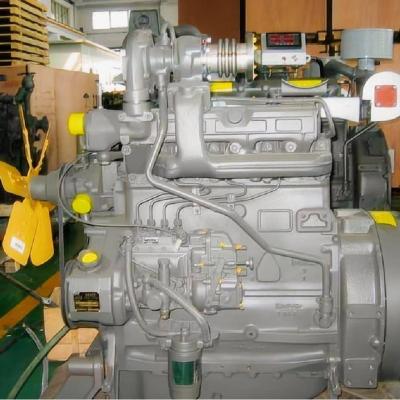
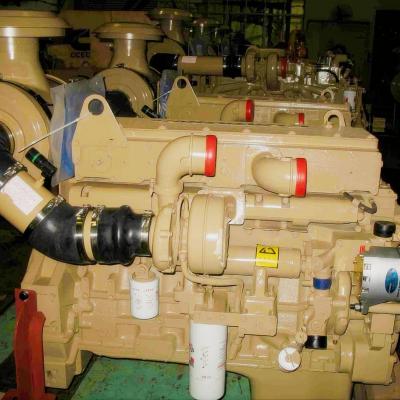
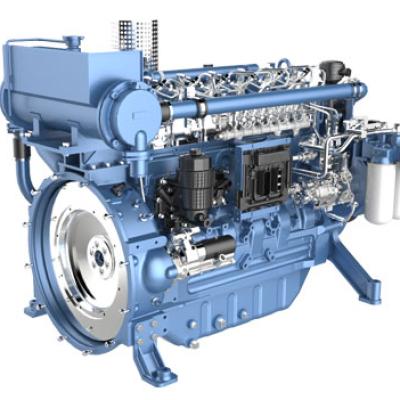
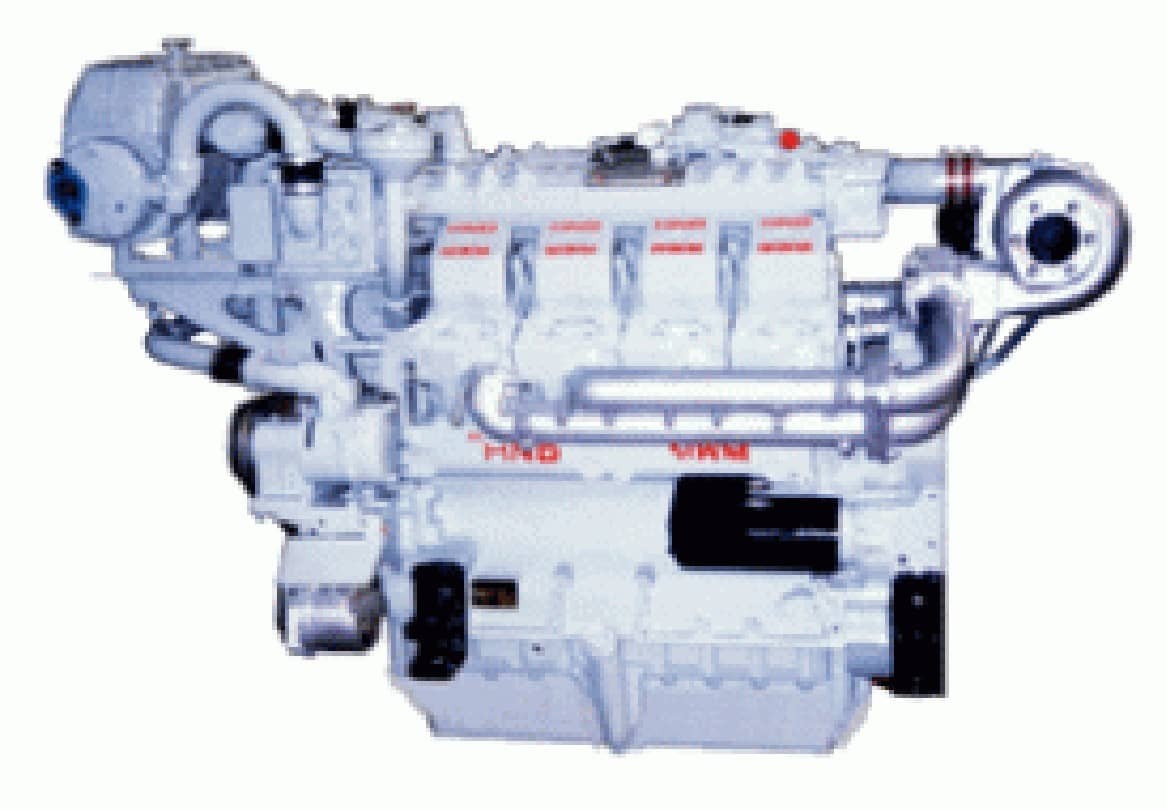
Deutz TBD234V8-249KW 50Hz Marine Auxiliary Generator Engine
Built by Henan Diesel Engine Industry Co., Ltd. (HND) under licensed German DEUTZ-MWM architecture, the Deutz TBD234V8-249KW is a fixed-speed 1500 rpm marine auxiliary engine engineered specifically for 50 Hz shipboard generator sets. Its 14.4-liter, 60-degree V8 block pairs water-cooled turbochargers with an indirect freshwater heat exchanger and a dedicated charge-air cooler circuit to deliver 249 kW continuous prime output and a 274 kW standby margin.
HekoPower supplies factory-tested TBD234V8-249KW complete engine assemblies directly to shipyards, marine genset packagers, and commercial fleet operators. Units ship configured for newbuild auxiliary packages or legacy Deutz-MWM repowering, with CCS classification and IMO compliance documentation matched to vessel survey requirements.
Technical Specifications
General Engine Data
- Engine Model:
- Deutz TBD234V8-249KW
- Type:
- 8 Cylinders, V Type, 4 Stroke
- Displacement:
- 14.4 L
- Bore * Stroke:
- 128 * 140
- Wet Weight (with heat exchanger):
- 1500 Kg
- Overall Dimension:
- 2032mm*1130mm*1587mm
Key Performance Data
- Rated Power/Speed:
- 249 kW @ 1500 rpm
- Standby Power/Speed:
- 274 kW @ 1500 rpm
- Min. Speed at Full Load:
- 1000 rpm
- Low Idle Speed:
- 650 rpm
- Fuel Consumption:
- 210 g/kW.hr
More Technical Data
- Certification:
- CCS/IMO Certificates
- Aspiration:
- Turbocharged and Intercooled
- Fuel System:
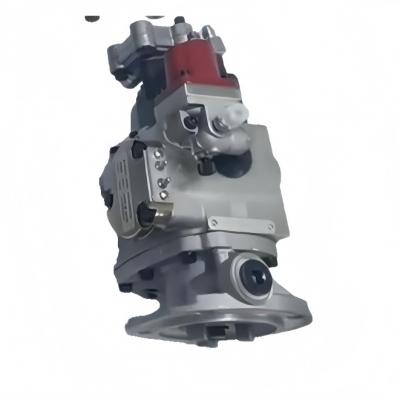
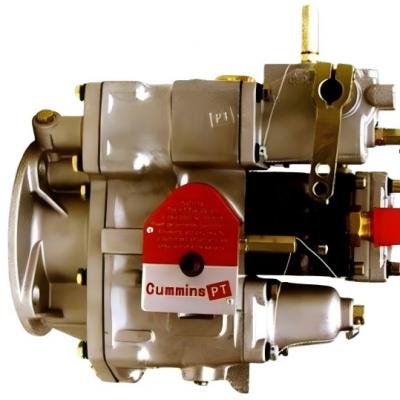
- High Pressure Fuel Pump
- Compression Ratio:
- 15:1
- Starting Method:
- Electrical Start (24V), Air Start
- Cooling Method:
- Water Cooled
- Ignition Sequence:
- A1-B2-A3-B1, A4-B3-A2-B4
How the TBD234V8-249KW Compares Across the TBD234 Lineup
Within HND's 14.4-liter V8 platform, the TBD234V8-249KW occupies the primary 50 Hz intercooled slot. Compared with the non-intercooled TD234V8 (160 kW at 1500 rpm), adding charge-air cooling and water-cooled turbochargers increases continuous shaft power by 89 kW while adding just 30 kg of wet weight. Against the 10.8-liter TBD234V6-244KW, which must turn at 1800 rpm to achieve 244 kW for 60 Hz grids, the V8-249KW delivers higher continuous output at 300 rpm lower crankshaft speed—cutting piston velocity, mechanical fatigue, and acoustic load on vessels wired for 50 Hz switchboards.
Moving higher within the same 2032 × 1130 × 1587 mm footprint to the TBD234V8-296KW or TBD234V8-325KW shifts the synchronous speed to 1800 rpm (60 Hz). Vessels committed to 50 Hz distribution that need more than 249 kW continuous mechanical power should step up to the 12-cylinder TBD234V12-373KW rather than pushing the V8 into chronic overload.
Application disambiguation matters when specifying HND part numbers. Stationary land-based TBD234V8 generator drives are fan-radiator cooled and rated at 255 kW under 25 °C ISO ambient conditions, whereas marine propulsion versions such as the TBD234V8-400HP run variable-speed propeller-law torque curves inside a narrower 1810 × 988 mm chassis. The TBD234V8-249KW is calibrated strictly for fixed-speed 1500 rpm marine alternator coupling under tropical unlimited-navigation ambient limits (45 °C engine-room air and 32 °C seawater).
Shipboard Auxiliary Sizing and Operating Behavior
On coastal cargo ships, offshore support vessels, tugboats, dredgers, ferries, and commercial fishing vessels, the TBD234V8-249KW typically drives a 400 V / 50 Hz brushless marine alternator rated between 200 and 220 kWe (250 to 275 kVA at 0.8 power factor), matching standard packages such as the CCFJ200J and CCFJ220J marine generator sets. A frequent procurement mistake is treating the 249 kW flywheel rating as 249 kWe of net electrical capacity—or assuming the 274 kW standby step can run nonstop in warm seas. After accounting for 91% to 93% alternator efficiency and driven cooling-pump parasitic loads, pairing a 250 kWe continuous alternator to this engine eliminates thermal reserve; the 274 kW overload allowance is reserved for short-duration cargo-winch, ballast-pump, or bow-thruster surges (one hour in twelve).
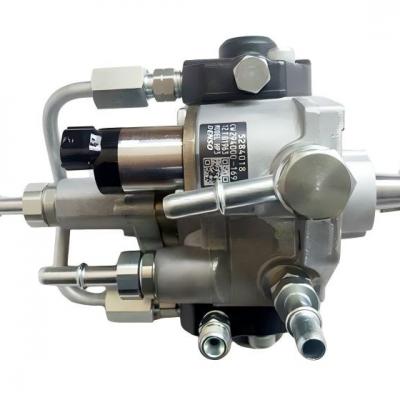
Because the special-grade cast iron crankcase houses a forged CrMo-steel crankshaft with bolted counterweights and a responsive block-type injection pump, cold-start load acceptance completes within 10 seconds. The fuel curve stays flat across 70% to 85% cruise hotel loads, and the combustion chamber geometry permits sustained low-load harbor running down to 20% output without rapid wet stacking.
Maintenance, Cooling Circuits, and Retrofit Fitment
Routine servicing centers on fluid quality and raw-water heat exchange. The standard wet sump holds approximately 28 liters of API CF-4 or CH-4 (SAE 15W-40 or 20W-40) marine diesel oil, with rated lubricating oil consumption at or below 1.4 g/kW·h. Forced circulation passes through an engine-mounted oil cooler and a switchable duplex oil filter, matched by a duplex fuel filter so engineers can change clogged elements while the generator stays on the bus. Internal jacket freshwater capacity is roughly 24 liters excluding external piping; because TBD models cool the charge-air intercooler via an independent seawater loop driven by a self-priming raw-water pump, inspect sacrificial zinc anodes and descale the intercooler bundle periodically to keep intake air temperatures on spec.
Operators moving from common-rail engines sometimes assume the mechanical block-type fuel pump cannot support parallel switchboard operation or modern emission rules. In practice, HND builds the TBD234V8-249KW to IMO Tier II standards and offers optional hydraulic or electronic speed governors for tight isochronous load sharing, while mechanical injection tolerates variable marine gas oil (MGO) quality in remote ports. Individual wet centrifugal cast-iron liners and single-cylinder cast-iron heads (one intake and one exhaust valve per head) simplify in-hull top-end service, with major overhaul intervals typically spanning 12,000 to 20,000 operating hours.
For drop-in fleet repowering, confirm anti-clockwise crankshaft rotation viewed from the flywheel end, match the standard SAE 1 flywheel housing and SAE 14 flywheel to your alternator's flexible coupling, verify clearance for the standard uncooled exhaust manifolds (insulated manifolds available on request), and specify 24V electric start, compressed air start, or dual starting to satisfy vessel class rules.
Deutz TBD234-Marine Generator Series
Spanning 116 kW to 444 kW across V6, V8, and V12 configurations, the HND Deutz TBD234 marine auxiliary lineup standardizes pistons, liners, cylinder heads, and filters across shared 128 × 140 mm bore-and-stroke geometry—making the TBD234V8-249KW a practical middle-tier 50 Hz choice for multi-vessel fleets.
Deutz TBD234-Marine Generator Series, Marine Generator Diesel Engines for commercial and recreational applications, original products from Henan Diesel Engine Plant (HND). This series mainly includes TD234V6, TD234V8, TBD234V6-116KW, TBD234V6-132KW, TBD234V6-186KW, TBD234V6-205KW, TBD234V6-222KW, TBD234V6-244KW, TBD234V8-160KW, TBD234V8-186KW, TBD234V8-249KW, TBD234V8-274KW, TBD234V8-296KW, TBD234V8-325KW, TBD234V12-373KW, TBD234V12-444KW.
Frequently Asked Questions
What marine alternator rating matches the Deutz TBD234V8-249KW at 1500 rpm?
Accounting for 91% to 93% marine alternator efficiency and engine-driven auxiliary pump loads, the 249 kW continuous shaft rating pairs cleanly with a 200 to 220 kWe (250 to 275 kVA at 0.8 PF) 50 Hz prime alternator, leaving the 274 kW standby rating available for transient motor-starting peaks.
Can the TBD234V8-249KW be converted from 1500 rpm (50 Hz) to 1800 rpm (60 Hz)?
While the base 14.4 L V8 hardware is shared with 60 Hz siblings like the TBD234V8-296KW, switching a 1500 rpm build to 1800 rpm requires recalibrating injection pump fuel delivery, governor settings, and turbocharger matching—plus updated CCS/IMO EIAPP documentation for the new speed and power curve. Specifying a factory 1800 rpm build is strongly recommended.
Does this engine support parallel operation on multi-genset vessel switchboards?
Yes. Standard engines ship with an injection-pump-mounted mechanical governor suited to standalone auxiliary duty or droop sharing, while optional hydraulic and electronic governors are available from HND for automated synchronization and isochronous active load sharing across parallel shipboard generators.
What flywheel housing, rotation direction, and starting setup apply for legacy replacements?
Standard HND marine builds use an SAE 1 flywheel housing, an SAE 14 flywheel, anti-clockwise crankshaft rotation viewed from the flywheel end, and the A1-B2-A3-B1-A4-B3-A2-B4 firing order. Both 24V DC electrical starting and compressed air starting are supported to meet main or emergency auxiliary class rules.