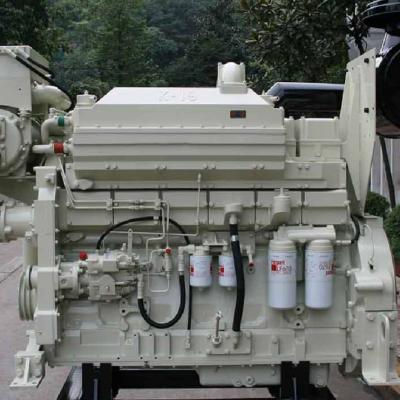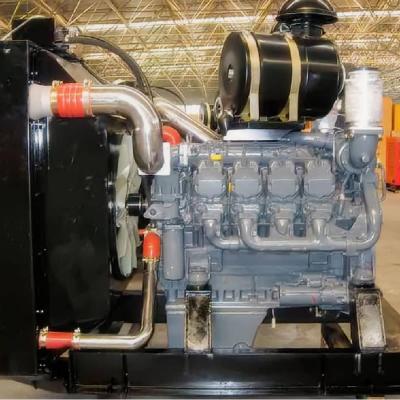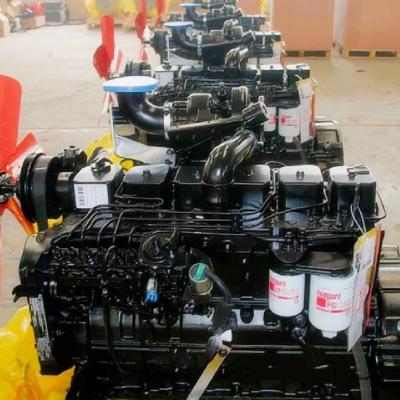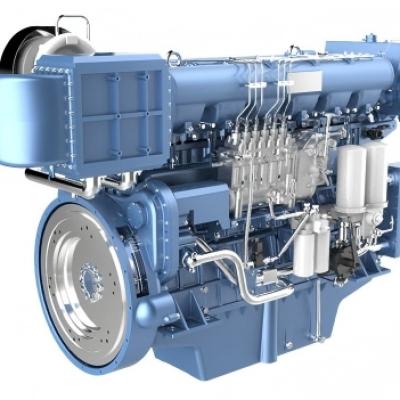
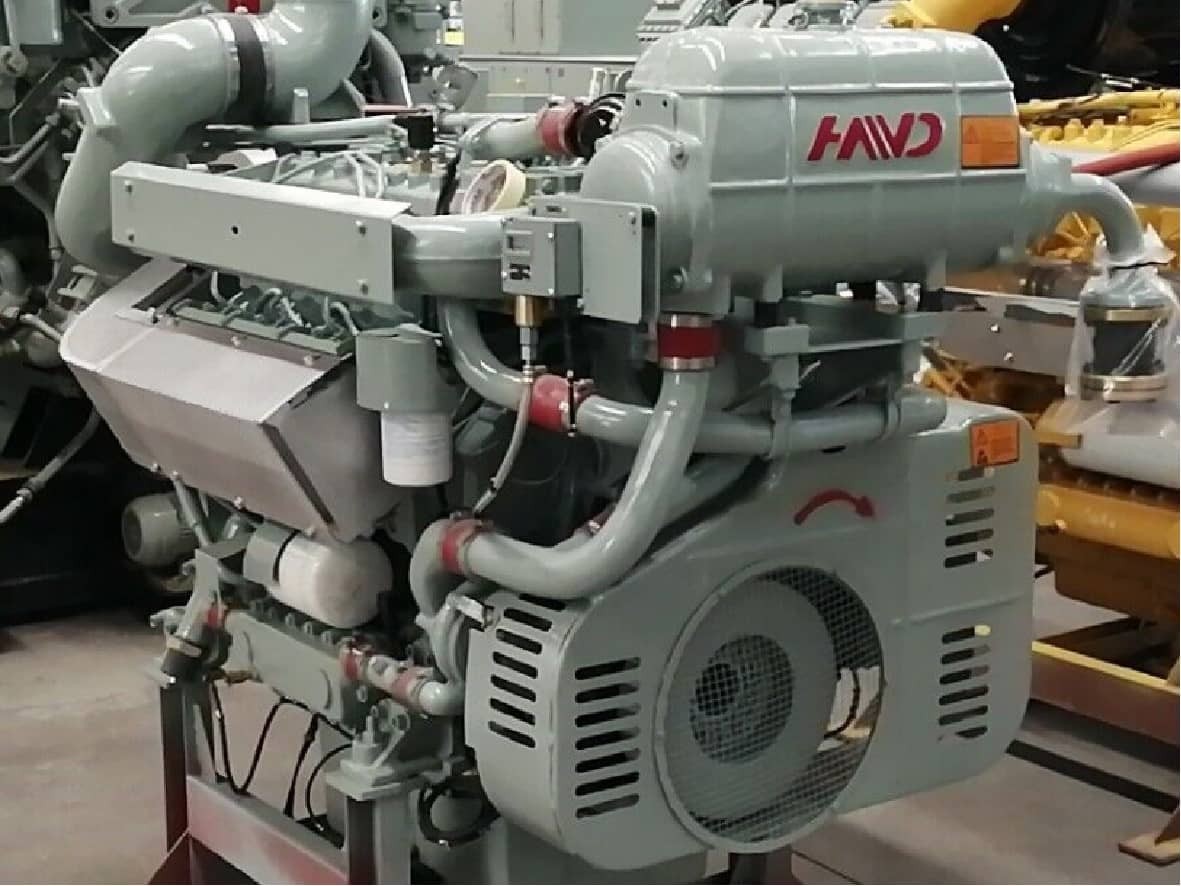
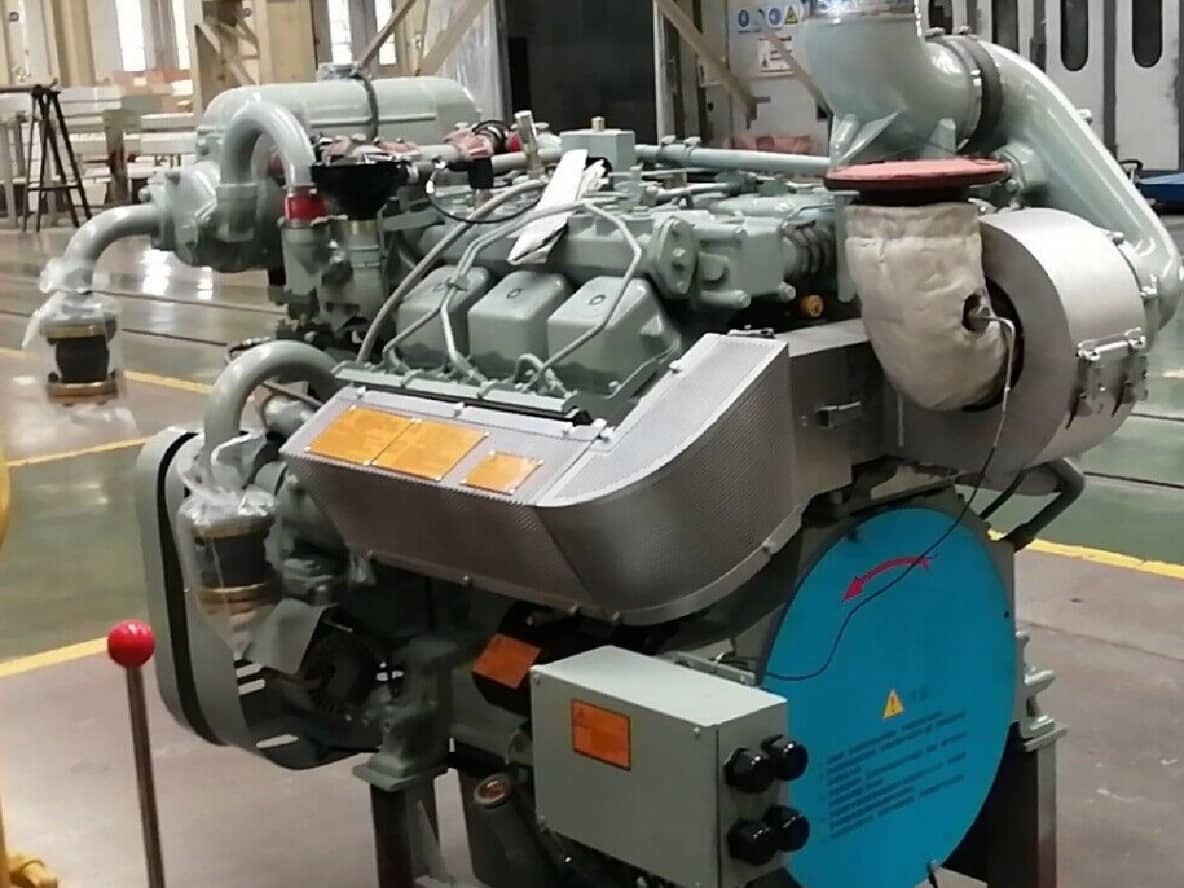
When designing or assembling a high-performance 50Hz diesel generator set, choosing the prime mover dictates the reliability, fuel economy, and operational lifespan of the entire installation. As an established engine supplier, HekoPower provides complete assemblies of the Deutz TBD234V6 generator engine, delivering a continuous 205kW output at 1500 RPM. This 10.8-liter, six-cylinder V-type configuration is engineered to meet rigorous industrial and commercial demands. Unlike inline engines that occupy an elongated footprint, the V6 architecture of the TBD234 series offers a compact spatial profile without compromising displacement, torque delivery, or thermal stability.
The engineering design of this engine focuses heavily on optimizing combustion efficiency. Equipped with an advanced turbocharged and intercooled system, the Deutz TBD234V6 ensures that compressed intake air is cooled effectively before entering the combustion chambers. This results in cleaner combustion, reduced thermal stress on cylinder heads, and consistent power delivery even when operating under heavy, fluctuating electrical loads.
Evaluating the Deutz TBD234V6 against standard heavy-duty diesel engines reveals distinct performance advantages for power generation applications. When compared to traditional inline six-cylinder engines of similar displacement, the V6 layout of the TBD234 series significantly reduces crankshaft torsional vibration. This reduction in mechanical vibration translates to smoother operation and less wear on coupled alternators, lowering long-term maintenance overhead for genset packagers.
Furthermore, when contrasted with higher-speed engines that require step-down gearboxes or struggle with continuous duty cycles, the 1500 RPM operating speed of this Deutz unit aligns perfectly with standard 50Hz generator synchronous speeds. This direct coupling capability eliminates mechanical conversion losses. While some alternative engines achieve similar output figures through aggressive fuel rail pressure tuning, the TBD234V6 relies on robust mechanical-electronic governing and robust block metallurgy to sustain its 205kW prime power rating over thousands of operating hours without thermal degradation.
The versatility of the Deutz TBD234V6 205kW generator engine makes it a preferred choice across diverse operational environments. It is widely deployed as the prime power source for remote industrial camps, continuous manufacturing facilities, and municipal backup systems. In marine auxiliary applications, configurations equipped with specialized heat exchangers allow seamless integration into vessel cooling circuits, providing reliable onboard electrical power under corrosive maritime conditions.
Despite its widespread use, several common misconceptions persist among buyers regarding this engine series. A frequent misunderstanding involves confusing prime power ratings with standby ratings. Some operators attempt to run continuous industrial loads at maximum standby thresholds, overlooking the critical balance between thermal load and fuel injection timing. Another misconception relates to cooling configurations; users occasionally assume that radiator-cooled land generator engines can be directly submersed or marinized without modifying the raw water pump and heat exchanger infrastructure. Understanding these operational nuances ensures that the engine is paired correctly with the appropriate alternator and cooling matrix from the outset.
Maximizing the operational lifespan of a Deutz TBD234V6 engine assembly requires strict adherence to scheduled maintenance intervals and genuine parts replacement. Because this unit operates under high specific power outputs, lubricating oil quality and filtration integrity are paramount. Operators should routinely inspect the oil coolers and turbocharger housing for carbon buildup, ensuring that exhaust gas temperatures remain within optimal thresholds.
When undertaking a complete engine replacement in an existing generator set enclosure, alignment precision between the flywheel housing and the alternator SAE flange is critical. Even minor angular misalignment can induce fatigue on the crankshaft rear oil seal. Additionally, maintaining proper coolant chemistry prevents cavitation erosion within the crankcase wet liners, safeguarding the structural integrity of the V6 block over decades of service.
As part of HekoPower’s comprehensive inventory, this unit belongs to a robust family of heavy-duty prime movers designed for professional packagers and end-users alike. Deutz TBD234-Marine Generator Series, Marine Generator Diesel Engines for commercial and recreational applications, original products from Henan Diesel Engine Plant (HND). This series mainly includes TD234V6, TD234V8, TBD234V6-116KW, TBD234V6-132KW, TBD234V6-186KW, TBD234V6-205KW, TBD234V6-222KW, TBD234V6-244KW, TBD234V8-160KW, TBD234V8-186KW, TBD234V8-249KW, TBD234V8-274KW, TBD234V8-296KW, TBD234V8-325KW, TBD234V12-373KW, TBD234V12-444KW.
Yes, depending on the auxiliary configuration—such as heat exchanger versus keel cooling or radiator cooling—it can be adapted for both heavy industrial land installations and marine auxiliary duties.
The engine features a 10.8-liter displacement configured in a compact six-cylinder V-type layout, which balances high power density with a reduced overall length.
The engine utilizes a robust 24V electric starting system designed for dependable cold starts and integration with standard industrial automated control panels.
The turbocharger combined with an intercooler lowers intake air temperature, increasing oxygen density for combustion, which enhances fuel efficiency and reduces exhaust emissions.