Details
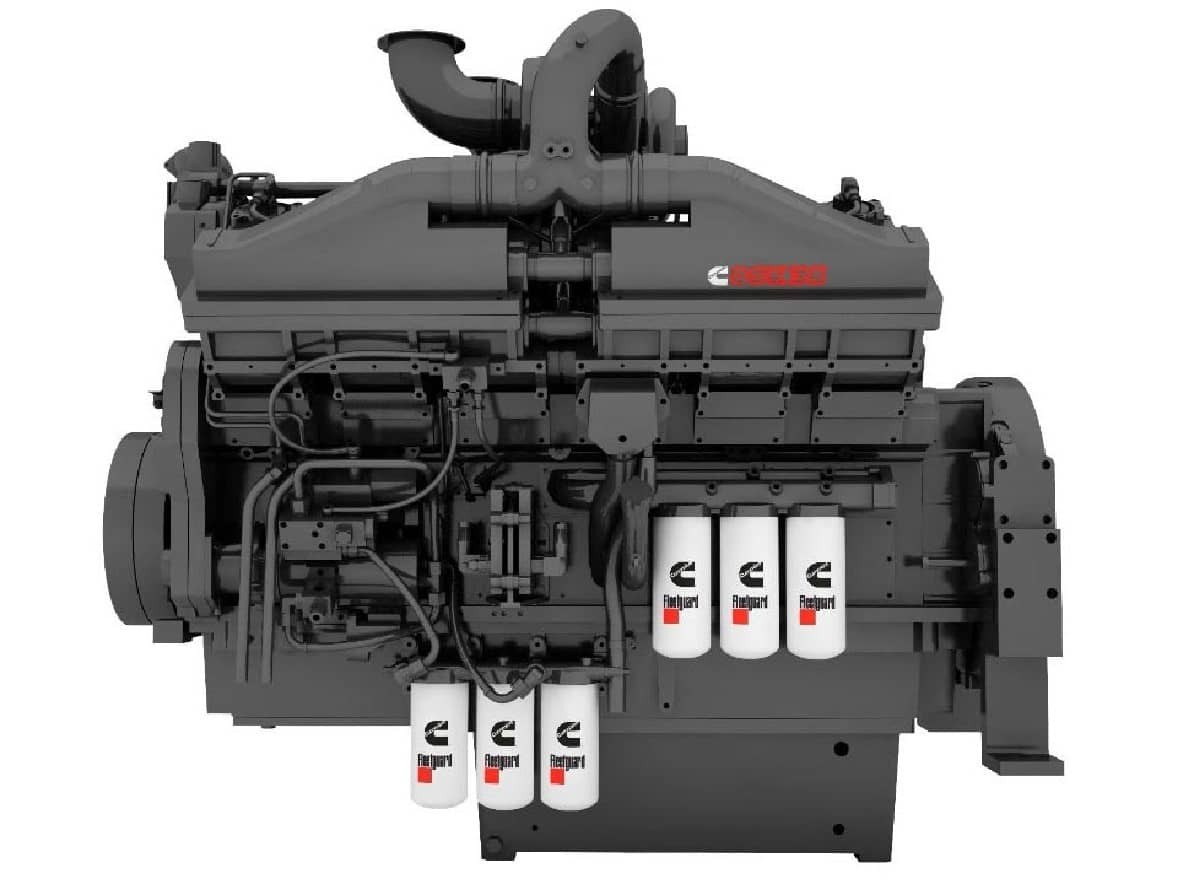
Engineering Excellence of the Cummins QSK38-G2 Generator Engine
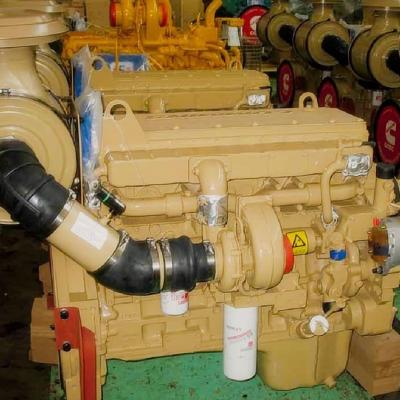
The Cummins QSK38-G2 generator engine represents a milestone in heavy-duty mechanical engineering, built specifically for mission-critical power generation. Operating at 1500 RPM for 50 Hz applications, this 37.7L V12 diesel engine delivers a robust prime power output of 989 kW alongside a standby output of 1096 kW. As an authorized CCEC QSK38-G2 989 kW G-Drive supplier, HekoPower provides complete, factory-fresh engine assemblies designed to anchor large-scale industrial microgrids and emergency backup systems.
Industrial procurement engineers selecting a QSK38-G2 diesel engine benefit from a sophisticated modular architecture. The engine integrates advanced electronic controls with rugged V12 metallurgy, ensuring long-term reliability under severe operating conditions. Whether deployed as a 908 kWe prime power driver or a 1250 kVA standby generator engine, the QSK38-G2 provides unmatched block-loading capability and transient response stability.
Tech Specs of Cummins QSK38-G2 Generator Engine
General Engine Data
Engine Model: Cummins QSK38-G2
Type: 12 Cylinders
Displacement: 37.7 L
Bore * Stroke: 159 * 159
Net Weight: 3825 Kg
Overall Dimension: 2081mm*1492mm*1866mm
Key Performance Data
Rated Power/Standby Output: 989 kW(1326 HP), 1096 kW(1470 HP)
Rated Speed: 1500 rpm
Low Idle Speed: 700-800 rpm
Fuel Consumption: 62 g/kWh
More Technical Data
Fuel System: Cummins Direct Injection MCRS
Aspiration: Turbocharged, After-cooled
Electrical System (Starter Motor/Alternator): 24V
Cooling System Design: 2 pump- 2 loop
Technical Comparisons and Performance Variations
Understanding the nuances between engine variants prevents costly specification mismatches during project design. When evaluating the Cummins QSK38-G2 engine specifications, engineers frequently compare it against neighboring models within the QSK38 series and legacy power plants.
Contrasting the Cummins QSK38-G2 vs QSK38-G1, the G2 variant is optimized for higher thermal efficiency and tighter frequency regulation under transient loads, making it the preferred choice for facilities sensitive to voltage and frequency fluctuations. When reviewing the Cummins QSK38-G2 vs QSK38-G3, the G3 variant is typically dialed for higher output requirements, whereas the G2 strikes an optimal balance between fuel economy and maximum continuous block-loading capacity at 1500 RPM.
A common historical comparison involves upgrading from mechanical injection platforms. Evaluating a Cummins QSK38-G2 vs KTA38-G2 reveals a fundamental shift in combustion technology. While both share the same legendary 37.7-liter V12 displacement and 159 mm bore and stroke dimensions, the older KTA38 relies on a mechanical PT fuel system. In contrast, the QSK38-G2 MCRS fuel system diesel engine utilizes a Modular Common Rail System. This electronic architecture allows the Cummins QSK38-G2 989 kW 1500 rpm engine to adjust injection pressure dynamically, achieving superior fuel atomization, lower emissions compliance, and vastly superior transient recovery times during sudden inductive load additions.
Real Application Scenarios and Operational Deployment
The adaptability of this 50 Hz generator drive engine makes it indispensable across diverse industrial sectors. Its performance profile is tailored to meet the strict demands of high-capacity backup and continuous duty environments.
In telecommunications and enterprise infrastructure, the heavy duty diesel engine for data center backup QSK38-G2 configuration ensures uninterrupted operations. Data facilities cannot tolerate micro-second power drops; the engine’s ability to take on massive block loads instantaneously protects servers from catastrophic downtime during grid failures.
For remote industrial sites, the continuous prime power engine for mining camp QSK38 deployment guarantees steady energy delivery where commercial power is unavailable. Operating thousands of hours per year under heavy dust and high ambient temperatures, the dual-pump, two-loop cooling design prevents thermal runaway.
Similarly, municipal utilities rely on the emergency generator prime mover for municipal water plant QSK38-G2 setup. Heavy-duty water pumps demand immense startup torque; the turbocharged aftercooled engine supplies the necessary rotational inertia and torque response to spin up large turbine pumps without tripping system breakers.
Maintenance, Inspection, and Replacement Best Practices
Maximizing the operational lifespan of a Cummins QSK38-G2 engine assembly requires strict adherence to scheduled maintenance intervals. Facility managers must institute proactive service protocols focusing on critical sub-systems.
The Cummins QSK38-G2 fuel system inspection is vital for maintaining optimal combustion efficiency. Because the MCRS injectors operate under extremely high pressures, fuel filtration must be rigorously maintained to prevent particulate contamination. Operators should monitor the Cummins QSK38-G2 fuel consumption rate at 75% load as a benchmark indicator; any unexpected deviation in fuel burn signals potential injector wear or turbocharger degradation.
Furthermore, the Cummins QSK38-G2 cooling system requirements demand careful attention. The specialized 2-pump, 2-loop circuit separates jacket water cooling from intercooler circuit cooling, keeping charge-air temperatures low and ensuring thermal stability. When executing a QSK38-G2 replacement engine installation, technicians must verify accessory alignment, exhaust backpressure limits, and vibration damper integrity to ensure seamless integration into existing skid packages.
Cummins QSK-G Series Integration and Product Lineup
Selecting the correct model from the broader manufacturing family ensures that your generator set matches exact facility load profiles. The Chongqing Cummins Engine Plant produces a robust lineup of high-horsepower industrial prime movers tailored for various output tiers.
Cummins QSK-G Series, original products from Chongqing Cummins Engine Plant(CCEC). This series mainly includes QSNT-G, QSK19-G4, QSK19-G5, QSKTAA19-G3, QSK38-G1, QSK38-G2, QSK38-G3, QSK38-G4, QSK38-G5, QSK50-G2, QSK50-G3, QSK50-G4, QSK50-G6, QSK50-G7.
Frequently Asked Questions (FAQs)
How does the MCRS fuel system improve upon older mechanical systems?
The Modular Common Rail System provides electronically controlled, ultra-high-pressure fuel injection. This improves atomization, reduces emissions, and delivers significantly faster transient response times when handling sudden load steps.
Can this engine be used for continuous base-load power?
Yes. As a prime power unit rated at 989kW, the QSK38-G2 can run continuously under variable loads. It is engineered with premium metallurgy in the cylinder liners and valve guides to withstand tens of thousands of hours of continuous duty before requiring a major overhaul.
Can this engine operate in high ambient temperature environments?
Yes, provided the cooling matrix is engineered correctly. The 2-pump, 2-loop cooling system design effectively manages high ambient heat rejection during continuous mining and heavy industrial deployments.