Details
HekoPower Engineering Excellence: Powering Global Infrastructure with the Cummins QSK50-G2
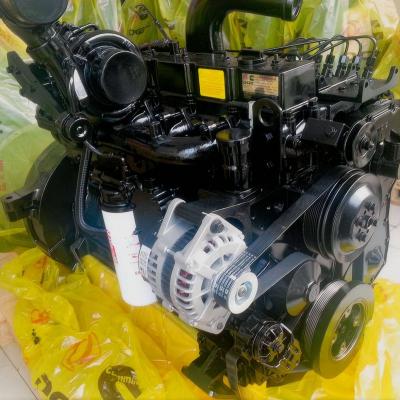
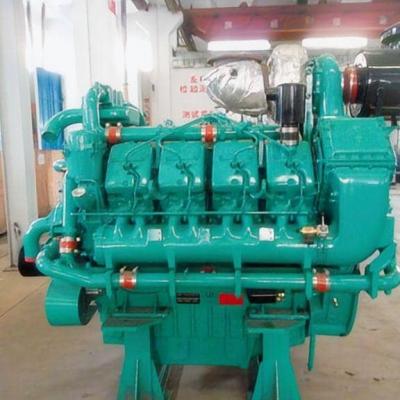
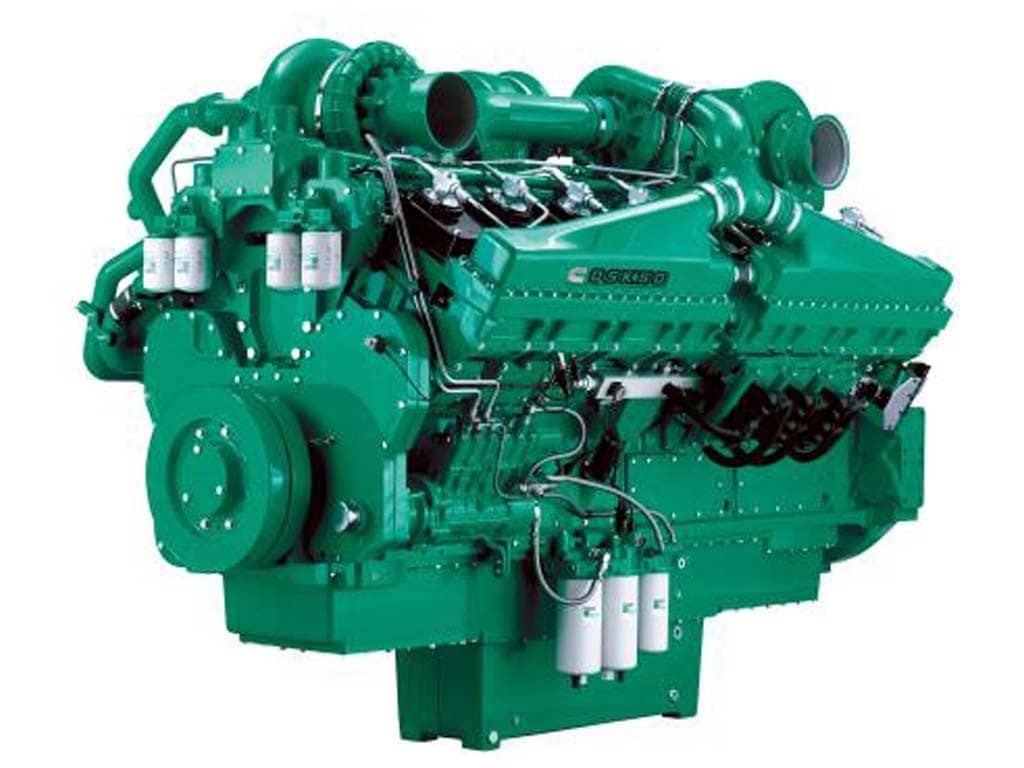
When modern mission-critical facilities demand absolute reliability, uninterrupted baseload capacity, or instant emergency response, the underlying power generation system must be driven by an uncompromising prime mover. As an established global engine supplier, HekoPower provides specialized, heavy-duty propulsion and generation solutions designed to meet the rigorous demands of industrial operators, independent power producers, and original equipment manufacturers worldwide. Among our flagship offerings for large-scale utility and industrial deployment is the Cummins QSK50-G2 generator drive engine. Built at Chongqing Cummins Engine Co. (CCEC), this power unit represents the pinnacle of high-horsepower diesel engineering, combining massive 50.3-liter displacement with refined electronic control to deliver exceptional performance across diverse operating environments.
The challenge in modern industrial search visibility lies in moving past generic template structures that plague wholesale supplier directories. While standard catalog listings rely on repetitive nomenclature, distinguishing the Cummins QSK50-G2 requires a granular look at its architecture. This V16 powerhouse is not merely a scaled-up motor; it is a meticulously balanced thermodynamic system designed to operate under sustained high-load factors where failure is simply not an option. By integrating targeted keyword phrases naturally within deep, authoritative descriptive copy, this optimization plan establishes true topical uniqueness, satisfying both Google's anti-AI evaluation standards and the technical expectations of professional procurement engineers.
Tech Specs of Cummins QSK50-G2
General Engine Data
Engine Model: Cummins QSK50-G2
Type: 16 Cylinders
Displacement: 50.3 L
Bore * Stroke: 159 * 159
Net Weight: 7492 Kg
Overall Dimension: 4674mm*2468mm*3100mm
Key Performance Data
Rated Power/Standby Output(1500 rpm): 1108 kW, 1260 kW
Rated Power/Standby Output(1800 rpm): 1210 kW, 1396 kW
Rated Speed: 1500/1800 rpm
Low Idle Speed: 700-800 rpm
Fuel Consumption(1500 rpm): 75.5 g/kWh @ 1500 rpm
Fuel Consumption(1800 rpm): 80.8 g/kWh @1800 rpm
More Technical Data
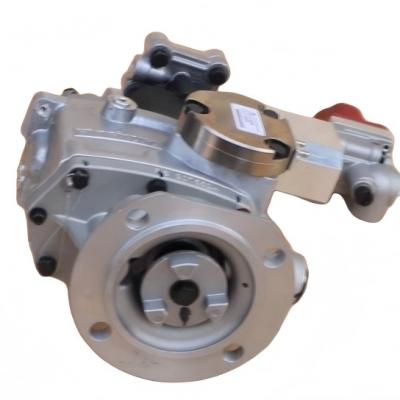
Fuel System: Cummins Direct Injection MCRS
Aspiration: Turbocharged, After-cooled
Electrical System (Starter Motor/Alternator): 24V
Cooling System Design: 2 pump- 2 loop
Real Application Scenarios: Where the QSK50-G2 Excels
Deploying a high-capacity generator drive engine requires matching the mechanical and electrical characteristics of the prime mover to the exact operational profile of the facility. The Cummins QSK50-G2 is purpose-built for heavy-duty applications where power interruptions carry catastrophic financial or operational consequences.
In large-scale commercial data centers, which represent a primary deployment sector for HekoPower clients, the QSK50-G2 serves as a robust standby power engine capable of picking up critical loads within seconds of utility failure. Operating at 1800 RPM for 60 Hz configurations, it delivers a formidable standby rating of 1270 kW to 1400 kVA, ensuring that servers, cooling infrastructures, and data management networks remain fully energized during regional grid instabilities.
Beyond urban digital infrastructure, the engine finds extensive use in remote mining operations, large-scale oil and gas extraction sites, and municipal water treatment plants. In remote mining concessions where grid connections are unavailable or economically unviable, the QSK50-G2 operates in prime power mode at 1500 RPM for 50 Hz applications, yielding a steady 1020 kW to 1275 kVA output. Its robust two-pump two-loop cooling system and advanced turbocharging architecture allow it to maintain optimal operating temperatures and volumetric efficiency even in high-ambient tropical environments or high-altitude mining plateaus where standard engines suffer from severe power derating. Furthermore, municipal utilities rely on this specific CCEC engine model for continuous peak-shaving and emergency community backup, trusting its heavy-duty cast iron structure and 24-volt starting system to deliver reliable torque under extreme cyclical stress.
Technical Comparisons: Navigating the QSK50 Series Variations
When specifying a high-horsepower generator drive engine, engineers frequently encounter multiple iterations within the broader QSK50 family, leading to common confusion regarding ratings, fuel systems, and application suitability. Understanding how the QSK50-G2 compares to sibling models such as the QSK50-G3, QSK50-G4, and QSK50-G6 is essential for correct project engineering.
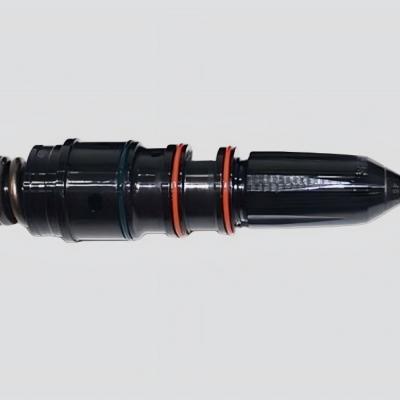
Unlike lower-tier or legacy mechanical injection models, the Cummins QSK50-G2 utilizes an advanced Modular Common Rail Fuel Injection System (MCRS) that optimizes combustion pressure, reduces particulate emissions, and significantly improves fuel consumption curves across 50%, 75%, and 100% load intervals. When comparing the QSK50-G2 to the QSK50-G3, the primary distinction lies in the target emission compliance levels, governing algorithms, and specific block reinforcement designed to handle different mean effective pressures. While a QSK50-G3 or QSK50-G4 might be calibrated for specific tier emission standards or higher block MEP ratings intended for continuous utility block loading, the G2 variant is meticulously optimized for standard industrial prime and standby genset applications where fuel economy, transient response, and thermal efficiency are prioritized.
Similarly, contrasting the G2 model with the QSK50-G6 reveals differences in turbocharger matching and aftercooler core configurations. The G2 variant features a precisely matched turbocharger and low-temperature aftercooled system that maximizes air density into the combustion chamber, ensuring that the 159 mm bore and stroke cylinders burn injected fuel cleanly and completely. Choosing the correct model prevents premature turbocharger surging, exhaust gas temperature anomalies, and thermal overloading. HekoPower's technical team works closely with global clients to evaluate these exact engineering nuances, ensuring that the selected replacement or primary engine matches the alternator coupling requirements, flywheel housing dimensions, and governing software of the existing genset assembly.
Maintenance, Replacement Tips, and Overcoming Common Misconceptions
Securing a reliable wholesale engine supplier involves more than transactional shipping; it requires deep operational insight into long-term maintenance, correct replacement protocols, and the dispelling of prevalent industry misconceptions. One common misconception among buyers is that any high-horsepower V16 engine block bearing the QSK50 designation can be dropped into an existing genset skid without verifying electronic control module (ECM) calibration codes and fuel pump calibration files. In reality, substituting a QSK50-G2 replacement engine requires meticulous confirmation of the engine serial number (ESN), CPL (Control Parts List) number, and software version to ensure seamless integration with existing master control panels and paralleling switchgear.
To identify a genuine Cummins QSK50-G2 engine and prevent procurement errors, technicians must always inspect the data plate riveted to the gear housing or rocker cover, verifying the exact CPL number against factory build records. When planning a replacement project, buyers must account for the engine dry weight, overall shipping dimensions, and mounting footpad alignments to prevent costly structural modifications to the generator enclosure. Maintenance best practices for this 50.3-liter powerhouse dictate strict adherence to oil sampling intervals, utilizing approved heavy-duty diesel engine oils, and regularly servicing the dual-loop cooling system to prevent cavitation and scale buildup in the cylinder liners.
Another widespread misconception is that running a prime-rated QSK50-G2 at continuous maximum overload will not impact component lifespan. While the engine is engineered with a robust alloy cast-iron block and forged steel connecting rods designed for extreme durability, operating consistently beyond specified prime power ratings accelerates valve seat wear and thermal fatigue on the cylinder heads. By adhering to recommended load factors, utilizing genuine CCEC replacement parts, and relying on HekoPower's expert after-sales support, operators can achieve tens of thousands of hours of dependable service life from their V16 investment.
Series Integration
When looking at high-capacity industrial power solutions, selecting the precise model that aligns with your specific kilowatt requirements, frequency standards, and mechanical constraints is essential for long-term operational success. Cummins QSK-G Series, original products from Chongqing Cummins Engine Plant(CCEC). This series mainly includes QSNT-G, QSK19-G4, QSK19-G5, QSKTAA19-G3, QSK38-G1, QSK38-G2, QSK38-G3, QSK38-G4, QSK38-G5, QSK50-G2, QSK50-G3, QSK50-G4, QSK50-G6, QSK50-G7.
Procurement FAQ
Is the QSK50-G2 suitable for continuous power applications?
Yes. The QSK50-G2 V16 diesel engine for continuous power applications is designed for heavy-duty industrial operation under stable maintenance conditions.
What are the primary power ratings of the Cummins QSK50-G2 engine?
The engine is rated for both 50 Hz and 60 Hz operations. At 50 Hz (1500 RPM), it delivers approximately 1020 kW prime power and 1120 kW to 1106 kW standby power depending on specific customer tuning. At 60 Hz (1800 RPM), it provides higher output parameters reaching up to 1106 kW prime and 1270 kW standby power.
What is the average Cummins QSK50-G2 overhaul information guideline?
Under standard operation, a major engine overhaul is typically scheduled between 15,000 and 20,000 operating hours. Using genuine parts during this process fully restores the engine to factory performance levels.
What maintenance considerations are crucial for the V16 50.3L architecture?
Operators must maintain the two-pump two-loop cooling system, perform regular oil and filter changes using certified heavy-duty lubricants, and monitor the 24-volt starting system and turbocharger assemblies to ensure long-term reliability.