Details
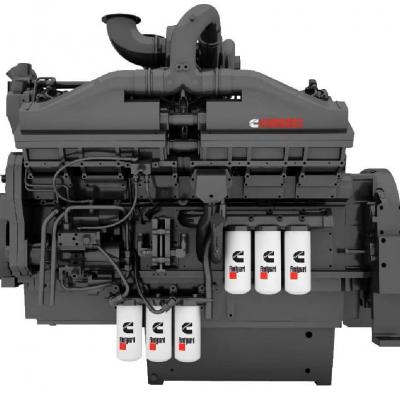
Advanced Engineering Architecture of the CCEC Cummins QSK50-G3 Generator Engine
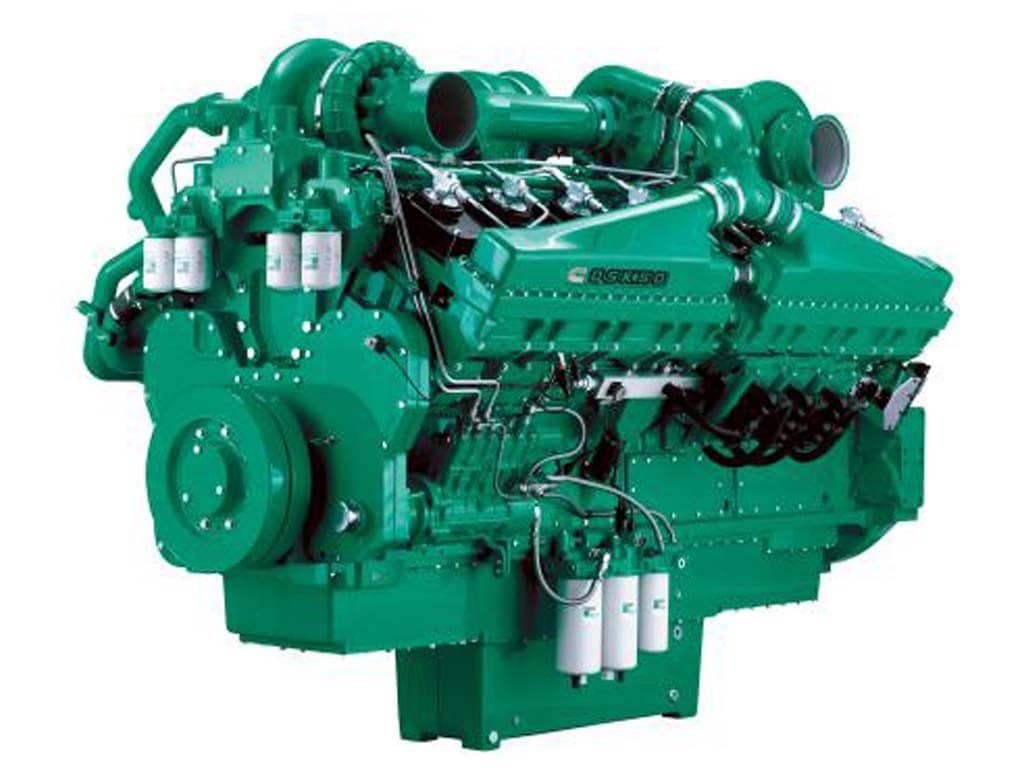
The modern industrial power landscape demands uncompromising reliability under extreme electrical loading profiles. As a trusted global engine supplier, HekoPower provides the CCEC Cummins QSK50-G3 as a cornerstone solution for mission-critical power generation. Operating with a commanding 50.3-liter displacement across a sixteen-cylinder V-configuration, this power plant delivers a mechanical brake output of 1210 kW at 1500 RPM for 50 Hz utility applications and 1401 kW at 1800 RPM for 60 Hz operations. The engineering integrity of the QSK50-G3 lies in its ability to accept massive block loads instantaneously without sacrificing frequency stability or thermal endurance.
Tech Specs of Cummins QSK50-G3 Generator Engine
General Engine Data
Engine Model: Cummins QSK50-G3
Type: 16 Cylinders
Displacement: 50.3 L
Bore * Stroke: 159 * 159
Net Weight: 7492 Kg
Overall Dimension: 4674mm*2468mm*3100mm
Key Performance Data
Rated Power/Standby Output(1500 rpm): 1210 kW, 1401 kW
Rated Speed: 1500/1800 rpm
Low Idle Speed: 700-800 rpm
Fuel Consumption(1500 rpm): 85.5 g/kWh @ 1500 rpm
Fuel Consumption(1800 rpm): 91.1 g/kWh @1800 rpm
More Technical Data
Fuel System: Cummins Direct Injection MCRS
Aspiration: Turbocharged, After-cooled
Electrical System (Starter Motor/Alternator): 24V
Cooling System Design: 2 pump- 2 loop
Real Application Scenarios and Operational Environments
Deploying a high-output V16 diesel engine requires matching the mechanical and thermal characteristics of the prime mover to the exact demands of the installation site. In hyperscale and enterprise data center infrastructures, the QSK50-G3 serves as an elite backup generator drive engine. During a sudden utility grid failure, data center server racks demand immediate block-load pickup. The QSK50-G3 satisfies Tier rating requirements by assuming 100% of its rated standby load in a single step while maintaining tight voltage and frequency recovery tolerances.
Beyond digital infrastructure, this engine powers remote mining operations and continuous-duty municipal water treatment plants where utility power is either unstable or entirely absent. In continuous remote service, the engine operates near its prime rating for extended hours, requiring robust oil scavenging and thermal management. Healthcare campuses and international airport terminals also rely on this specific V16 platform to drive emergency generators, ensuring that life-safety systems and air traffic control communication loops remain uninterrupted during prolonged blackouts.
In-Depth Technical Comparisons
Engineering teams evaluating the QSK50-G3 must differentiate its operating parameters from adjacent engine platforms within the Cummins and competitor ecosystem. When comparing the G3 variant to the earlier QSK50-G2 model, the G3 incorporates refined fuel injection calibration maps and updated turbocharger nozzle rings. These updates yield lower specific fuel consumption under partial loads and improve altitude derating performance in high-ambient-temperature regions.
When juxtaposed with higher-output models like the QSK50-G4 or G7, the G3 is intentionally calibrated for standard utility backup and prime applications where thermal loading and component longevity take precedence over maximum possible burst output. Against mechanical legacy engines such as the KTA50-G3, the electronic Modular Common Rail System (MCRS) on the QSK50-G3 provides infinitely variable control over injection pressure and timing. This eliminates the characteristic white smoke during cold starts and drastically curtails particulate emissions, helping facility operators comply with regional environmental air quality standards.
When comparing the 50 Hz configuration running at 1500 RPM to the 60 Hz configuration running at 1800 RPM, the mechanical crankshaft and block remain identical, but the internal governor parameters and turbocharger trim change significantly. Selecting the incorrect frequency calibration leads to boost pressure mismatch and premature exhaust gas temperature spikes. HekoPower works directly with clients to verify that factory ECM programming matches the local electrical grid frequency before dispatch.
Common Misconceptions Regarding High-Output V16 Diesel Engines
A frequent misconception among facility planners is that mechanical gross engine power equates directly to net electrical output at the generator busbar. The 1210 kW and 1401 kW ratings delivered by the QSK50-G3 represent mechanical brake horsepower at the flywheel. System integrators must always factor in alternator efficiency losses, typically ranging between five and seven percent, when sizing the complete generator set.
Another widespread misunderstanding involves fuel quality requirements. Because the QSK50-G3 utilizes high-pressure MCRS fuel injection technology with precision-machined injector tolerances, operators often assume it can tolerate standard commercial diesel with high sulfur content if secondary filters are installed. In practice, running this engine on unrefined or high-sulfur fuel rapidly degrades internal control valves and causes injector sticking, necessitating strict adherence to Ultra-Low Sulfur Diesel (ULSD) fuel protocols.
Technical Maintenance and Engine Replacement Integration Tips
Securing a reliable replacement CCEC Cummins QSK50-G3 engine assembly requires meticulous attention to mechanical and electrical interfaces. Before installation, technicians must cross-reference the engine serial number and Control Parts List (CPL) to verify compatibility with existing remote monitoring panels and safety shutdown systems.
During physical mounting, precise alignment of the SAE industrial flywheel housing and the flexible coupling is mandatory. Even minor angular misalignment under high V16 torsional forces can transmit destructive vibrations into the alternator bearings. Maintenance schedules should prioritize regular coolant testing for supplemental coolant additives to prevent cavitation erosion on cylinder liners. Furthermore, high-pressure fuel filters must be replaced strictly on schedule to protect the MCRS fuel pump from microscopic contamination during heavy commercial duty cycles.
Series Integration
Within our comprehensive catalog of industrial power solutions, this model represents a vital node for heavy industrial applications. For users exploring alternative power classes or auxiliary components, this engine forms part of the broader Chongqing Cummins Engine Plant (CCEC) lineup.
Within our comprehensive catalog of high-output power solutions, this model represents a vital node for heavy industrial applications. For users exploring alternative power classes or auxiliary components, Cummins QSK-G Series, original products from Chongqing Cummins Engine Plant(CCEC). This series mainly includes QSNT-G, QSK19-G4, QSK19-G5, QSKTAA19-G3, QSK38-G1, QSK38-G2, QSK38-G3, QSK38-G4, QSK38-G5, QSK50-G2, QSK50-G3, QSK50-G4, QSK50-G6, QSK50-G7.
Frequently Asked Questions
What is the primary difference between the prime power rating and standby power rating for the QSK50-G3?
The prime power rating applies to variable load applications for an unlimited number of hours annually, incorporating a 10% overload capability for emergency use. The standby power rating is intended for supplying emergency power for the duration of utility power interruption, with no overload capability permitted.
Does the QSK50-G3 engine require ultra-low sulfur diesel (ULSD)?
Yes. Due to the high-pressure precision tolerances of the Modular Common Rail System (MCRS) fuel injection technology, running the engine on high-sulfur or unrefined fuel can lead to injector sticking, premature nozzle wear, and severe damage to the fuel pump assembly.
Can a 50 Hz QSK50-G3 engine be converted to 60 Hz in the field?
While the core engine block and rotating assembly are identical, converting between 1500 RPM and 1800 RPM requires comprehensive electronic control module reprogramming, governor adjustments, and potential turbocharger trim changes to maintain safe exhaust gas temperatures.
Can a 50 Hz QSK50-G3 engine configuration be converted to 60 Hz operation in the field?
While mechanical components like the block and crankshaft are identical, converting between 1500 RPM (50 Hz) and 1800 RPM (60 Hz) requires changing turbocharger trim components, recalibrating the ECM software, and adjusting governor parameters. This conversion should only be performed following official engineering guidelines from CCEC Cummins.