Details
Deutz F6L912 Generator Engine: Engineered for Uncompromising Reliability in Extreme Environments
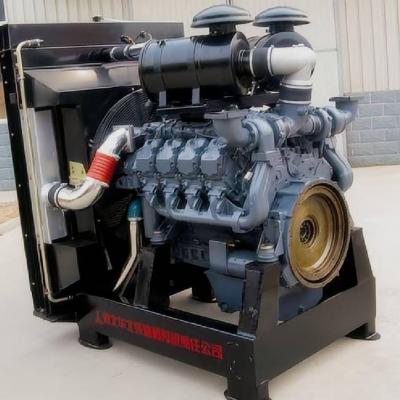
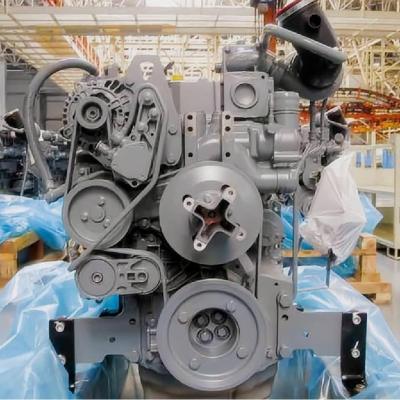
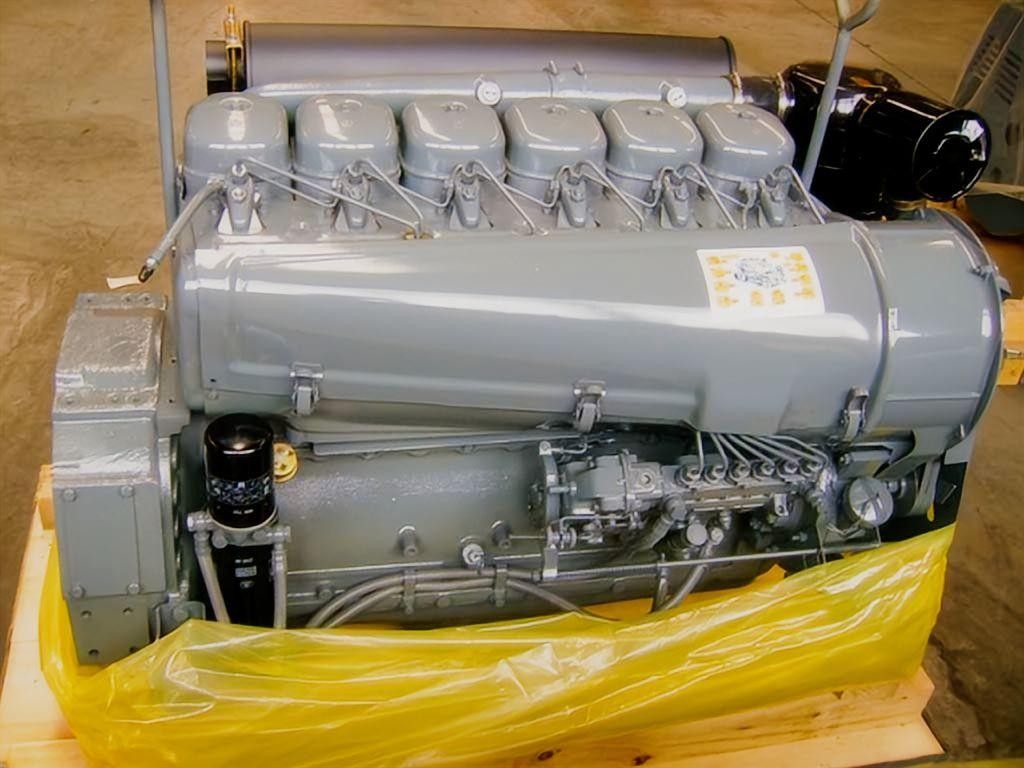
When designing or maintaining a dependable prime power or standby generator system, selecting the right G-Drive engine determines the long-term operational viability of the entire genset. The Deutz F6L912 generator engine represents a time-tested benchmark in heavy-duty, air-cooled diesel engineering. Built on a robust 6-cylinder inline architecture with a 5.655L displacement, this engine eliminates the vulnerable cooling radiators and water pumps common in liquid-cooled alternatives. As a trusted industrial engine supplier, HekoPower provides complete Deutz F6L912 diesel engine assemblies tailored specifically for 50kW to 55kW generator applications across remote industrial sites, telecommunication towers, and harsh desert or arctic environments where water scarcity or freezing temperatures would cripple conventional generator sets.
Tech Specs of Deutz F6L912 Generator Engine
General Engine Data
Engine Model: Deutz F6L912-Generator Engine
Type: 6 Cylinders, in Line
Displacement: 5.655 L
Bore * Stroke: 100 * 120
Overall Dimension: 1120mm*673mm*815mm
Net Weight: 410 Kg
Key Performance Data
Continue Power(1500 RPM): 48 kW
Continue Power(1800 RPM): 55 kW
Max. Power Output(1500 RPM): 52 kW/1500 rpm
Max. Power Output(1800 RPM): 62 kW/1800 rpm
Rated Speed: 1500/1800 rpm
Prime/Standby Generator Power: 40 kW/44 kW
Noise Standard: 105 dB(a)
Fuel Consumption with Full-Load: 228 g/kW.h
More Technical Data
Aspiration: Natural Intake
Fuel System: Direct Injection Pump
Cooling Method: Air Cooling
Electrical System (Starter Motor/Alternator): Electronic Starting (12V/24V)
Compression Ratio: 17:1
Exhaust Gas Flow & Temprature: 4.37 m³/min; 500℃
Governor Type: Mechanical/Electronic Governor
Lubricant Capacity: 14 L
Technical Comparison: Air-Cooled vs. Liquid-Cooled Engines in Genset Applications
Evaluating the F6L912 air-cooled diesel generator engine against traditional liquid-cooled power units reveals distinct operational advantages for specific deployment scenarios. Liquid-cooled engines rely on complex cooling circuits comprising radiators, coolant hoses, water pumps, thermostats, and antifreeze mixtures. While effective in temperate urban settings, every added component introduces a potential point of failure. In contrast, the Deutz F6L912 G-Drive engine utilizes an integrated axial-flow cooling blower driven directly by the crankshaft, forcing precise volumes of cooling air across deeply finned individual cylinder barrels.
From a thermodynamic efficiency standpoint, air-cooled engines reach their optimal operating temperature much faster than liquid-cooled counterparts, drastically reducing warm-up wear during cold-start cycles. Furthermore, maintenance demands are significantly streamlined because technicians never need to worry about coolant degradation, cavitation erosion in cylinder liners, or hose ruptures. While liquid-cooled engines may offer slightly higher power density per liter in ultra-high output brackets, the Deutz 6-cylinder naturally aspirated engine maintains unmatched thermal stability under continuous 100% load operation in high-ambient-temperature environments where water-cooled radiators frequently overheat.
Real-World Application Scenarios and Operational Versatility
The structural design and torque characteristics of the F6L912 six-cylinder generator engine make it exceptionally versatile across diverse off-grid and backup power applications. In remote mining operations and oilfield exploration camps, generator sets powered by this motor provide continuous 50Hz prime power at 1500RPM or 60Hz generation at 1800RPM without requiring external utility infrastructure. Because it operates independently of a pressurized water cooling system, service technicians operating in arid desert regions report zero downtime related to radiator scaling or coolant boil-off.
Another critical deployment sector is telecommunication base stations situated in mountainous or remote rural areas. These telecom backup generators must start instantly under sudden electrical loads when grid failures occur. The Deutz F6L912 diesel engine for gensets responds with rapid block loading capability, stabilizing voltage and frequency within strict ISO 8528 tolerances. Additionally, marine auxiliary setups and emergency municipal power units utilize this Deutz F6L912 generator drive engine for its mechanical governor stability, ensuring precise frequency regulation even when running complex inductive loads like water pumps and heavy industrial compressors.
Maintenance, Troubleshooting, and Replacement Best Practices
Maximizing the operational lifespan of a BeiNei Deutz F6L912 generator engine requires adherence to specific air-cooled maintenance protocols that differ fundamentally from water-cooled diesel motors. The most critical maintenance task involves regular inspection and cleaning of the individual cylinder cooling fins. Dust, oil mist, or agricultural chaff can accumulate between the aluminum-cast cooling fins, insulating the cylinder walls and causing localized hot spots. Technicians should utilize compressed air or approved solvent washes to keep these fins unobstructed.
When undertaking a Deutz F6L912 replacement generator engine installation or routine overhauls, proper alternator matching and flywheel housing alignment (typically SAE 4) are essential to prevent torsional vibration. Engine oil quality and change intervals also demand strict attention; because air-cooled engines operate at slightly higher surface temperatures than liquid-cooled units, high-performance heavy-duty diesel engine oil meeting API CI-4 specifications must be utilized. Maintaining clean dry-air cleaner elements is equally vital, as air-cooled combustion chambers rely heavily on pristine intake filtration to prevent premature ring and bore wear.
Common Misconceptions Regarding Air-Cooled Diesel Engines
A frequent misconception among inexperienced generator buyers is that air-cooled engines are inherently louder and less refined than liquid-cooled motors. While older generations of air-cooled diesels featured higher acoustic signatures, modern acoustically optimized housing components and precision direct-injection combustion chambers on the F6L912 series generator motor have dramatically reduced noise emissions, allowing them to meet rigorous environmental standards without requiring excessive secondary sound-attenuation enclosures.
Another persistent myth is that air-cooled engines cannot maintain stable operating temperatures under heavy variable loads. In practice, the independent modular cylinder design of the Deutz F6L912 5.655L diesel engine allows each cylinder barrel to dissipate heat autonomously, preventing the cascading thermal distortion sometimes experienced in large monoblock liquid-cooled engines during sudden load rejections.
Series Navigation Integration
Navigating complex industrial catalog structures requires seamless internal pathways that guide users from broad series categories down to specific model assemblies without creating abrupt dead ends. HekoPower provides an extensive ecosystem of power units tailored to diverse commercial demands, ensuring that engineers and procurement managers can easily locate matching components. Deutz F2L912/FL913-Generator Engine Series, original products from Beinei Deutz Engine Plant. This series mainly includes Deutz F2L912, Deutz F3L912, Deutz F3L913, Deutz F4L912, Deutz F4L912T, Deutz F4L913, Deutz BF4L913, Deutz F6L912, Deutz F6L912T, Deutz F6L913, Deutz BF6L913, Deutz BF6L913C. In accordance with the criteria of Machinery Safety Directive 2006/42, movable elements such as distribution belts, fans, and parts that acquire high temperatures during operation, such as exhaust manifolds, have their respective safeguards. Before being delivered, the generator is thoroughly checked at the factory. Voltage, frequency, and load are all tested, as well as the appropriate operation of warnings and the influence of engine oil temperature on stop.
Frequently Asked Questions
What is the difference between running the Deutz F6L912 generator engine at 1500 RPM and 1800 RPM?
Operating at 1500 RPM produces 50 Hz electrical frequency suitable for regions utilizing standard European/global utility grids, delivering a continuous prime output of approximately 48 kW to 50 kW. Operating at 1800 RPM supports 60 Hz electrical generation standard in North America and parts of South America and Asia, yielding an increased continuous output of approximately 55 kW.
Is the F6L912 engine naturally aspirated or turbocharged?
The standard Deutz F6L912 generator engine is naturally aspirated, relying on atmospheric air induction rather than a turbocharger. This mechanical simplicity reduces maintenance complexity, lowers thermal stress on the exhaust valves, and ensures excellent reliability in remote, dusty working environments.
What alternator capacity is recommended to match the Deutz F6L912 engine?
For a standard prime power output of 50 kW (1500 RPM), pairing the engine with a 50kVA to 60kVA synchronous brushless alternator provides an optimal safety margin, accommodating transient motor-starting surges without overloading the prime mover.
What is the fuel consumption profile of the F6L912 under normal load?
Under standard operating conditions at 75% load, the engine consumes approximately 217 g/kWh, offering excellent fuel economy for continuous running standby and prime power generator sets.