Details
Deutz F3L912 Generator Engine: Fixed-Speed Air-Cooled G-Drive Power
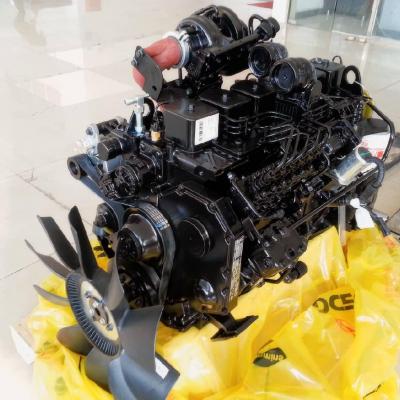
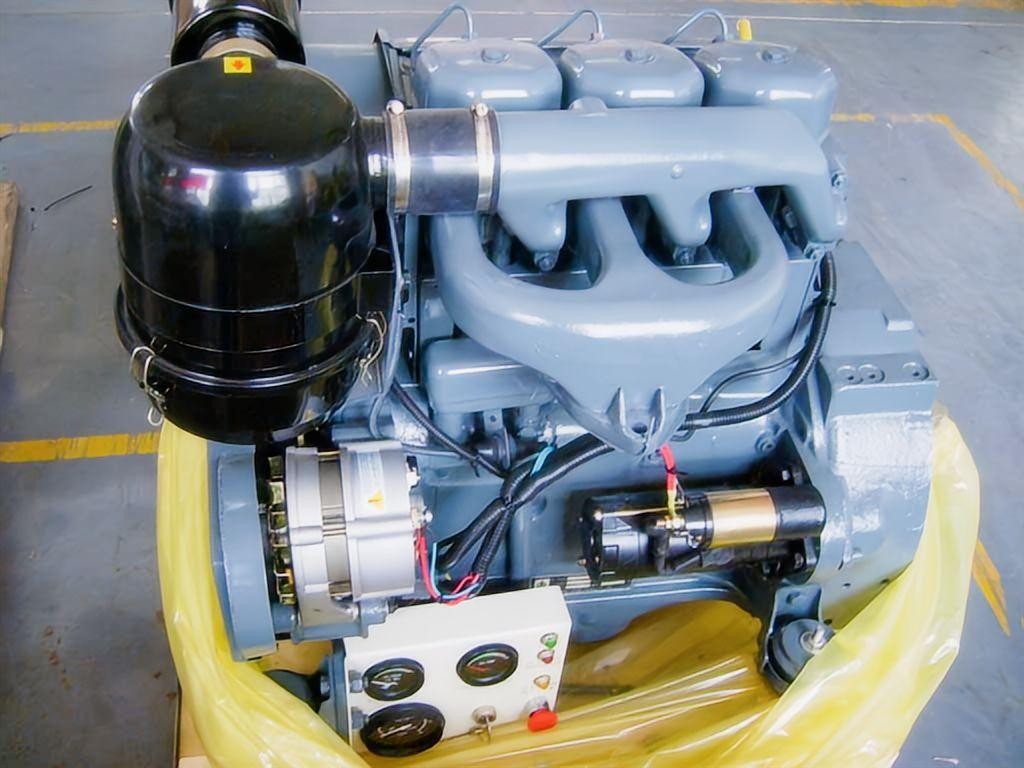
Built by Beinei Deutz for stationary and mobile generator sets, the Deutz F3L912 generator engine is a 2.828 L naturally aspirated inline 3-cylinder air-cooled diesel calibrated specifically for constant-speed 50Hz and 60Hz power generation. It produces 24 kW continuous (26 kW maximum) at 1500 rpm and 28 kW continuous (30 kW maximum) at 1800 rpm, matching 20 kW prime and 22 kW standby electrical packages without requiring a radiator, water pump, or liquid coolant circuit.
Engineered around a 100 mm bore by 120 mm stroke direct-injection architecture, the F3L912 pairs an integrated belt-driven axial blower with individually cast finned cylinders and separate aluminum cylinder heads. HekoPower supplies complete, factory-tested F3L912 G-drive assemblies for OEM genset packagers as well as direct drop-in replacements for existing 912-powered generator frames.
Tech Specs of Deutz F3L912 Generator Engine
General Engine Data
- Engine Model:
- Deutz F3L912-Generator Engine
- Type:
- 3 Cylinders, in Line
- Displacement:
- 2.828 L
- Bore * Stroke:
- 100 * 120
- Overall Dimension:
- 730mm*673mm*815mm
- Net Weight:
- 275 Kg
Key Performance Data
- Continue Power(1500 RPM):
- 24 kW
- Continue Power(1800 RPM):
- 28 kW
- Max. Power Output(1500 RPM):
- 26 kW/1500 rpm
- Max. Power Output(1800 RPM):
- 30 kW/1800 rpm
- Rated Speed:
- 1500/1800 rpm
- Prime/Standby Generator Power:
- 20 kW/22 kW
- Noise Standard:
- 103 dB(a)
- Fuel Consumption with Full-Load:
- 232 g/kW.h
More Technical Data
- Aspiration:
- Natural Intake
- Fuel System:
- Direct Injection Pump
- Cooling Method:
- Air Cooling
- Electrical System (Starter Motor/Alternator):
- Electronic Starting (12V/24V)
- Compression Ratio:
- 17:1
- Exhaust Gas Flow & Temprature:
- 2.18 m³/min; 3
- Governor Type:
- Mechanical/Electronic Governor
How the F3L912 G-Drive Compares Within the 912/913 Lineup
F3L912 Generator vs. F3L912 Construction Spec
Although the generator-drive F3L912 and the construction-rated F3L912 share the same 2.828 L block and 730 x 673 x 815 mm envelope, their fuel and governing configurations are not interchangeable. The construction variant operates across a variable speed band up to 2800 rpm (43 kW intermittent) for loaders and compactors, whereas this G-drive unit is locked to 1500 rpm or 1800 rpm with tighter governor droop and generator-grade flywheel mass to stabilize AC frequency under shifting electrical loads.
F3L912 vs. F2L912, F3L913, and F4L912 Generator Models
Moving up from the 2-cylinder F2L912 (1.88 L, 14 kW at 1500 rpm and 17 kW at 1800 rpm), the 3-cylinder F3L912 adds a smoother 1-2-3 firing cadence and lifts prime alternator capacity into the 20 kW (25 kVA) class. Against the larger-bore 3-cylinder F3L913 (102 x 125 mm, 3.064 L, 25 kW at 1500 rpm and 31 kW at 1800 rpm), the F3L912 delivers nearly identical 50Hz output at 275 kg dry weight while retaining broader parts compatibility with legacy 912 fleets; the F3L913 mainly pays off when a 60Hz build needs extra headroom.
Compared with the 4-cylinder F4L912 (3.77 L, 32 kW at 1500 rpm and 38 kW at 1800 rpm), the F3L912 saves space, weight, and fuel whenever site demand sits at or below 20 kW prime. Selecting a 4-cylinder engine for a 15–20 kW load profile pushes operating load percentage too low, increasing fuel consumption per kilowatt-hour and accelerating exhaust carbon buildup.
Real-World Application Scenarios and Load Behavior
Eliminating liquid coolant makes the F3L912 practical in locations where radiator maintenance is unreliable or ambient temperatures swing violently. Typical installations include remote telecom base stations, off-grid agricultural irrigation and cold-room backup, arid mining camps, and sub-zero mountain relay shelters where neglected antifreeze would crack a water-cooled block or boil over under dusty high-ambient duty.
Coupled to a 4-pole synchronous alternator at 85% to 89% efficiency, the engine supports 20 kW prime and 22 kW standby output (roughly 25 to 27.5 kVA at 0.8 power factor). Because the F3L912 is naturally aspirated, throttle response during sudden inductive motor starts is immediate, avoiding the momentary boost lag common on small turbocharged engines.
A frequent operational misconception is that running an air-cooled genset gently under 25% load extends overhaul life. In reality, prolonged light-load duty drops cylinder wall temperatures below clean-burn levels, causing glazed liners and wet stacking in the exhaust manifold. Sizing the generator so typical running loads stay between 55% and 85% keeps combustion clean and holds specific fuel consumption near its 232 g/kW.h full-load benchmark.
Maintenance, Servicing, and Replacement Tips
Another common misunderstanding is treating an air-cooled engine as maintenance-free because there is no radiator to flush. Thermal stability depends entirely on unobstructed airflow—roughly 1,565 m³/h at 1500 rpm—and clean metal cooling surfaces. In dusty farm or construction yards, blow compressed air through the cylinder cooling fins and integrated aluminum oil cooler fins on a fixed schedule, and verify blower V-belt tension and belt-breakage safety switches so a slipped belt cannot trigger rapid overheating.
Standard lubrication service takes approximately 8.5 to 9 liters of heavy-duty API CF-4 or CI-4 15W-40 diesel oil with a filter change, and oil pan temperatures should stay below the 130°C maximum threshold during continuous hot-weather runs. Check cold intake and exhaust valve clearances at 0.15 mm during scheduled inspections. Because each cylinder barrel and aluminum head mounts independently, field mechanics can pull and overhaul a single cylinder unit without dismantling the entire top end or draining any cooling fluid.
When replacing a failed F3L912 or packaging a new canopy genset, keep exhaust back pressure under 30 mbar and intake depression below 20 mbar, and duct heated blower discharge completely outside the acoustic housing to prevent hot-air recirculation. Before ordering a drop-in assembly, confirm your flywheel housing standard (typically SAE 3 or SAE 4), flexible coupling disc pattern, anticlockwise flywheel rotation, starter voltage (12V or 24V), and mechanical versus electronic governor requirements.
Deutz FL912/FL913 Generator Engine Series Integration
Within HekoPower's air-cooled generator drive catalog, the F3L912 occupies the mid-small 20–22 kW tier between the 2-cylinder F2L912 and the 4- and 6-cylinder FL912/FL913 models. Shared cylinder heads, pistons, injectors, and valvetrain hardware across the family simplify spare-parts inventory for operators running multiple genset ratings on the same site.
Deutz F2L912/FL913-Generator Engine Series, original products from Beinei Deutz Engine Plant. This series mainly includes Deutz F2L912, Deutz F3L912, Deutz F3L913, Deutz F4L912, Deutz F4L912T, Deutz F4L913, Deutz BF4L913, Deutz F6L912, Deutz F6L912T, Deutz F6L913, Deutz BF6L913, Deutz BF6L913C. In accordance with the criteria of Machinery Safety Directive 2006/42, movable elements such as distribution belts, fans, and parts that acquire high temperatures during operation, such as exhaust manifolds, have their respective safeguards. Before being delivered, the generator is thoroughly checked at the factory. Voltage, frequency, and load are all tested, as well as the appropriate operation of warnings and the influence of engine oil temperature on stop.
Frequently Asked Questions
Can the Deutz F3L912 generator engine be configured for both 50Hz and 60Hz output?
Yes. The governor is calibrated prior to assembly for either 1500 rpm (50Hz, 24 kW continuous / 26 kW max) or 1800 rpm (60Hz, 28 kW continuous / 30 kW max). Switching frequency later requires recalibrating governor speed settings and confirming the coupled alternator and AVR are rated for the target frequency and voltage.
Can a construction-spec F3L912 engine be used as a drop-in replacement on a generator set?
Not without fuel-system and flywheel modifications. Although external mounting dimensions match, construction F3L912 units use variable-speed governors rated up to 2800 rpm with wider speed droop, which causes unstable frequency and poor voltage regulation on an AC generator set. Always specify a fixed-speed G-drive governor and generator-spec flywheel assembly.
When should I choose an electronic governor over a mechanical governor on the F3L912?
A standard mechanical centrifugal governor handles standalone agricultural, irrigation, and basic standby power reliably with minimal wiring. Specify an electronic governor when the genset powers frequency-sensitive telecom or electronic loads, must satisfy tight ISO 8528 G2/G3 transient limits, or needs automated load-sharing synchronization.
What cooling and exhaust clearances are required inside a soundproof genset canopy?
The canopy must supply unrestricted fresh air to the axial blower (roughly 1,565 m³/h at 1500 rpm) and seal the hot cylinder discharge duct directly to the exterior louver so heated air cannot recirculate back to the intake. Keep exhaust back pressure below 30 mbar and combustion air intake restriction below 20 mbar to prevent high cylinder-head temperatures.