Details
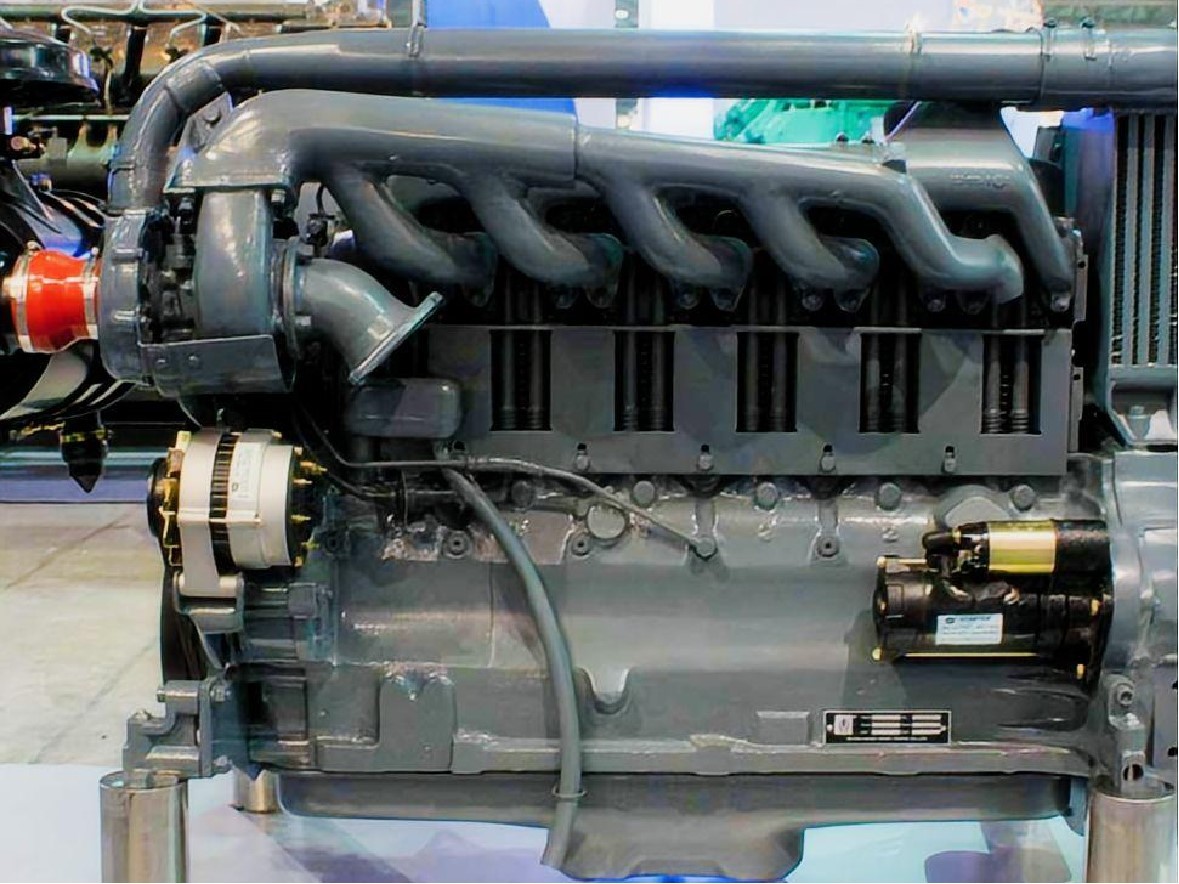
Deutz F6L913 Generator Engine
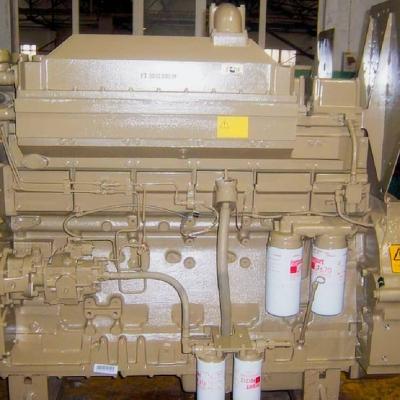
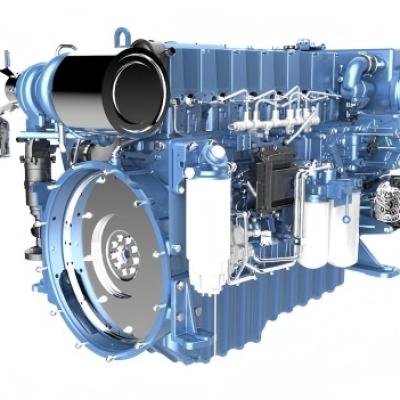
The Deutz F6L913 generator engine is a 6.128 L naturally aspirated, inline 6-cylinder air-cooled G-drive built for constant-speed 50 Hz and 60 Hz power generation. Rated at 51 kW continuous (54 kW max) at 1500 rpm and 65 kW continuous (68 kW max) at 1800 rpm, it powers 42 kW prime and 46 kW standby 50 Hz alternator packages without radiators, water pumps, or liquid coolant circuits.
HekoPower supplies complete Beinei Deutz F6L913 generator engine assemblies configured for genset OEMs, EPC contractors, and fleet operators replacing worn prime movers. Its direct mechanical injection pump, 17:1 compression ratio, and forced axial air cooling keep electrical output steady in high-dust, sub-zero, or water-scarce installations where liquid-cooled units require frequent cooling-system intervention.
Tech Specs of Deutz F6L913 Generator Engine
General Engine Data
- Engine Model:
- Deutz F6L913-Generator Engine
- Type:
- 6 Cylinders, in Line
- Displacement:
- 6.128 L
- Bore * Stroke:
- 100 * 120
- Overall Dimension:
- 1120mm*673mm*815mm
- Net Weight:
- 420 Kg
Key Performance Data
- Continue Power(1500 RPM):
- 51 kW
- Continue Power(1800 RPM):
- 65 kW
- Max. Power Output(1500 RPM):
- 54 kW/1500 rpm
- Max. Power Output(1800 RPM):
- 68 kW/1800 rpm
- Rated Speed:
- 1500/1800 rpm
- Prime/Standby Generator Power:
- 42 kW/46 kW
- Noise Standard:
- 105 dB(a)
- Fuel Consumption with Full-Load:
- 228 g/kW.h
More Technical Data
- Aspiration:
- Natural Intake
- Fuel System:
- Direct Injection Pump
- Cooling Method:
- Air Cooling
- Electrical System (Starter Motor/Alternator):
- Electronic Starting (12V/24V)
- Compression Ratio:
- 17:1
- Exhaust Gas Flow & Temprature:
- 4.74 m³/min; 500℃
- Governor Type:
- Mechanical/Electronic Governor
- Lubricant Capacity:
- 14 L
Technical Comparisons Within the FL912/FL913 Lineup
Compared with the 5.655 L Deutz F6L912 generator engine (48 kW at 1500 rpm and 55 kW at 1800 rpm), the F6L913 gains 0.473 L of displacement inside the same 1120 mm × 673 mm × 815 mm envelope. That extra swept volume adds 3 kW at 50 Hz and a substantial 10 kW at 60 Hz, giving 60 Hz prime-duty sets far better thermal margin and reduced cylinder-head loading when running near rated output.
Stepping up to the turbocharged F6L912T (61 kW / 72 kW) or BF6L913 (roughly 65–69 kW at 1500 rpm and 78–82 kW at 1800 rpm) raises genset capacity into the 70–90 kVA band. Engineers specify the naturally aspirated F6L913 instead when target demand sits around 50–70 kVA and the jobsite prioritizes zero turbocharger maintenance, lower exhaust thermal load, and immediate natural-aspiration response to sudden inductive loads.
Buyers should also separate this generator drive from the construction-rated Deutz F6L913 carrying the same base model name. The construction version runs variable speeds up to 2500–2800 rpm (85–96 kW) with an automotive-style governor and heavier industrial dress, whereas this G-drive is calibrated strictly for 1500/1800 rpm synchronous frequency control and direct alternator coupling.
Real-World Application Scenarios for the F6L913
At 50 Hz (1500 rpm), the F6L913 pairs cleanly with 42 kW prime / 46 kW standby (52.5–57.5 kVA at 0.8 power factor) brushless alternators; at 60 Hz (1800 rpm), its 65–68 kW shaft rating supports 65–72 kVA class sets depending on alternator efficiency. Common deployments include desert telecom base stations, arid mining camps, agricultural borehole pumping grids, and high-altitude or arctic construction sites where glycol hoses freeze or hard water scales up radiators.
Because the 6.128 L block breathes naturally, step-load acceptance during direct-on-line starts of submersible pumps and quarry compressors happens without turbo lag. Under steady 60%–80% site loads, direct injection holds combustion clean and avoids the wet-stacking issues seen on oversized turbocharged gensets, while full-load fuel burn stays at 228 g/kW.h.
A common misconception is that air-cooled generator engines overheat faster than water-cooled models under continuous 24/7 desert loads. In practice, thermal shutdowns inside soundproof canopies almost always trace back to hot discharge air leaking back to the blower intake; with sealed ducting that directs heated air cleanly out of the enclosure, the F6L913 sustains continuous prime duty at high ambient temperatures.
Maintenance, Airflow Control, and Replacement Guidance
Without coolant, thermostats, or water pumps to service, routine upkeep centers on oil quality, clean cooling fins, and blower drive integrity. The 14 L oil sump typically requires oil and filter changes every 250 to 500 operating hours depending on diesel sulfur content, paired with regular V-belt tension checks on the axial cooling fan and verification of the belt-break shutdown switch.
In quarry, cement, or grain-handling environments, blowing dust out of the finned cylinder barrels and oil cooler prevents gradual head-temperature rise. When designing an acoustic canopy around the 105 dB(A) bare engine, allow generous intake louvers and flexible exhaust joints rated for 4.74 m³/min gas flow at 500℃ so noise attenuation never restricts cooling airflow or raises exhaust backpressure.
Fleet managers often assume an inline-6 air-cooled block requires a major top-end teardown if one cylinder loses compression. Because the FL913 architecture uses individual modular cylinder barrels and separate cylinder heads, a technician can remove and rebuild a single cylinder assembly on-site without disturbing the remaining five cylinders. For drop-in repowering, confirm the 420 kg dry weight on existing mounts, SAE flywheel housing and coupling disk size, 12V or 24V electrical voltage, and governor linkage before ordering.
Deutz FL912 / FL913 Generator Engine Series Integration
Within Beinei Deutz's air-cooled generator lineup, the F6L913 serves as the highest-output naturally aspirated model—bridging the smaller 4-cylinder F4L913 and 5.655 L F6L912 drives below it and the turbocharged BF6L913 and charge-air-cooled BF6L913C units above it while sharing core maintenance hardware across the family.
Deutz F2L912/FL913-Generator Engine Series, original products from Beinei Deutz Engine Plant. This series mainly includes Deutz F2L912, Deutz F3L912, Deutz F3L913, Deutz F4L912, Deutz F4L912T, Deutz F4L913, Deutz BF4L913, Deutz F6L912, Deutz F6L912T, Deutz F6L913, Deutz BF6L913, Deutz BF6L913C. In accordance with the criteria of Machinery Safety Directive 2006/42, movable elements such as distribution belts, fans, and parts that acquire high temperatures during operation, such as exhaust manifolds, have their respective safeguards. Before being delivered, the generator is thoroughly checked at the factory. Voltage, frequency, and load are all tested, as well as the appropriate operation of warnings and the influence of engine oil temperature on stop.
Frequently Asked Questions (FAQs)
What electrical kVA output can the Deutz F6L913 generator engine drive at 50 Hz and 60 Hz?
At 50 Hz (1500 rpm), its 51 kW continuous and 54 kW maximum shaft output supports 42 kW prime and 46 kW standby electrical ratings, equal to roughly 52.5 kVA prime and 57.5 kVA standby at 0.8 power factor. At 60 Hz (1800 rpm), the higher 65 kW continuous / 68 kW max shaft output typically drives 65–72 kVA class alternators depending on generator efficiency and site derating.
Can a Deutz F6L913 construction engine replace a Deutz F6L913 generator engine?
Not as a direct drop-in swap. Construction F6L913 engines are governed for variable speeds up to 2500–2800 rpm (85–96 kW) with different injection calibration, flywheel housing configurations, and accessory drives, whereas the F6L913 generator engine uses a constant-speed 1500/1800 rpm governor and G-drive flywheel coupling matched to synchronous alternators.
Should I choose the mechanical or electronic governor on the F6L913?
Choose the mechanical governor for standalone off-grid construction, mining, or pumping gensets where ruggedness and tool-only field servicing take priority. Specify the electronic governor when powering sensitive telecom, medical, or UPS loads that demand tighter steady-state frequency regulation or multi-set synchronizing capability.
Can the F6L913 be installed inside a soundproof canopy without overheating?
Yes, provided the canopy separates cool intake air from hot cylinder-head discharge air with a dedicated exhaust duct and prevents recirculation inside the enclosure. Proper ducting lowers the bare-engine 105 dB(A) noise level while keeping cooling airflow and 500℃ exhaust heat rejection safely within operating limits.