Details
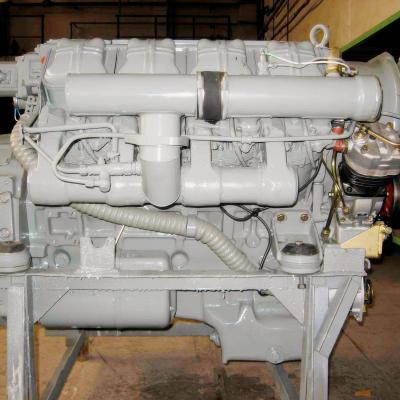
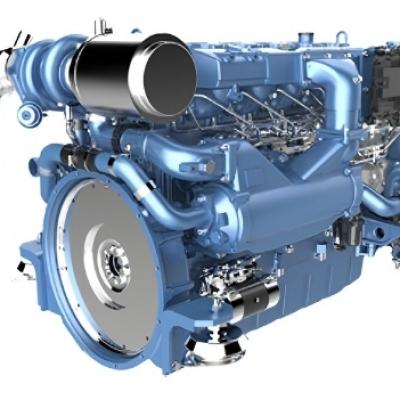
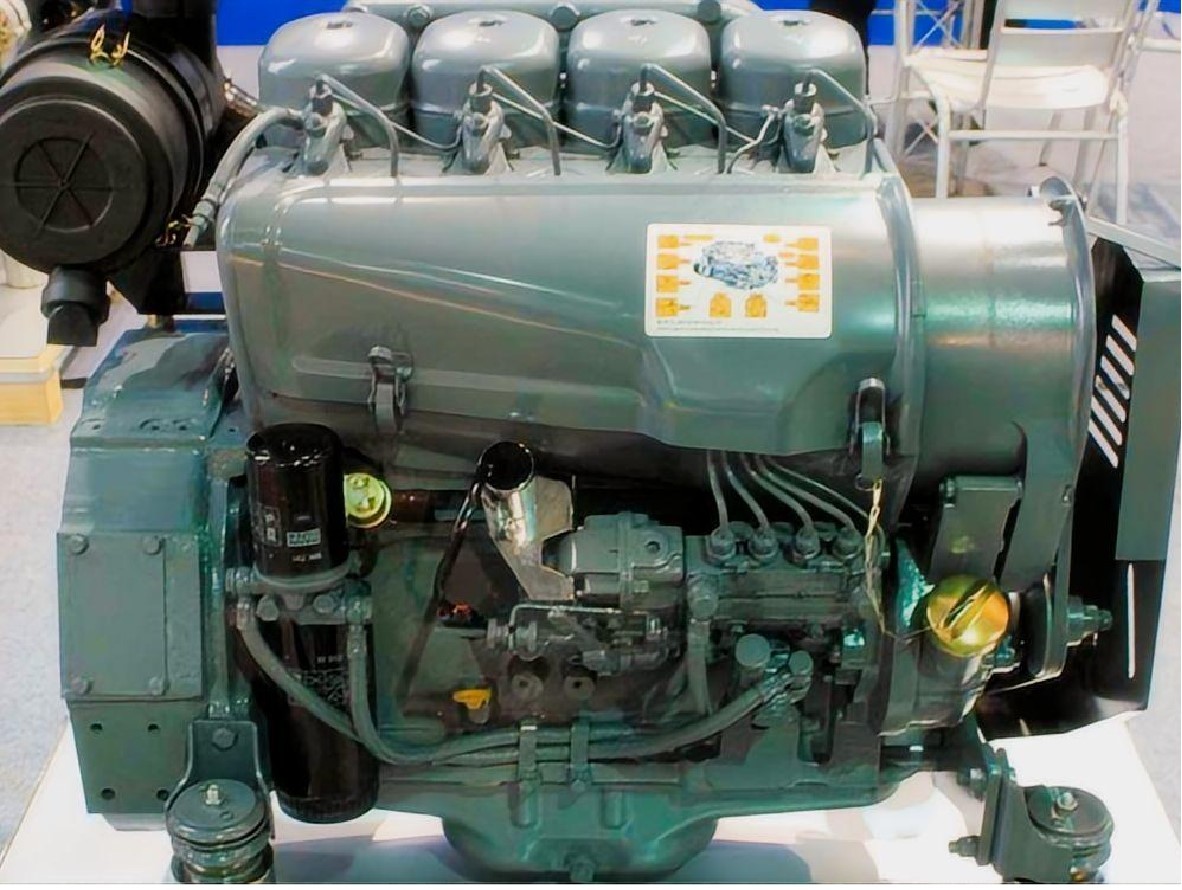
Deutz F4L912T Generator Engine: 41kW / 48kW Turbocharged Air-Cooled G-Drive
The Deutz F4L912T generator engine is a fixed-speed, turbocharged 3.77-liter inline 4-cylinder diesel G-drive built for 35 kW prime and 40 kW standby generator sets. Rated at 41 kW continuous (45 kW maximum) at 1500 rpm for 50 Hz output and 48 kW continuous (52 kW maximum) at 1800 rpm for 60 Hz networks, it combines forced induction with Deutz's individual-cylinder air-cooling layout to deliver compact power without radiators, coolant pumps, or hoses.
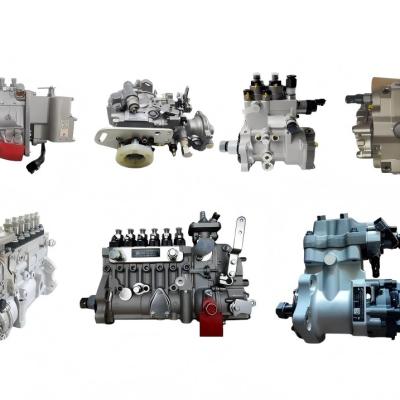
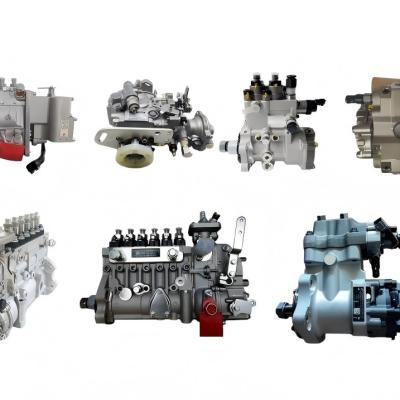
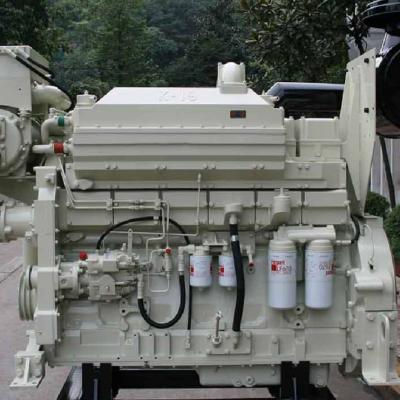
HekoPower supplies complete, factory-tested F4L912T G-drive assemblies built at the Beinei Deutz Engine Plant for OEM genset packagers and direct drop-in fleet repowering. Each assembly arrives configured for constant-speed electrical generation with direct-injection fuel delivery, 12V or 24V starting, and protective engine shutdown switches.
Tech Specs of Deutz F4L912T Generator Engine
General Engine Data
- Engine Model:
- Deutz F4L912T-Generator Engine
- Type:
- 4 Cylinders, in Line
- Displacement:
- 3.77 L
- Bore * Stroke:
- 100 * 120
- Overall Dimension:
- 865mm*673mm*815mm
- Net Weight:
- 310 Kg
Key Performance Data
- Continue Power(1500 RPM):
- 41 kW
- Continue Power(1800 RPM):
- 48 kW
- Max. Power Output(1500 RPM):
- 45 kW/1500 rpm
- Max. Power Output(1800 RPM):
- 52 kW/1800 rpm
- Rated Speed:
- 1500/1800 rpm
- Prime/Standby Generator Power:
- 35 kW/40 kW
- Noise Standard:
- 105 dB(a)
- Fuel Consumption with Full-Load:
- 220/217 g/kW.h
More Technical Data
- Aspiration:
- Turbocharged
- Fuel System:
- Direct Injection Pump
- Cooling Method:
- Air Cooling
- Electrical System (Starter Motor/Alternator):
- Electronic Starting (12V/24V)
- Compression Ratio:
- 17:1
- Exhaust Gas Flow & Temprature:
- 3.17 m³/min; 550℃
- Governor Type:
- Mechanical/Electronic Governor
- Lubricant Capacity:
- 12 L
How the F4L912T Compares to Sibling 912/913 and Construction Models
Within the 4-cylinder 3.77 L platform, turbocharging separates the F4L912T sharply from the naturally aspirated F4L912. Both share a 100 mm bore and 120 mm stroke in nearly the same envelope (865×673×815 mm at 310 kg versus 860×673×815 mm at 300 kg), yet forced induction lifts continuous mechanical output from 32 kW to 41 kW at 1500 rpm and from 38 kW to 48 kW at 1800 rpm. That jump moves usable genset output from 24/28 kW up to 35/40 kW while cutting full-load specific fuel consumption from 232 g/kW·h down to 220 g/kW·h at 1500 rpm and 217 g/kW·h at 1800 rpm.
The F4L912T also outperforms the larger-displacement naturally aspirated F4L913 (4.085 L, 102×125 mm), which weighs the same 310 kg but tops out at 34/40 kW continuous and 238 g/kW·h. When a project requires prime electrical capacity above 35 kW, packagers step up to the turbocharged 4.086 L BF4L913 (47/55 kW continuous for 40/44 kW gensets) or the longer 6-cylinder F6L912. Choosing the F4L912T keeps skid length compact and avoids oversized enclosures whenever 35 kW prime or 40 kW standby covers peak site demand.
Do not confuse this fixed-speed G-drive with the construction-spec F4L912T rated at 52 kW (71 HP) at 2300 rpm. Although external block geometry is similar, the construction variant uses a variable-speed governor tuned for mobile machinery rather than tight AC frequency control. Installing a variable-speed construction pump and flywheel on an alternator leads to wide frequency droop and unstable voltage under switching loads.
Industrial Generator Applications and Operating Behavior
Sized for 44–50 kVA (35 kW prime / 40 kW standby at 0.8 power factor) generator sets, the F4L912T is widely deployed on off-grid mining camps, quarry crushing stations, mobile telecom towers, dewatering pump packs, and cold-climate standby skids. Removing the liquid cooling circuit eliminates freeze-cracked blocks in sub-zero winters and mud-choked radiators on dusty extraction sites. Higher intake air density from the turbocharger also limits altitude derating and helps the governor recover speed faster during motor-starting or welding load steps.
For clean combustion and long turbocharger life, size the alternator load so routine operation stays between 50% and 85% of prime rating. Extended running below 30% load lowers exhaust gas temperature well beneath its 550°C full-load peak, accelerating cylinder glazing, unburned fuel wet stacking, and carbon buildup in the turbine housing.
A persistent misconception is that air-cooled diesel gensets overheat in 45°C–50°C desert ambient conditions. In reality, the deep cast-iron cylinder fins handle high ambient air without issue; overheating inside soundproof canopies almost always comes from hot cylinder discharge air leaking back to the blower intake. Sealing the warm-air discharge duct directly to the exterior louver and sizing intake louvers generously prevents thermal recirculation.
Maintenance, Cooling Care, and Drop-In Replacement Checks
Another frequent misunderstanding is that the FL912 cooling blower is a gear-driven, maintenance-free fan. On the F4L912T, the axial blower is V-belt driven and paired with an automatic belt tensioner and a V-belt breakage alarm switch. Inspect belt condition every 250 operating hours, verify that the belt-break shutdown circuit triggers properly, and blow dry compressed air through the cylinder-head and barrel fins to clear dust or oil film that insulates heat transfer.
Engine oil serves both lubrication and thermal transfer in air-cooled turbocharged engines, which is why the F4L912T carries a 12 L oil sump—one liter more than the naturally aspirated F4L912. Run heavy-duty API CF-4 or CH-4 SAE 15W-40 diesel oil, hold to 250-hour oil and filter change intervals, and check cold valve clearances periodically. After full-load operation, idle the engine unloaded for 3 to 5 minutes before shutdown so circulating oil cools the turbocharger center bearing and prevents oil coking.
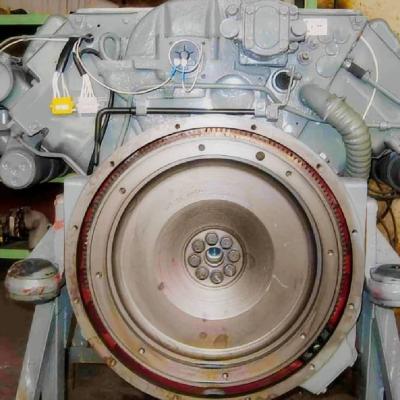
Before ordering a complete F4L912T drop-in replacement for an existing 865×673×815 mm frame, confirm five interface details with our engineering team: SAE flywheel housing size (typically SAE 3 or SAE 4), flexible coupling disc pattern, 12V versus 24V starter and fuel shutdown solenoid voltage, mechanical versus electronic governor linkage, and remote exhaust piping. Unlike naturally aspirated 912 engines that can use manifold-mounted mufflers, the turbocharged F4L912T requires a remote absorption or spark-arrestor exhaust silencer mounted independently to avoid stressing the turbine housing.
Deutz FL912/FL913 Generator Engine Series Overview
Inside the modular FL912/FL913 lineup, the F4L912T bridges the naturally aspirated 2-to-4-cylinder models and the higher-output 913 and 6-cylinder frames, preserving common service access and familiar cylinder-unit maintenance across mixed-capacity fleets.
Deutz F2L912/FL913-Generator Engine Series, original products from Beinei Deutz Engine Plant. This series mainly includes Deutz F2L912, Deutz F3L912, Deutz F3L913, Deutz F4L912, Deutz F4L912T, Deutz F4L913, Deutz BF4L913, Deutz F6L912, Deutz F6L912T, Deutz F6L913, Deutz BF6L913, Deutz BF6L913C. In accordance with the criteria of Machinery Safety Directive 2006/42, movable elements such as distribution belts, fans, and parts that acquire high temperatures during operation, such as exhaust manifolds, have their respective safeguards. Before being delivered, the generator is thoroughly checked at the factory. Voltage, frequency, and load are all tested, as well as the appropriate operation of warnings and the influence of engine oil temperature on stop.
Frequently Asked Questions
Why is the F4L912T rated at 41 kW / 48 kW engine power but 35 kW prime / 40 kW standby generator power?
The 41 kW (1500 rpm) and 48 kW (1800 rpm) figures represent mechanical shaft power at the flywheel, whereas 35 kW prime and 40 kW standby reflect net electrical output after alternator efficiency losses (typically 85%–88%) and continuous thermal reserve margins. Prime power covers unlimited annual hours under variable loads, while standby power covers emergency utility outages.
Can a Deutz F4L912T directly replace a naturally aspirated F4L912 on an existing generator skid?
Mechanically, the footprints are almost identical (865×673×815 mm versus 860×673×815 mm) and share standard SAE flywheel housing options. However, upgrading from an F4L912 to an F4L912T requires verifying that your alternator can handle the higher torque and kVA, re-routing exhaust piping for the turbocharger outlet (3.17 m³/min at 550°C), and confirming adequate canopy airflow.
When should I specify an electronic governor instead of a mechanical governor on the F4L912T?
A mechanical centrifugal governor is well suited for standalone construction, mining, and general backup gensets where simplicity and minimal wiring are priorities. Specify an electronic governor when powering frequency-sensitive telecom rectifiers or industrial electronics, meeting tight ISO 8528 G2/G3 transient limits, or synchronizing multiple generator sets.
How is the 105 dB(a) noise level managed when packaging the F4L912T for urban standby sites?
The 105 dB(a) rating applies to an open, unenclosed engine at full load. Mounting the assembly inside a baffled acoustic canopy with lined intake/exhaust ducts, vibration-isolating elastic engine mounts, and a remote absorption silencer reduces operating noise substantially while preserving unobstructed cooling airflow across the cylinders.