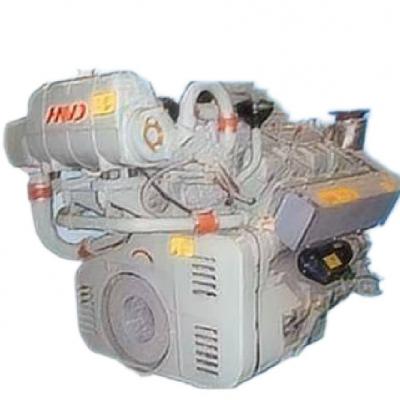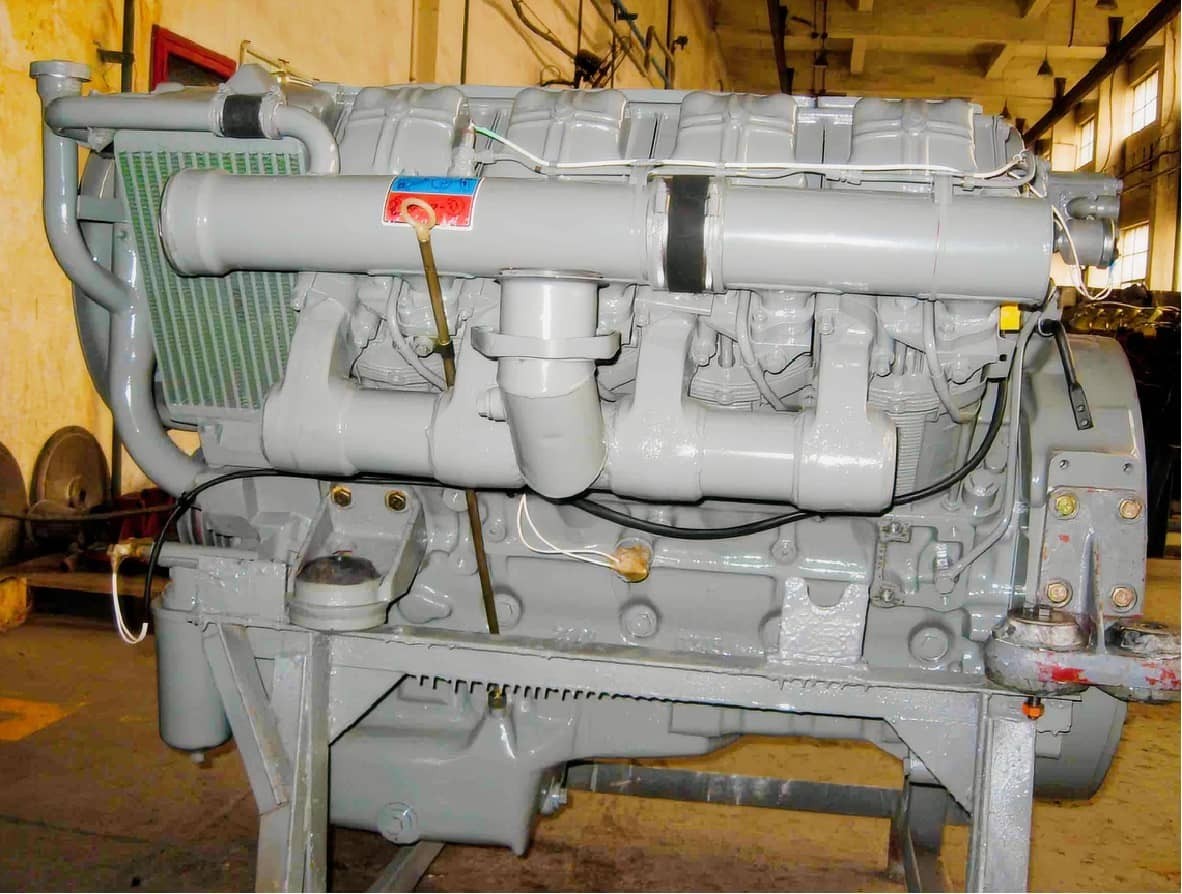
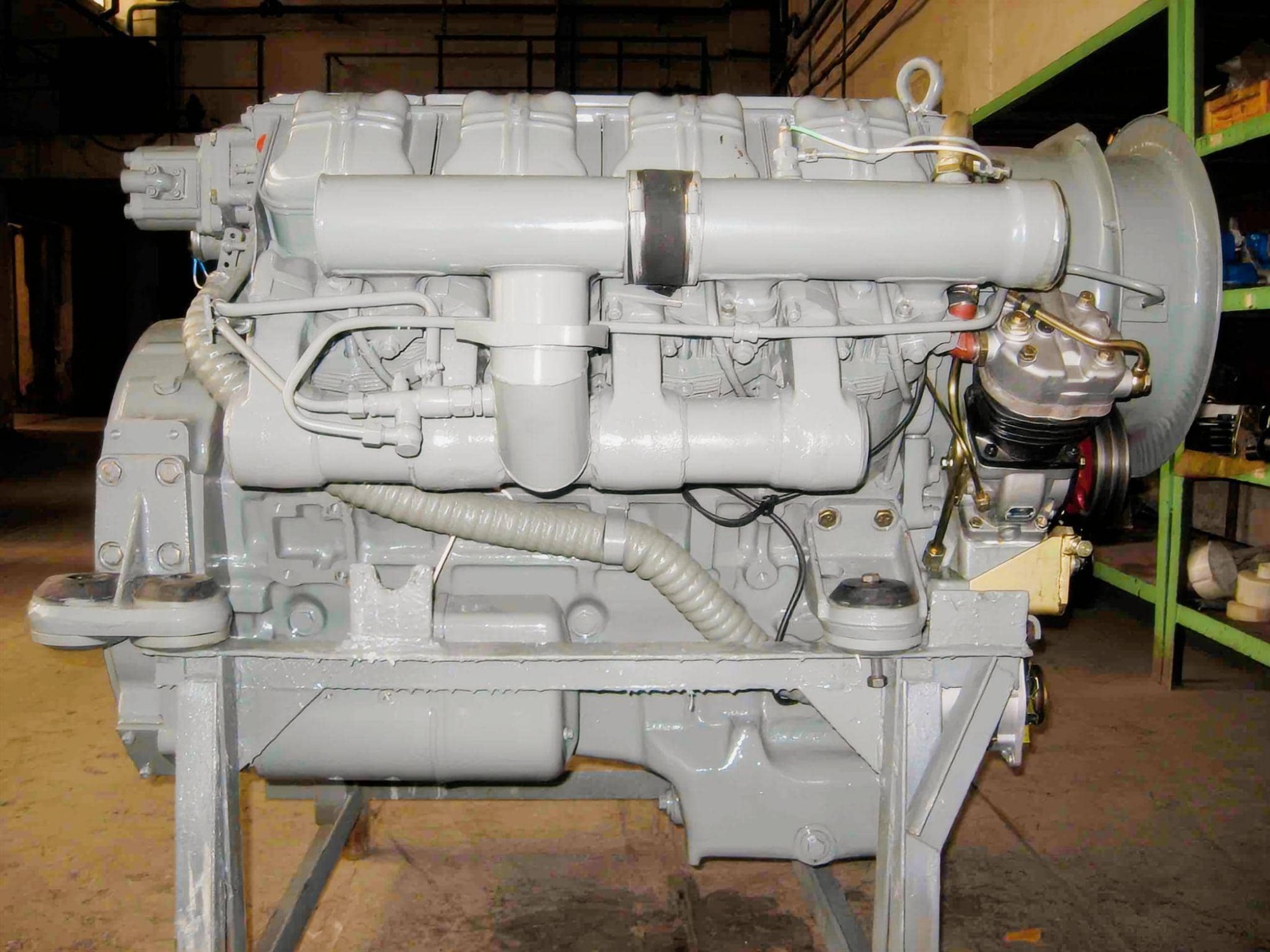
Heavy commercial transport requires powertrains that defy extreme thermal and mechanical operating conditions without relying on vulnerable liquid cooling systems. The Deutz BF12L513 vehicle diesel engine answers this demand through an advanced V12 air-cooled architecture. Operating as a robust 19.144L power plant, this commercial vehicle engine delivers a rated power output of 300kW at 2300 rpm alongside a massive torque output of 1755 Nm. When configured for lower-speed continuous haulage duties, it provides 206kW at 1500 rpm.
The structural integrity of the block relies on a 125mm bore and 130mm stroke configuration, utilizing individual cylinder heads that isolate thermal expansion. This modular cylinder design prevents catastrophic head-gasket failures common in heavy-duty inline or monolithic block blocks. Each cylinder operates independently, ensuring that field maintenance can address single-unit wear without requiring a complete engine teardown. The integration of a high-efficiency turbocharger paired with direct injection technology ensures optimal combustion stoichiometry, achieving a fuel consumption rate of approximately 212 g/kWh under optimal load profiles. Complying with Euro II emission standards, this engine remains a preferred choice for rugged vocational trucks operating in regions with variable fuel qualities and demanding ambient temperatures.
Evaluating the Deutz BF12L513 V12 diesel engine requires distinguishing its vehicular setup from stationary generator variants found across the industrial market. While both configurations share the fundamental 19.144L displacement and air-cooled cylinder layout, their internal calibration and peripheral hardware differ significantly. Generator variants are optimized for constant-speed operation, typically locked at 1500 rpm or 1800 rpm to maintain stable alternating current frequency. In contrast, the Deutz BF12L513 truck engine features a variable-speed automotive governor tuned for dynamic throttle response across a wide RPM range up to 2300 rpm.
Furthermore, the vehicular iteration integrates specialized flywheel housings and transmission mounting interfaces designed to accommodate heavy-duty mechanical gearboxes used in off-road dump trucks and long-haul transport. The cooling fan drive system on the vehicle engine utilizes specialized belt ratios and clutch mechanisms responsive to chassis airflow dynamics, whereas industrial sets rely on fixed-speed belt drives matched to static enclosure ventilation. Thermal management in the vehicle version is also engineered to handle rapid load dumping during gear shifts and severe braking cycles, contrasting with the steady-state thermal equilibrium required by stationary electrical power generation units.
Deploying the Deutz BF12L513 engine in commercial fleets demands an understanding of its unique operating envelopes. Unlike water-cooled engines that depend on radiators, coolant hoses, and water pumps—all prone to boiling over in extreme heat or freezing in sub-zero environments—this air-cooled system thrives in punishing climates.
Off-road mining dump trucks and heavy construction transport vehicles frequently operate in remote areas where water resources are scarce and repair infrastructure is limited. The Huachai Deutz BF12L513 engine provides an ideal powertrain solution for these harsh environments. Its independent cylinder cooling fins dissipate heat directly into ambient air, eliminating the risk of coolant leaks, cavitation erosion, and radiator clogging from fine dust and particulate matter common in open-pit mines. Fleet operators utilize this 12 cylinder air-cooled diesel engine to power multi-axle tipper trucks hauling heavy payloads across steep, unpaved terrain where high torque at low RPM prevents stalling under heavy loads.
Beyond construction, the Deutz BF12L513 heavy duty truck engine replacement serves as a reliable power source for long-distance buses, coaches, and specialized heavy transport vehicles. The compact V12 layout allows coach builders to optimize engine bay space while delivering the sustained high-speed output required for highway cruising. Because the engine reaches thermal operating efficiency quickly without warm-up delays associated with large liquid-cooled blocks, it reduces idling wear during cold weather departures.
Maximizing the operational lifespan of a Deutz BF12L513 commercial engine requires disciplined preventive maintenance protocols tailored to air-cooled diesel technology.
Because air serves as the primary cooling medium, maintaining unobstructed airflow across the cylinder cooling fins is critical. Operators must regularly inspect the engine cooling blower, belt tensioners, and ducting shrouds for accumulation of oil mist, dust, or debris. A buildup of grime on the cylinder fins acts as an insulating blanket, rapidly increasing head temperatures and risking thermal cracking. Cleaning the fins with compressed air or approved solvent washes during scheduled service intervals preserves optimal heat transfer.
A frequent misconception among technicians is that air-cooled Deutz engines tolerate neglected fuel injector maintenance better than liquid-cooled counterparts. In reality, because combustion chamber temperatures fluctuate more directly with ambient air variations, precise fuel atomization is essential. Worn injector nozzles cause fuel dribbling, leading to localized thermal hot spots on the piston crown. Technicians should calibrate injection pumps and test nozzles every specified service interval to prevent piston scorching and maintain the rated fuel consumption efficiency of 212 g/kWh.
As an established industrial engine supplier, HekoPower provides comprehensive powertrain solutions designed to match diverse heavy-duty commercial requirements. While you explore the specifications of this specialized vehicle power plant, it is important to consider how it fits within our broader catalog offerings.
Deutz FL513-Vehicle Diesel Engine Series, original products from Huachai Deutz Engine Plant. This series mainly includes F6L513-Vehicle Diesel Engine, F8L513-Vehicle Diesel Engine, F8L513C-Vehicle Diesel Engine, F10L513F-Vehicle Diesel Engine, BF12L513-Vehicle Diesel Engine, BF12L513C-Vehicle Diesel Engine, BF12L513CP-Vehicle Diesel Engine.
Yes, this engine serves as a direct replacement assembly for commercial vehicles and heavy trucks originally equipped with Deutz FL513 series power plants, provided that the transmission bell housing and mounting brackets match the specified engineering drawings.
Maintenance focuses primarily on keeping the cylinder cooling fins clean and free of oil or dust buildup, inspecting the cooling blower drive belts, and ensuring proper airflow management within the vehicle engine bay.