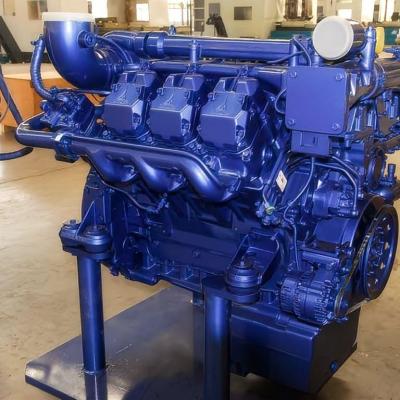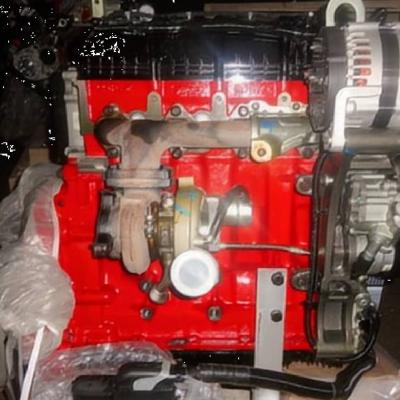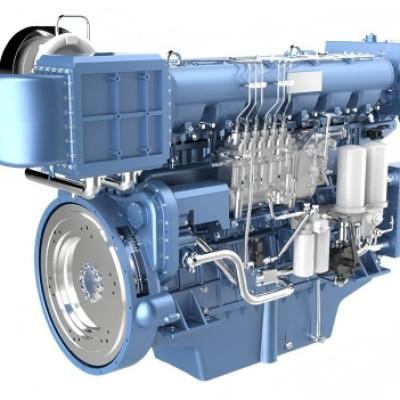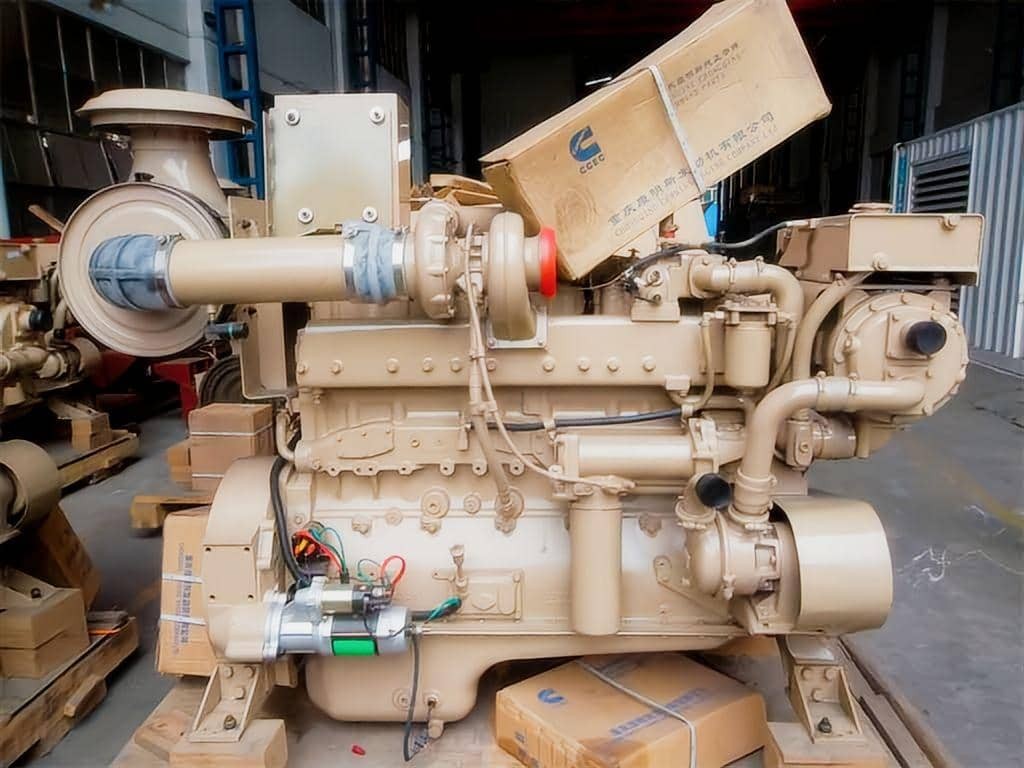
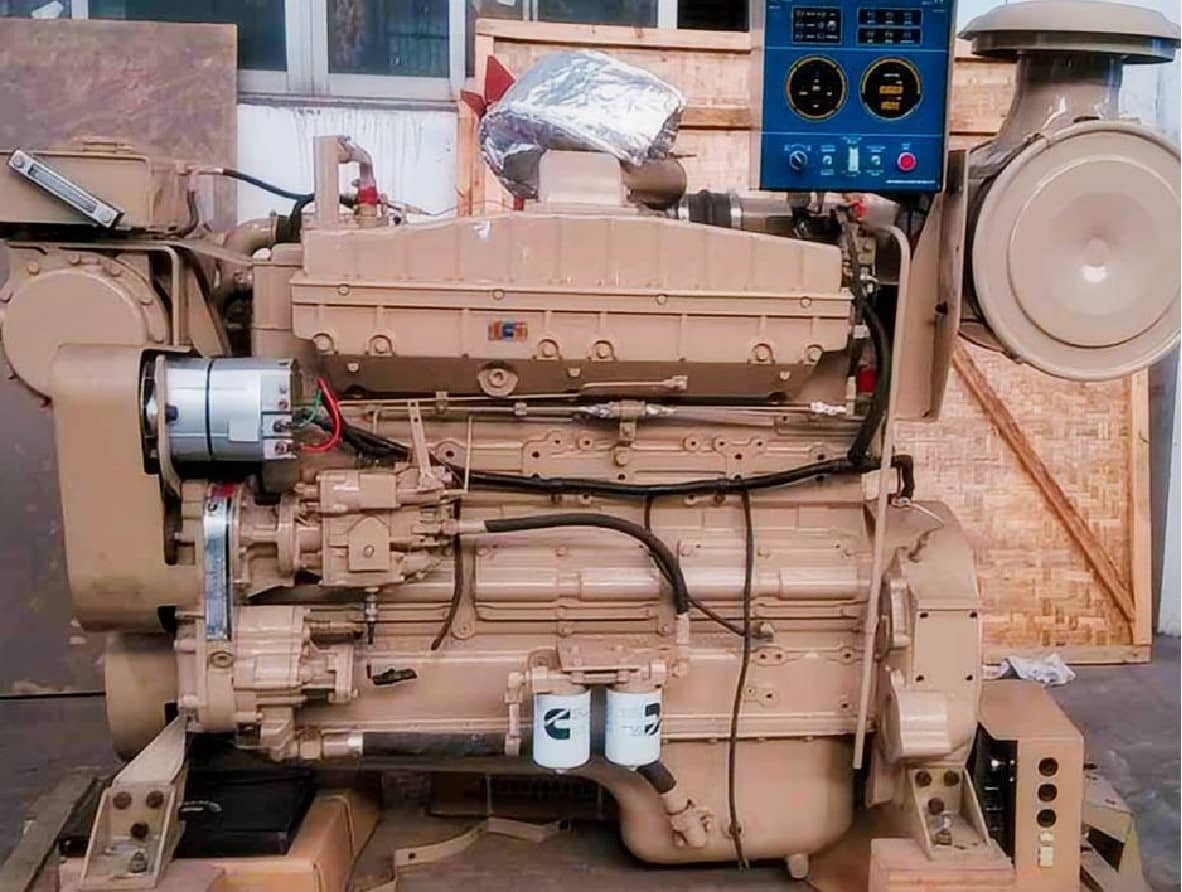
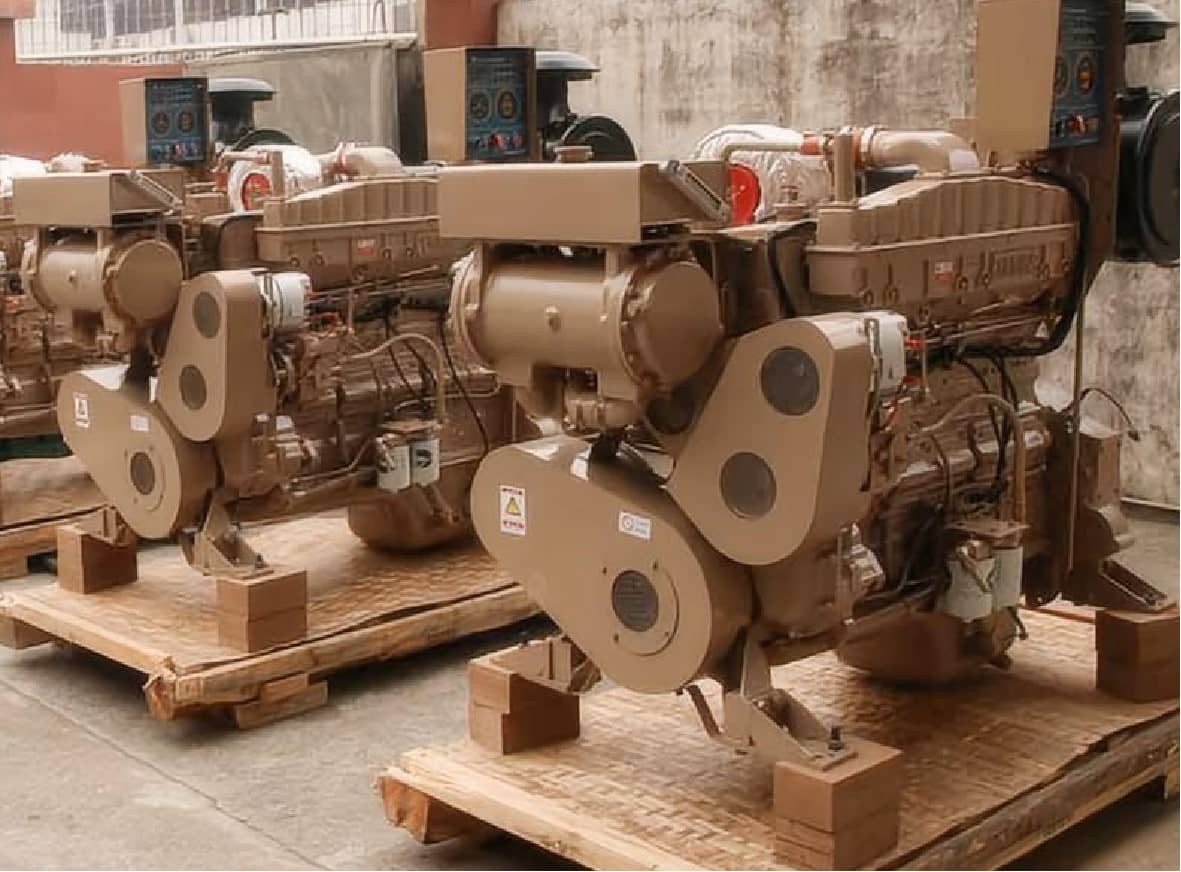
The Cummins NTA855 platform has earned a formidable reputation across global maritime sectors for unyielding durability in harsh marine environments. Within this legendary 14-liter engine family, the NTA855-DM287 stands out as a purpose-built marine auxiliary and shipboard power unit. Delivered by Chongqing Cummins Engine Co., Ltd. (CCEC), this configuration is engineered specifically to meet the continuous electrical demands of commercial vessels, offshore workboats, and auxiliary generator sets operating in 60Hz electrical grid environments. As an experienced engine supplier, HekoPower provides fully verified assemblies complete with factory calibration documentation, CPL mapping, and vessel-ready cooling configurations.
Understanding why the NTA855-DM287 requires a dedicated product page involves examining how marine auxiliary architecture diverges fundamentally from land-based generator drive (-G3) or industrial pump drive engines.
In land-based generator applications, engines typically operate within enclosed, temperature-regulated generator rooms where ambient airflow is artificially maintained and cooling towers or remote radiators handle thermal rejection. Conversely, the NTA855-DM287 is designed for the confined, high-humidity, and salt-laden environment of a ship's engine room. Its thermal management relies directly on raw water cooling loops, utilizing a heavy-duty, engine-mounted sea water pump paired with a cupronickel shell-and-tube heat exchanger rather than standard belt-driven automotive fans.
Furthermore, when compared to high-torque pump drive variants (-P300), the DM287 is calibrated explicitly for strict frequency stability under transient electrical load steps. Marine auxiliary engines must comply with rigid ISO 8178 D2 emission cycles and classification society governor response standards. While a pump engine prioritizes steady-state fluid displacement curves under heavy continuous load, the DM287 balances prime torque (1,521 Nm) and overload torque (1,681 Nm) characteristics to absorb sudden heavy electrical kicks—such as bow thruster activation or cargo winch engagement—without unacceptable frequency sag or voltage collapse on the shipboard switchboard.
The NTA855-DM287 is structurally optimized for auxiliary power generation units operating at 1,800 RPM to deliver stable 60Hz electrical power. Typical operational deployments include main shipboard electrical power generator sets on medium-sized cargo vessels, coastal container ships, harbor tugboats, and offshore supply vessels (OSVs). In these settings, the engine acts as the primary heartbeat for vessel hotel loads, navigational electronics, refrigeration units on reefer containers, and auxiliary motor drives. It also serves reliably as an emergency or port-harbor generator on larger ocean-going bulk carriers.
A frequent misconception among marine operators is that any land-based Cummins NTA855-G series block can be easily marinized by simply bolting on a heat exchanger and a raw water pump. This oversight ignores critical internal and auxiliary differences. The DM287 incorporates specialized corrosion-resistant internal component coatings, marine-grade exhaust manifold configurations (available in dry or water-cooled options), and a specialized governor setup designed for parallel synchronization across shipboard busbars. Attempting to field-convert an industrial land engine often leads to premature cooling system cavitation, thermal cracking under variable sea loads, and failure during classification society surveys.
Maximizing the operational lifespan of a CCEC Cummins NTA855-DM287 requires strict adherence to marine-specific maintenance schedules, particularly concerning the raw water cooling loop and fuel injection architecture.
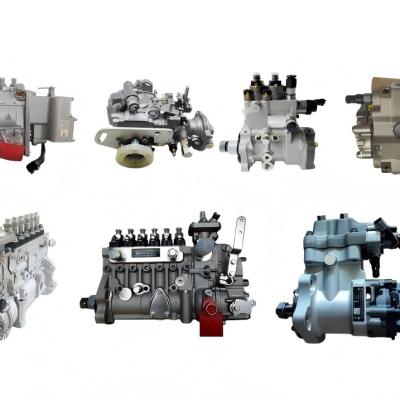
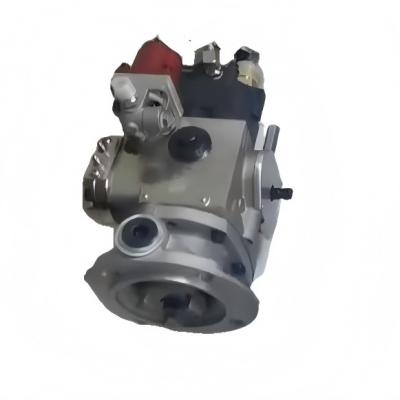
Operators must inspect the zinc anode plugs and the plate-type heat exchanger bundle every 250 operating hours to prevent salt accumulation and galvanic corrosion. The PT (Pressure-Time) fuel system utilized on this 14-liter platform demands pristine diesel filtration; secondary fuel filters should be drained daily to remove entrained moisture from humid marine atmospheres before fuel reaches the precision injectors.
When planning a repower or complete engine replacement, verifying the CPL (Control Parts List) identifier—specifically CPL CQ171 or associated marine configurations—is paramount. When ordering replacement overhauls or auxiliary spare parts, ensure that components such as the sea water pump impellers, cylinder head gaskets, and turbocharger compressor housings match the marine specification rather than land-based equivalents. Sourcing genuine CCEC components through an established supplier like HekoPower ensures that compression ratios, fuel delivery rates, and thermal thresholds remain entirely faithful to factory safety margins.
Cummins N855-DM Series, Marine Auxiliary Engines for commercial and recreational applications, original products from Chongqing Cummins Engine Plant(CCEC). This series mainly includes NT855-DM180, NT855-DM205, NT855-DM230, NT855-DM240, NTA855-DM264, NTA855-DM284, NTA855-DM287, NTA855-DM306, NTA855-DM313,NTA855-DM317. All engines complete with sea water pump, heat exchanger, CCS/IMO certificates.
The DM287 is specifically engineered for marine vessel integration, featuring an engine-mounted sea water pump, a cupronickel heat exchanger, marine-grade corrosion protections, and governor calibrations tailored for stable 60Hz shipboard electrical busbar synchronization.
Absolutely. HekoPower can deliver a CCS certified NTA855-DM287 marine diesel generator drive. We arrange factory inspections to ensure the engine meets IMO Tier II 385 HP marine auxiliary engine for cargo ships standards and holds the necessary classification society paperwork before export.
Yes. Unlike land-based configurations that rely on remote cooling towers or front-mounted industrial radiators, the DM287 incorporates an integrated marine cooling architecture designed to utilize raw sea water for thermal rejection.
Yes. The engine supports flexible installation options, including dry exhaust configurations with thermal insulation blanketing as well as water-cooled exhaust manifold arrangements depending on the vessel's specific ventilation and safety requirements.