Details
Engineering Excellence of the Cummins M11-C320 Platform
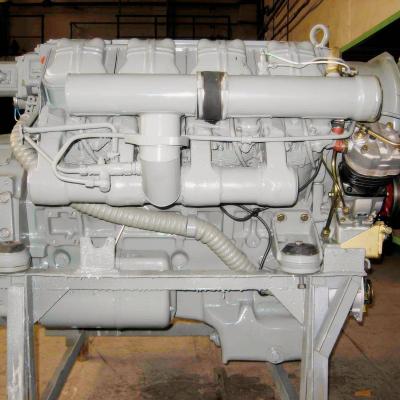
As a specialized global engine supplier, HekoPower delivers the CCEC Cummins M11-C320 as a premier power solution engineered specifically for demanding construction and industrial duty cycles. Displacing 10.8 liters across six inline cylinders, this mechanical diesel engine delivers a rated output of 235 kilowatts (320 horsepower) at 2,000 revolutions per minute.
The architecture of the M11 series combines high structural rigidity with modular simplicity. Unlike lighter-duty automotive derivatives, the Ccean-built CCEC M11-C320 utilizes a heavy-duty cast iron block designed to withstand continuous high-load operations in earthmoving and material handling equipment.
Tech Specs of Cummins M11-C320
General Engine Data
Engine Model: Cummins M11-C320
Type: 6 Cylinders in Line
Displacement: 10.8 L
Bore * Stroke: 125 * 147
Overall Dimension: 1450mm*950mm*1010mm
Net Weight (with flywheel & alternator): 980 Kg
Key Performance Data
Rated Power: 235 kW/320HP
Rated Speed: 2000 rpm
Max Torque/Speed: 1234 N.m @ 1300 rpm
Max. No-Load Speed: 2450 rpm
Fuel Consumption @ Rated Power: 64.4 L/hr
Idle Speed: 675-750 rpm
Max. Continuous Running Altitude: 3048 m
More Technical Data
Certification: Tier 1
Aspiration: Turbocharged-Intercooled
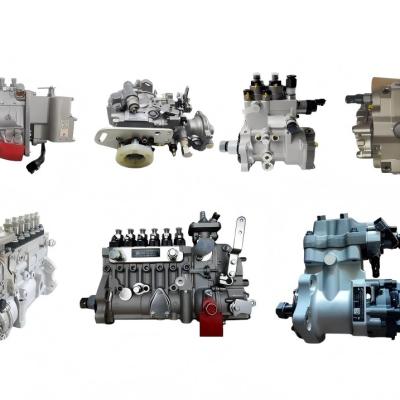
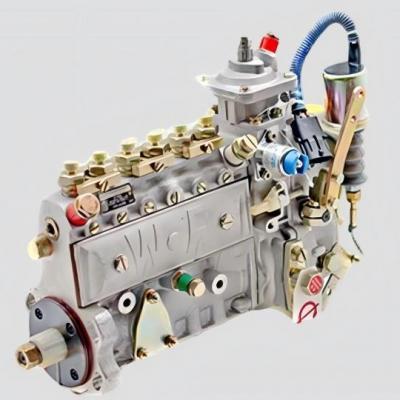
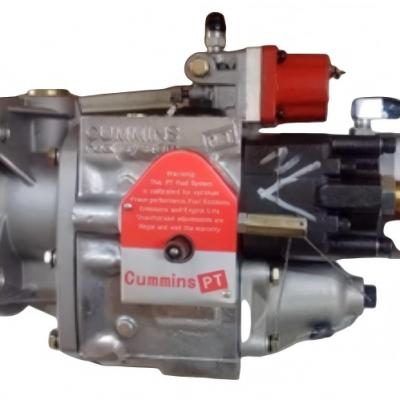
Fuel System: Direct Injection PT Pump, STC
Compression Ratio: 16.1:1
Electrical System (Starter Motor/Alternator): 12V/24V
Lowest Starting Temp Without auxiliary system: -12℃
Cooling Method: Water cooled
Engine Cooling Fluid Volume: 12.9 L
Technical Comparisons: M11-C320 vs. Alternative M-Series Ratings
When specifying replacement power units, equipment operators frequently evaluate the M11-C320 against adjacent power ratings within the same displacement family, such as the M11-C300 and M11-C315.
Unlike the M11-C300, which is tuned for moderate vocational duty with lower thermal stress, the M11-C320 is calibrated to sustain a peak torque of 1,234 Newton-meters at 1,300 revolutions per minute. This elevated torque curve provides superior lugging capability when heavy machinery encounters sudden ground resistance.
Furthermore, while older M11 variations relied entirely on conventional fuel scheduling, the M11-C320 integrates Step Timing Control (STC). This technology optimizes combustion phasing across varying load conditions, reducing white smoke during cold starts and improving fuel efficiency under partial loads compared to non-STC legacy iterations.
When compared to electronic powerplants like the QSM11, the mechanical governing of the CCEC M11-C320 offers distinct advantages for remote project sites where electronic diagnostic tools are scarce. Its mechanical PT direct injection fuel pump relies on hydraulic pressure and precise orifices rather than complex electronic control modules, ensuring high reliability in dusty, high-vibration construction environments.
Real Application Scenarios in Heavy Construction
The operational profile of the Cummins M11-C320 makes it the factory-specified choice for a wide array of heavy construction machinery.
In large-scale crawler excavators operating in mining and civil engineering, this engine provides the hydraulic pump drive power required to sustain multi-function digging, swinging, and lifting operations without dropping engine speed.
Similarly, in heavy wheel loaders and articulated haulers, the rapid torque rise allows operators to crowd piles and transition smoothly into torque converter stall without stalling the prime mover.
Other primary deployment scenarios include heavy-duty road reclaimers, large pneumatic tire rollers, and stationary industrial rock crushers where continuous prime power output is mandatory. HekoPower supplies these complete engine assemblies pre-configured with application-specific flywheel housings, starter locations, and accessory bracketry to streamline installation into existing chassis.
Maintenance, Replacement Tips, and Common Misconceptions
Maximizing the service life of a CCEC M11-C320 requires adherence to precise maintenance protocols and an awareness of common operational pitfalls.
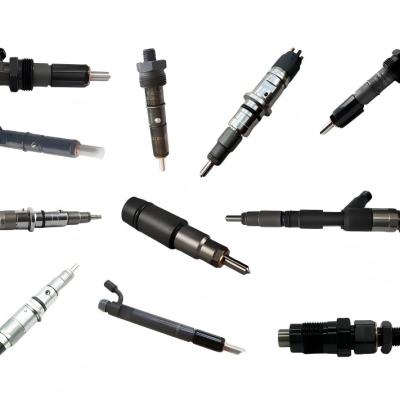
A frequent misconception among fleet operators is that the PT fuel system requires routine calibration changes akin to traditional inline mechanical pumps. In reality, the Cummins PT system relies on calibrated flow test benches for injector calibration; field adjustments to individual injector plungers without proper flow bench data frequently lead to uneven cylinder fueling and piston thermal distress.
Another critical maintenance practice involves the wet-type replaceable cylinder liners. During a mid-life overhaul, technicians must inspect the lower liner counterbores and replace the cavitation seals meticulously to prevent coolant leakage into the crankcase.
When replacing an aging engine assembly, always verify the engine's Control Parts List (CPL) number stamped on the data plate alongside the serial number. Matching the CPL ensures that fuel mapping, turbocharger matching, and cooling package interfaces align perfectly with the target machine's hydraulic and electrical architecture.
Product Series Integration
The M11 platform forms a cornerstone of industrial diesel technology. Cummins M11-C Series, original products from Chongqing Cummins Engine Plant(CCEC). This series mainly includes M11-C225, M11-C245, M11-C250, M11-C265, M11-C270, M11-C275, M11-C280, M11-C290, M11-C300, M11-C310, M11-C315, M11-C320, M11-C330, M11-C335, M11-C350.
Frequently Asked Questions
What are the primary machinery applications for the M11-C320 engine?
It is widely utilized in heavy construction machinery, including large crawler excavators, heavy wheel loaders, bulldozers, road reclaimers, and industrial crushing equipment.
How does the M11-C320 differ from electronic engines like the QSM11?
The M11-C320 features a mechanical governing system with a PT fuel pump, making it easier to maintain and service in remote operational environments without specialized electronic diagnostic software.