Details
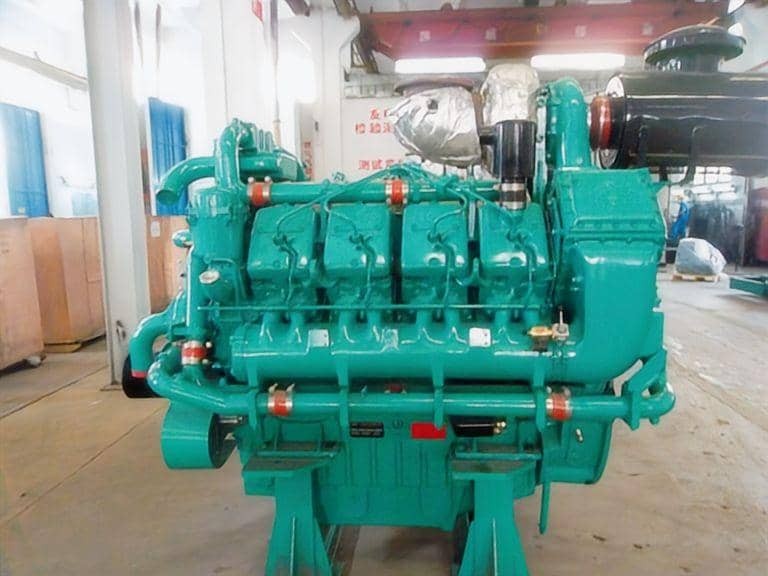
Deutz TBD620V12-1311KW 50 Hz Marine Auxiliary Engine
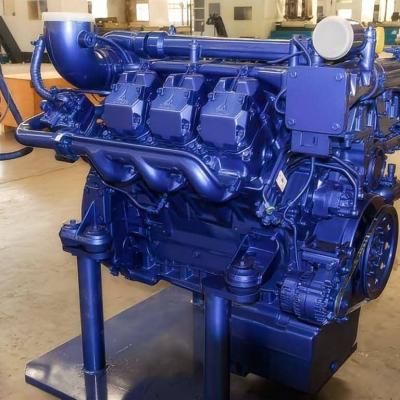
The Deutz TBD620V12-1311KW is a 53.16 L, 90-degree V12 marine auxiliary diesel engine built for continuous 1500 rpm shipboard power generation. Produced under Deutz technical license by Henan Diesel Engine Plant (HND), this four-stroke unit combines individual four-valve cylinder heads, replaceable wet liners, and a 13.5:1 compression ratio with turbocharged, water-intercooled breathing.
Rated at 1311 kW continuous and 1442 kW standby, it serves as a dedicated 50 Hz prime mover for 1,200 to 1,250 kWe marine generator sets. HekoPower supplies complete HND factory assemblies with CCS and IMO Tier II documentation, verified build-sheet matching, and long-term OEM overhaul parts support.
Technical Specifications of Deutz TBD620V12-1311KW
General Engine Data
- Engine Model:
- Deutz TBD620V12-1311KW
- Type:
- 12 Cylinders, V Type 90°, 4 Stroke
- Displacement:
- 53.16 L
- Bore * Stroke:
- 170 * 195
- Wet Weight (with heat exchanger):
- 5100 Kg
- Overall Dimension:
- 2979mm*1450mm*2240mm
Key Performance Data
- Rated Power/Speed:
- 1311 kW @ 1500 rpm
- Standby Power/Speed:
- 1442 kW @ 1500 rpm
- Max. Continuous Running Altitude:
- 3000 m
- Fuel Consumption with Full Load:
- 199 g/kW.hr
More Technical Data
- Certification:
- CCS/IMO2 Certificates
- Aspiration:
- Turbocharged and Intercooled
- Fuel System:
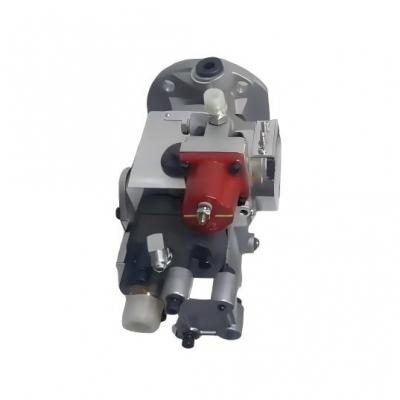
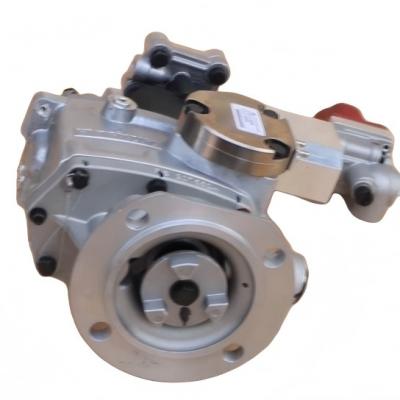
- Direct Injection Pump
- Compression Ratio:
- 13.5:1
- Starting Method:
- Electrical Start (12V/24V)
- Cooling Method:
- Water Cooled
- Power Output Type:
- Continuous
How the 1311 kW Rating Compares Across the TBD620V12 Platform
Within HND's 50 Hz marine auxiliary lineup, the TBD620V12-1311KW sits directly above the 1251 kW rating (1376 kW standby). Both engines share the identical 5100 kg wet weight and 2979 × 1450 × 2240 mm envelope, yet the 1311 kW calibration adds 60 kW of continuous mechanical power and 66 kW of standby reserve. That extra headroom lets a four-pole marine alternator cleanly support a 1,200 kWe to 1,250 kWe (roughly 1,500 to 1,555 kVA at 0.8 power factor) switchboard load without stepping up to the longer, heavier 16-cylinder TBD620V16 frame.
Compared against the 1800 rpm TBD620V12-1364KW and TBD620V12-1433KW models built for 60 Hz grids, running at 1500 rpm holds the 195 mm stroke to a modest 9.75 m/s mean piston speed instead of 11.7 m/s. Lower piston velocity reduces mechanical friction and ring-pack wear over multi-year base-load duty on European, Asian, and offshore 50 Hz fleets.
Buyers also encounter the TBD620V12 designation on marine propulsion units such as the 1680 HP (1240 kW at 1500 rpm) and 1850 HP (1380 kW at 1800 rpm) models. Despite sharing the same 170 × 195 mm base block, propulsion builds use variable-speed propeller-law fueling and marine gearbox interfaces, whereas the 1311 kW auxiliary engine is calibrated for constant-speed alternator governing and parallel load sharing.
50 Hz Shipboard Applications and Load Behavior
The TBD620V12-1311KW fits vessels whose electrical plant carries heavy continuous hotel, cargo-handling, or dynamic-positioning loads on a 50 Hz bus. Common installations include container feeders with reefer racks, self-unloading bulk carriers, trailing suction hopper dredgers, platform supply vessels, and coastal power barges requiring 1,500 kVA-class auxiliary sets.
Its 1442 kW standby rating provides a full 10 percent transient overload allowance above continuous output, supporting sudden motor-starting currents from bow thrusters, ballast pumps, and cargo cranes without excessive frequency dip. At 1500 rpm under IMO Tier II marine calibration, full-load specific fuel consumption is specified at 199 g/kW·h, with best combustion cleanliness achieved between 65 and 85 percent rated load.
A common specification mistake on commercial vessels is installing a 1311 kW auxiliary engine where routine harbor or sea-passage hotel demand stays below 350 kW. Prolonged operation under 25 to 30 percent load depresses cylinder temperatures, leading to wet stacking, turbocharger carbon buildup, and glazed liners; if typical base loads remain under 600 kW, an 8-cylinder TBD620V8 auxiliary set is better matched to the vessel's duty cycle.
Maintenance Thresholds and Replacement Fitment Checks
Long overhaul intervals depend on controlling lubricant chemistry, cooling efficiency, and exhaust restriction. The 12-cylinder sump holds approximately 105 to 135 liters of SHPD marine diesel oil (API CF-4/CD or CCMC D4/D5 class), which should be sampled every 500 running hours to confirm Total Base Number (TBN) retention against marine gas oil sulfur levels while keeping bulk oil temperatures below 105 °C.
Inspect the seawater-cooled heat exchanger and charge-air intercooler regularly for scaling and zinc anode depletion, particularly in warm tropical waters where marine continuous ratings assume 45 °C intake air and 32 °C raw-water cooling. On the exhaust side, keep total system back-pressure including the silencer within manufacturer limits (typically 25 to 50 mbar) to prevent elevated exhaust temperatures around 480 °C at full load and premature turbocharger distress.
Another frequent error during drydock repowers is assuming any 50 Hz TBD620V12—or a land-based radiator genset build—drops straight onto an existing marine skid. Before ordering a replacement engine, confirm anti-clockwise crankshaft rotation viewed from the flywheel end, verify the SAE 0 flywheel housing and flexible coupling against a class-approved torsional vibration analysis (TVA), and confirm 24V DC high-CCA battery sizing (typically 300 Ah minimum) or air-start equipment from the original Engine Serial Number (ESN) build sheet.
Position Within the Deutz TBD620 Marine Auxiliary Series
Within HND's twelve-model marine auxiliary catalog, the TBD620V12-1311KW serves as the top 50 Hz / 1500 rpm calibration in the V12 cylinder bank, bridging the 1251 kW continuous V12 rating and the higher-output V16 units for shipyards standardizing on shared 170 mm-bore spare parts across multiple vessel classes.
Deutz TBD620-Marine Auxiliary Series, Marine Auxiliary Diesel Engines for commercial and recreational applications, original products from Henan Diesel Engine Plant (HND). This series mainly includes TBD620V8-834KW, TBD620V8-874KW, TBD620V8-910KW, TBD620V8-955KW, TBD620V12-1251KW, TBD620V12-1311KW, TBD620V12-1364KW, TBD620V12-1433KW, TBD620V16-1668KW, TBD620V16-1747KW, TBD620V16-1819KW, TBD620V16-1910KW.
Frequently Asked Questions
What 50 Hz generator output matches the Deutz TBD620V12-1311KW?
Paired with a typical 95 percent efficient four-pole marine alternator at 1500 rpm, the 1311 kW rated mechanical output delivers roughly 1,245 kWe (about 1,555 kVA at 0.8 power factor). Under the 1442 kW standby rating, electrical capability reaches approximately 1,370 kWe (around 1,710 kVA) for short-duration peak or emergency loads.
When should I specify the TBD620V12-1311KW instead of the TBD620V12-1251KW?
Both models occupy the same 2979 × 1450 × 2240 mm footprint and 5100 kg wet weight at 1500 rpm. Choose the 1311 kW calibration when your 50 Hz switchboard requires a full 1,200 kWe to 1,250 kWe rating or extra derating margin in tropical engine rooms, whereas the 1251 kW version suits 1,150 to 1,180 kWe continuous base-load plants.
Can a 1500 rpm TBD620V12-1311KW be converted to 1800 rpm for 60 Hz vessels?
Field conversion is not recommended. Although the V12 base engine supports 1800 rpm operation, shifting frequency requires recalibrating the injection pump, governor speed range, turbocharger matching, torsional vibration calculation, and IMO/CCS certification; for 60 Hz vessels, order the factory-configured TBD620V12-1364KW or TBD620V12-1433KW directly.
What mechanical interface checks are required before coupling an alternator?
Verify anti-clockwise crankshaft rotation from the flywheel end, confirm SAE 0 flywheel housing and disc dimensions, and run a torsional vibration analysis (TVA) with the selected flexible coupling and alternator inertia. Also confirm governor type (electronic isochronous or droop) and 24V DC starting specs against your vessel's switchboard drawings.