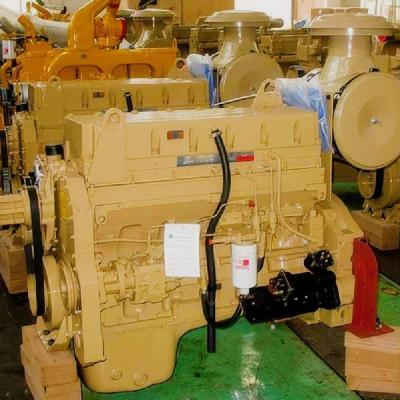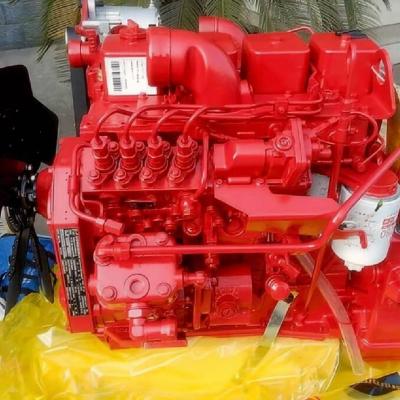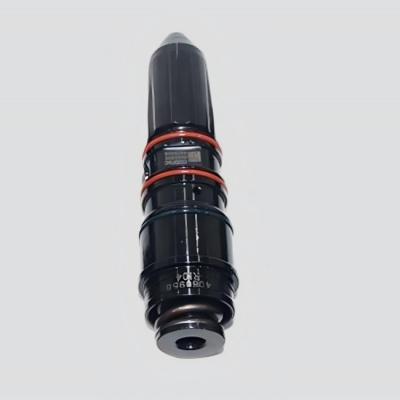
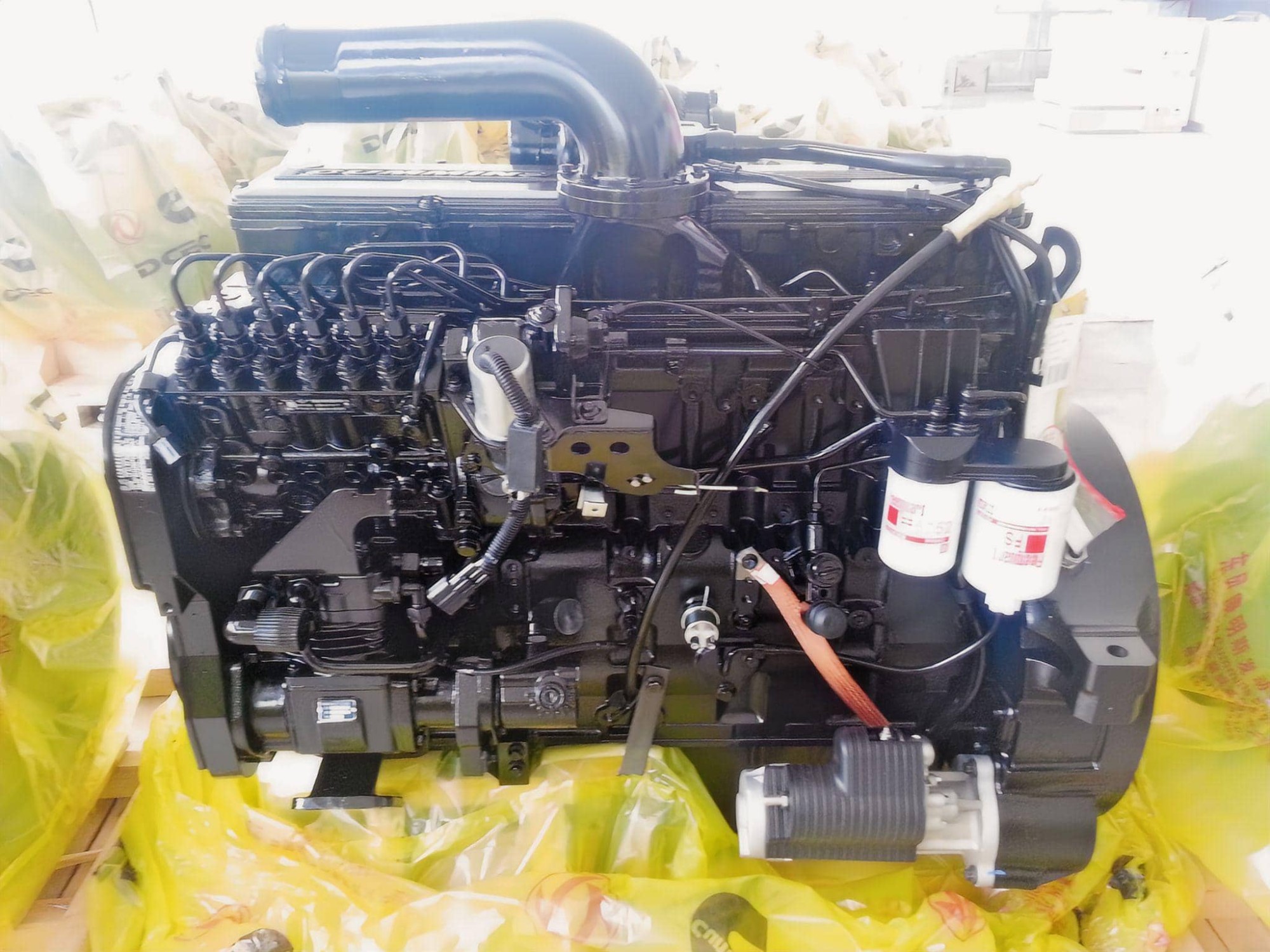
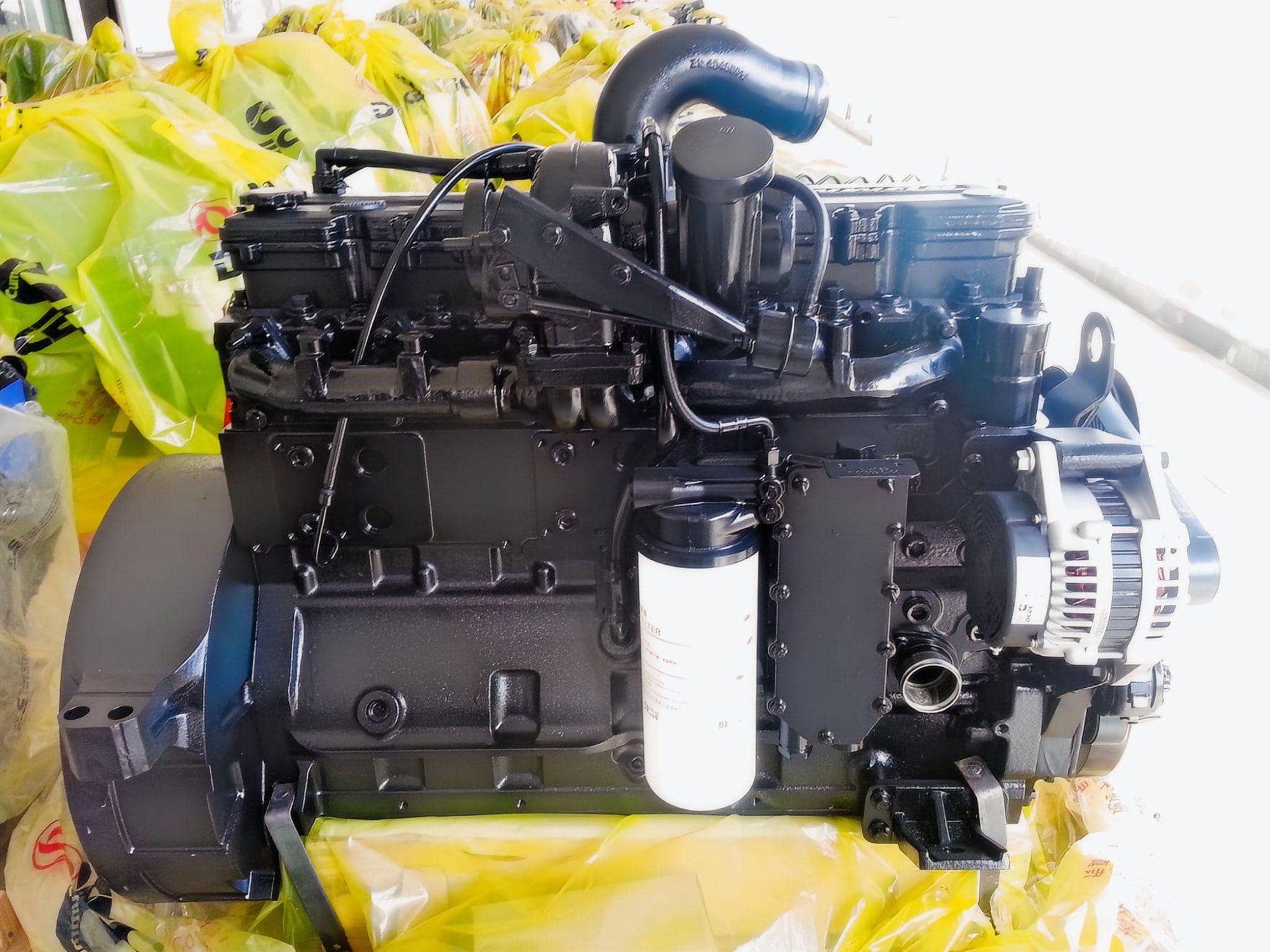
Finding a reliable and exact-match powerplant for heavy-duty commercial vehicles is a critical fleet decision. HekoPower provides the genuine DCEC Cummins L325-20 complete engine assembly, engineered directly by the Dongfeng Cummins Engine Company. As an established Cummins L325-20 engine supplier and exporter, we deliver this robust 8.9-liter mechanical block globally to fleet managers, transit authorities, and repair facilities. The original 8.9L 325HP Cummins Euro II engine has earned a legacy of extreme durability. It is specifically designed to handle harsh operating environments, heavy payloads, and unpredictable fuel qualities without the downtime associated with fragile electrical sensors. Whether you are repowering a municipal transit bus or upgrading a heavy logistics truck, this Cummins L325-20 vehicle diesel engine delivers 239kW of sustained power and a massive 1230Nm of peak torque to keep your operations moving.
What separates the Dongfeng Cummins L325-20 replacement engine from lighter-duty alternatives is its foundational architecture. The engine utilizes a 24-valve cylinder head design with centrally located fuel injectors. This structural layout ensures a more homogenous air-fuel mixture, resulting in a cleaner burn and vastly improved low-end torque. Furthermore, the engine block features wet replaceable cylinder liners. For fleet maintenance teams, this means the Cummins L325-20 complete engine can be overhauled multiple times in the frame without removing the block from the chassis, drastically reducing long-term lifecycle costs.
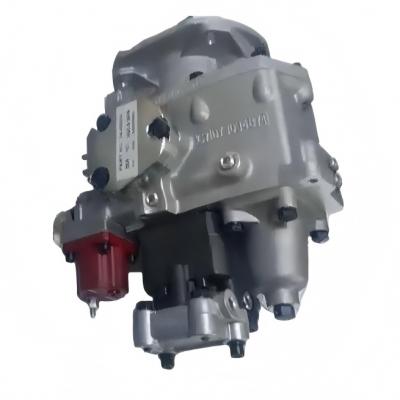
A major reason why mechanics specifically request the 325HP Cummins L325-20 is its fuel delivery system. This mechanical diesel engine is equipped with the legendary Cummins L325-20 Bosch P7100 engine injection pump, paired with a highly responsive Cummins L325-20 RQV-K governor. Unlike high-pressure common-rail engines that require proprietary computer software to diagnose faults, the mechanical P7100 pump allows field mechanics to manually adjust fuel timing. If a vehicle operates in regions with high-sulfur or lower-grade diesel, the mechanical L325-20 replacement engine assembly will continue to perform where electronic equivalents would immediately trigger safety shut-downs.
The L325-20 automotive diesel engine is not a generic industrial block; it is calibrated specifically for variable highway and city speeds.
In the passenger transport sector, this model is recognized as the premier Cummins L325-20 engine for Higer and Zhong Tong bus chassis, specifically for 11-meter and 12-meter coaches. Because transit buses require constant stop-and-go acceleration while running heavy air conditioning compressors, they need the 239kW Cummins L325-20 power rating to prevent sluggish performance. The engine's specific 114x145 engine bore and stroke ratio provides the necessary long-stroke leverage to pull heavy passenger loads up steep inclines without overheating.
Beyond transit, we frequently supply the Cummins L325-20 truck engine for heavy-duty tippers, dump trucks, and regional freight carriers. The 1230Nm of peak torque is available early in the RPM range, which is exactly what a fully loaded construction truck requires to pull out of deep excavation sites. By choosing a complete Cummins L325-20 engine assembly, logistics companies can restore factory-level reliability to aging truck chassis in a matter of days.
When sourcing a replacement, buyers often cross-reference the 8.9L Cummins L325-20 with adjacent models. Understanding these distinctions is crucial to maintaining your vehicle's driveline integrity.
When evaluating the L325-20 vs L340-20 Cummins, the primary difference lies in the fuel mapping and intended application. While the L340-20 pushes 340 horsepower for extreme heavy-haul applications, the L325-20 offers slightly superior fuel economy for highway cruising, making it the preferred specification for passenger buses and regional box trucks.
A frequent debate among fleet managers is the L325-20 vs L300-20 Cummins. The 300HP configuration is highly capable, but it can struggle to maintain highway speeds when a 12-meter bus is fully loaded with passengers and luggage. The L325-20 bridges this performance gap, providing the extra horsepower overhead required for smooth passing maneuvers and steady hill climbs.
Another common source of confusion is comparing the 8.9L L325-20 vs 8.3L C325-20. While both engines deliver 325 horsepower, they belong to entirely different engine families. The Cummins L325-20 vs C325-20 distinction comes down to displacement and low-end torque. The 8.9-liter L-series block generates significantly more torque at lower RPMs than the smaller 8.3-liter C-series. The heavier L-series block also operates with lower internal stress, generally resulting in longer intervals between major overhauls.
Finally, when weighing a mechanical L325-20 vs electronic Cummins engine like the ISLe series, the deciding factor is your operating environment. The Cummins L325-20 Euro II diesel engine relies entirely on mechanical governing, making it immune to electrical shorts and sensor failures. Conversely, the ISLe series provides stricter emission compliance but demands ultra-low sulfur diesel and complex diagnostic computers for routine maintenance.
Procuring a new powerplant is a significant investment. To ensure a smooth installation, mechanics must verify compatibility before confirming a Cummins L325-20 engine wholesale order.
Knowing how to identify a Cummins L325-20 engine accurately is the first step. Before ordering, technicians should perform a strict Cummins L325-20 ESN verification (Engine Serial Number) using the metal dataplate affixed to the front gear housing. This plate will display the Control Parts List number. Requesting a Cummins L325-20 CPL 1480 replacement guarantees that the turbocharger, injectors, and piston bowls perfectly match the factory specifications of your original engine.
Driveline matching is equally important. Buyers must confirm their Cummins L325-20 engine replacement compatibility by checking the flywheel housing size. Ensuring proper Cummins L325-20 flywheel housing compatibility—typically standard SAE 1 or SAE 2 dimensions—guarantees that the new engine will bolt seamlessly to your existing transmission without the need for expensive custom adapter plates.
When searching for a Cummins L325-20 engine for sale, buyers occasionally make critical sourcing errors. A major misconception is assuming that any 8.9L Cummins engine can be placed into a truck. Putting an industrial-calibrated L-series engine into a highway vehicle will cause severe drivability issues, as industrial engines are designed to run at fixed, constant speeds. The automotive L325-20 utilizes a variable-speed governor calibrated for throttle pedal input. As a genuine DCEC L325-20 engine supplier, HekoPower ensures you receive the correct automotive calibration every time. Furthermore, buyers often confuse a "long block" with a "complete engine." We supply the Cummins L325-20 complete engine configuration fully dressed, vastly reducing the labor hours required to swap old accessories onto a new block.
Upgrading a purely mechanical engine to meet Euro 3 or Euro 4 standards requires swapping out the mechanical fuel injection pump for an electronic common-rail system, alongside adding extensive wiring harnesses, sensors, and an ECU. If your local regulations dictate higher emission compliance, it is more cost-effective to purchase a dedicated electronic engine model, such as an ISL series, rather than trying to convert a mechanical L325-20 block.
The engine is highly efficient for its displacement class, featuring a minimum fuel consumption rate of approximately 215 g/kW.h at rated power. This efficiency is directly attributed to the precise atomization achieved by the mechanical inline fuel pump.
For accurate freight planning and engine bay fitment, the Cummins L325-20 engine dimensions and weight are standard across this specific automotive application. The unit measures approximately 1149 mm in length, 799 mm in width, and 1022 mm in height, with a dry weight of roughly 680 kg.
Yes. Because the 8.9L platform is a globally recognized standard, replacement parts such as filters, injectors, and rebuild kits are highly accessible worldwide, keeping long-term maintenance costs exceptionally low.
To ensure your commercial fleet remains profitable and operational, securing the exact matching engine model is just the foundation. While the L325-20 provides an ideal balance of mechanical power and reliability for buses and heavy trucks, our extensive inventory accommodates a wide spectrum of automotive demands. If your fleet requires different horsepower ratings, alternative emission certifications, or specific application calibrations, we supply a comprehensive range of Dongfeng Cummins powerplants to suit your engineering requirements.
Cummins L Series, original products from Dongfeng Cummins Engine Plant (DCEC), Cummins Joint Venture Plant since 1986, 50% shareholding by Cummins USA. This series mainly includes L270-30, L290-30, L300-20, L315-30, L325-20, L340-20, L360-20, L360-30, L375-20, L375-30.