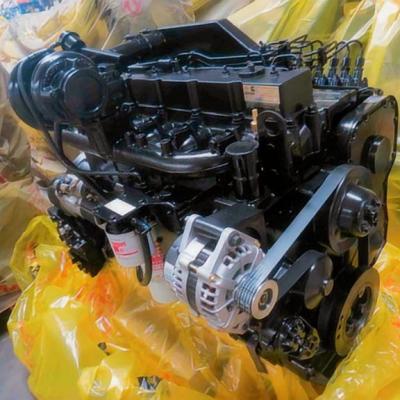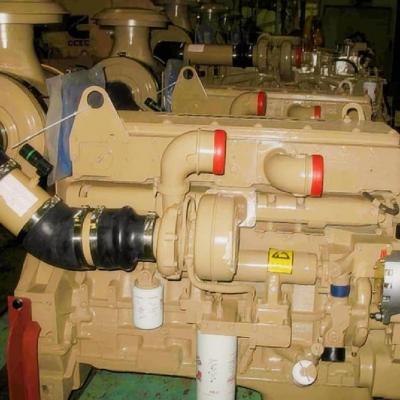
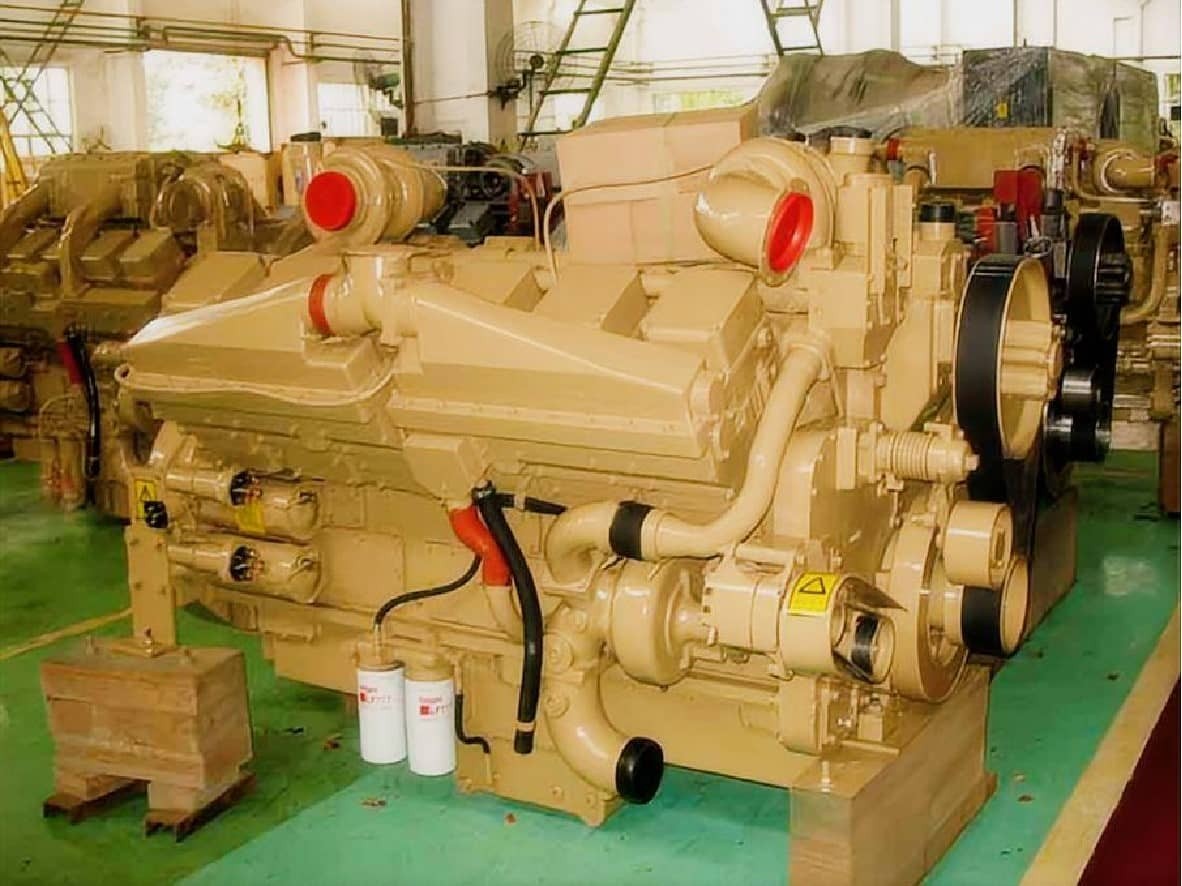
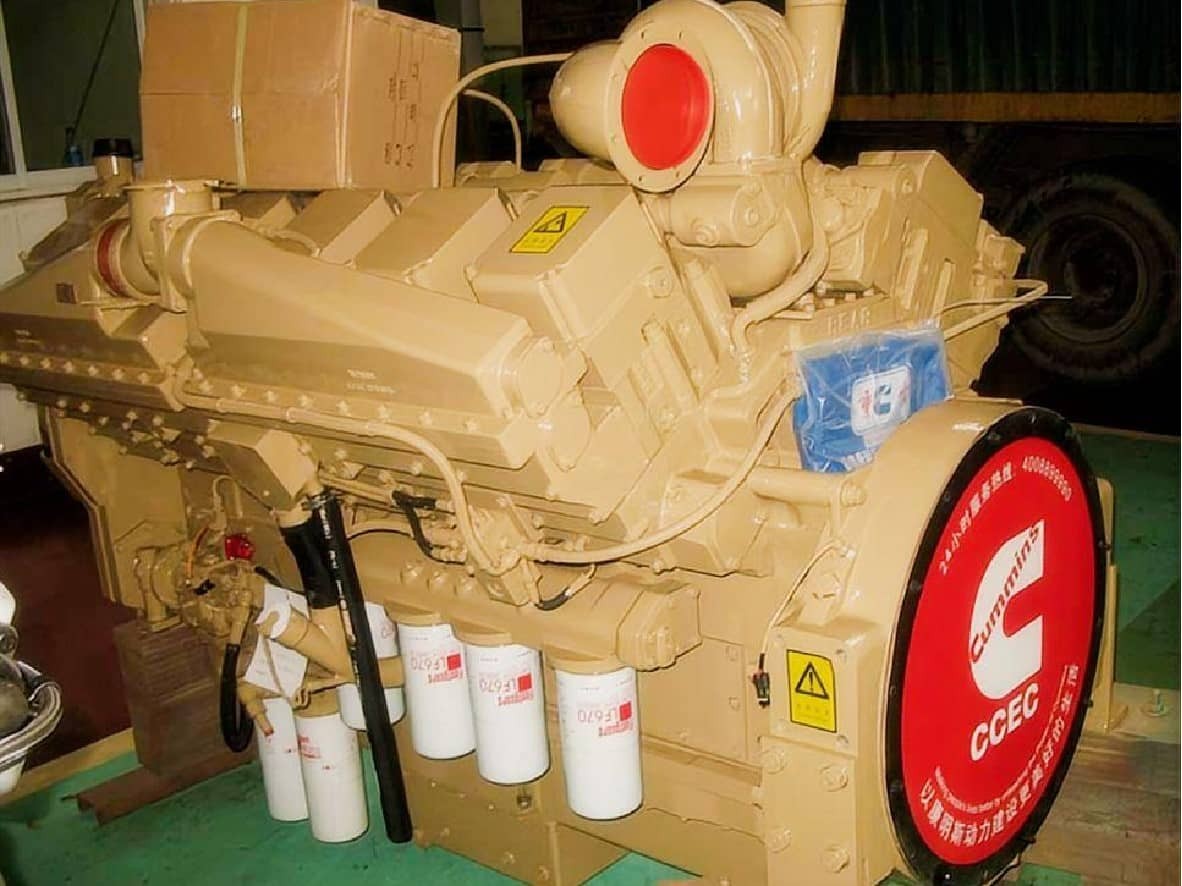
The CCEC Cummins KT38-G is a heavy-duty, 12-cylinder V-type 38L Cummins engine specifically engineered for reliable power generation. Delivering a prime power output of 560kW (750HP) at 1500RPM, this engine serves as the backbone for continuous industrial power plants and heavy-duty gensets worldwide. Designed by Chongqing Cummins (CCEC), it combines robust mechanical durability with high-load tolerance, making it an ideal 50Hz generator engine for extreme operating environments.
As a dedicated CCEC KT38-G engine supplier, HekoPower provides the complete Cummins KT38-G engine assembly to OEMs, maintenance teams, and international distributors. Our inventory ensures you receive an original CCEC KT38-G engine with verified serial numbers and comprehensive factory support.
When configuring industrial power systems, engineers often evaluate multiple configurations within the K38 family to match precise alternator requirements. To help you navigate these options, Cummins K38-G Series, This series mainly includes KT38-G-560KW, KTA38-G1-634KW, KTA38-G2-664KW, KTA38-G2A-813KW, KTA38-G2B-711KW, KTA38-G5-880KW, KTA38-G9A-1195KW, KT38-G-679KW, KTA38-G2-809KW, KTA38-G2A-915KW, KTA38-G4-1007KW.
Understanding the mechanical differences within the K38 family is crucial for proper genset configuration. A common challenge for procurement teams is deciding between the base KT38-G and the aftercooled KTA38 models.
When comparing the Cummins KT38-G vs KTA38-G, the primary differentiator is the air intake system. The KT38-G is a turbocharged diesel engine. It forces compressed air into the cylinders to increase power output. However, when you step up and evaluate the KT38-G 560kW vs KTA38-G1 634kW, you are looking at the addition of an air-to-water aftercooler. The KTA38-G1 cools the compressed intake air before it enters the combustion chamber, allowing for denser air and a higher power yield.
Similarly, evaluating the KT38-G 560kW vs KTA38-G2 664kW reveals further tuning for higher standby power demands. The base KT38-G 560kW remains the preferred choice when the facility requires standard 560kW prime power and values mechanical simplicity over maximum power density. By omitting the aftercooler circuit, the KT38-G reduces overall maintenance complexity.
We also frequently receive inquiries asking to compare the KT38-G 560kW vs KT38-G 679kW. The 679kW rating typically represents the absolute maximum standby capacity of the block under specific environmental conditions, whereas the 560kW rating is calibrated for continuous, prime power generation. For ultra-high capacity needs, engineers might also compare the KT38-G vs QSK38-G5, where the QSK series introduces advanced electronic fuel injection compared to the KT38's traditional mechanical setup.
The Cummins KT38-G industrial generator engine is not designed for light commercial use. Its 37.8L displacement and immense physical footprint are meant for demanding, high-stakes environments.
One primary application is the KT38-G engine for mining generator sets. Mining sites operate in remote locations with heavy dust and variable fuel quality. The mechanical governor on the KT38-G provides highly responsive load acceptance without relying on fragile electronic control modules that can fail in harsh conditions.
Another critical application is the KT38-G engine for data center backup power. While modern data centers often lean toward electronic engines, the KT38-G 560kW standby generator configuration remains popular in emerging markets due to its rapid startup time and ease of repair. It is also highly effective as a KT38-G engine for commercial backup generator systems in large manufacturing plants where power grid instability threatens production lines.
Proper Cummins KT38-G generator set configuration requires exact alternator matching. A 560kW engine does not simply connect to any alternator. For a 50Hz application running at 1500RPM, the KT38-G 560kW alternator matching usually pairs best with a 625kVA genset setup. This allows the engine to handle step-load changes smoothly without stalling. Using the KT38-G engine for a 500kW generator provides an excellent buffer, allowing the engine to run at approximately 80% load, which optimizes the KT38-G fuel consumption per hour and extends the interval between overhauls.
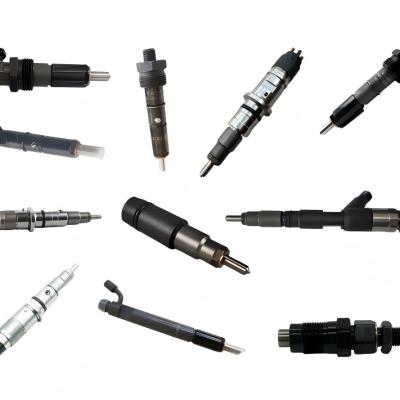
Maintaining a 38-liter V12 diesel engine requires strict adherence to factory intervals. The heart of the KT38-G is the Cummins KT38-G PT fuel pump (Pressure-Time). Unlike common rail systems, the PT system relies on mechanical pressure to inject fuel. Maintaining exact valve lash and injector clearances is mandatory. Over time, poor fuel quality can wear the internal gear pump of the PT system, leading to power loss. We highly recommend installing primary water separators to protect these components.
When a catastrophic failure occurs, facility managers must decide between rebuilding or seeking a Cummins KT38-G replacement engine. Rebuilding an engine of this size on-site can take weeks and risks contamination. Purchasing a Cummins KT38-G complete engine replacement from an authorized Cummins KT38-G engine export supplier like HekoPower significantly reduces facility downtime. We provide the complete assembly, pre-tested and ready to drop into the existing skid.
A prevalent misconception in the power generation industry involves the mechanical governor. Many buyers believe that a mechanical governor cannot synchronize with multiple generator sets. While electronic governors (like the Cummins EFC) offer tighter frequency control, a properly calibrated mechanical governor on the KT38-G is entirely capable of parallel operation when paired with the correct synchronizing controllers.
Another misconception is confusing prime and standby ratings. Customers often purchase a KT38-G 560kW standby generator engine and attempt to run it 24/7 at full load. Standby engines are configured to run for a limited number of hours per year during utility outages. If your site lacks grid power, you must configure the engine for continuous prime power, which requires a different load management strategy.
The engine features a 37.8-liter displacement spread across 12 cylinders arranged in a 60-degree Vee configuration. The bore and stroke dimensions are identical at 159mm by 159mm, resulting in a balanced, square combustion profile that reduces piston skirt wear and optimizes structural longevity.
The standard factory-new Chongqing Cummins KT38-G is configured to meet Euro II non-regulated emission levels, prioritizing raw torque output and mechanical reliability. For regions requiring strict Tier 4 or Stage V compliance, additional exhaust after-treatment configurations, such as Selective Catalytic Reduction (SCR) systems, must be integrated externally into the generator set enclosure.
Our standard KT38-G units are fitted with high-precision mechanical governors that maintain steady-state speed regulation within narrow margins. For projects requiring tight parallel synchronization or automated microgrid integration, we can supply the engine with electronic governor upgrades or Woodward actuator configurations.
If the engine assembly will sit on-site before installation, it must be stored in a dry, covered enclosure. Our export units ship with factory-applied anti-corrosion oil treatments inside the lubrication and fuel systems, protecting internal surfaces for up to 12 months under standard storage conditions.