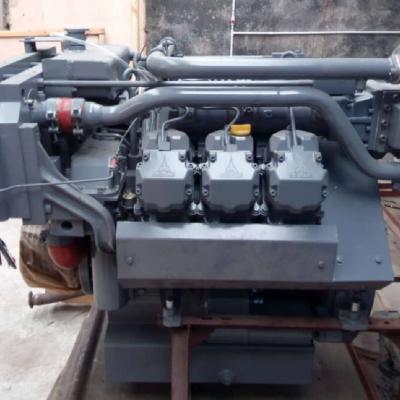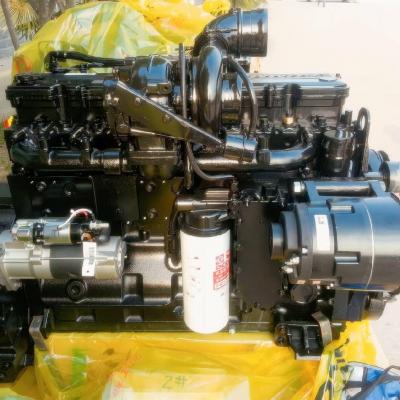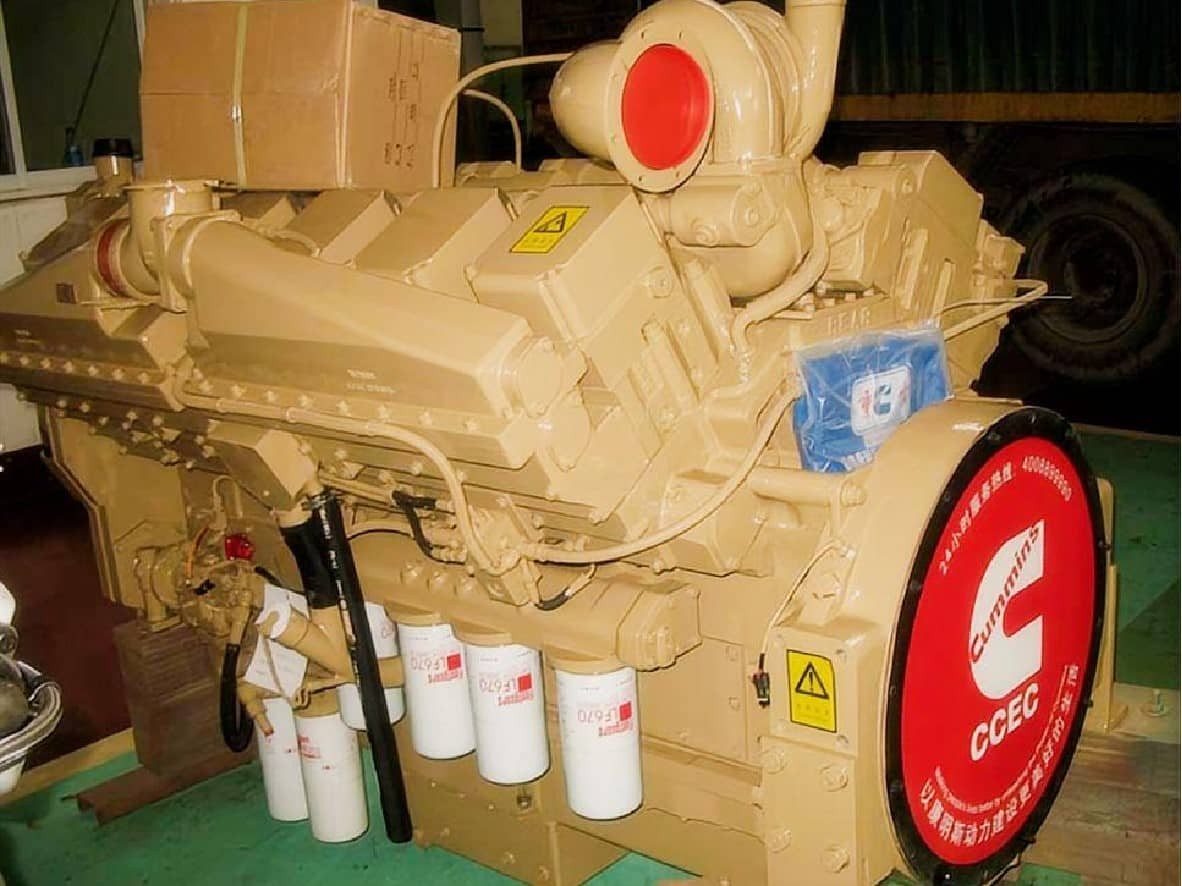
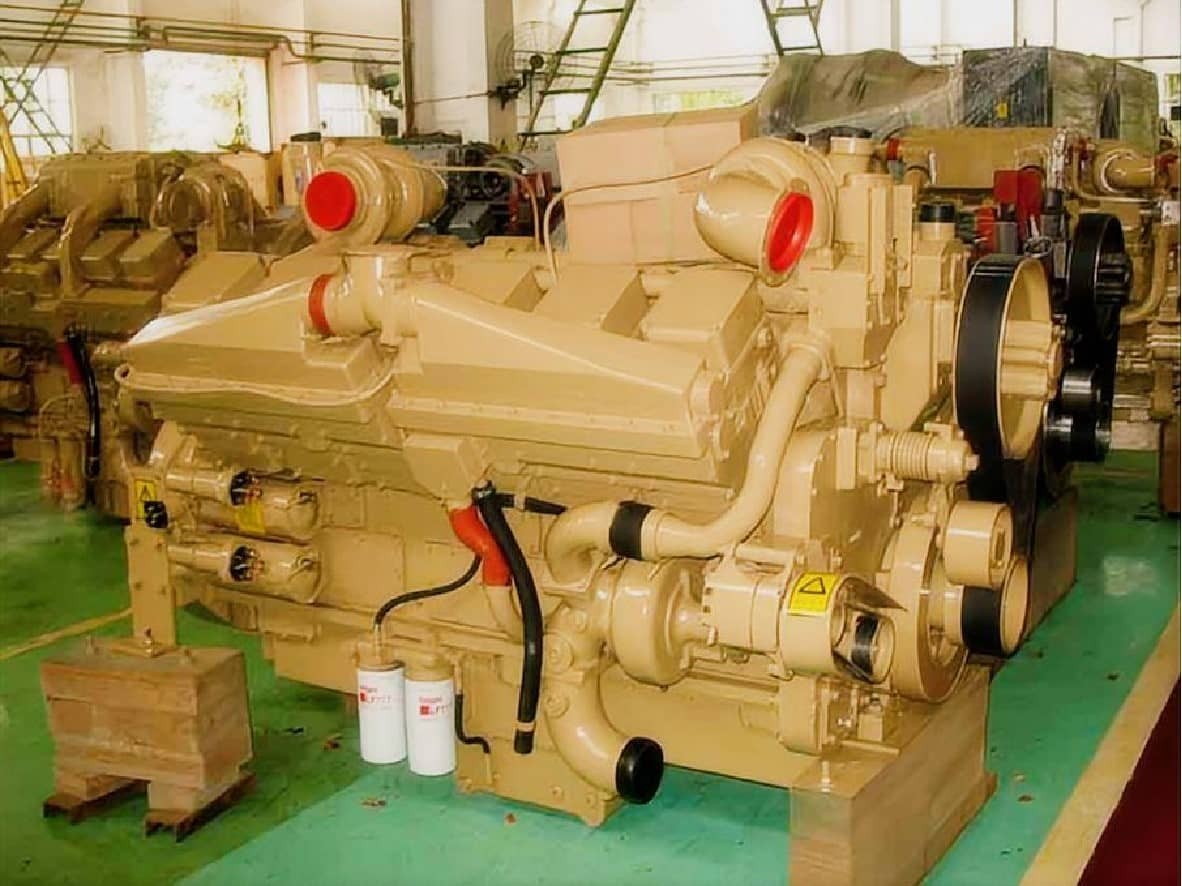
The Chongqing Cummins (CCEC) KTA38-G2A is engineered specifically to meet the heavy demands of continuous industrial and standby power generation at 50Hz. At the heart of this 38-liter V12 powerplant is a robust, heavily ribbed cast-iron block designed to handle peak cylinder pressures without thermal distortion. Unlike smaller inline engines, the 12-cylinder layout of the KTA38-G2A distributes mechanical stress evenly across the crankshaft, reducing vibration and extending major overhaul intervals.
As a dedicated engine supplier, HekoPower provides this unit configured precisely for heavy-duty G-Drive applications. The block features replaceable wet cylinder liners, which simplify maintenance during major overhauls compared to parent-bore blocks. Coupled with a heavy-duty forged steel crankshaft and induction-hardened journal fillets, this engine delivers reliable performance under fluctuating load steps typical of municipal backup stations, large-scale mining operations, and remote industrial microgrids.
When evaluating heavy diesel engines for large-scale gensets, engineers frequently weigh the KTA38-G2A against sibling models like the KTA38-G2 or KTA38-G2B. While all three share the same 159mm bore and stroke dimensions across the V12 architecture, their electronic and mechanical governing differs significantly.
The G2A variant utilizes specialized timing and fuel calibration geared toward superior transient response and strict frequency regulation under sudden block loading. Unlike lesser-optimized industrial engines that experience significant voltage and frequency sag when heavy machinery starts up, the KTA38-G2A integrates advanced CTT (Cummins Turbo Technologies) turbocharging that matches air-fuel ratios instantly. This minimizes black smoke emissions during cold starts and sudden load acceptance—a critical compliance factor for urban industrial environments.
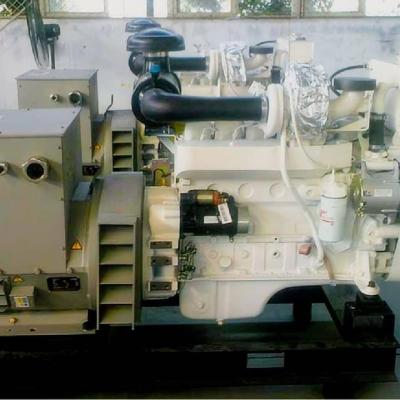
The physical footprint and high torque output of the 12-cylinder Cummins KTA38-G2A make it the preferred prime mover for mission-critical facilities. HekoPower routinely supplies this engine to integration partners building containerized 1-megawatt power stations for remote oil fields, large manufacturing plants requiring uninterrupted baseload power, and municipal water treatment plants where power failure is not an option.
Pairing this engine requires careful consideration of alternator compatibility. To harness the full 813kW output without risking mechanical coupling failure, the engine must be coupled with high-grade single-bearing or double-bearing synchronous alternators—such as Stamford or Marathon units—featuring SAE 0 or SAE 00 flywheel housings. Proper torsional vibration analysis (TVA) between the rotating mass of the V12 crankshaft and the alternator rotor is essential to eliminate resonant harmonic frequencies during long-term operation.
Maximizing the operational lifespan of a Chongqing Cummins KTA38-G2A engine relies heavily on rigorous preventive maintenance routines. Because this unit processes massive volumes of air and fuel, air filter restriction monitoring must be performed weekly in dusty industrial settings. A common pitfall operators face is neglecting the cooling system's SCA (Supplemental Coolant Additive) concentration; failing to maintain proper DCA levels in the 38-liter cooling jacket leads directly to cavitation pitting on the wet cylinder liners.
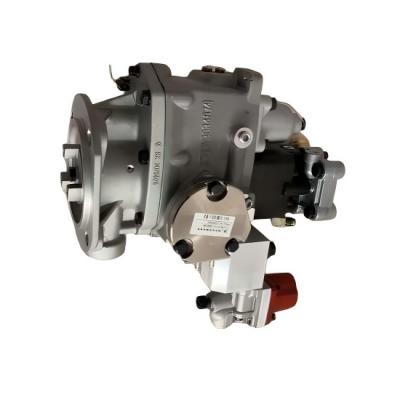
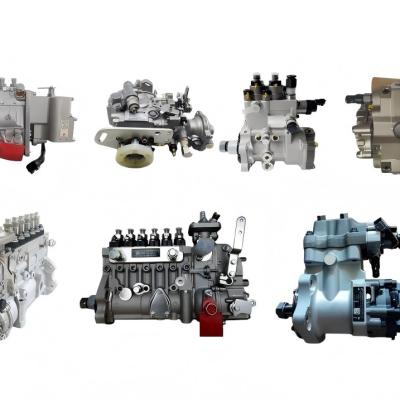
When replacing components such as the PT fuel pump or unit injectors, technicians must verify the engine's CPL (Control Parts List) and serial number. Using non-genuine or poorly remanufactured fuel components disrupts injection timing across the twelve cylinders, resulting in uneven exhaust temperatures, power loss, and potential piston crown damage. Always source verified CCEC replacement parts during scheduled 2,000-hour and 8,000-hour service intervals.
To explore alternative power tiers or complementary models within the same heavy-duty family, you can browse our comprehensive directory below. Cummins K38-G Series, original products from Chongqing Cummins Engine Plant(CCEC). This series mainly includes KT38-G-560KW, KTA38-G1-634KW, KTA38-G2-664KW, KTA38-G2A-813KW, KTA38-G2B-711KW, KTA38-G5-880KW, KTA38-G9A-1195KW, KT38-G-679KW, KTA38-G2-809KW, KTA38-G2A-915KW, KTA38-G4-1007KW.
The KTA38-G2A delivers 813kW (1090HP) under continuous prime power operation, meaning it can run indefinitely under variable loads. For emergency standby applications, it can handle higher peak demands up to approximately 895kW for limited annual operating hours.
No. The KTA38-G2A is factory-optimized and fuel-calibrated specifically for 1500 RPM (50Hz) operation. Operating this specific mechanical configuration at 1800 RPM violates the manufacturer's engineering parameters, leading to thermal stress and premature component degradation.
It utilizes Cummins’ proprietary PT (Pressure Time) fuel system. This mechanical-hydraulic system operates at lower injection pressures than common rail systems, offering exceptional reliability, easier field servicing, and high tolerance for varying fuel qualities found in remote industrial sites.