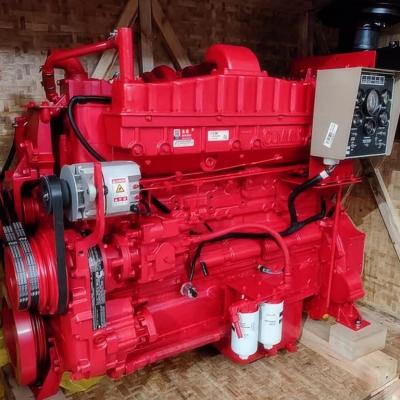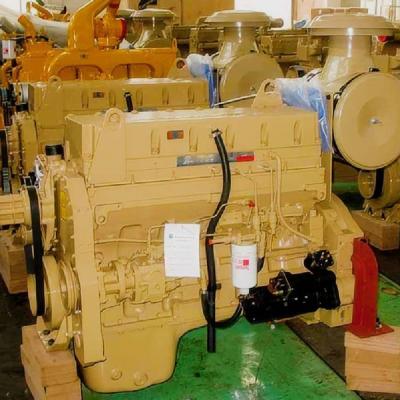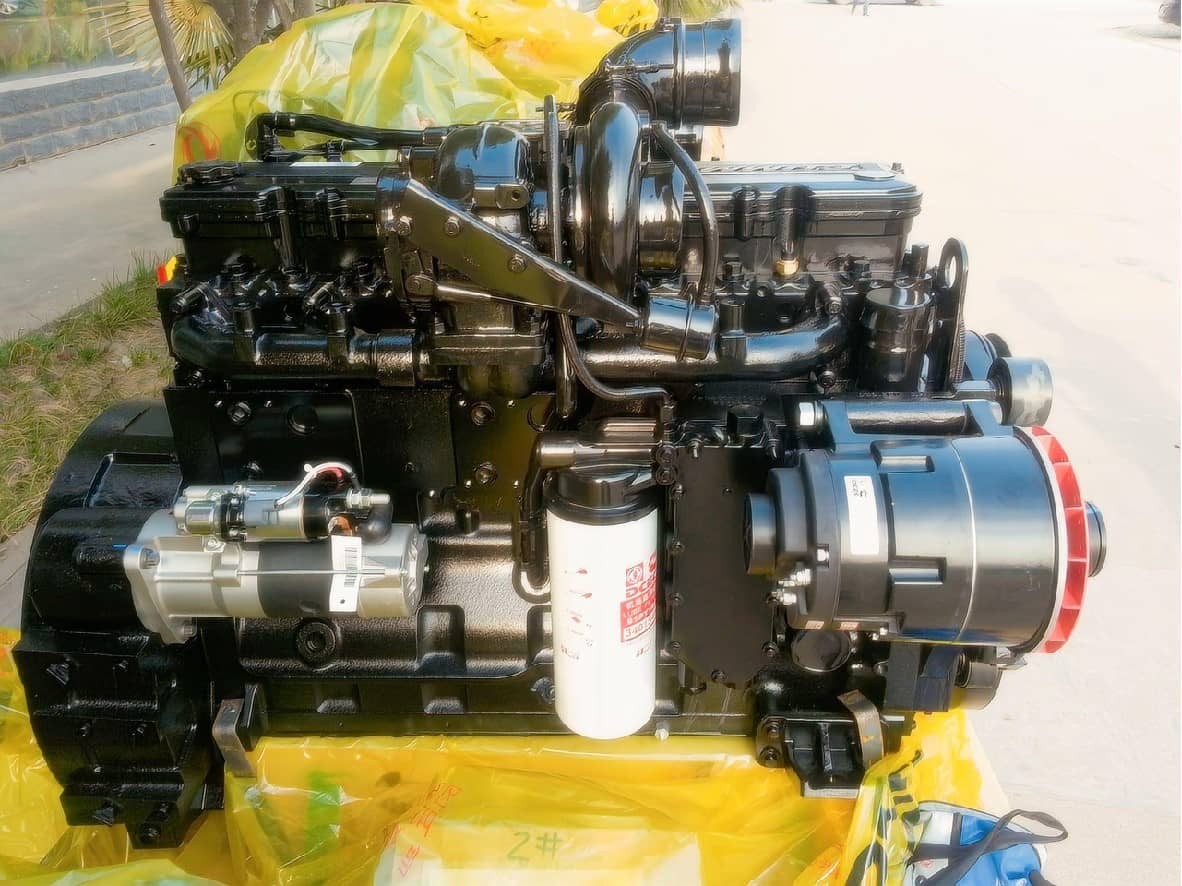
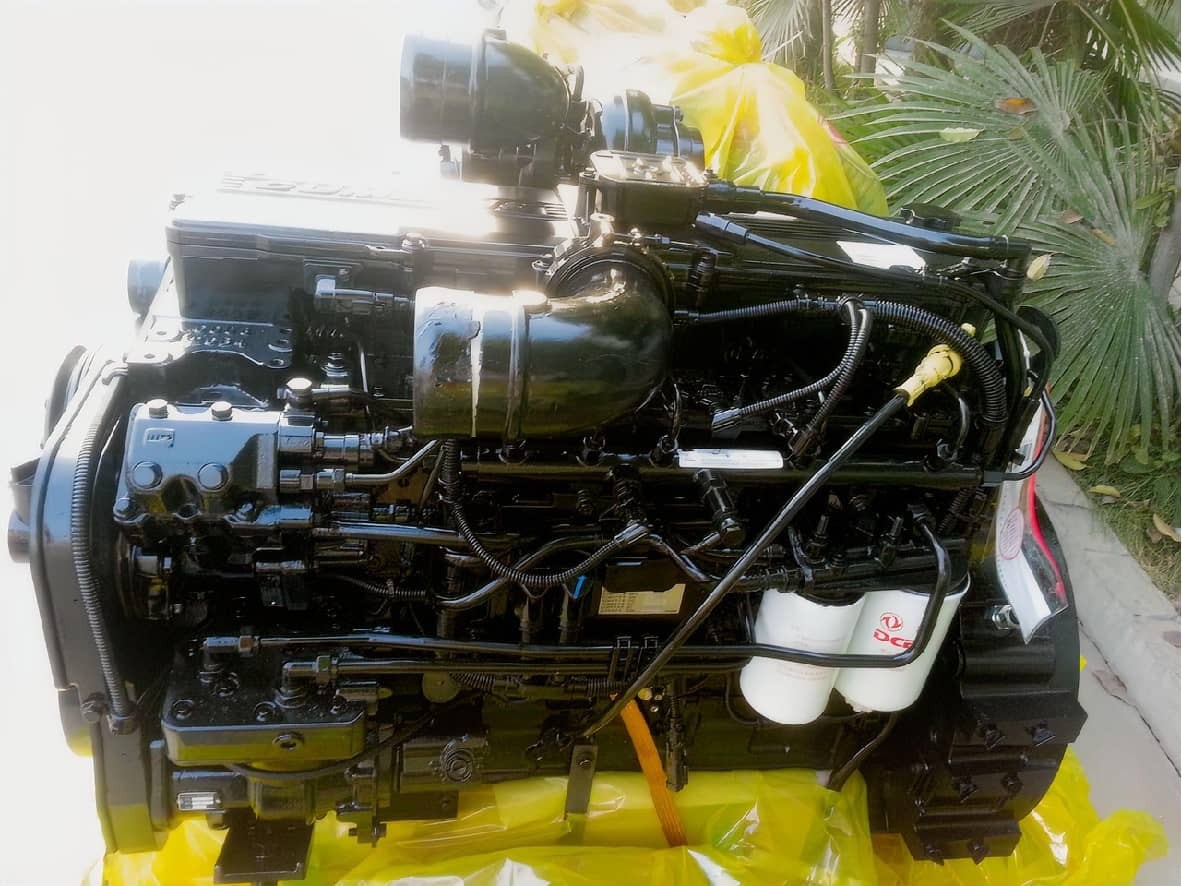
When fleet operators and commercial vehicle manufacturers specify an 8.9-liter displacement engine for regional distribution and medium-duty vocational trucks, the primary engineering objective is achieving a balance between robust mechanical reserve and optimized fuel economy in stop-and-go traffic cycles. The Dongfeng Cummins ISLe270-30 engine assembly delivers a rated output of 201 kilowatts, equivalent to 270 horsepower, at 2100 revolutions per minute. Unlike smaller displacement mid-range powerplants that operate near their thermal and mechanical limits under heavy loads, the ISLe platform leverages its generous displacement to generate a peak torque of 1050 N.m across a broad, flat operating band from 1100 to 1700 rpm. This characteristic allows commercial vehicles to maintain highway cruising speeds on inclines without excessive downshifting, reducing mechanical wear on the transmission driveline.
The ISLe270-30 configuration occupies a critical niche in commercial transport, finding widespread deployment in 4x2 and 6x4 rigid cargo trucks, regional distribution vehicles, and municipal transit buses operating under Euro III emissions jurisdictions. In urban and inter-city logistics fleets, trucks experience frequent acceleration cycles, heavy payload variations, and prolonged idle times. The mechanical architecture of the ISLe270-30 is specifically optimized for these duty cycles.
For instance, in regional delivery trucks carrying gross vehicle weights between 15 and 25 metric tons, the 270HP rating provides optimal power density. It avoids the fuel consumption penalties associated with higher-output 315HP or 340HP variants while delivering superior gradeability compared to 6-cylinder 6.7L engines. The robust casting of the cylinder block, combined with wet cylinder liners that facilitate efficient heat dissipation, ensures long operational lifespans even when operating in high-ambient-temperature regions across Africa, the Middle East, and Southeast Asia. HekoPower supplies complete engine assemblies configured precisely for direct chassis drop-in, ensuring seamless integration with existing vehicle wiring harnesses and mounting brackets.
Understanding how the ISLe270-30 differs from its sibling ratings within the L-series family clarifies its specific operational role. When evaluating the ISLe270-30 against the ISLe290-30 and ISLe310-30, the physical dimensions, 8.9-liter displacement, and 114mm by 144.5mm bore and stroke remain identical. The differentiation lies entirely in the electronic control module (ECM) calibration, fuel injection mapping, and turbocharger wastegate or variable geometry matching.
While the ISLe290-30 and ISLe310-30 are calibrated to deliver higher peak power at the upper end of the RPM spectrum for heavier long-haul or regional dump truck applications, the ISLe270-30 prioritizes low-end torque responsiveness and fuel efficiency at moderate engine speeds. The fuel injection strategy governed by the Bosch Common Rail (CCR) system on the ISLe270-30 delivers a slightly softer initial fuel charge gradient. This prevents thermal shock in the combustion chambers during repeated urban acceleration cycles, whereas higher horsepower variants utilize more aggressive injection timing that favors sustained highway output at the expense of increased thermal stress in stop-and-go environments. Fleet managers selecting between these models should match the engine rating directly to average payload weights and route topography rather than defaulting to the highest available horsepower rating.
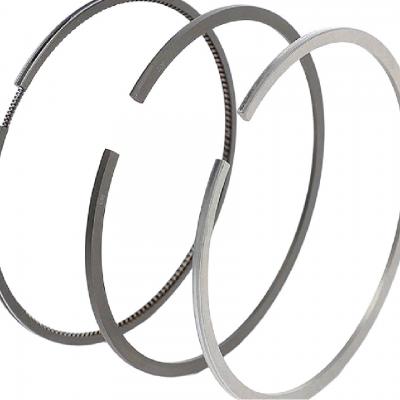
A frequent misconception in commercial vehicle maintenance is that detuned or lower-horsepower variants within the same engine family possess inferior internal components, such as weaker crankshafts or lighter-duty pistons. In the case of the Dongfeng Cummins ISLe platform, the core rotating assembly, including the forged steel crankshaft, connecting rods, and heavy-duty piston design, is shared across the entire horsepower range up to 340HP. The ISLe270-30 benefits from the exact same metallurgical standards and structural integrity as its higher-output counterparts.
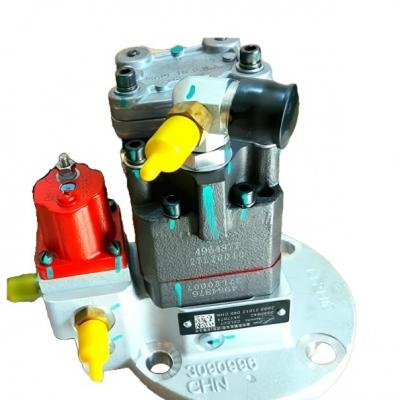
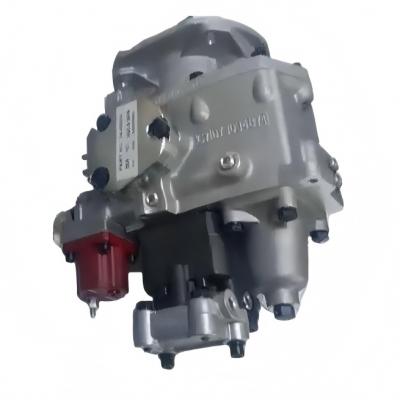
Another common misunderstanding involves fuel system sensitivity. Operators sometimes assume that Euro III mechanical and electronic fuel injection systems are impervious to varying diesel fuel quality. In practice, the precision tolerances within the Bosch Common Rail high-pressure pumps and fuel injectors on the ISLe270-30 require rigorous primary and secondary fuel-water separation. Neglecting filtration maintenance in dusty or high-moisture operating environments remains the leading cause of premature rail pressure loss, independent of the engine's inherent mechanical durability.
Maximizing the operational lifecycle of a genuine DCEC ISLe270-30 engine assembly requires adherence to preventative maintenance schedules tailored to vocational operating conditions. The integrated ECM governor continuously monitors engine load, coolant temperature, and boost pressure, storing diagnostic fault codes that provide early warning signs of component wear. During routine servicing, technicians should closely inspect the turbocharger compressor wheel and wastegate actuator linkage for carbon buildup, particularly in fleets operating extensive idling hours.
When undertaking a complete engine overhaul or replacing auxiliary components such as the fuel pump, electronic control module, or high-pressure fuel injectors, sourcing genuine replacement parts is critical. Non-genuine replacement components often fail to replicate the precise spray angle and flow rate of original DCEC fuel injection equipment, leading to uneven cylinder temperatures, unburned fuel wash, and accelerated bore wear. HekoPower provides fully assembled, factory-tested replacement units complete with matching serial documentation, ensuring that fleet operators can execute rapid engine swaps without compatibility discrepancies.
The broader engine platform encompassing this specific model serves as a cornerstone for medium and heavy commercial vehicle manufacturing. For engineers and procurement specialists seeking alternative power ratings or related displacement configurations within the same architectural family, exploring adjacent product categories ensures precise matching for specific vocational requirements.
DCEC ISDe Series, original products from Dongfeng Cummins Engine Plant (DCEC), Cummins Joint Venture Plant since 1986, 50% shareholding by Cummins USA. This series mainly includes ISLe270-30, ISLe290-30, ISLe300-30, ISLe310-30, ISLe325-30, ISLe340-30, ISLe350-30, ISLe375-30.
While the SAE flywheel housing and mounting dimensions conform to standard commercial vehicle specifications, driveline compatibility depends on transmission torque ratings and electronic vehicle speed sensor integration. The ISLe270-30 utilizes an advanced ECM governance system that communicates with compatible manual and automatic transmissions via standard data links, requiring proper harness verification during installation.
The ISLe270-30 is engineered for Euro III emissions compliance. It utilizes a high-pressure Bosch Common Rail (CCR) fuel system controlled by an onboard ECM, which optimizes injection timing and atomization across varying load conditions to balance power output and exhaust gas recirculation requirements.