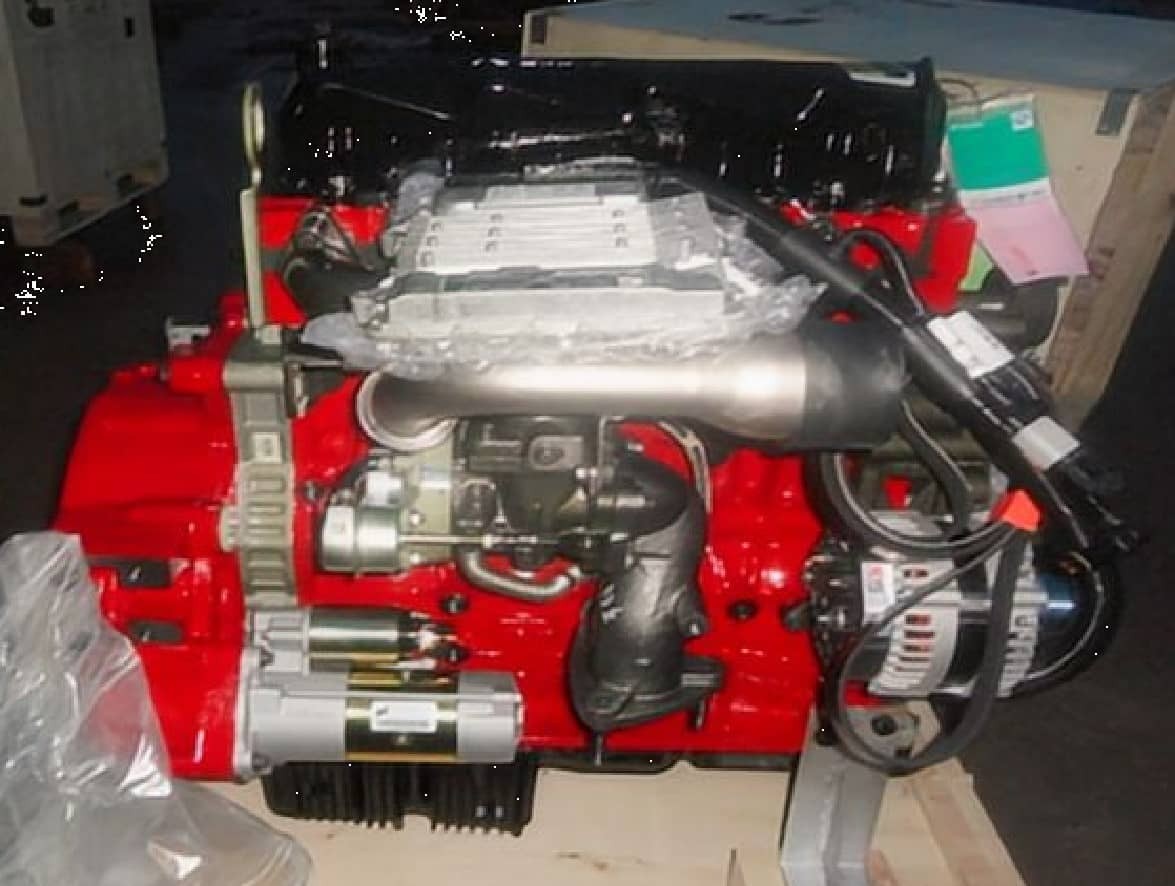
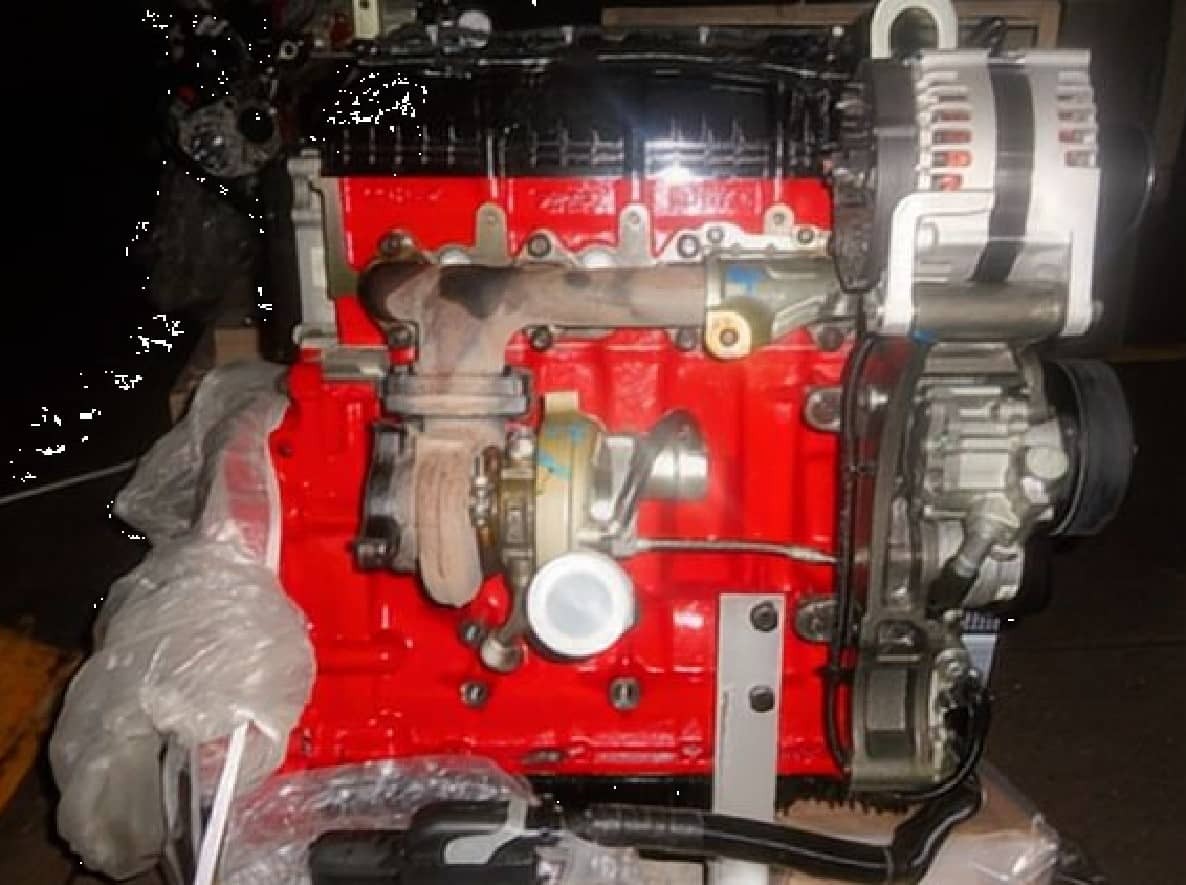
The Cummins ISF2.8s4107P is a state-of-the-art, inline four-cylinder, turbocharged and intercooled diesel power plant engineered specifically for light-duty commercial applications. Manufactured under the Beijing Foton Cummins Engine Co. (BFCEC) joint venture, this 2.78-liter engine achieves an optimal balance between high power density and fuel efficiency. Operating at a rated output of 80kW (107 horsepower) at a high-revving 3,600 RPM, the ISF2.8s4107P is uniquely tuned to deliver instantaneous throttle response in stop-and-go urban traffic environments while maintaining structural durability under continuous commercial loads.
In commercial transport, engine matching dictates operational profitability. The ISF2.8s4107P is primarily deployed in light commercial vehicles (LCVs), including light-duty cargo trucks, multi-passenger light buses, express delivery vans, and utility service vehicles with gross vehicle weight ratings (GVWR) typically ranging between 3.5 and 4.5 tons. Because urban delivery vehicles require frequent acceleration from standstill and sustained highway cruising speeds, the 3,600 RPM capability of the s4107P calibration provides the necessary gear-band flexibility. Fleet operators utilizing vehicles equipped with this engine benefit from minimized transmission wear and optimized fuel burn during mixed cycle delivery routes.
Selecting the correct engine variant requires understanding calibration differences within the same displacement family. When comparing the ISF2.8s4107P (107HP @ 3,600 RPM) to higher-output variants like the ISF2.8s4129P (129HP) or heavier torque-biased versions, the fundamental mechanical architecture—such as the 94mm bore and 100mm stroke—remains identical, but the fueling map, turbocharger boost threshold, and ECU calibration differ significantly. Unlike the 129HP variant which is optimized for heavier payload hauling at slightly lower sustained RPM bands, the s4107P prioritizes lighter dynamic loads, faster transient response, and smoother high-RPM cruising. This makes the s4107P the definitive choice for light courier fleets where maneuverability and acceleration responsiveness outweigh maximum towing capacity.
A frequent misconception among equipment buyers is that all ISF2.8 engines share identical turbocharger and fuel injection setups regardless of their horsepower suffix. In reality, pairing an incorrect ECU calibration or turbocharger housing with an ISF2.8s4107P assembly leads to thermal overload and premature EGR system failure. Another common myth is that high-RPM diesel engines like the s4107P suffer from compromised low-end torque. Despite its 3,600 RPM peak power rating, the engine sustains a robust flat torque curve down to 1,400 RPM, ensuring that low-speed urban crawling does not cause engine lugging or excessive soot accumulation in the diesel particulate filter.
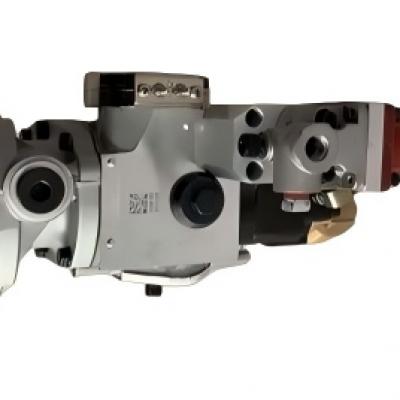
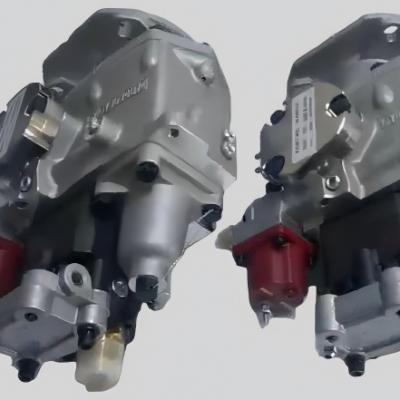
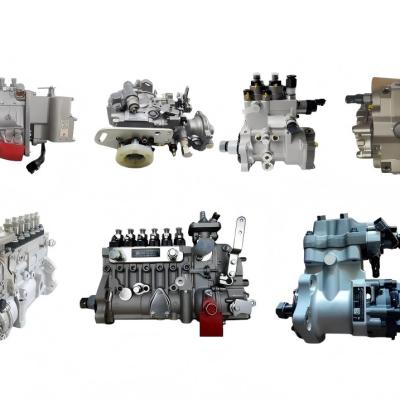
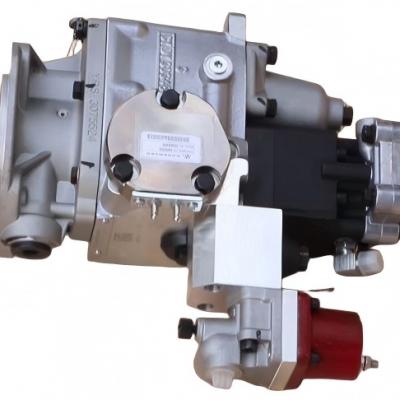
Proper maintenance ensures the longevity of the BFCEC ISF2.8s4107P complete engine assembly. Because the engine relies on a high-pressure common rail (HPCR) fuel system manufactured by Bosch, fuel cleanliness is paramount. Fleet managers must replace fuel filters every 10,000 to 15,000 kilometers to protect high-precision injector nozzles from abrasive contaminants and water-induced corrosion. Furthermore, when executing a complete engine replacement or repowering project, technicians must verify that the cooling fan clutch and viscous fan drive operate within thermal specifications, as high-speed light commercial operation generates intense localized heat dissipation demands around the aluminum cylinder head. As an experienced engine supplier, HekoPower provides fully pre-tested assembly units complete with factory-calibrated sensors and matching wiring harnesses to streamline installation.
BFCEC ISF Series, original products from Beijing Foton Cummins Engine Company Limited (BFCEC), a 50/50 joint venture between Cummins Inc. and China's Beiqi Foton Motor Company (Foton Motor). BFCEC produces Cummins light-duty, high-performance ISF diesel engines. This series mainly includes ISF2.8s3129T, ISF2.8s3148T, ISF2.8s4129P, ISF2.8s4129T, ISF2.8s5129T, ISF2.8s4148T, ISF2.8s4161P, ISF3.8s3141, ISF3.8s3154, ISF3.8s3168, ISF3.8s4141, ISF3.8s4154, ISF3.8s4168, ISF2.8s4107P.
It is specifically optimized for light commercial vehicles, express delivery vans, light trucks, and utility transport vehicles operating in urban and suburban delivery cycles.
Yes, due to its standardized mounting dimensions and compact four-cylinder footprint, it is frequently utilized for repowering Foton and compatible light-duty commercial trucks seeking restored fuel efficiency and reliable power delivery.
The engine features a state-of-the-art Bosch High-Pressure Common Rail (HPCR) electronic fuel injection system, ensuring precise fuel metering, lower noise emissions, and optimal fuel atomization.