Details
Deutz HC8V560/18C Continuous Marine Propulsion Engine
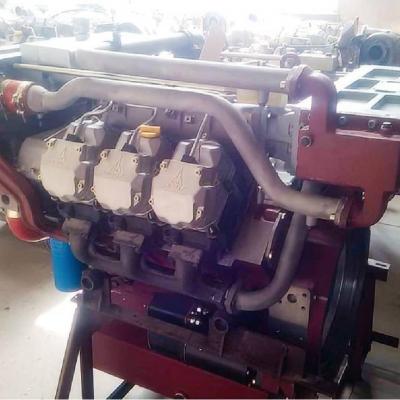
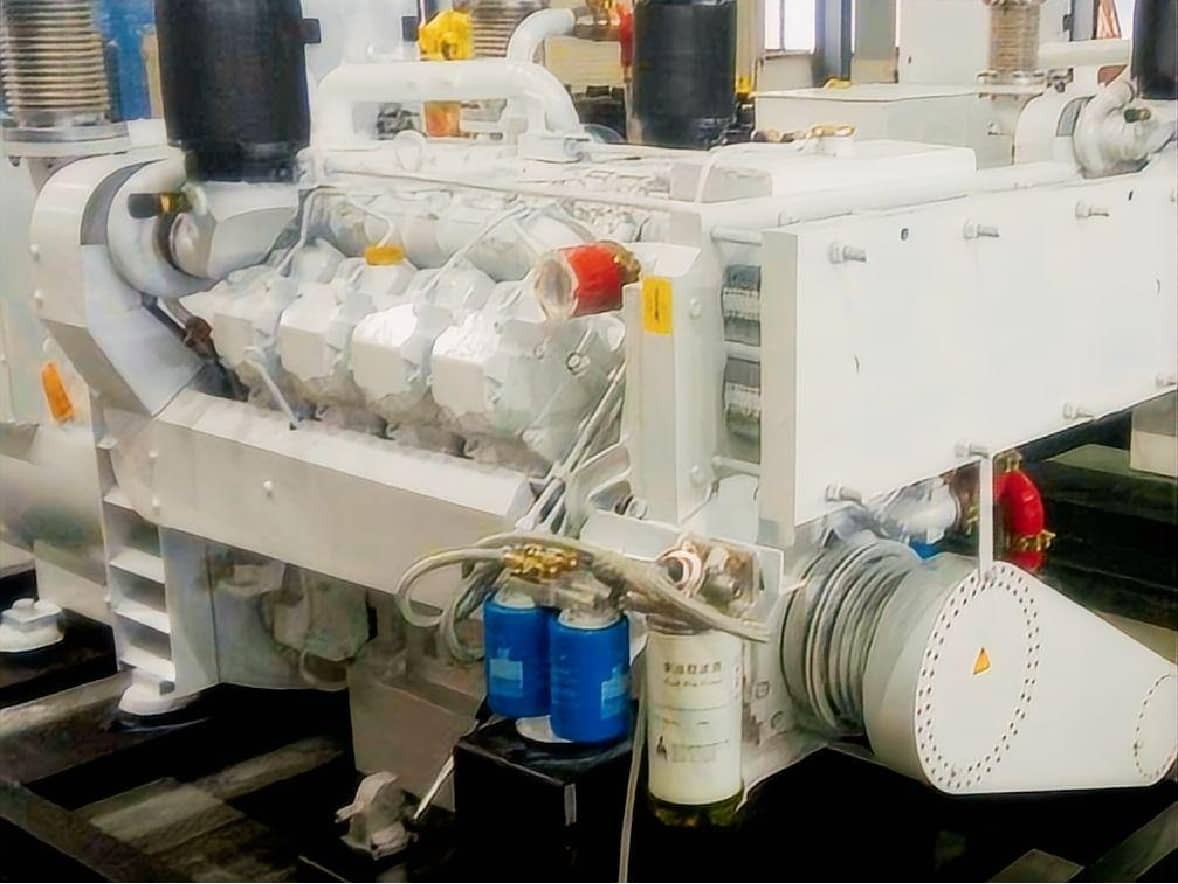
The Deutz HC8V560/18C is a continuous-duty marine main propulsion engine built by Hebei Huabei Diesel Engine Co., Ltd. (Huachai Deutz), the authorized Deutz AG license plant in China. Engineered from the German BFM1015M 90-degree V8 architecture, this 15.874-liter diesel delivers 412 kW (560 metric PS, or approximately 553 mechanical HP) at 1800 rpm for vessels operating under sustained commercial propulsion loads.
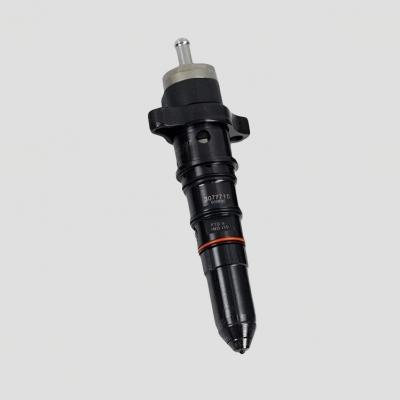
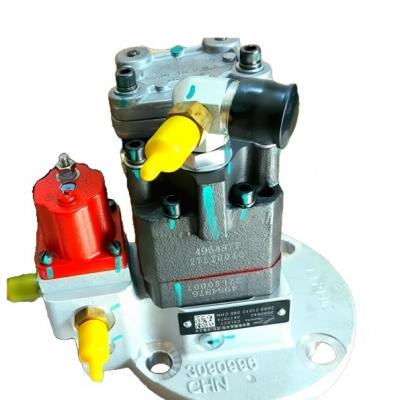
Its mechanical foundation pairs replaceable wet cylinder liners and modular single-cylinder four-valve heads with cam-driven Electronic Unit Pumps (EUP), turbocharging, and water-to-air charge cooling. HekoPower supplies factory-new complete HC8V560/18C marine propulsion assemblies equipped with heat exchanger cooling, 28.5V/55A electric starting, SAE 1 / 14-inch flywheel interface, and ZY, CCS, or IMO emissions certification for shipyards, marine integrators, and vessel repowering projects.
Technical Specifications
General Engine Data
- Engine Model:
- Deutz HC8V560/18C
- Type:
- 8 Cylinders, V type, 4 stroke
- Displacement:
- 15.874 L
- Bore * Stroke:
- 132 * 145
- Net Weight (with flywheel and alternator):
- 1300 Kg
- Overall Dimension:
- 1727mm*1119mm*1204mm
Key Performance Date
- Rated Power:
- 412 kW/560 HP
- Rated Speed:
- 1800 rpm
- Low Idle Speed:
- 550 rpm
- Fuel Consumption (Running Speed):
- ≥ 195 g/kW.h
More Technical Data
- Certification:
- ZY/CCS/IMO Certificates
- Aspiration:
- Turbocharged and Intercooled
- Fuel System:
- EUP
- Compression Ratio:
- 16.5:1
- Starting Method:
- Electrical Start (28.5V/55A)
- Cooling Method:
- Heatexchanger and Water-air Intercooler
- Governor Type:
- Electronic/Mechanical
- Lubricant Capacity:
- Around 47 L
- Flywheel Size/ Housing:
- 14", SAE1
- Running Type:
- Continuous
Comparing HC8V560/18C Against Sibling Ratings and Auxiliary Builds
Within the 1800 rpm HC8V/C propulsion tier, the HC8V560/18C occupies a balanced middle ground on the identical 15.874 L, 1300 kg engine frame. It delivers 8 kW more shaft power than the HC8V550/18C (404 kW) and 15 kW more than the HC8V540/18C (397 kW) without requiring any change to engine-bed spacing or shaftline geometry. At the upper end of the family, the HC8V580/18C (426 kW) and HC8V600/18C (441 kW) extract higher cylinder mean effective pressure from the same 132 mm by 145 mm bore and stroke. Running at 412 kW and 1800 rpm keeps the HC8V560/18C at roughly 17.3 bar BMEP and about 2,186 N·m of rated shaft torque, giving high-hour commercial operators stronger thermal margin than the 441 kW calibration.
Compared with the 1500 rpm propulsion models—topping out at the HC8V540/15C (397 kW)—the HC8V560/18C adds 15 kW of rated output while spinning 300 rpm faster. Slow-turning `/15C` engines are typically selected when naval architects want lower piston speed and lower reduction ratios on deep-draft displacement hulls, whereas the `/18C` pairs cleanly with higher-ratio marine reverse-reduction gearboxes (often 3.5:1 to 5:1) when compactness and vessel speed carry equal weight.
Buyers should also avoid confusing the `/18C` propulsion unit with the HC8V/D marine auxiliary series, such as the HC8V568/18D (418 kW at 1800 rpm). Even though both share the same V8 block and physical dimensions, the `/18D` is calibrated for constant-speed 60 Hz marine generator drive with isochronous governing and 10% overload capability. The HC8V560/18C is tuned specifically for variable-speed propeller-law loading down to 550 rpm idle, so propulsion and auxiliary builds are not interchangeable without re-specifying fuel mapping, governing, and classification paperwork.
Vessel Applications and Real-World Operating Behavior
With its compact 1,727 mm overall length and 412 kW continuous output, the HC8V560/18C fits single-screw coastal cargo ships and inland barges (roughly 800 to 1,500 DWT), 24 to 35 meter offshore trawlers and purse seiners, twin-screw harbor tugboats, pushboats, and commercial passenger ferries. Under a standard cubic propeller curve, cruising at 80% rated speed (around 1440 rpm) draws roughly half of rated power, where turbocharged and water-air intercooled scavenging keeps combustion temperatures stable and specific fuel burn near its optimal efficiency band around 195 g/kW·h. The stable 550 rpm low idle gives crews smooth clutch engagement and precise low-speed control during berthing or net hauling.
A frequent sizing mistake during repowering is treating the "560 HP" label as imperial brake horsepower or an intermittent pleasure-boat rating. Because 412 kW converts to 560 metric PS (553 mechanical HP), naval architects must pitch the propeller so the hull reaches full 1800 rpm at rated rack position. Over-propping the vessel so full throttle stalls at 1650 to 1700 rpm overloads the EUP fuel delivery, drives up exhaust gas temperatures, and accelerates turbocharger and piston-ring wear.
Maintenance, Cooling, and Retrofit Guidance
The HC8V560/18C carries an oil sump capacity of roughly 47 liters and requires API CF-4, CI-4, or higher marine diesel oil (commonly SAE 15W-40), with oil and filter intervals typically set between 250 and 500 hours depending on load profile and local fuel sulfur levels. Because each cylinder has an independent four-valve cylinder head and individual EUP unit pump, marine engineers can service a single cylinder head or injection unit inside tight machinery spaces without dismantling an entire cylinder bank. Keep the primary oil-water separator drained daily and replace fine fuel filters on schedule to shield the high-pressure unit pumps from water and particulate scoring.
Thermal reliability depends on maintaining both halves of the dual-circuit cooling system. Keep closed-loop freshwater coolant properly inhibited—normal protection limits sit below a 103 °C ceiling—and schedule regular inspections of raw-water pump impellers, zinc sacrificial anodes, and both the heat exchanger and water-air intercooler tube bundles to prevent salt scaling. During engine-room retrofits, account for the 1300 kg dry engine weight plus marine gearbox mass, pair the SAE 1 housing and 14-inch flywheel with a torsionally matched flexible coupling approved for V8 firing harmonics, and verify final shaft alignment once the vessel is afloat.
Deutz HC8V/C-Marine Propulsion Series
Positioned near the upper end of Huachai Deutz's 15.874 L V8 propulsion catalog, the HC8V560/18C bridges the lower-speed 1500 rpm range and the peak 441 kW 1800 rpm rating while sharing standardized liners, gaskets, filters, and mounting geometry across the entire lineup.
Deutz HC8V/C-Marine Propulsion Series, Marine Propulsion Diesel Engines for commercial and recreational applications, original products from Huachai Deutz Engine Plant. This series mainly includes HC8V480/15C, HC8V500/15C, HC8V510/15C, HC8V520/15C, HC8V540/15C, HC8V520/18C, HC8V540/18C, HC8V550/18C, HC8V560/18C, HC8V580/18C, HC8V600/18C.
Frequently Asked Questions
Why is the HC8V560/18C listed as 560 HP on some sheets and 553 HP on others?
Both figures refer to the exact same 412 kW continuous rating at 1800 rpm. The "560" in the model code represents metric horsepower (PS, where 412 kW equals 560.2 PS), whereas 553 HP is the mechanical/imperial horsepower conversion (412 kW equals 552.5 bhp).
What marine gearboxes match the HC8V560/18C flywheel and housing?
The engine uses a standard SAE 1 flywheel housing and 14-inch flywheel, which mates directly with commercial marine reverse-reduction gearboxes rated for 412 kW at 1800 rpm (roughly 2,186 N·m input torque) using an appropriately sized torsional elastic coupling.
Can the HC8V560/18C be used to drive a 60 Hz marine auxiliary generator?
No. The `/18C` suffix designates a variable-speed propulsion build calibrated for propeller-curve duty. For constant-speed 1800 rpm (60 Hz) onboard power generation, specify a dedicated HC8V/D auxiliary model such as the HC8V568/18D.
What practical advantage does the EUP fuel system offer for commercial fleets?
Because each cylinder has its own cam-driven unit pump rather than a single shared high-pressure rail pump, a localized injection fault affects only one cylinder and can be swapped quickly at sea or in regional ports without specialized common-rail cleanroom tooling.