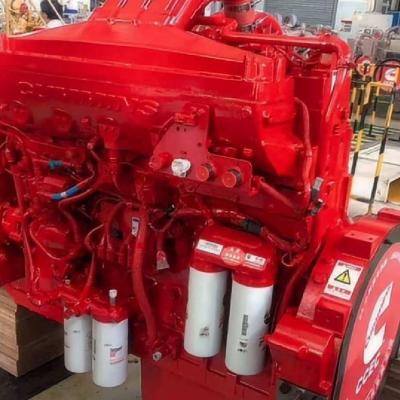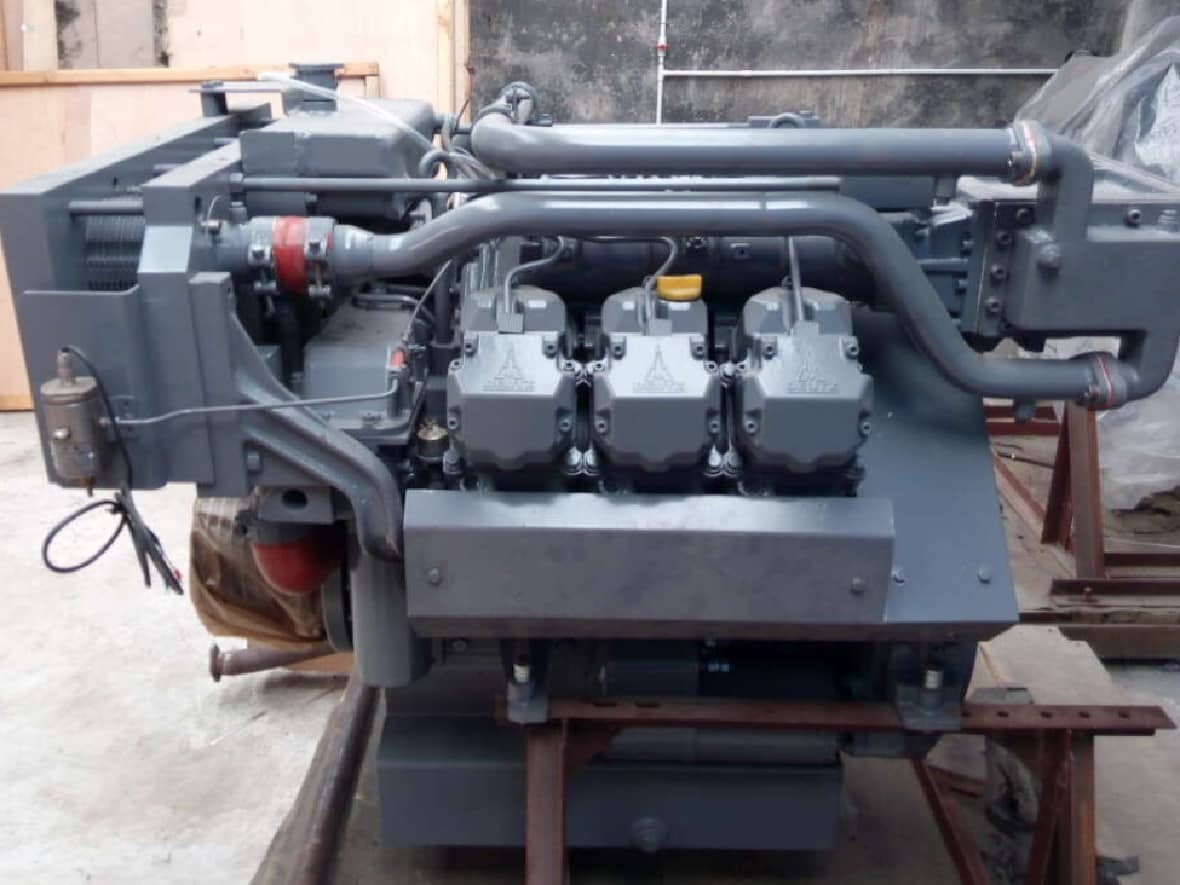
Details
Deutz HC6V450/18C Continuous Marine Propulsion Engine
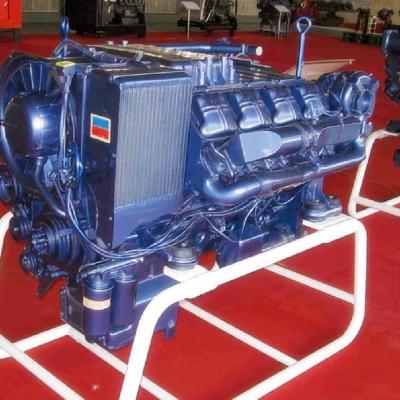
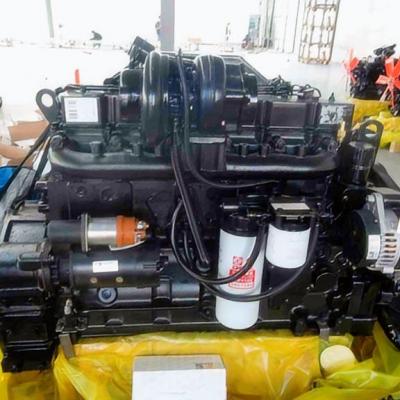
The Deutz HC6V450/18C is a continuous-duty marine main propulsion diesel engine rated at 331 kW (450 HP) at 1800 rpm. Built by Hebei Huabei Diesel Engine Company (Huachai Deutz Engine Plant) under Deutz AG technology licensing since 1979, it uses an 11.906 L 90-degree V6 architecture with a 132 mm bore, 145 mm stroke, 16.5:1 compression ratio, and Electronic Unit Pump (EUP) fuel injection.
HekoPower Group supplies the HC6V450/18C as a factory-assembled marine propulsion package from the licensed Huachai plant for commercial and recreational vessels. Configurations are available with ZY, CCS, and IMO classification certification, pairing a 14-inch flywheel and SAE 1 flywheel housing with closed-loop heat exchanger and water-air intercooler cooling.
Technical Specifications
General Engine Data
- Engine Model:
- Deutz HC6V450/18C
- Type:
- 6 Cylinders, V type, 4 stroke
- Displacement:
- 11.906 L
- Bore * Stroke:
- 132 * 145
- Net Weight (with flywheel & alternator):
- 1100 Kg
- Overall Dimension:
- 1484mm*1050mm*1468mm
Key Performance Date
- Rated Power:
- 331 kW/450 HP
- Rated Speed:
- 1800 rpm
- Low Idle Speed:
- 550 rpm
- Fuel Consumption (Running Speed):
- ≥ 195 g/kW.h
More Technical Data
- Certification:
- ZY/CCS/IMO Certificates
- Aspiration:
- Turbocharged and Intercooled
- Fuel System:
- EUP
- Compression Ratio:
- 16.5:1
- Starting Method:
- Electrical Start (28.5V/55A)
- Cooling Method:
- Heatexchanger and Water-air Intercooler
- Governor Type:
- Electronic/Mechanical
- Lubricant Capacity:
- Around 36 L
- Flywheel Size/ Housing:
- 14", SAE1
- Running Type:
- Continuous
How the HC6V450/18C Compares Within the HC6V Family
Within the 1800 rpm propulsion tier, the HC6V450/18C (331 kW) sits at the top output step of the 11.906 L V6 block, delivering 22 kW more continuous shaft output than the HC6V420/18C (309 kW) and 37 kW more than the HC6V400/18C (294 kW) with the same 1100 kg net weight and 1484 mm by 1050 mm by 1468 mm footprint. That extra headroom supports slightly higher cruising speeds or heavier displacement hulls without lengthening the engine room.
Compared with 1500 rpm propulsion models such as the HC6V410/15C (301 kW) and HC6V400/15C (294 kW), the HC6V450/18C reaches higher peak power at 1800 rpm while typically pairing with a marine reverse-reduction gearbox of slightly deeper reduction ratio to match propeller tip speed. It also differs from auxiliary and generator-drive models such as the HC6V449/18D or HC6V-GM series, which are set up for constant-speed electrical generation rather than variable-speed marine propulsion curves.
Vessel Applications and Operating Behavior
The HC6V450/18C is well suited to commercial fishing boats, harbor and coastal tugs, cargo ships, passenger vessels, barges, motorboats, and yachts where compact V6 dimensions and sustained continuous output matter. In twin-screw installations it provides strong margin for coastal passages and maneuvering, while single-screw vessels benefit from its 1100 kg dry/net weight class and 550 rpm low idle during docking, lock transit, or gear hauling.
Operators sometimes treat a continuous 331 kW marine propulsion rating as permission to run continuously at 100% power even if the propeller curve is heavy or fouled. Matching propeller pitch so the engine can reach its rated 1800 rpm under clean-hull sea trial conditions prevents sustained over-fueling, high exhaust temperatures, and premature turbocharger or valve wear.
Maintenance, Cooling, and Retrofit Guidance
Routine maintenance centers on keeping the approximately 36 L lubricating oil charge topped up with API CF-4 or higher grade engine oil, servicing primary water-separating and fine fuel filters, and maintaining the 28.5V/55A electrical starting and charging circuit. The single-cylinder, single-head modular layout allows individual cylinder heads and camshaft-driven EUP assemblies to be serviced without disturbing adjacent cylinders.
A common misconception is that an EUP fuel system behaves like a fragile centralized common rail where one fault disables the entire fuel rail. Because each cylinder on the HC6V450/18C uses its own unit pump and short delivery line, technicians can isolate individual cylinder performance more cleanly during diagnostics.
On the cooling circuit, inspect seawater strainers, zinc anodes, and heat exchanger or water-air intercooler passages regularly so jacket coolant stays safely below the 103 °C maximum limit in warm sea water. During repowering or new builds, confirm engine-bed mounting geometry for the 1484 mm by 1050 mm by 1468 mm envelope, verify torsional coupling sizing for the 14-inch flywheel and SAE 1 housing, and choose between electronic or mechanical governing to match vessel controls.
Deutz HC6V/C-Marine Propulsion Series
The HC6V450/18C anchors the 1800 rpm continuous propulsion end of the 11.906 L Huachai Deutz V6 line, giving vessel builders a direct step above lower-rated 1800 rpm and 1500 rpm propulsion models on a common installation envelope.
Deutz HC6V/C-Marine Propulsion Series, Marine Propulsion Diesel Engines for commercial and recreational applications, original products from Huachai Deutz Engine Plant. This series mainly includes HC6V296/15C, HC6V330/15C, HC6V350/15C, HC6V375/15C, HC6V400/15C, HC6V410/15C, HC6V390/18C, HC6V400/18C, HC6V420/18C, HC6V450/18C, HC6V150, HC6V240.
HC6V450/18C Technical FAQs
What gearbox and flywheel interface does the Deutz HC6V450/18C use?
The engine is equipped with a 14-inch flywheel and an SAE 1 flywheel housing, matching commercial marine reverse-reduction gearboxes rated for around 331 kW continuous duty subject to a torsional vibration check.
How does the HC6V450/18C handle cooling in enclosed engine rooms?
It combines a turbocharged and intercooled intake system with a heat exchanger and water-air intercooler, cooling charge air directly with water rather than relying on hot engine-room air.
Can the HC6V450/18C be ordered with either electronic or mechanical governing?
Yes, the specification supports electronic or mechanical governing so shipyards and fleet operators can match speed control, twin-engine synchronization, and bridge station integration to the vessel design.
What low idle speed does the HC6V450/18C maintain during harbor work?
Its low idle speed is 550 rpm, supporting smooth slow-speed maneuvering, trolling, and standby operation without abrupt clutch engagement or rough firing.