Details
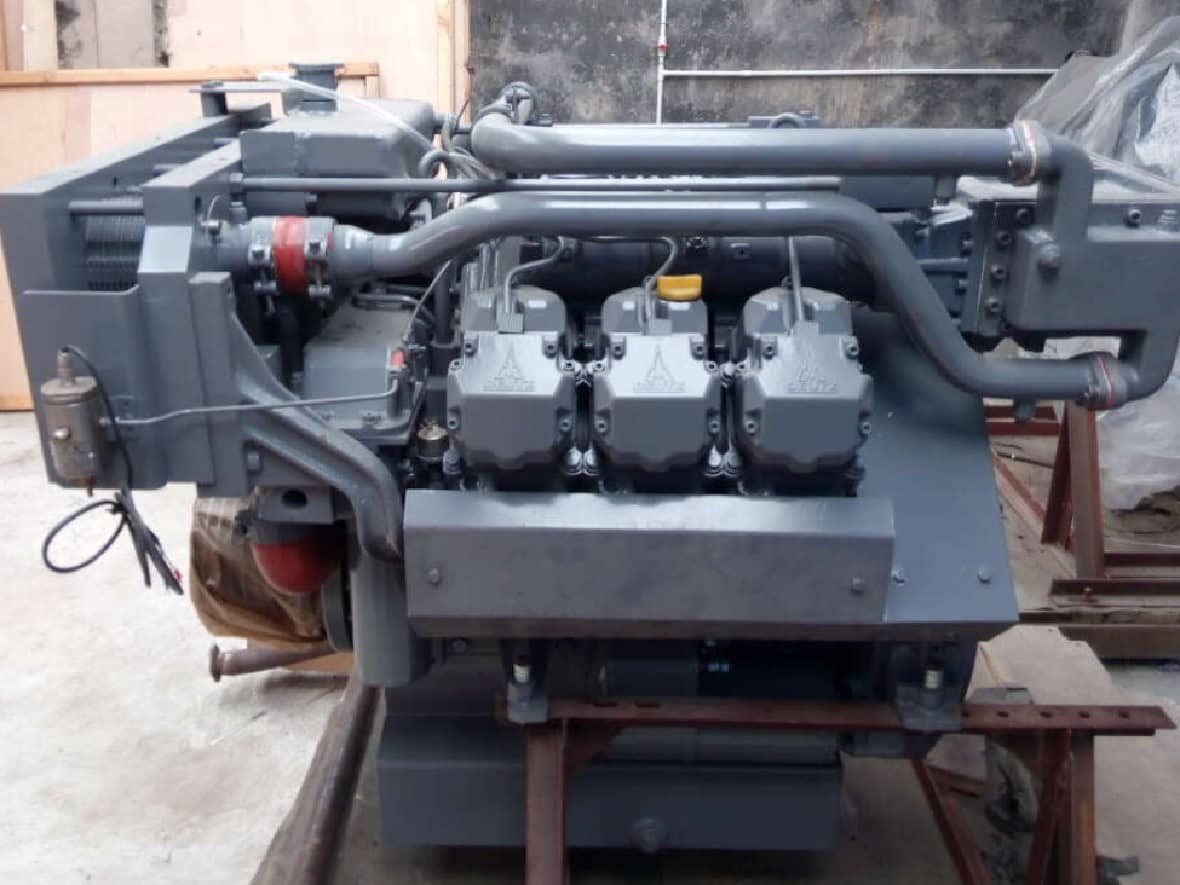
Deutz HC6V375/15C Continuous-Duty Marine Propulsion Engine
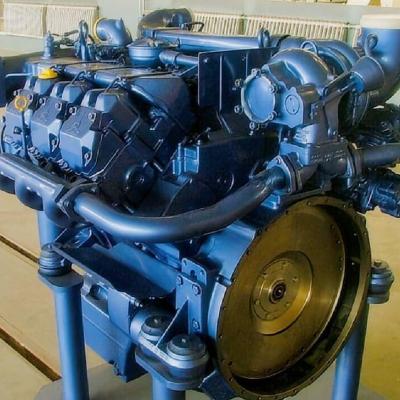
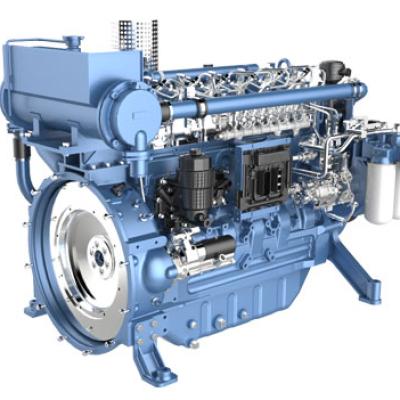
The Deutz HC6V375/15C is a 6-cylinder V-type marine propulsion diesel engine rated at 276 kW (375 HP) continuous output at 1500 rpm. Manufactured at the Hebei Huabei Diesel Engine Company (Huachai) licensed plant on the proven German Deutz BFM1015 core architecture, it combines a compact 11.906 L displacement with an electronic unit pump (EUP) fuel system and water-to-air charge cooling.
HekoPower supplies the HC6V375/15C as a complete, factory-new marine propulsion assembly equipped with flywheel, SAE 1 housing, heat exchanger, and 28.5V/55A electrical starting system. With ZY, CCS, and IMO certification, it is built for commercial vessels and workboats that require uninterrupted propeller-law operation rather than intermittent pleasure-craft bursts.
Technical Specifications
General Engine Data
- Engine Model:
- Deutz HC6V375/15C
- Type:
- 6 Cylinders, V type, 4 stroke
- Displacement:
- 11.906 L
- Bore * Stroke:
- 132 * 145
- Net Weight (with flywheel & alternator):
- 1100 Kg
- Overall Dimension:
- 1484mm*1050mm*1468mm
Key Performance Date
- Rated Power:
- 276 kW/375 HP
- Rated Speed:
- 1500 rpm
- Low Idle Speed:
- 550 rpm
- Fuel Consumption (Running Speed):
- ≥ 195 g/kW.h
More Technical Data
- Certification:
- ZY/CCS/IMO Certificates
- Aspiration:
- Turbocharged and Intercooled
- Fuel System:
- EUP
- Compression Ratio:
- 16.5:1
- Starting Method:
- Electrical Start (28.5V/55A)
- Cooling Method:
- Heatexchanger and Water-air Intercooler
- Governor Type:
- Electronic/Mechanical
- Lubricant Capacity:
- Around 36 L
- Flywheel Size/ Housing:
- 14", SAE1
- Running Type:
- Continuous
How the HC6V375/15C Compares Within the HC6V Lineup
Inside the 1500 rpm propulsion family, the HC6V375/15C sits in the upper-middle power band between the 257 kW HC6V350/15C and the 294 kW HC6V400/15C. All three share the same 132 mm bore, 145 mm stroke, 1100 kg dry weight, and 1484 mm length, so hull builders can step up thrust without redesigning engine bearers or shaft tunnels. Choosing the 276 kW calibration keeps thermal loading lower than the 301 kW HC6V410/15C while still delivering stronger bollard pull than the 243 kW HC6V330/15C.
Naval architects also weigh the HC6V375/15C against 1800 rpm siblings such as the HC6V390/18C and HC6V420/18C. Running at 1500 rpm instead of 1800 rpm reduces piston speed and valve-train wear over multi-thousand-hour voyages, making the /15C rating better suited to heavy displacement hulls and lower reduction-gear ratios. Buyers should also avoid confusing this propulsion model with the similarly named HC6V374/15D auxiliary engine; the “C” suffix denotes variable-speed marine propulsion with propeller-curve fueling, whereas “D” units are fixed-speed generator drives.
Real-World Marine Operating Scenarios
The HC6V375/15C is widely installed in inland and coastal cargo vessels, harbor tugs, stern trawlers, passenger ferries, and self-propelled barges. Its 550 rpm low idle speed gives helmsmen smooth clutch engagement and predictable slow-speed maneuvering when docking or holding station in current. Because the V6 block is only 1484 mm long, it fits comfortably in compact twin-screw engine rooms where an inline-six of equal displacement would encroach on forward bulkheads.
Under typical commercial duty cycles—cruising between 70% and 85% load—the turbocharged and water-air intercooled intake maintains dense charge air even in warm engine rooms. A common misconception in marine repowering is that a 1500 rpm propulsion engine can be paired directly with any existing gearbox originally matched to an 1800 rpm unit. In practice, dropping rated input speed by 300 rpm requires verifying propeller pitch and reduction ratio so the engine reaches full 1500 rpm without lugging or over-fueling.
Maintenance and Retrofit Guidance
Routine servicing centers on the 36-liter lubrication sump and the closed-loop heat exchanger circuit. Use marine-grade 15W-40 API CI-4 or equivalent heavy-duty diesel oil, and monitor raw-water strainer differential pressure to keep the water-air intercooler free of silt and marine growth. Because the engine uses an EUP fuel system, clean water-separating primary filtration is essential to protect individual unit pumps from coastal fuel contamination.
Another frequent oversight during vessel retrofits is assuming mechanical and electronic governor configurations are interchangeable without throttle-control changes. Confirm whether your bridge control system uses mechanical push-pull cables or electronic throttle signals before ordering. When mating to a marine gearbox, check alignment against the standard 14-inch flywheel and SAE 1 housing, and ensure the 24V battery bank is properly sized for the 28.5V/55A charging and starting circuit.
Deutz HC6V/C-Marine Propulsion Series
As the 276 kW continuous-duty option in Huachai Deutz’s 11.906 L V6 propulsion lineup, the HC6V375/15C bridges mid-range workboat power and heavy-duty coastal propulsion while maintaining parts commonality across the entire 132 mm bore platform.
Deutz HC6V/C-Marine Propulsion Series, Marine Propulsion Diesel Engines for commercial and recreational applications, original products from Huachai Deutz Engine Plant. This series mainly includes HC6V296/15C, HC6V330/15C, HC6V350/15C, HC6V375/15C, HC6V400/15C, HC6V410/15C, HC6V390/18C, HC6V400/18C, HC6V420/18C, HC6V450/18C, HC6V150, HC6V240.
Frequently Asked Questions
Can the HC6V375/15C be used as a marine generator drive?
No. The HC6V375/15C is calibrated for variable-speed marine propulsion. For 50 Hz marine auxiliary generator sets at 1500 rpm, specify the corresponding D-series auxiliary model such as the HC6V374/15D.
What marine gearbox interface does the HC6V375/15C use?
It is supplied with a standard SAE 1 flywheel housing and a 14-inch flywheel, allowing direct coupling to commercial marine reduction gearboxes rated for 276 kW at 1500 rpm.
How does the water-air intercooler benefit continuous marine operation?
The water-air intercooler uses engine-mounted heat-exchanger cooling water to lower intake air temperature after turbocharging, keeping exhaust temperatures stable and preventing power derating in enclosed, high-ambient engine rooms.