Details
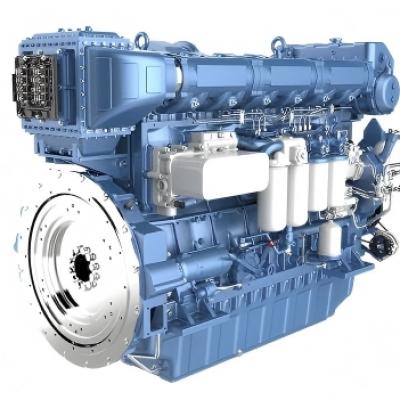
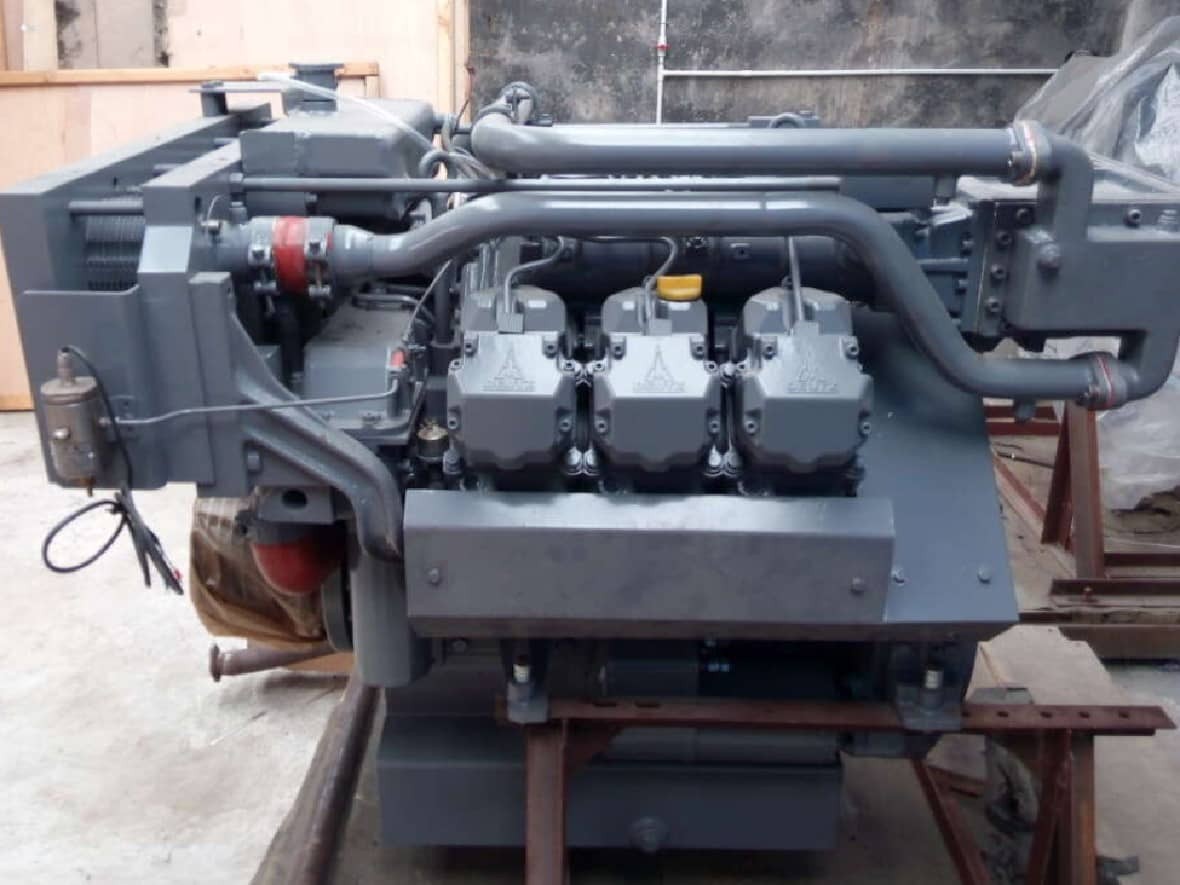
Deutz HC6V420/18C Continuous Marine Propulsion Engine
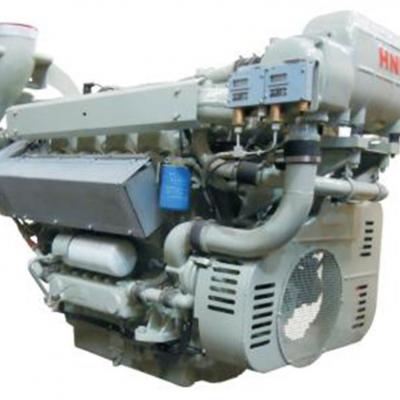
The Deutz HC6V420/18C is a continuous-duty marine main propulsion diesel engine rated at 309 kW (420 PS) at 1800 rpm. Built by Hebei Huabei Diesel Engine Company (Huachai Deutz Engine Plant) under Deutz AG technology licensing, it draws from the 90-degree V6 BFM1015 core architecture, pairing an 11.906 L displacement (132 mm bore by 145 mm stroke) with camshaft-driven Electronic Unit Pump (EUP) fuel injection and water-air intercooling.
HekoPower Group supplies the HC6V420/18C as a complete, factory-assembled marine propulsion package directly from the licensed Huachai production line. Each assembly is configured for commercial classification compliance with ZY, CCS, and IMO certification options, ready for shipyard installation or twin- and single-screw vessel repowering.
Technical Specifications
General Engine Data
- Engine Model:
- Deutz HC6V420/18C
- Type:
- 6 Cylinders, V type, 4 stroke
- Displacement:
- 11.906 L
- Bore * Stroke:
- 132 * 145
- Net Weight (with flywheel & alternator):
- 1100 Kg
- Overall Dimension:
- 1484mm*1050mm*1468mm
Key Performance Date
- Rated Power:
- 309 kW/420 HP
- Rated Speed:
- 1800 rpm
- Low Idle Speed:
- 550 rpm
- Fuel Consumption (Running Speed):
- ≥ 195 g/kW.h
More Technical Data
- Certification:
- ZY/CCS/IMO Certificates
- Aspiration:
- Turbocharged and Intercooled
- Fuel System:
- EUP
- Compression Ratio:
- 16.5:1
- Starting Method:
- Electrical Start (28.5V/55A)
- Cooling Method:
- Heatexchanger and Water-air Intercooler
- Governor Type:
- Electronic/Mechanical
- Lubricant Capacity:
- Around 36 L
- Flywheel Size/ Housing:
- 14", SAE1
- Running Type:
- Continuous
How the HC6V420/18C Compares Within the HC6V Lineup
Inside the 1800 rpm propulsion bracket, the HC6V420/18C bridges the gap between the 294 kW HC6V400/18C and the 331 kW HC6V450/18C on the exact same 1100 kg, 11.906 L V6 block. Stepping up from the HC6V400/18C adds 15 kW of continuous shaft capacity without expanding engine-room clearance, while staying 22 kW below the HC6V450/18C preserves extra thermal margin on vessels operating in warm seawater or heavy-drag conditions.
Naval architects also weigh the HC6V420/18C against the 1500 rpm HC6V410/15C (301 kW). Both units deliver nearly identical shaft power from the same cylinder block, yet their propulsion matching differs cleanly: the 1500 rpm HC6V410/15C develops higher rated torque at slower crankshaft speeds for heavy-displacement barges using lower gearbox reduction ratios, whereas the 1800 rpm HC6V420/18C lowers brake mean effective pressure per firing stroke and pairs naturally with deeper reduction ratios (commonly 3.5:1 to 5:1) or higher-speed semi-displacement shafts.
It is equally important not to confuse the HC6V420/18C propulsion engine with the Huachai HC6V419/18D marine auxiliary engine (308 kW at 1800 rpm). Although both share the 11.906 L V6 core and rated speed, the “/18C” unit is mapped for variable-speed propeller-law duty down to a 550 rpm low idle with marine gearbox mating, while the “/18D” variant is strictly governed for constant-speed 60 Hz generator loads.
Vessel Applications and Operating Behavior
With a compact 1484 mm length and 90-degree V6 layout, the HC6V420/18C fits cleanly into tight machinery spaces aboard coastal fishing trawlers, harbor tugs, inland cargo barges, crew boats, passenger ferries, and workboats. Single-screw installations commonly serve 18 m to 26 m commercial hulls, while twin-screw setups power wider river pushers, offshore utility craft, and higher-speed displacement yachts requiring redundant propulsion.
Under variable sea states, the 16.5:1 compression ratio, turbocharging, and water-air charge cooling keep intake air dense for responsive load acceptance during net hauling, astern crash-stops, and harbor bollard pulls. A stable 550 rpm low idle allows extended trolling, lock approaches, and standby maneuvering without excessive vibration or rough cylinder firing.
A common specification mistake during vessel repowering is reading “420 HP” as 420 imperial BHP or sizing the propeller as if this were a light-duty intermittent pleasure rating. In metric terms, 309 kW equals 420 PS (roughly 414 mechanical BHP), and because the HC6V420/18C carries a true continuous rating, propellers should be pitched along the cubic propeller curve so the engine reaches a full 1800 rpm at wide-open throttle during sea trials without overloading the exhaust valves or turbocharger.
Maintenance, Cooling, and Retrofit Guidance
Routine servicing centers on the roughly 36 L lubricating oil sump using API CF-4 or higher marine diesel oil, paired with clean primary water-separating fuel filtration. Because the 1015-derived V6 platform uses individual cylinder heads and gear-driven internal auxiliaries—leaving only the 28.5V/55A charging alternator belt-driven—engineers can service a single cylinder head or unit pump inside a narrow engine room without stripping an entire cylinder bank.
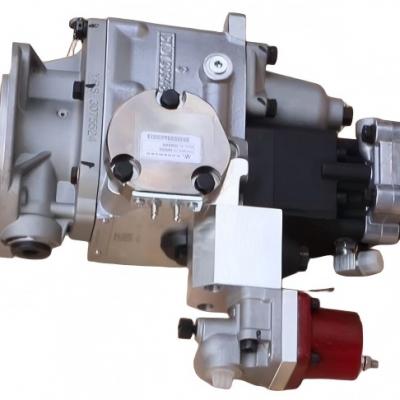
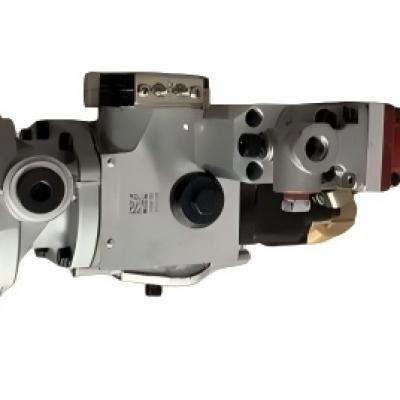
Fleet operators transitioning from inline mechanical pumps sometimes assume an EUP fuel system introduces a fragile high-pressure common rail spanning all six cylinders. In practice, each cylinder on the HC6V420/18C relies on its own camshaft-actuated Electronic Unit Pump and short injection line, allowing single-cylinder diagnostics and simpler mechanical isolation in remote ports while maintaining precise injection timing.
Cooling relies on a closed freshwater jacket circuit via heat exchanger coupled with a seawater-cooled water-air intercooler, so keeping jacket coolant safely below the 103 °C ceiling requires scheduled zinc anode inspections and seawater tube descaling. During retrofits, confirm engine-bed clearance for the 1484 mm × 1050 mm × 1468 mm envelope, verify torsional coupling compatibility with the SAE 1 housing and 14-inch flywheel, and specify either the electronic or mechanical governor to match existing bridge controls.
Deutz HC6V/C-Marine Propulsion Series
Within Huachai’s 11.906 L V6 propulsion family, the HC6V420/18C occupies the upper continuous tier of the 1800 rpm lineup, sitting just below the 331 kW HC6V450/18C and offering a higher-speed alternative to the heavy-duty 1500 rpm models.
Deutz HC6V/C-Marine Propulsion Series, Marine Propulsion Diesel Engines for commercial and recreational applications, original products from Huachai Deutz Engine Plant. This series mainly includes HC6V296/15C, HC6V330/15C, HC6V350/15C, HC6V375/15C, HC6V400/15C, HC6V410/15C, HC6V390/18C, HC6V400/18C, HC6V420/18C, HC6V450/18C, HC6V150, HC6V240.
Deutz HC6V420/18C Technical FAQs
Can the HC6V420/18C drive a 60 Hz marine auxiliary generator instead of a propeller?
No. Although the HC6V420/18C runs at 1800 rpm, its “/18C” rating is calibrated for variable-speed propeller-law propulsion rather than constant-speed droop or isochronous alternator loads. For a 308 kW 60 Hz marine generator set on the same 11.906 L V6 block, specify the Huachai HC6V419/18D auxiliary engine instead.
What marine gearboxes mate with the HC6V420/18C flywheel and housing?
The engine uses a standard SAE 1 flywheel housing and a 14-inch flywheel, which directly accepts heavy-duty commercial reverse-reduction gearboxes in the 300 to 350 kW continuous class via a matching rubber-block or high-elasticity torsional coupling. Always confirm torsional vibration calculations with your gearbox supplier before finalizing the reduction ratio.
Should I specify the electronic or mechanical governor on the HC6V420/18C?
Choose the electronic governor for twin-screw vessels needing tight RPM synchronization, multi-station electronic helm controls, or sharper load recovery. Choose the mechanical governor for workboats operating in remote regions where crew prefer purely mechanical throttle linkages and simplified field maintenance.
Why does the HC6V420/18C use a water-air intercooler rather than air-to-air cooling?
Enclosed vessel engine rooms have limited ambient airflow and elevated machinery-space temperatures. Passing compressed charge air through a seawater-cooled water-air intercooler holds intake air temperatures lower and more consistent under continuous 309 kW load, supporting cleaner combustion and controlling exhaust gas temperatures.