Details
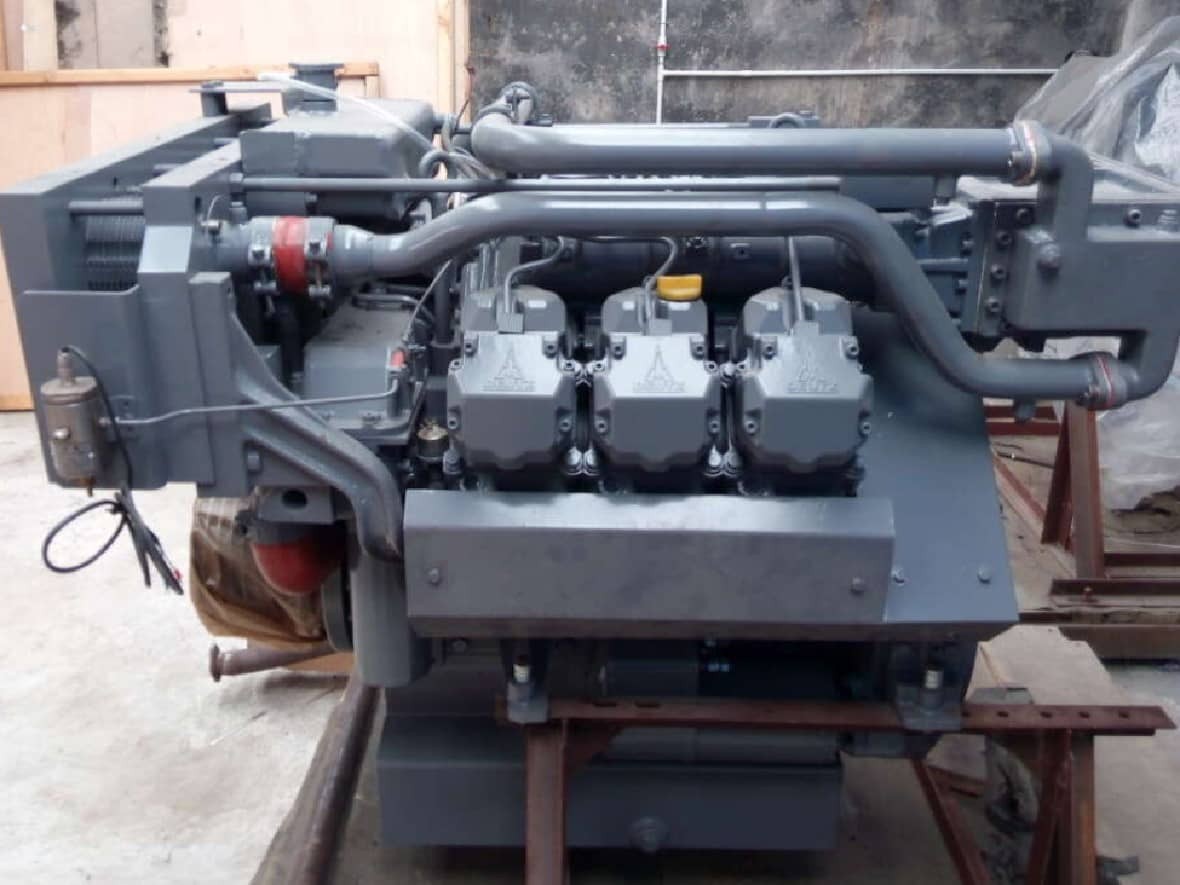
Deutz HC6V400/18C 294 kW Marine Propulsion Diesel Engine
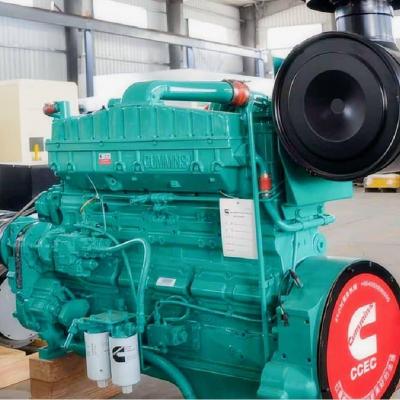
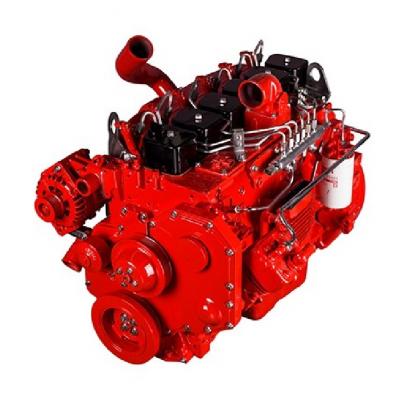
The Deutz HC6V400/18C is a continuous-duty V6 marine propulsion diesel rated at 294 kW (400 metric PS, or 394 mechanical BHP) at 1800 rpm. Manufactured by Hebei Huabei Diesel Engine Co., Ltd. (Huachai) under Deutz AG license technology, this 11.906 L platform combines a compact 1484 mm installation length with a 1100 kg net weight for space-constrained engine rooms.
HekoPower Group supplies factory-new HC6V400/18C complete marine propulsion assemblies direct from the licensed production line. Units are delivered ready for shipyard newbuilds or commercial vessel repowering, with ZY, CCS, and IMO classification documentation configured to match your flag-state requirements.
Technical Specifications
General Engine Data
- Engine Model:
- Deutz HC6V400/18C
- Type:
- 6 Cylinders, V type, 4 stroke
- Displacement:
- 11.906 L
- Bore * Stroke:
- 132 * 145
- Net Weight (with flywheel & alternator):
- 1100 Kg
- Overall Dimension:
- 1484mm*1050mm*1468mm
Key Performance Date
- Rated Power:
- 294 kW/400 HP
- Rated Speed:
- 1800 rpm
- Low Idle Speed:
- 550 rpm
- Fuel Consumption (Running Speed):
- ≥ 195 g/kW.h
More Technical Data
- Certification:
- ZY/CCS/IMO Certificates
- Aspiration:
- Turbocharged and Intercooled
- Fuel System:
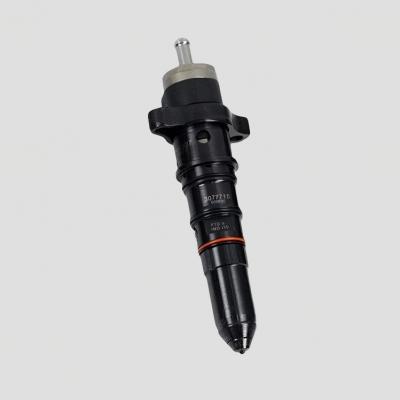
- EUP
- Compression Ratio:
- 16.5:1
- Starting Method:
- Electrical Start (28.5V/55A)
- Cooling Method:
- Heatexchanger and Water-air Intercooler
- Governor Type:
- Electronic/Mechanical
- Lubricant Capacity:
- Around 36 L
- Flywheel Size/ Housing:
- 14", SAE1
- Running Type:
- Continuous
Comparing HC6V400/18C Against Sibling HC6V Ratings
Within Huachai's 11.906 L V6 propulsion catalog, the closest technical comparison is between the HC6V400/18C and the 1500 rpm HC6V400/15C. Both produce the exact same 294 kW continuous output on identical block dimensions, yet their mechanical loading differs sharply. Running at 1800 rpm lowers rated shaft torque to roughly 1,560 N·m and keeps brake mean effective pressure near 16.5 bar, compared with roughly 1,872 N·m and 19.8 bar on the HC6V400/15C.
That 20 percent reduction in rated torque lets naval architects pair the HC6V400/18C with lighter marine reverse-reduction gearboxes while retaining a conservative 8.7 m/s mean piston speed. Its 550 rpm low idle also creates a wider 3.27:1 operating speed ratio than the 1500 rpm model, making it better suited to coastal vessels that alternate between slow maneuvering and sustained cruising. Heavy bollard-pull barges swinging large slow-turning wheels generally favor the HC6V400/15C instead.
Inside the 1800 rpm propulsion band, the HC6V400/18C sits just above the 287 kW HC6V390/18C and below the 309 kW HC6V420/18C and 331 kW HC6V450/18C. It meets the widely specified 400 PS vessel class without running at the higher cylinder pressures of the 331 kW calibration. Buyers should also avoid confusing the "/18C" propulsion engine with Huachai's "/18D" auxiliary models such as the HC6V374/18D; although both turn at 1800 rpm, only the "/18D" line is governed for constant-speed 60 Hz marine generator duty.
Vessel Sizing, Load Behavior, and Operating Conditions
A single HC6V400/18C fits 18 to 26 meter coastal fishing trawlers, gillnetters, utility workboats, and inland cargo carriers operating on multi-day shifts. Twin-screw installations delivering 588 kW combined are widely deployed on harbor pushboats, offshore crew launches, and medium-capacity passenger ferries where compact V6 engine-room width leaves clear central walkways for routine inspection.
Under cubic propeller-law operation, running at full 294 kW continuous output consumes roughly 68 liters of marine diesel per hour around its 195 g/kW·h specific fuel consumption benchmark. Backing off to 80 percent rated speed (approximately 1440 rpm) cuts absorbed shaft power near 150 kW and trims fuel burn close to half, giving coastal operators strong endurance on long transits.
A common specification error is treating the "400" designation as 400 mechanical BHP or assuming an intermittent pleasure-boat duty margin. Because 294 kW equals 400 metric PS (394 mechanical BHP) on an unlimited-hours continuous rating, propellers must be pitched so the hull lets the engine achieve a full 1800 rpm at wide-open throttle in loaded trim; over-pitching drags down RPM, spikes exhaust gas temperatures, and accelerates turbocharger wear.
Maintenance, Cooling Care, and Retrofit Fitment
The 90-degree V6 architecture uses individual cylinder heads—one head per cylinder—so marine engineers can pull a single head, valve assembly, or wet liner inside tight bilge clearances without overhead hoists capable of lifting a monoblock casting. The crankcase holds around 36 L of API CF-4 or higher marine diesel oil, and regular oil analysis helps catch fuel dilution early on vessels that log long idling periods.
Because jacket coolant and boosted charge air rely on a raw-water heat exchanger and water-air intercooler, seawater circuit upkeep drives long-term reliability. Inspect raw-water pump impellers, zinc sacrificial anodes, and intercooler tube bundles on schedule—especially in warm coastal waters or silty river deltas where scaling quickly elevates intake air temperatures.
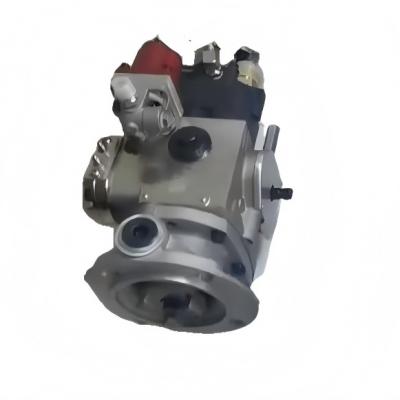
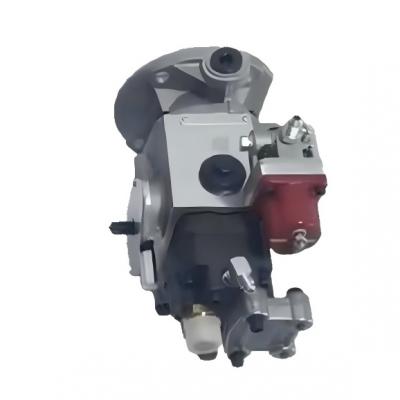
Mechanics new to Huachai Deutz engines sometimes mistake the EUP (Individual Unit Pump) fuel layout for a high-pressure common-rail system requiring specialized electronic benches. Each cylinder actually runs a compact camshaft-driven unit pump with short high-pressure lines, eliminating long common-rail leak paths; still, pairing the engine with a dual water-separating pre-filter and fine secondary filter is mandatory to protect pump plungers from contaminated bunkering fuel. For repowering projects, verify engine-bed clearance for the 1484 mm × 1050 mm × 1468 mm envelope, confirm 24V battery banks for the 28.5V/55A charging system, and check torsional coupling matching on the 14-inch flywheel and SAE 1 housing.
Deutz HC6V/C-Marine Propulsion Series
The HC6V400/18C anchors the 400 PS / 1800 rpm tier of Huachai's 11.906 L marine propulsion family, bridging the lower-speed 1500 rpm displacement ratings and higher-output 1800 rpm calibrations on a shared spare-parts footprint.
Deutz HC6V/C-Marine Propulsion Series, Marine Propulsion Diesel Engines for commercial and recreational applications, original products from Huachai Deutz Engine Plant. This series mainly includes HC6V296/15C, HC6V330/15C, HC6V350/15C, HC6V375/15C, HC6V400/15C, HC6V410/15C, HC6V390/18C, HC6V400/18C, HC6V420/18C, HC6V450/18C, HC6V150, HC6V240.
Deutz HC6V400/18C Technical Questions
When should a vessel specify the HC6V400/18C instead of the HC6V400/15C?
Choose the HC6V400/18C when you need 294 kW continuous propulsion with lower gearbox input torque (~1,560 N·m vs. ~1,872 N·m), lower BMEP, and a broader speed range from 550 to 1800 rpm for coastal cruising or patrol work. Specify the 1500 rpm HC6V400/15C for heavy-displacement barges or tugs swinging large-diameter, low-RPM propellers.
What rated speed target should be confirmed during HC6V400/18C sea trials?
Under full working displacement, the propeller pitch and gearbox reduction ratio should allow the HC6V400/18C to reach its full 1800 rpm rated speed at wide-open throttle without overloading. Falling short of 1800 rpm indicates an over-pitched propeller that will raise cylinder thermal stress and fuel consumption during continuous service.
How does the EUP fuel system affect marine fuel filtration and field repairs?
Each cylinder uses an individual camshaft-driven unit pump rather than a shared high-pressure rail, allowing technicians to isolate and service a single cylinder without dismantling the full injection assembly. Always install a primary marine oil-water separator ahead of the engine's fine fuel filter to prevent water or particulate wear in the EUP plungers.
What vessel electrical system matches the HC6V400/18C starting and charging circuit?
The HC6V400/18C is equipped with a 28.5V/55A charging alternator and electric starter configured for a standard 24V DC marine electrical system. Confirm matching 24V battery capacity, starter cabling gauge, and optional electronic governor power supply wiring before installation.