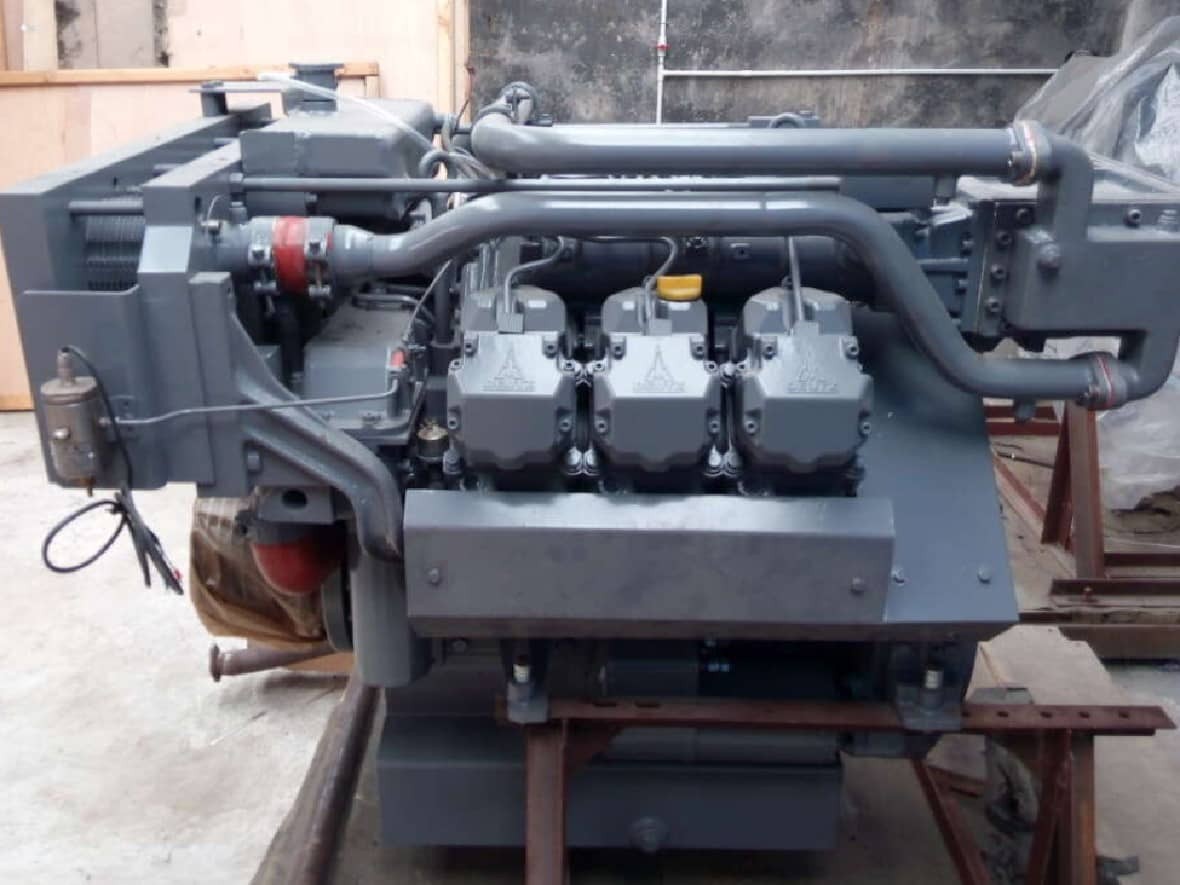
Details
Deutz HC6V240 Marine Propulsion Diesel Engine Overview
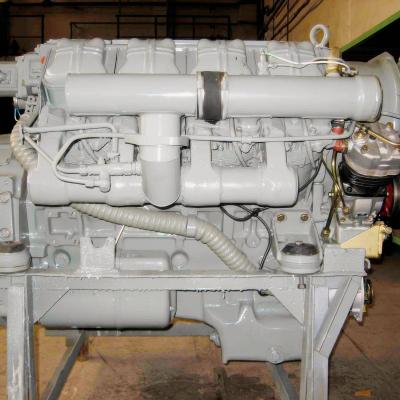
The Deutz HC6V240 is an 11.906-liter, 6-cylinder V-type marine propulsion diesel engine rated at 176 kW (240 HP) for continuous operation at 1500 rpm or 1800 rpm. Manufactured by Hebei Huabei Diesel Engine Co., Ltd. (Huachai Deutz Engine Plant) under German Deutz BFM1015 licensed architecture, it pairs turbocharged, water-air intercooled induction with individual single-cylinder EUP fuel injection pumps for stable commercial vessel service.
HekoPower supplies the HC6V240 as a factory-tested complete marine propulsion assembly backed by ZY, CCS, or IMO classification certificates, optional matched reduction gearboxes, and genuine OEM wear parts. Because this model draws a modest 176 kW from a heavy-duty 11.9-liter V6 block, shipyards and fleet operators select it for high-hour vessels where low thermal stress and predictable overhaul cycles outweigh peak horsepower density.
Technical Specifications
General Engine Data
- Engine Model:
- Deutz HC6V240
- Type:
- 6 Cylinders, V type, 4 stroke
- Displacement:
- 11.906 L
- Bore * Stroke:
- 132 * 145
- Net Weight (with flywheel & alternator):
- 1100 Kg
- Overall Dimension:
- 1484mm*1050mm*1468mm
Key Performance Data
- Rated Power:
- 176 kW/240 HP
- Rated Speed:
- 1500/1800 rpm
- Low Idle Speed:
- 550 rpm
- Fuel Consumption (Running Speed):
- ≥ 195 g/kW.h
More Technical Data
- Certification:
- ZY/CCS/IMO Certificates
- Aspiration:
- Turbocharged and Intercooled
- Fuel System:
- EUP
- Compression Ratio:
- 16.5:1
- Starting Method:
- Electrical Start (28.5V/55A)
- Cooling Method:
- Heatexchanger and Water-air Intercooler
- Governor Type:
- Electronic/Mechanical
- Lubricant Capacity:
- Around 36 L
- Flywheel Size/ Housing:
- 14", SAE1
- Running Type:
- Continuous
How the HC6V240 Compares Across the Huachai Deutz Lineup
Within the HC6V/C propulsion family, the HC6V240 sits directly above the 110 kW HC6V150 while sharing the same 132 x 145 mm bore and stroke, 1,100 kg net weight, and 1,484 x 1,050 x 1,468 mm installation envelope. Stepping up from the HC6V150 adds 60% more continuous shaft power for heavier displacement hulls or higher river-current thrust without altering engine-bed geometry or machinery-room clearances.
Compared against the higher-output HC6V296/15C (218 kW at 1500 rpm) through HC6V410/15C (301 kW at 1500 rpm) and HC6V450/18C (331 kW at 1800 rpm), the HC6V240 operates at a significantly lower brake mean effective pressure of roughly 9.9 to 11.8 bar instead of 18 to 20+ bar. That conservative derating lowers exhaust gas temperatures and mechanical cylinder loads, making the HC6V240 better suited to vessels logging 3,000+ operating hours per year under warm engine-room conditions.
Buyers should also distinguish the HC6V240 propulsion unit from two closely related Huachai Deutz platforms. The HC6V/D marine auxiliary series (HC6V299/15D through HC6V490/18D) uses constant-speed generator governing for 50 Hz or 60 Hz shipboard alternators rather than variable-speed propeller-law fueling. Likewise, land-based BF6M1015C industrial engines weigh roughly 850 kg dry and peak at 2100 rpm with radiator cooling, whereas the HC6V240 integrates marine heat-exchanger cooling, a water-air intercooler, and marine classification hardware.
Marine Operating Profiles and Vessel Fitment
The HC6V240 is engineered for continuous-duty commercial craft rather than short-sprint leisure boats. Typical installations include 300 to 600 DWT inland cargo barges in single- or twin-screw arrangements, coastal trawlers and gillnetters, shallow-draft utility tugs, harbor workboats, and small passenger ferries running fixed daily routes.
Choosing between the 1500 rpm and 1800 rpm factory calibrations depends on hull drag and propeller sizing. The 1500 rpm build delivers roughly 1,120 N·m of rated shaft torque, pairing cleanly with 3:1 to 4:1 reduction gearboxes to swing larger, slow-turning wheels on heavy barges and fishing boats. The 1800 rpm build produces about 934 N·m and matches 2:1 to 3:1 ratios on faster semi-displacement launches, while the 550 rpm low idle gives smooth clutch engagement during close-quarters docking.
A frequent engineering misconception is treating the dual 1500/1800 rpm listing as field-interchangeable on an existing hull. Changing rated engine speed without recalculating propeller pitch or gearbox reduction ratio either overloads the engine before reaching rated rpm or leaves significant thrust unused across the cruising band.
Maintenance, Cooling Care, and Repower Guidelines
Huachai retains Deutz's modular one-cylinder, one-head architecture and wet replaceable liners on the HC6V240, allowing engineers to pull a single cylinder head or piston kit inside tight engine rooms without hoisting the 1,100 kg block off its mounts. The wet sump holds around 36 L of API CF-4 or higher heavy-duty diesel oil; checking oil viscosity and fuel dilution every 250 hours is critical on vessels that log extended trolling or canal idling.
Because the engine relies on a jacket-water heat exchanger and water-air intercooler, raw-water side upkeep determines long-term thermal health. Flush the heat-exchanger tube bundle on schedule, inspect raw-water pump impellers and zinc anodes, and keep closed-loop coolant inhibited to prevent charge-air fouling. On the fuel side, install dual primary water-separating filters upstream of the EUP unit pumps, and confirm shipboard 24V battery banks are properly matched to the 28.5V/55A alternator.
When repowering legacy craft, verify stringer spacing for the 1,050 mm width and confirm torsional coupling compatibility with the standard SAE 1 flywheel housing and 14-inch flywheel before mating to Hangzhou Advance, ZF, or Twin Disc marine gearboxes. Avoid a common operational mistake with derated engines: assuming continuous-duty certification allows unlimited running below 25% load. Extended low-load operation still causes wet stacking, lube-oil dilution, and cylinder glazing, so crews should periodically run the HC6V240 above 70% load to maintain clean combustion chambers.
Deutz HC6V/C-Marine Propulsion Series
Within the complete HC6V/C marine propulsion catalog, the HC6V240 bridges the gap between the 110 kW HC6V150 workboat rating and the higher-boost 218 kW to 331 kW models, giving fleet operators parts commonality across vessels of different tonnages.
Deutz HC6V/C-Marine Propulsion Series, Marine Propulsion Diesel Engines for commercial and recreational applications, original products from Huachai Deutz Engine Plant. This series mainly includes HC6V296/15C, HC6V330/15C, HC6V350/15C, HC6V375/15C, HC6V400/15C, HC6V410/15C, HC6V390/18C, HC6V400/18C, HC6V420/18C, HC6V450/18C, HC6V150, HC6V240.
Frequently Asked Questions
Should I specify the Deutz HC6V240 at 1500 rpm or 1800 rpm?
Both configurations output 176 kW (240 HP) continuously. Select the 1500 rpm calibration for heavy-displacement barges, tugs, and trawlers needing higher shaft torque (about 1,120 N·m) and deeper gearbox reductions, or choose 1800 rpm (about 934 N·m) for lighter workboats and ferries running lower reduction ratios.
Can the HC6V240 propulsion engine directly drive a shipboard marine generator set?
No. Although the 11.906 L V6 block is shared across the Huachai lineup, the HC6V240 is calibrated for variable-speed propeller-law loads and marine gearbox coupling. For constant-speed 50 Hz or 60 Hz shipboard power generation, specify a dedicated HC6V/D marine auxiliary model with genset-grade governing.
What marine reduction gearboxes fit the HC6V240 flywheel interface?
The HC6V240 comes standard with an SAE 1 flywheel housing and a 14-inch flywheel, which mates directly to commercial marine gearboxes from Hangzhou Advance, ZF, and Twin Disc rated for 176 kW continuous input when paired with an appropriately sized torsional elastic coupling.
How does the EUP fuel system affect fuel filtration and at-sea servicing?
Each cylinder uses its own cam-driven unit pump, eliminating long high-pressure fuel rails and allowing crews to replace a single faulty pump unit without removing a multi-cylinder inline injection pump. Maintaining clean marine diesel through a primary water separator is essential to protect EUP plungers and nozzles.