Details
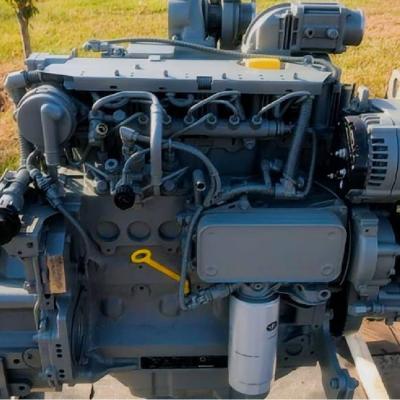
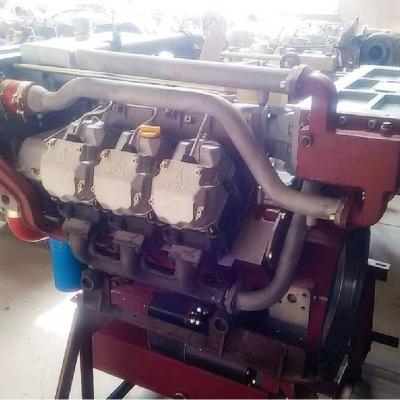
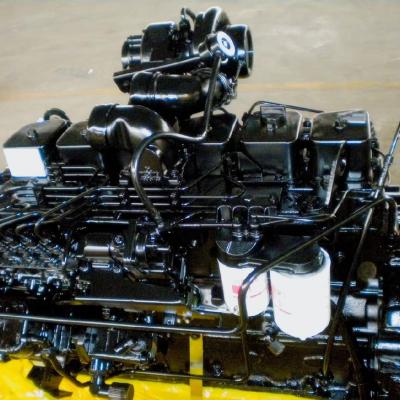
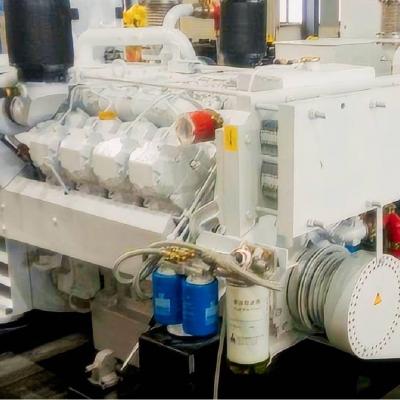
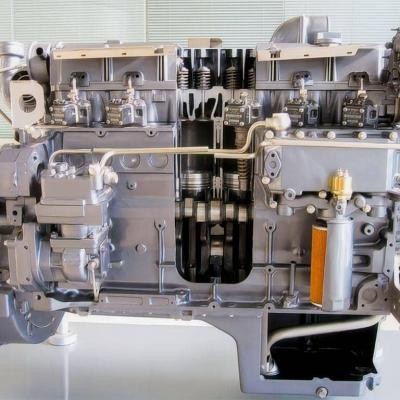
Deutz BF6M1013FC-G2-A 183kW 1500rpm 50Hz G-Drive Engine
The Deutz BF6M1013FC G2 generator engine is a dedicated 1500 rpm prime mover built for stationary 50Hz power plants. Rated at 183 kW standby (LTP), 166 kW prime (PRP), and 151 kW continuous (COP), this 7.15-liter inline six-cylinder unit hits the exact torque and thermal balance needed for a 180 kVA prime or 200 kVA standby genset.
After accounting for the 7.2 kW standard cooling fan draw, the BF6M1013FC delivers 175.8 kW of net flywheel power at 50Hz. Operating at a 19:1 compression ratio under COM II emission standards, it pairs a water-cooled cast-iron block with turbocharged charge-air cooling. HekoPower supplies the Dalian Deutz BF6M1013FC-G2 complete G-drive assembly for export, backed by the official 183 kW genset engine datasheet and performance curve so OEM assemblers can finalize base-frame and alternator calculations before shipment.
Tech Specs of Deutz BF6M1013FC 183 kW Drive Engine
General Engine Data
- Engine Model:
- Deutz BF6M1013FC
- Type:
- 6 Cylinders, in Line
- Displacement:
- 7.146 L
- Bore * Stroke:
- 108 * 130
- Overall Dimension:
- 1971mm*1054mm*1373mm
- Net Weight:
- 770 Kg
Key Performance Data
- Rated Power:
- 183 kW
- Max. Torque/Speed:
- 1165 N.m @ 1500 rpm
- Rated Speed:
- 1500 rpm
- Specific Fuel Consumption:
- 226 g/kW.h
- Net Frequency:
- 50Hz
- Noise db(A):
- ≤ 113
More Technical Data
- Certification:
- Tier II
- Aspiration:
- Turbocharged & Intercooling
- Fuel System:
- Mechanical Unit Pump in Line
- Cooling Method:
- Water Cooled
- Electrical System (Starter Motor/Alternator):
- Electronic Starting (24V)
- Compression Ratio:
- 18:1
Choosing Between the BF6M1013FC-G2, G3, and Construction Models
BF6M1013FC G2 vs. BF6M1013FC-G3 at 1500 RPM
Although the G2 and G3 configurations share the same 7.15L displacement and 108 × 130 mm cylinder geometry, their internal load profiles differ. Pushing the G3 to 201 kW standby raises mean effective pressure to 22.5 bar, while the G2 operates at a calmer 20.5 bar.
That lower thermal stress gives the BF6M1013FC-G2 two practical advantages in the field. First, its radiator rejects 85.1 kW and its charge air cooler rejects 35.9 kW, compared with 86.1 kW and 42.0 kW on the G3. That margin lifts the G2's air-to-boil limit to 55 °C instead of 50 °C. Second, the G2 burns 30.2 L/h at 75% load and 40.6 L/h at 100% load, saving fuel over the G3's 33.6 L/h and 45.6 L/h on daily prime-power duty.
183 kW Generator Drive vs. 233 kW Construction Engine
Buyers occasionally confuse this unit with the 233 kW Deutz BF6M1013FC construction engine because both carry the same base model stamp. They are not interchangeable. The construction version is calibrated for variable-speed mobile machinery up to 2300 rpm, whereas the Deutz BF6M1013FC-G2-A is locked to 1500 rpm with a 2.6 kg·m² genset flywheel and a 129-tooth flywheel ring gear matched to standard alternator couplings.
Attempting to repurpose a construction block inside a generator frame usually causes frequency hunting under block loads. The G-drive variant meets ISO 8528 G2 governing standards, holding 4–5% static speed droop with its mechanical governor or 0–3% when fitted with an electronic EMR/DDE governor.
Real-World 50Hz Applications and Load Performance
In commercial backup rooms, industrial workshops, and regional telecom hubs, the Deutz BF6M1013FC 50Hz G-drive engine is most often paired with a 180 kVA prime or 200 kVA standby alternator. Its 55 °C ambient cooling ceiling makes it well suited for soundproof canopies operating in Middle Eastern, African, and Southeast Asian climates, provided the enclosure supplies the required 11,520 m³/h of cooling airflow.
Fuel efficiency stays flat across normal working bands at 1500 rpm. Expect roughly 11.1 L/h (227 g/kWh) at 25% load, 20.3 L/h (208 g/kWh) at 50% load, 30.2 L/h (206 g/kWh) at 75% load, and 40.6 L/h (208 g/kWh) at full load. One frequent mistake during specification is assuming every standby canopy requires an electronic EMR governor. Standalone emergency sets generally run more reliably with the standard mechanical governor, whereas the electronic EMR/DDE package is mainly justified for parallel synchronizing or strict 0–3% frequency tolerances.
Maintenance Standards and Retrofitting a BF6M1013EC
Because this engine shares mounting points and the 129-tooth ring gear with the lower-output EC variant, many fleet operators use the BF6M1013FC 50Hz generator drive as a replacement for an aging BF6M1013EC. Before dropping the new assembly onto an existing skid, verify that the legacy radiator and intercooler core can dissipate the full 85.1 kW radiator and 35.9 kW charge-air heat load, and confirm that exhaust back pressure stays under 30 mbar.
Long overhaul life depends on sticking to factory fluid specs rather than generic substitutes. Fill the 31-liter oil sump with lubricant meeting Deutz TR0199-99-3002/6 standards, and configure your controller for a 2.7 bar low-oil warning and 2.0 bar shutdown. The cooling circuit requires 27.3 liters of coolant in total (9.8 liters inside the engine block), regulated by a thermostat that starts opening at 83 °C and reaches full open at 98 °C.
A common workshop assumption is that mechanical single unit pumps require little fuel care compared with electronic common-rail engines. While unit pumps handle regional diesel grades far better, water in the fuel still scores plungers quickly. Drain water separators weekly and verify valve clearances on schedule to keep exhaust temperatures below the 540 °C ceiling.
Positioning Within the Dalian Deutz BFM1013 Series
While the BF6M1013FC-G2 covers the 180–200 kVA range, power projects often span several nodes across the same job site. Keeping engines within the same BFM1013 family lets maintenance teams share filters, belts, and service tooling across smaller 4-cylinder standby units and higher-output 6-cylinder prime sets supplied by HekoPower.
Deutz BFM1013-Generator Engine Series, original products from Dalian Deutz Engine Plant. This series mainly includes Deutz BF4M1013EC, Deutz BF4M1013FC, Deutz BF6M1013EC, Deutz BF6M1013FC, Deutz BF6M1013FC-G3. In accordance with the criteria of Machinery Safety Directive 2006/42, movable elements such as distribution belts, fans, and parts that acquire high temperatures during operation, such as exhaust manifolds, have their respective safeguards. Before being delivered, the generator is thoroughly checked at the factory. Voltage, frequency, and load are all tested, as well as the appropriate operation of warnings and the influence of engine oil temperature on stop.
Frequently Asked Questions (FAQs)
Why does the BF6M1013FC-G2 show 183 kW, 166 kW, and 175.8 kW on technical sheets?
183 kW is gross standby power (LTP) and 166 kW is gross prime power (PRP), with continuous duty rated at 151 kW. Subtracting the 7.2 kW radiator fan load from 183 kW leaves 175.8 kW of net flywheel power available to drive the alternator.
Can the BF6M1013FC-G2 replace a BF6M1013EC without modifying the genset base?
The engine block footprint, bore-stroke geometry, and 129-tooth flywheel ring gear match, so mechanical mounting is straightforward. However, you must confirm that your existing alternator frame, coupling rating, and radiator core can handle the jump from 153 kW to 183 kW.
What is the hourly fuel consumption of the BF6M1013FC-G2 at 1500 rpm?
Under standard ISO test conditions, fuel consumption is 11.1 L/h at 25% load, 20.3 L/h at 50% load, 30.2 L/h at 75% load, and 40.6 L/h at 100% standby load. Peak efficiency occurs around 75% load at 206 g/kWh.
When should I specify an electronic EMR governor instead of the mechanical governor?
Choose the mechanical governor (4–5% speed droop) for standalone backup or remote prime power where simple field servicing matters most. Specify the electronic EMR/DDE governor (0–3% speed droop) when synchronizing multiple gensets in parallel or powering frequency-sensitive industrial loads.