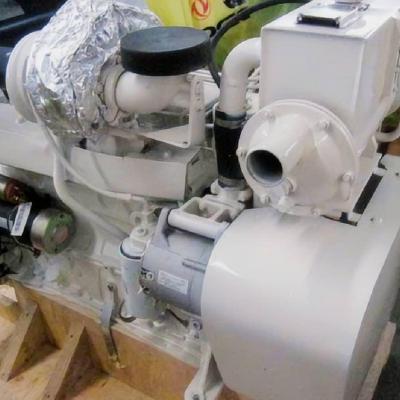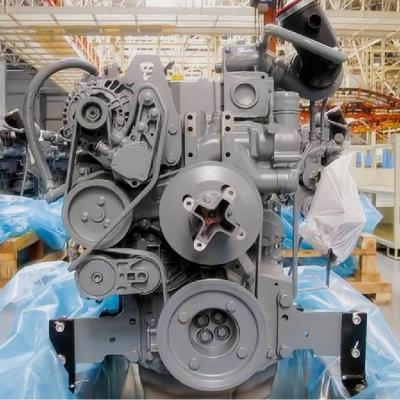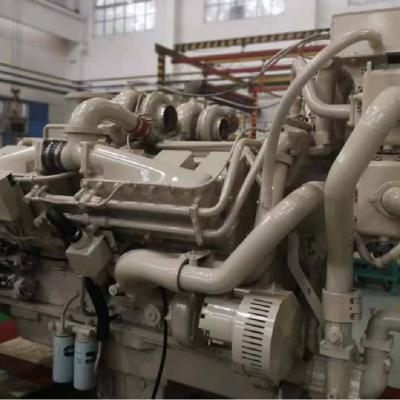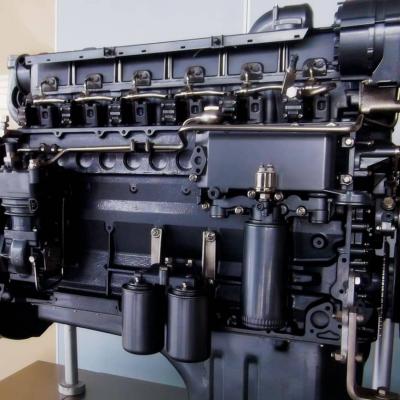
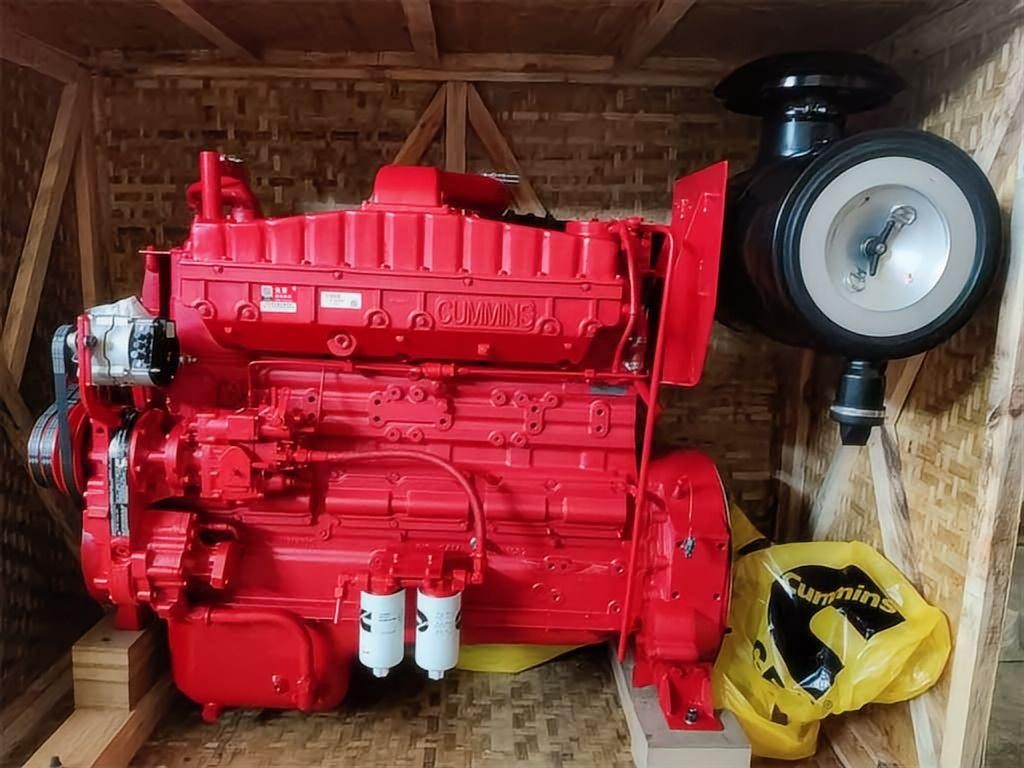
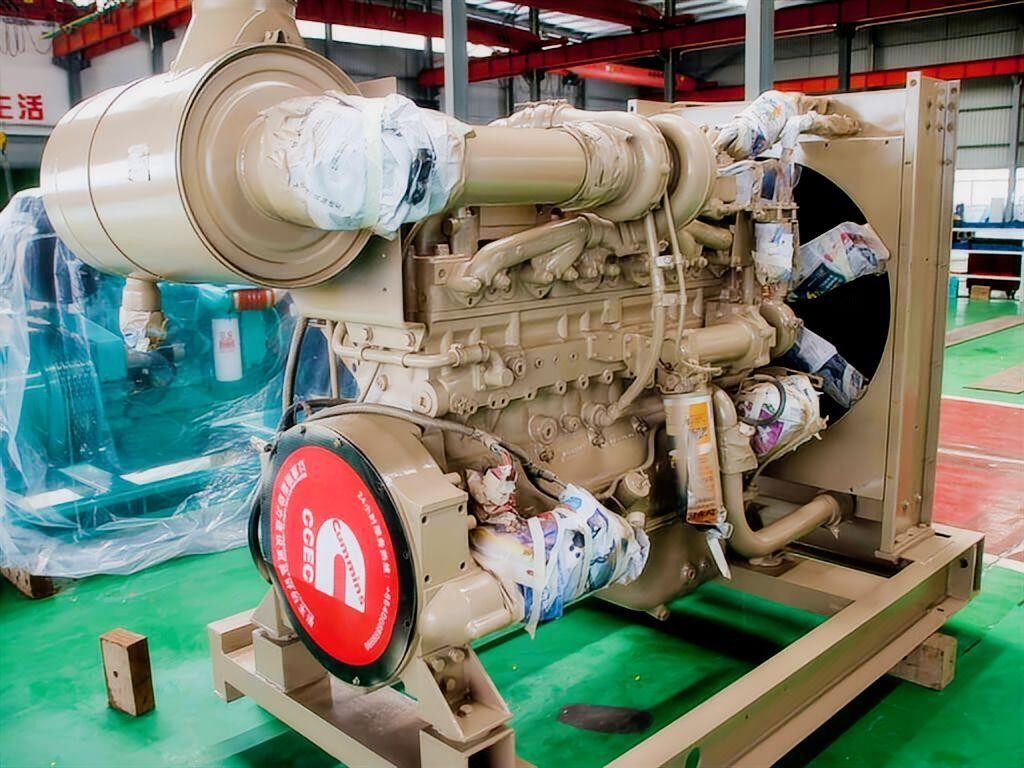
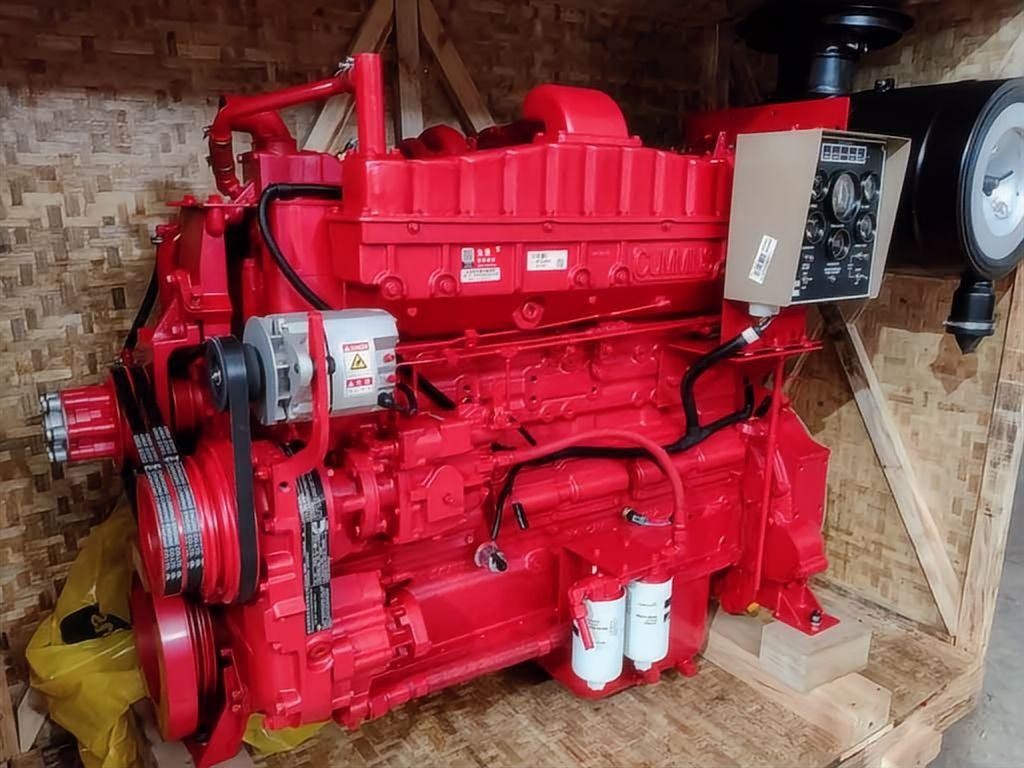
The CCEC Cummins NTA855-C400 is a heavy-duty 14-litre inline six-cylinder diesel engine developed by Chongqing Cummins for demanding industrial applications. Rated at 400 HP, it combines the proven reliability of the Cummins 855 platform with a robust mechanical fuel system, making it well suited to environments where durability, serviceability, and long operating hours are more important than complex electronic controls.
Unlike many online catalog pages that simply list specifications, it is important to understand why this engine continues to be widely selected for equipment operating in mining sites, construction projects, oilfields, and remote infrastructure developments. Its PT fuel injection system, turbocharged and aftercooled air intake, and heavy-duty block design enable stable performance even under continuous high-load conditions.
At HekoPower, we supply complete engine assemblies that are suitable for both new installations and replacement projects. Each engine can be matched with the required flywheel housing, cooling configuration, and accessory arrangement based on the customer's equipment.
Engineers and fleet procurement officers rarely buy an engine in isolation; they buy a replacement for a specific machine. The mechanical footprints and torque curves of the NTA855-C400 match heavy construction and resource extraction equipment perfectly.
The most common long-tail application for this specific engine assembly is serving as an engine replacement for Shantui SD32 crawler bulldozers. The factory physical dimensions allow a direct drop-in setup, aligning perfectly with the existing torque converter housing and radiator mounts. Using a genuine CCEC unit ensures the engine handles the high-impact shock loads typical of heavy earthmoving and land reclamation projects without premature crankshaft wear.
Open-pit mining demands uninterrupted duty cycles. The NTA855-C400 powers heavy excavators and mining trucks, delivering peak torque at lower RPM ranges where components experience less mechanical friction. This low-RPM, high-torque characteristic reduces structural stress on internal rods and bearings.
For drilling machines, hydraulic power units, and pump drive engine operations, stable speed regulation is mandatory. The mechanical governor on the CCEC NTA855-C400 holds a steady RPM under fluctuating hydraulic pressures, protecting downstream pump components from cavitation and sudden pressure spikes.
Choosing between mid-range and heavy-duty engines dictates your total cost of ownership. Procurement teams frequently evaluate the NTA855-C400 against alternative Cummins families.
While both models share the historical 14L platform block, the differences lie in fuel system calibration and turbocharger sizing. The C360 delivers 360 HP, whereas the C400 uses aggressive cam timing and an upgraded turbocharger wheel to unlock 400 HP. Upgrading an old C360 machine to a C400 engine assembly offers improved productivity during deep trenching or hard-rock blade work, without requiring modifications to the engine bay footprint.
The KTA19 engine relies on a larger 19-liter displacement block, scaling up to significantly higher horsepower ranges. However, for applications strictly requiring 400 HP, the NTA855 platform presents clear advantages:
Maximizing the service lifespan of a heavy equipment engine requires disciplined adherence to mechanical service intervals. The NTA855 platform is forgiving, but ignoring basic fluid dynamics will shorten its operational life.
A major risk for heavy-duty industrial engines is cylinder liner pitting caused by coolant bubbles. Fleet operators must treat cooling systems with high-quality Supplemental Coolant Additives (SCA). These chemicals form a protective film over the outer cylinder walls, preventing liner perforation and internal water-to-oil leaks.
Under standard operating loads, an original Chongqing Cummins NTA855-C400 reaches its major overhaul interval between 12,000 to 15,000 hours of run time. Implementing mid-life top-end overhauls—including replacing valve guides, seals, and checking injector spray patterns—can extend block life significantly before a complete frame-out rebuild is required.
Buying heavy machinery parts internationally demands transparency regarding physical logistics data and product provenance.
Because lookalike parts populate the market, verify that your supplier provides the original CCEC data tag attached to the engine block. This tag displays the unique engine serial number (ESN). Buyers can cross-reference this ESN through the official Cummins database to verify manufacturing history, validation testing, and exact component configurations.
Freight calculations require exact packaging profiles. A complete mechanical NTA855-C400 engine assembly carries a dry weight of approximately 1,300 kg (2,866 lbs). When crated securely for international export in heavy ocean-freight wooden boxes, total shipping weight approaches 1,450 kg. Dimensions average 1,500 mm in length, 1,000 mm in width, and 1,350 mm in height, making it optimized for standard shipping containers or LCL ocean freight.
Cummins NTA855-C/P Series, original products from Chongqing Cummins Engine Plant(CCEC). This series mainly includes NTA855-C250, NTA855-C280, NTA855-C310, NTA855-C335, NTA855-C360, NTA855-C400, NTA855-C450, NTA855-P300, NTA855-P360, NTA855-P400, NTA855-P470.
CCEC stands for Chongqing Cummins Engine Company. It is a legitimate joint-venture factory in China that manufactures heavy-duty M11, NT855, K19, K38, and K50 series engines under direct license from Cummins Inc. USA, adhering to identical global metallurgy standards.
No. International shipping regulations prohibit exporting engines containing fluids due to environmental and fire hazards. The engine assembly is sprayed with anti-corrosion oil externally and drained internally. It must be filled with recommended breaking oil and coolants before its initial startup.
Because the PT system operates mechanically, altitude power adjustments require changing the fuel pump's internal button or modifying the throttle linkage stroke. HekoPower technicians can pre-calibrate your CCEC engine configuration if you inform us of high-altitude site operational parameters prior to assembly packaging.
Replacing an electronic engine with a mechanical NTA855-C400 is common in regions lacking diagnostic infrastructure. It requires modifying dashboard wiring to match analog gauges and setting up a basic mechanical kill switch to drop the fuel fuel shutoff valve circuit.