Details
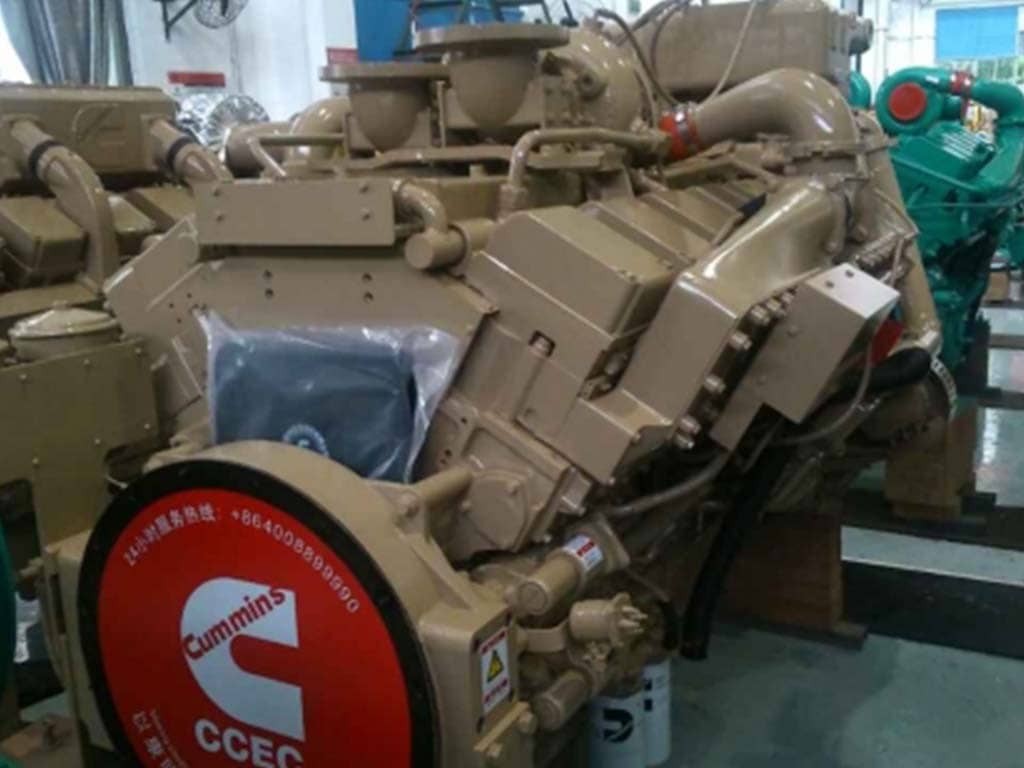
Cummins KTA38-M850 (KT38-M850) 850HP 634kW Marine Diesel Engine
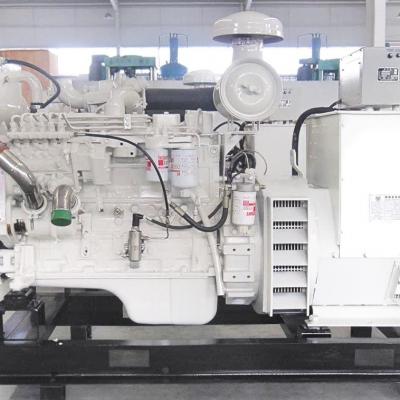
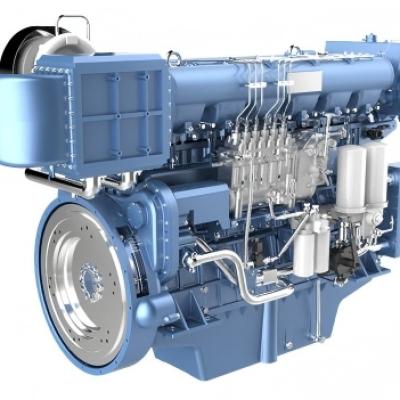
The Cummins KTA38-M850 marine engine is a heavy-duty, 38-liter V12 propulsion powerplant manufactured by Chongqing Cummins Engine Co., Ltd. (CCEC). Rated at 850 HP (634 kW) at 1800 RPM under unrestricted continuous duty, this 12-cylinder engine bridges the power gap between mid-range inline-six marine diesels and high-output 1,000+ HP V12 units. HekoPower operates as an experienced Cummins KTA38-M850 engine supplier, providing complete, factory-tested propulsion assemblies with CCS and IMO marine certifications for shipyards and commercial fleet operators worldwide.
Built on a square 159 mm bore and 159 mm stroke architecture, the CCEC KTA38-M850 634kW marine diesel engine prioritizes thermal margin and low fuel burn over aggressive boost pressures. Unlike higher-horsepower variants in the same 38-liter block family, the Cummins KTA38-M0-850 marine main engine utilizes a higher 15.5:1 compression ratio paired with jacket-water aftercooling. This mechanical configuration allows the 850 HP Cummins V12 continuous duty marine engine to burn only 162.1 L/hr at full rated load while maintaining dependable cold-start performance down to -12°C without auxiliary heaters.
Tech Specs of CCEC KTA38-M850
General Engine Data
Engine Model: Cummins KTA38-M850
Type: 12 Cylinders, V Type, 4 strokes
Displacement: 38 L
Bore * Stroke: 159 * 159
Net Weight (with flywheel & alternator): 4457 Kg
Overall Dimension: 2152mm*1462mm*2083mm
Engine Configuration No.: D233034MX02
Key Performance Data
Rated Power: 634 kW/850HP
Rated Speed: 1800 rpm
Low Idle Speed: 575-675 rpm
High Idle Speed: 1962-2200 rpm
Rating Type: Continuous Running
Fuel Consumption (Running Speed): 162.1 L/hr
More Technical Data
Certification: CCS/IMO Certificates
Governor Type: Mechanical Control
Aspiration: Turbocharged
Compression Radio: 15.5:1
Fuel System: Cummins Pressure Time (PT Pump)
Starting System: Electrical Start (24V)
Lowest Starting Temp Without auxiliary system: -12℃
Cooling Method: Sea water pump, Heat exchanger, Water cooled
Technical Comparisons Within the 38-Liter Marine Lineup
Selecting the right rating inside the CCEC K38-M marine engine family requires looking closely at compression ratios, thermal stress, and gearbox sizing rather than relying solely on nameplate horsepower. Many buyers assume all 38-liter marine engines share identical internal calibrations, yet the Cummins KTA38-M850 occupies a distinct mechanical tier.
Cummins KTA38-M850 vs. KTA38-M1 1000HP Comparison
The most frequent engineering evaluation involves comparing the Cummins KTA38-M850 vs KTA38-M1 1000HP rating. While both engines share the same 2152 mm × 1462 mm × 2083 mm envelope and D233034MX02 base configuration, their internal combustion geometry differs significantly. The KTA38-M850 634kW engine uses a 15.5:1 compression ratio, whereas the 1000 HP KTA38-M1 drops to a 13.9:1 compression ratio to accommodate higher turbocharger boost pressures.
For vessels that do not strictly need 746 kW of shaft power, stepping down from 1000 HP to the 850HP vs 1000HP Cummins marine propulsion engine reduces full-load fuel consumption from 185 L/hr down to 162.1 L/hr. Over a 4,000-hour annual operating cycle, that 22.9 L/hr difference saves more than 91,000 liters of marine gas oil. Furthermore, the lower torque peak allows shipyards to pair the 850 HP rating with lighter, more economical marine reduction gearboxes.
Cummins KT38-M850 vs. KTA38-M850 and KTA38-DM850 Differences
Fleet managers sourcing replacement units often encounter three overlapping model designations in parts catalogs and class certificates. Understanding the Cummins KT38-M850 KTA38-M850 difference prevents costly procurement errors. In older CCEC documentation, the 634 kW propulsion unit was designated as the Cummins KT38-M850 850HP propulsion engine or Cummins KTA38-M0 850, whereas current export build sheets standardize on KTA38-M850 to reflect its jacket-water aftercooled intake manifold. All three codes refer to the same 634 kW @ 1800 RPM continuous-duty propulsion platform.
By contrast, comparing the Cummins KTA38-M850 vs KTA38-DM850 reveals a completely different application profile. The "DM" suffix designates an auxiliary generator-drive marine engine governed strictly for constant-speed 1800 RPM (60 Hz) electrical generation, lacking the variable-speed propulsion governor and marine reduction gear interface required for main shaft propulsion. Similarly, comparing the Cummins KTA38-M850 vs KTA38-M800 marine engine or Cummins KTA38-M850 vs KTA38-M900 specifications comes down to PT fuel pump calibration and injector flow rates within the same 15.5:1 compression block, giving the M850 an optimal balance between the 597 kW M800 and the 671 kW M900.
Real-World Commercial Application Scenarios
Because the Cummins 38 liter marine engine delivers 850 HP without pushing cylinder pressures to their upper limits, naval architects specify this rating for vessels operating on tight fuel budgets in demanding waters.
Coastal Cargo Vessels and River Barges
As an 850HP Cummins marine propulsion engine for cargo vessel hulls between 1,500 and 2,800 DWT, the KTA38-M850 shines in both single-screw and twin-screw layouts. Bulk carriers and container feeders running fixed coastal routes benefit from steady 1800 RPM cruising with predictable bunkering intervals. In shallow inland rivers, pairing a Cummins KTA38-M850 engine for tugboat and pushboat convoys with a CCEC KTA38-M850 heat exchanger vs keel cooling configuration lets operators isolate the engine block from silt-heavy river water by routing coolant through external hull keel coolers.
Commercial Trawlers and Offshore Support Workboats
Deep-sea fishing fleets require a Cummins KTA38-M850 engine for fishing vessel propulsion that tolerates rapid load transitions when winching heavy trawl doors against ocean swells. The mechanical Cummins PT fuel system marine engine architecture meters fuel pressure directly proportional to engine speed, delivering immediate throttle response without electronic sensor lag. For offshore utility boats and cutter suction dredger support craft, installing a Cummins KTA38-M850 marine engine with Advance gearbox (such as the Hangzhou Advance HCD400A or HCQ300 at 3.5:1 to 5:1 reduction ratios) converts high-speed crankshaft rotation into high-thrust propeller torque.
Maintenance, Repowering, and Common Misconceptions
Long-term durability on a KTA38-M850 complete engine assembly depends on disciplined fluid maintenance and accurate drivetrain matching during installation.
Preventive Maintenance and Repowering Guidelines
When performing Cummins KTA38-M850 repowering, verify that the existing engine bedplates align with the 4457 kg wet assembly weight and SAE #0 flywheel housing. During KTA38-M850 PT fuel pump maintenance, technicians must inspect the fuel gear pump pressure and clean the magnetic inlet screen every 500 hours to protect the mechanical injectors from water or sulfur particulates. Equally important is servicing the Cummins KTA38-M850 seawater pump and heat exchanger zinc anodes every 250 hours and maintaining Supplemental Coolant Additive (SCA) levels to prevent wet liner cavitation.
Common Operational Misconceptions
Misconception 1: Any 38-liter propeller will work across all KTA38 ratings. Replacing an older 1000 HP engine with a Cummins KTA38-M850 replacement engine without repitching the propeller will overload the 634 kW power curve. An over-pitched propeller prevents the engine from reaching 1800 RPM at full throttle, driving up exhaust gas temperatures and risking piston scuffing.
Misconception 2: Higher compression means harder cold starting. Some operators assume the 15.5:1 compression ratio requires heavy glow-plug preheating. In reality, higher compression raises end-of-compression air temperature inside the combustion chamber, enabling cleaner ignition and less white smoke during cold mornings than lower-compression high-boost variants.
Expanding Within the Cummins K38-M Propulsion Family
While the 634 kW rating hits the efficiency sweet spot for mid-sized commercial hulls, different vessel displacements and bollard-pull targets require tailored power curves across the same reliable 38-liter V12 footprint. Whether your shipyard is specifying a lower-output unit for an inland barge or scaling up to over 1,000 HP for an ocean-going tug, HekoPower supplies the complete CCEC propulsion lineup with full factory documentation.
Cummins K38-M Series (K38 Marine Engine), marine propulsion engines for commercial and recreational applications, original products from Chongqing Cummins Engine Plant(CCEC). This series mainly includes KT38-M600, KT38-M780, KT38-M800, KT38-M850, KT38-M900, KTA38-M1 (1000 HP), KTA38-M1 (1100 HP), KTA38-M2 (545 HP), KTA38-M2 (1050 HP), KTA38-M2 (1200 HP), KTA38-M2 (1300 HP), KTA38-M2 (1350 HP). All engines complete with sea water pump, heat exchanger, CCS/IMO certificates.
Frequently Asked Questions
Can the Cummins KTA38-M850 be configured for keel cooling instead of a heat exchanger?
Yes. While the standard factory configuration includes an engine-mounted Cummins KTA38-M850 seawater pump and heat exchanger, HekoPower can supply the unit configured for closed-circuit keel cooling. Removing the raw-water heat exchanger is recommended for shallow-draft river pushboats and dredgers operating in muddy or abrasive water.
Which marine gearboxes are compatible with the KTA38-M850 D233034MX02 configuration?
The Cummins KTA38-M850 D233034MX02 configuration features a standard SAE #0 flywheel housing and an 18-inch flywheel interface. It pairs directly with heavy-duty marine reduction gearboxes such as the Hangzhou Advance HCD400A, HCQ300, ZF W325, or Twin Disc MG-5222, depending on your required reduction ratio and propeller shaft angle.
Does the KTA38-M850 meet IMO Tier II marine emission standards?
Yes. Every genuine CCEC KTA38-M850 supplied for marine propulsion is factory-calibrated to comply with IMO Tier II NOx emission regulations and ships with an official Engine International Air Pollution Prevention (EIAPP) certificate alongside China Classification Society (CCS) marine product certification.