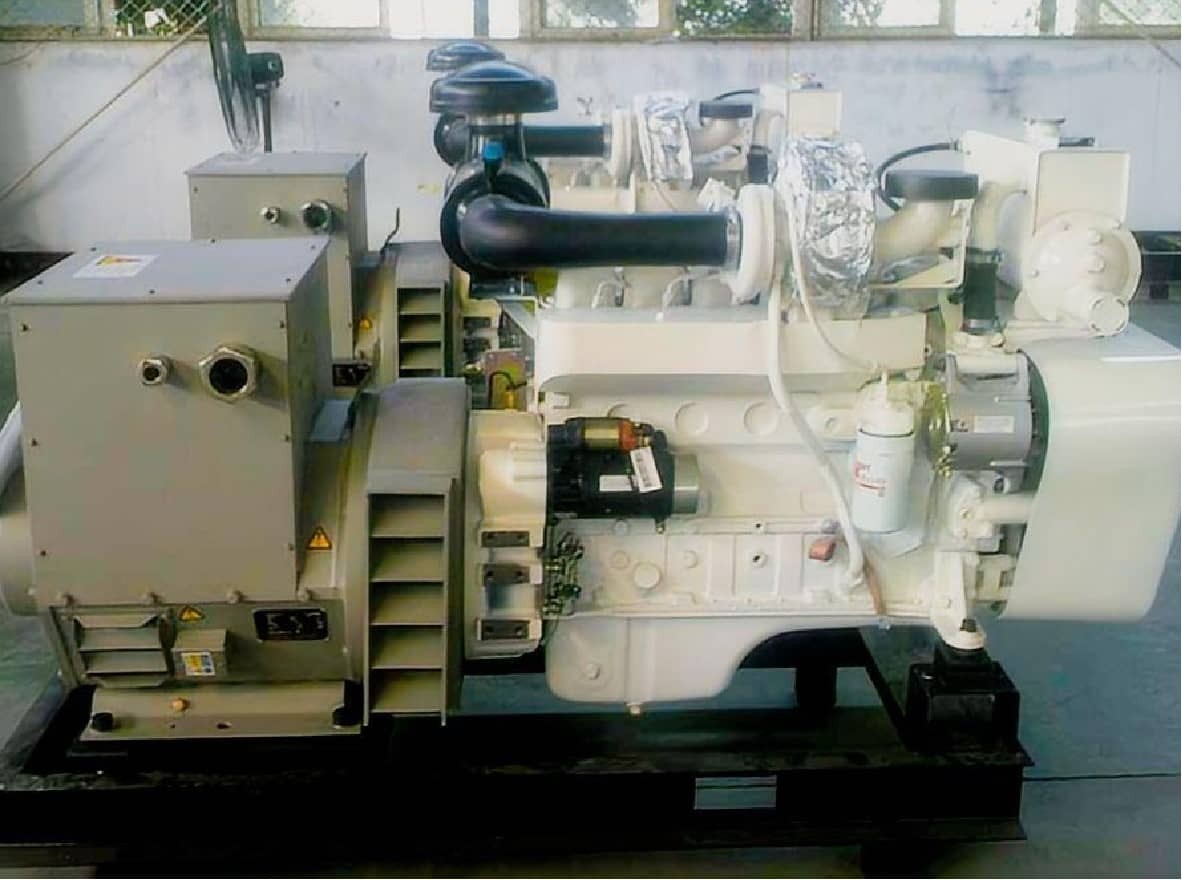
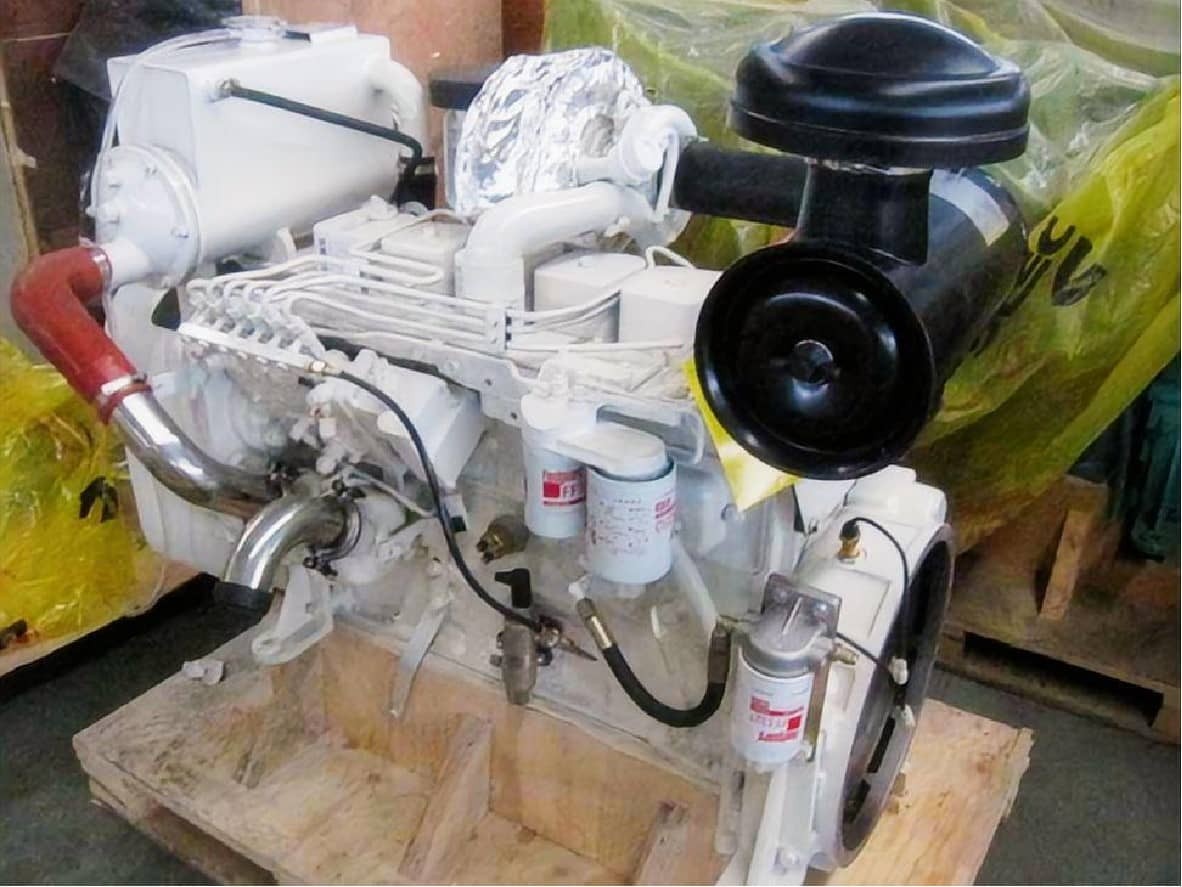
Sourcing verified industrial power machinery requires absolute configuration clarity. The DCEC Cummins 6BT5.9-GM83 is an inline, 6-cylinder mechanical diesel engine purpose-built for continuous-duty marine auxiliary operations. Operating at a stable 1500 RPM, this 5.9L engine platform outputs a rated prime capacity of 83 kW (111 HP) and a standby threshold of 92 kW (123 HP).
As an established global engine supplier, HekoPower provides complete engine assemblies configured exactly to maritime registry standards, protecting international procurement teams from common cross-border compliance setbacks.
The Cummins B Series generator engine family relies on a robust mechanical core that eliminates complex, failure-prone electronic control modules (ECMs) in humid offshore environments. The 6BT5.9-GM83 platform employs a heavy-duty cast-iron block with a platform mesh honing design across the cylinder bores, optimizing oil retention and minimizing blow-by.
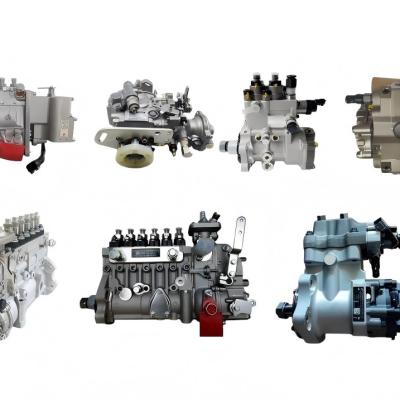
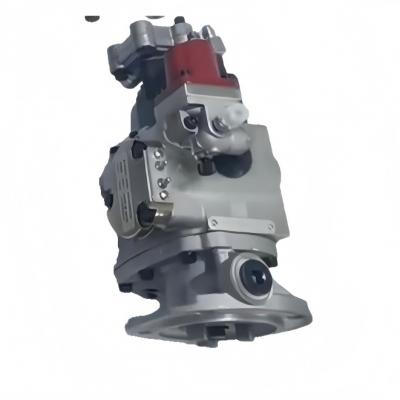
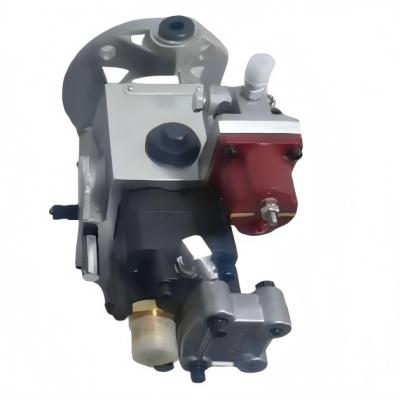
Fuel injection relies on a premium BYC A-series mechanical inline fuel pump paired with a highly responsive GAC electronic governor system. This combined injection framework regulates engine speed deviations within a strict limit of 3% or less, which is vital for preventing harmonic damage across alternating electrical systems.
Operating with high-efficiency turbocharging, the 6BT5.9 engine forces clean ambient air into its 17.3:1 compression chambers to ensure complete fuel combustion. The engine allows a maximum intake restriction of 4 mmH2O with a clean filter element, rising to 6 mmH2O when dirty. For proper engine room ventilation layouts, designers must account for a maximum temperature rise of 17°C from the ambient atmosphere to the turbocharger inlet.
The internal lubrication system demands a minimal capacity of 16.3 liters, combining the main oil sump and primary spin-on filters. Under normal operating criteria, main channel oil pressure stabilizes between 241 kPa and 345 kPa at its rated speed, while dropping no lower than 69 kPa during low idle conditions.
The structural design accommodates varying maritime pitch and roll metrics; the engine mounting angles support a static operational tilt up to 12° and an intermittent motion angle reaching up to 40° in any axial direction.
When finalizing a 83 kW marine diesel generator engine package, procurement agents often weigh the standard 6BT5.9 platform against high-output 4-cylinder alternatives or larger 6C configurations.
Operational logistics depend entirely on fuel burn metrics over long voyages. At full rated capacity, the 6BT5.9-GM83 burns approximately 22 liters of fuel per hour (or a specific metric of 214 grams per kilowatt-hour).
While high-stress 4-cylinder platforms may present a minor reduction in dry weight, the balanced 6-cylinder engine architecture yields far lower torsional vibration profiles. This reduces metal fatigue across the engine skids and adjoining generator backends during long-range continuous-duty cycles.
Physical integration requires precise dimensional planning. The dry weight of the base engine assembly stands at 426 kilograms, expanding to roughly 453 kilograms when crated with standard auxiliary systems.
The compact envelope measures 867 mm in length, 544 mm in width, and 988 mm in height. This space-saving profile enables shipbuilders to position twin auxiliary gensets side-by-side inside tight engine rooms without blocking essential access corridors for maintenance.
The Cummins 5.9L generator engine is built exclusively to supply uninterrupted power across specific marine and specialized industrial structures.
The main application for the Cummins 6BT5.9 1500rpm marine engine is powering onboard auxiliary networks. Coastal cargo hulls, regional push-boats, and ocean-going fishing trawlers rely on this engine assembly to drive 50 Hz brushless marine alternators. This setup satisfies deep-sea operational needs by energizing heavy deck winches, raw-water cooling circuits, cooling compressors, and emergency emergency bilge networks.
Beyond deep-sea hulls, this mechanical diesel engine delivers reliable standby support for shore-side bunkering facilities, remote container cranes, and dockside fueling stations. In locations where ocean air rapidly corrodes fragile electronic components, this fully mechanical platform guarantees predictable backup power without risking automated sensor shutdowns.
Preserving factory performance levels over thousands of operating hours depends on consistent maintenance and using authentic components.
Using cheap, non-genuine wear parts is a primary cause of unexpected auxiliary engine failures. HekoPower stocks a full line of direct-replacement parts verified for the GM83 build prefix. To prevent critical breakdowns, operators must monitor and replace these high-wear items at factory intervals:
Continuous-duty schedules put extreme stress on internal cooling paths. The standard thermostat is calibrated to regulate coolant temperatures between 82°C and 95°C, with an absolute peak limit of 96°C at the engine outlet.
If exhaust path temperatures exceed the normal 525°C threshold at the turbocharger outlet flange, operators must immediately check for raw-water loop blockages or scale buildup inside the integrated heat exchanger cores.
Procuring critical marine auxiliary equipment demands transparent factory logistics and rigorous quality checks.
Many online B2B directories act as unverified brokers, recycling outdated factory spec sheets without offering engineering oversight. HekoPower provides direct technical support and inspection access. Every engine assembly undergoes complete load-bank verification testing prior to export packing, confirming that the mechanical governor and fuel system match your exact power criteria.
Long-distance ocean freight exposes bare metal to salt air and humidity. HekoPower houses all completed assemblies inside heavy-duty, fumigated export wooden cases. We wrap all precision components in vapor-corrosion inhibitor linings, protecting the starter systems, charging dynamos, and bare flywheels from structural damage during transit.
Cummins B5.9-GM Series, Marine Auxilliary Diesel Engines for commercial and recreational applications, original products from Dongfeng Cummins Engine Plant (DCEC), Cummins Joint Venture Plant since 1986, 50% shareholding by Cummins USA. This series mainly includes 6BT5.9-GM83, 6BT5.9-GM100, 6BTA5.9-GM100, 6BTAA5.9-GM115, 6BTA5.9-GM120. All engines complete with sea water pump, heat exchanger, CCS/IMO certificates.
Yes. HekoPower offers genuine Cummins 6BT5.9-GM83 for marine genset configurations paired with official China Classification Society (CCS) certification. We can coordinate with classification surveyors during production to verify full traceability for all raw materials and safety mechanisms.
Every engine arrives as a complete running assembly. The standard package includes the turbocharger, water-cooled exhaust manifold, fuel lift pump, 24V starter motor, charging alternator, instrument monitor panel, and a factory-matched heat exchanger framework with an integrated sea-water pump.
The integrated GAC electronic governor responds instantly to sudden load changes. The engine handles a standard two-step load induction (0% to 50% to 100%) smoothly, stabilizing transient frequency variations within 5 seconds to safeguard delicate onboard marine electronic arrays.
Standard processing times for custom-configured or marine-certified engine assemblies average 15 working days from order confirmation to port delivery in Shanghai or other domestic transit gateways.