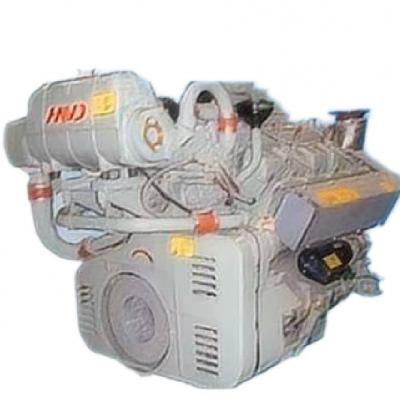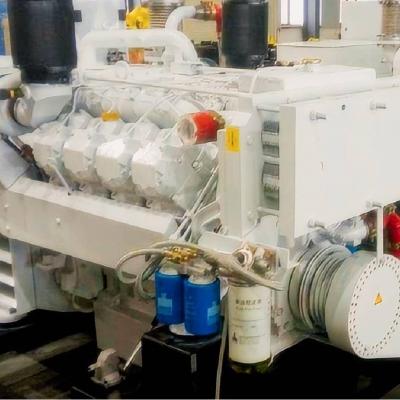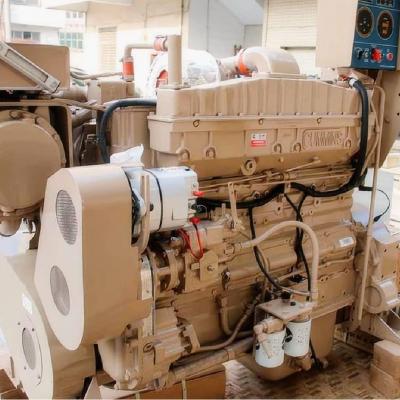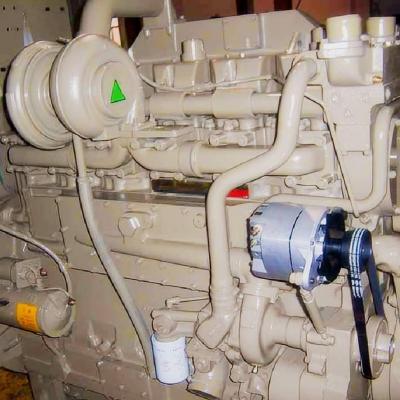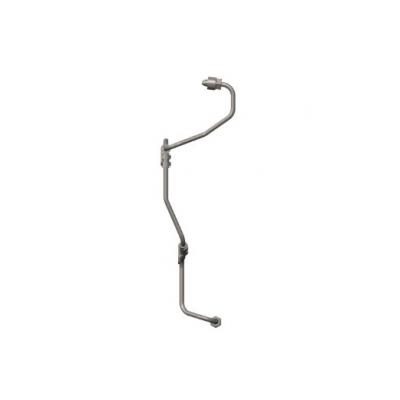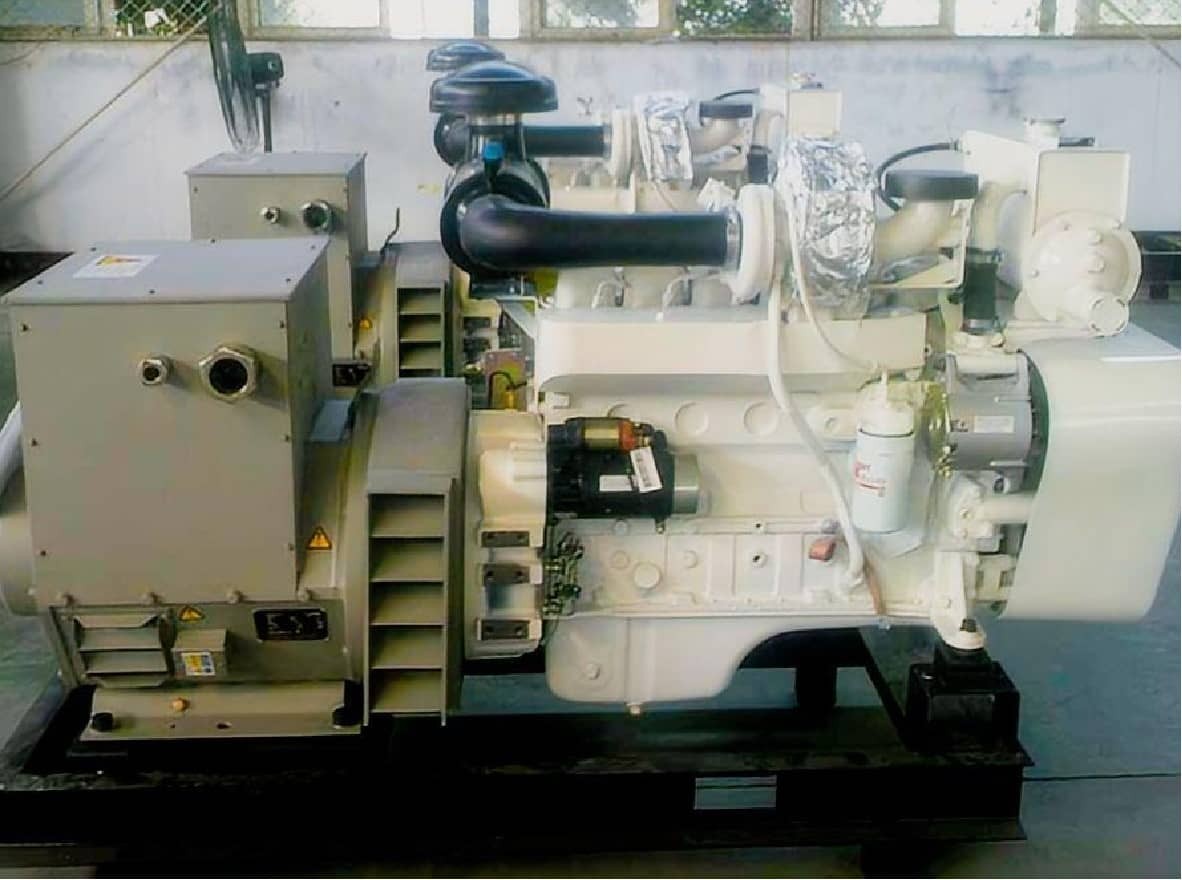
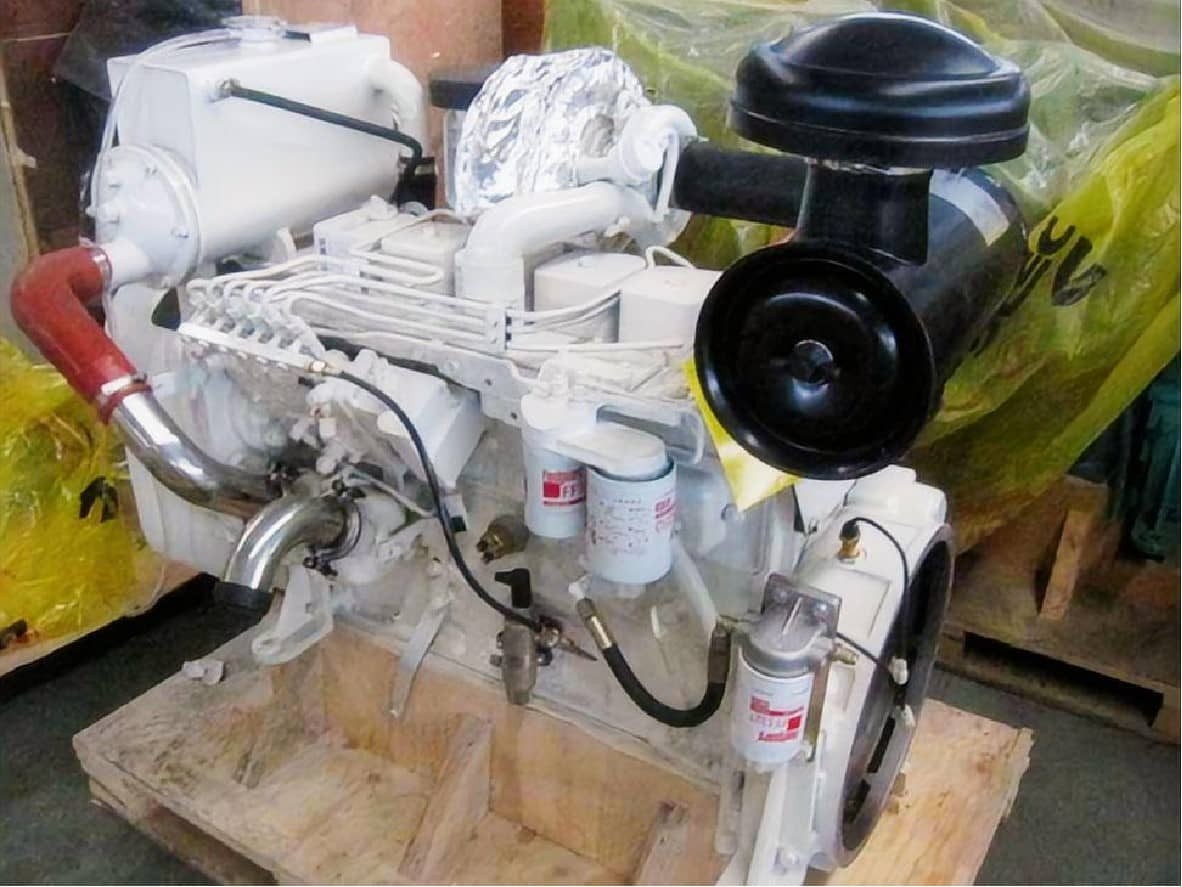
When commercial vessel operators look for dependable shipboard auxiliary electrical generation in a 60Hz regional grid, the Cummins 6BT5.9-GM100 Marine Auxiliary Engine stands out as an industry benchmark. Manufactured under strict quality controls at the Dongfeng Cummins (DCEC) joint venture plant, this inline six-cylinder, four-stroke power unit delivers a reliable prime output of 100 kW (134 HP) at 1800 RPM, backed by a robust standby capacity of 110 kW. Built with a precise 102 mm bore and 120 mm stroke across its 5.9-liter displacement, the DCEC 6BT5.9-GM100 Diesel Engine achieves optimal cylinder pressure distribution and exceptional thermal efficiency under demanding marine workloads.
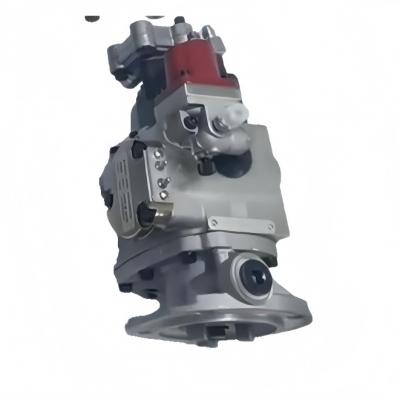
Unlike standard land-based generator drives, the Cummins 6BT5.9-GM100 100kW Marine Auxiliary Engine is specifically designed to withstand corrosive saltwater atmospheres, high humidity, and continuous vessel vibration. Tracked under strict manufacturing specifications like configuration code D402051MX02 and CPL 3117, this Cummins 6BT5.9-GM100 1800RPM Engine integrates a heavy-duty seawater pump and a mounted marine heat exchanger. Fuel delivery is handled expertly by a mechanical BYC A fuel pump paired with a GAC electronic governor, ensuring that frequency regulation remains stable even during sudden block load acceptance.
Navigating the B5.9 marine generator engine lineup requires an understanding of how the 6BT5.9-GM100 134HP Marine Generator Engine differs from alternative models. When comparing the Cummins 5.9L Six-Cylinder Marine Auxiliary Engine against lower-rated variants like the GM83, the primary distinctions lie in fuel calibration, turbocharger matching, and thermal management parameters. While both share identical block dimensions and displacement, the GM100 is calibrated to sustain higher continuous thermal loads to achieve its 100 kW rating at 1800 RPM.
Operators frequently weigh the choice between a turbocharged DCEC 6BT5.9-GM100 60Hz Generator Engine and an aftercooled 6BTA5.9 model. The GM100 utilizes a streamlined turbocharged setup without a raw water intercooler loop, which significantly simplifies pipe routing inside compact auxiliary compartments and eliminates potential maintenance points for raw water scale accumulation. However, because it operates without an aftercooler, exhaust gas temperatures under peak loads run slightly higher, making proper engine room ventilation an essential factor for marine engineers during installation.
Another critical design choice involves selecting between an 1800RPM unit and a 1500RPM variant. The Cummins 6BT5.9-GM100 CPL 3117 Engine is specifically engineered for 60Hz electrical systems found across North American, Asian, and regional commercial fleets. Attempting to operate an 1800RPM generator set on a 50Hz grid requires major speed adjustments that compromise governor efficiency and fuel calibration curves, making correct model selection vital for long-term operational stability.
Maximizing the operational lifespan of a Cummins 6BT5.9-GM100 Marine Diesel Engine requires adherence to marine-specific maintenance schedules that differ substantially from land-based generator applications. A widespread misconception among vessel engineers is that raw water zinc anodes can safely be inspected on an annual schedule. In high-salinity coastal waters, zinc pencil anodes inside the heat exchanger and oil cooler must be checked every 250 operating hours to prevent galvanic corrosion of internal tube stacks.
Another critical maintenance area involves the 6BT5.9-GM100 BYC A fuel pump GAC governor assembly. Because marine auxiliary sets frequently operate at fixed speeds under fluctuating electrical loads, governor linkage wear can gradually introduce frequency hunting. Vessel operators should inspect the electronic actuator linkage and sensor calibration semi-annually. Furthermore, a common mistake during engine overhauls is failing to verify the exact CPL number before ordering replacement gasket sets or injection pump components, which can result in timing discrepancies and reduced fuel economy.
When planning a repowering project, verifying the flywheel housing dimensions and coupling interfaces ensures seamless alignment with existing brushless generator ends. HekoPower supplies complete replacement assemblies configured to match original vessel footprint dimensions, minimizing costly structural modifications in cramped engine rooms.
The versatility and compact footprint of the 100kW Cummins Marine Generator Drive Engine make it an ideal prime mover across a diverse spectrum of commercial marine vessels. In the coastal fishing fleet sector, these units serve as primary auxiliary generator sets aboard trawlers and longliners, powering onboard refrigeration compressors, fish-finding electronics, and hydraulic deck winches simultaneously. Their mechanical resilience allows them to run continuously for days in salt-laden environments without thermal degradation.
For inland river push boats and harbor tugs, the Genuine Cummins 6BT5.9-GM100 Engine Supplier role becomes crucial when delivering units deployed as secondary harbor service generators. When main propulsion engines are shut down during docking maneuvers, the auxiliary set maintains vital shipboard lighting, navigation controls, and steering hydraulic pumps. Additionally, workboats, utility barges, and small passenger ferries rely on this power unit to drive emergency firefighting pumps and auxiliary hydraulic power packs. Its ability to accept rapid block load steps without excessive frequency drop ensures full compliance with marine classification society emergency power regulations.
As vessel operators explore complete auxiliary power options, it helps to review the broader engineering family to ensure the ideal kilowatt match for your specific shipboard electrical load profile.
Cummins B5.9-GM Series, Marine Auxilliary Diesel Engines for commercial and recreational applications, original products from Dongfeng Cummins Engine Plant (DCEC), Cummins Joint Venture Plant since 1986, 50% shareholding by Cummins USA. This series mainly includes 6BT5.9-GM83, 6BT5.9-GM100, 6BTA5.9-GM100, 6BTAA5.9-GM115, 6BTA5.9-GM120. All engines complete with sea water pump, heat exchanger, CCS/IMO certificates.
The marine auxiliary unit utilizes a mounted heat exchanger and engine-driven seawater pump rather than a standard automotive-style radiator, allowing raw water cooling loops to dissipate heat efficiently directly into the surrounding marine environment.
It features a reliable mechanical BYC A fuel pump coupled with a GAC electronic governor, ensuring precise frequency control during sudden electrical load changes at sea.
Yes, provided the flywheel housing size, electrical voltage system, and exhaust or cooling connections match the existing vessel machinery layout. HekoPower provides technical datasheets to verify compatibility prior to export.