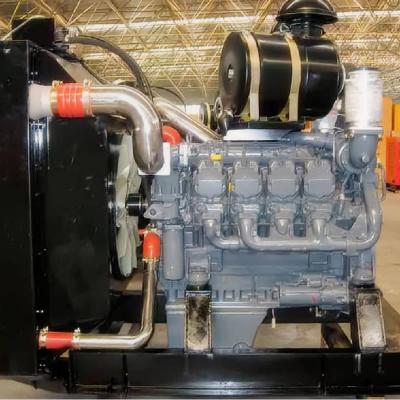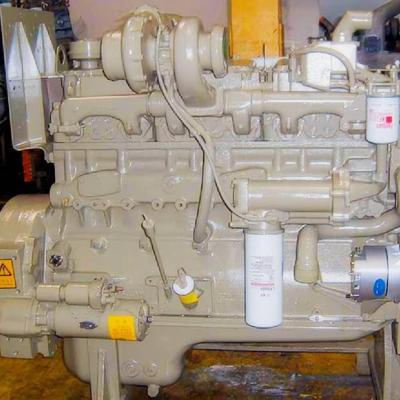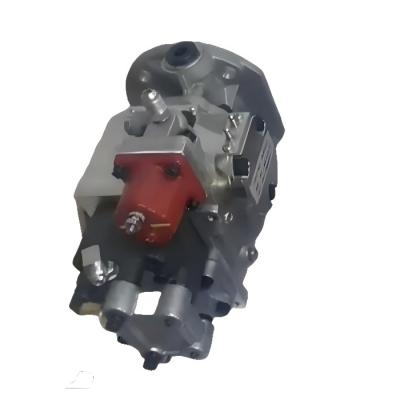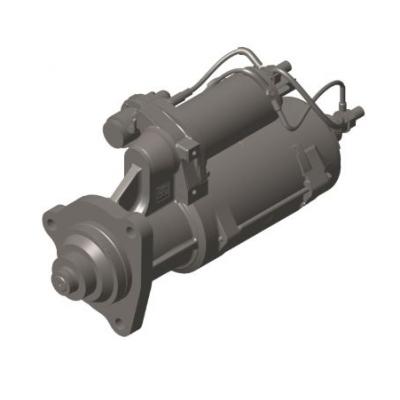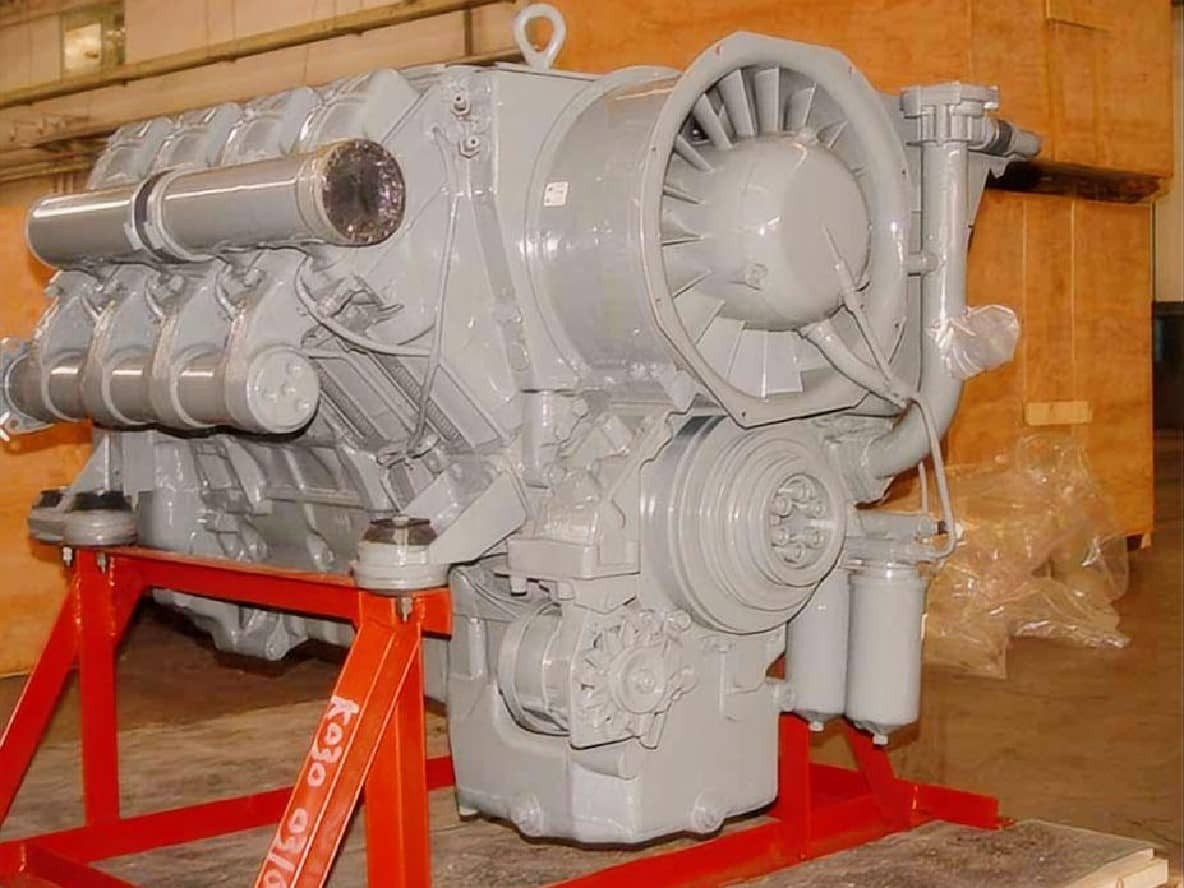
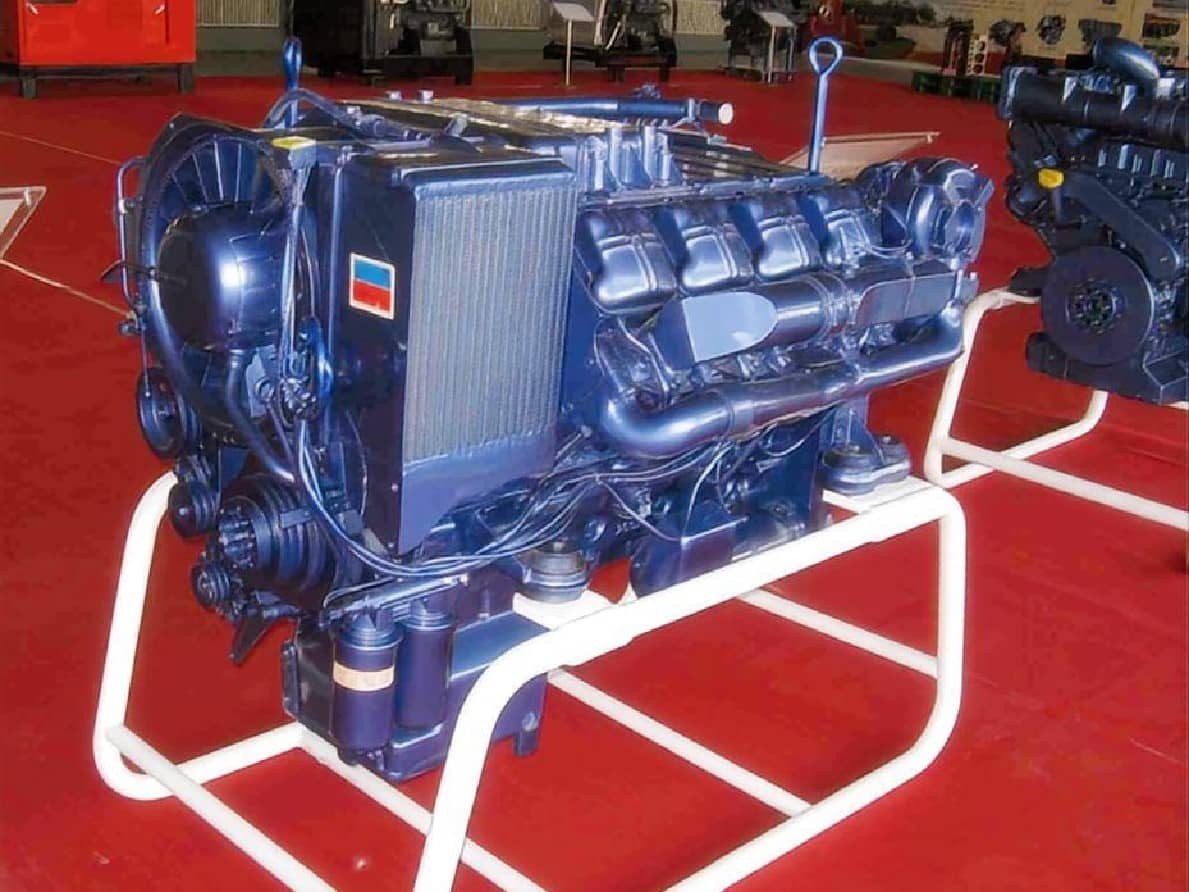
Built by Hebei Huabei Diesel Engine Company (Huachai Deutz Engine Plant) under official Deutz AG manufacturing license, the Deutz BF8L513 is a turbocharged, air-cooled 12.763 L V8 diesel engine calibrated specifically for fixed-speed 1500 rpm 50Hz generator drive service. Producing 147 kW at 1500 rpm inside a compact 1181 mm overall length, it removes the liquid radiator, water pump, coolant hoses, and antifreeze loop that trigger most standby genset failures in arid or sub-zero climates.
HekoPower supplies complete, factory-tested BF8L513 generator engine assemblies for OEM genset packagers, mobile power skids, and direct repower replacements. Every engine is dispatched ready for coupling to a 4-pole synchronous alternator, with flywheel housing, 24V starting equipment, and governor setup confirmed against your project specification prior to shipment.
Compared with the naturally aspirated Deutz F8L413F, which shares the exact same 12.763 L V8 displacement and 125 x 130 mm bore-and-stroke geometry, the turbocharged BF8L513 lifts 1500 rpm rated output from 117 kW to 147 kW while lowering the compression ratio to 15.8:1 to manage peak cylinder pressures. That extra 30 kW lets genset builders step up to a 150-165 kVA alternator without lengthening the base frame.
Stepping up to the intercooled BF8L513C pushes 50Hz mechanical output further—into the 158 kW to 176 kW bracket depending on rating calibration—at the expense of a charge-air cooler core, additional boost piping, and slightly greater weight and footprint. Engineers specify the non-intercooled BF8L513 when tight acoustic canopies cannot accommodate an intercooler core, or when eliminating silicone boost hoses and clamps improves reliability under high-vibration transport.
Between cylinder counts, the 920 kg BF8L513 bridges the gap between the 9.572 L V6 BF6L513 (103 kW at 1500 rpm) and the longer 15.953 L V10 BF10L513 (172 kW at 1500 rpm). Buyers should also distinguish this 50Hz G-drive build from the 1800 rpm F8L513 (60HZ) generator version and from variable-speed 1500-2300 rpm BF8L513FC construction engines, which carry completely different governor springs, torque curves, and auxiliary PTO layouts.
At 147 kW mechanical input and 1500 rpm, the BF8L513 pairs naturally with 150 kVA to 165 kVA (roughly 120-132 kWe prime) 4-pole 50Hz alternators after accounting for 90-92% generator efficiency. Its short V8 block and zero-coolant design make it a staple for desert telecom towers, remote oilfield camps, dry high-altitude mining substations, mobile defense power trailers, and unmanned standby shelters where coolant sourcing or freeze protection is impractical.
With its 12.763 L swept volume and forced induction, the engine absorbs sudden inductive motor-starting step loads steadily and maintains 215 g/kW.h specific fuel consumption at rated output. For prime-duty sites, sizing the generator so average running loads stay between 65% and 85% maximizes fuel efficiency and exhaust temperatures; running persistently below 30% load invites wet stacking and carbon buildup around exhaust valves and turbocharger seals. Equipped with an intake air heater, the platform starts reliably in cold climates down to -35 C without jacket-water block heaters.
A common misconception in genset packaging is that removing the liquid radiator eliminates canopy airflow engineering. In reality, an air-cooled V8 still rejects substantial heat directly into the cooling air stream driven by its axial blower. If hot discharge air from the cylinder-barrel shrouds is not ducted cleanly outside the enclosure, recirculation drives cylinder-head temperatures past safe limits even under moderate electrical load.
Because the BF8L513 uses modular individual cylinder barrels and heads across a V8 architecture with internal oil galleries, field overhauls require less downtime than monolithic block designs. Keep these operational checks on a strict schedule:
Another frequent mistake during emergency repowers is assuming a salvaged 2300 rpm vehicle or construction BF8L513 can bolt directly onto a 50Hz generator skid. Although major wear parts share 125 x 130 mm FL513 dimensions, variable-speed automotive governors cannot maintain tight ISO 8528 frequency droop at 1500 rpm without injection-pump recalibration, and engine mounting feet, fan shrouds, and flywheel housings often do not align.
Within the Huachai Deutz air-cooled generator lineup, the BF8L513 serves as the mid-range turbocharged 50Hz V8 option—sitting above the naturally aspirated F8L413F and V6 BF6L513 while offering a simpler, non-intercooled alternative to the BF8L513C and higher-output V10/V12 models.
Deutz FL413-Generator Engine Series, original products from Huachai Deutz Engine Plant. This series mainly includes Deutz F8L413F, Deutz F10L413F, Deutz F12L413F, Deutz BF6L513, Deutz BF8L513, Deutz BF8L513C, Deutz BF10L513, Deutz BF12L513, Deutz BF12L513C, Deutz BF12L513CP, Deutz F8L413F (60HZ), Deutz F8L513 (60HZ), Deutz F12L413F (60HZ).
Accounting for typical 90% to 92% alternator efficiency at 0.8 power factor, a 147 kW mechanical rating at 1500 rpm supports roughly 132 kWe (165 kVA) at rated load. Depending on whether your genset build applies ISO 3046 prime or standby derating for site altitude and ambient temperature, it is most commonly paired with a 150 kVA prime or 165 kVA standby 50Hz alternator.
Choose the BF8L513 when your load sits at or below 147 kW mechanical power and you want a more compact 1181 mm engine envelope with simpler plumbing. Skipping the air-to-air charge-air cooler eliminates intercooler core ducting and silicone boost connections, which reduces installation complexity in tight mobile or containerized enclosures.
Do not simply wind up the governor on a factory 1500 rpm build without checking injection-pump calibration, cooling-blower speed limits, and alternator coupling rating. For 60Hz grids, specify a factory-calibrated 1800 rpm generator assembly—such as the 60Hz FL513 configuration—so fuel delivery, governing stability, and fan airflow match 1800 rpm continuous operation.
Provide an unrestricted cool-air intake louver positioned at the alternator/blower intake end and install a sealed discharge duct connecting the engine's hot-air outlet shroud directly to the canopy exhaust louver. Separating intake and exhaust airflows prevents heated air from recirculating back into the axial cooling blower and combustion air filter.