Details
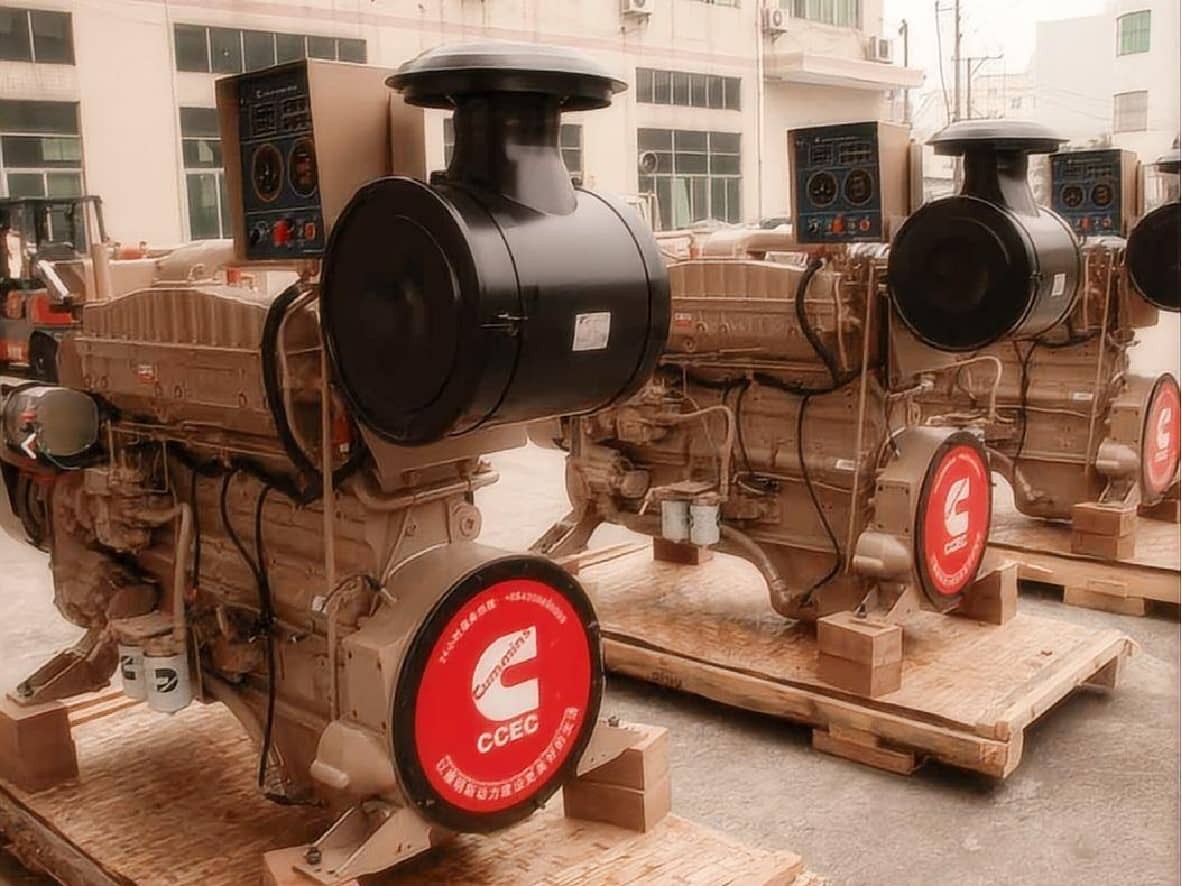
CCEC Cummins NTA855-M400 Marine Propulsion Diesel Engine
The marine propulsion landscape demands absolute reliability under punishing, continuous duty cycles. At the heart of heavy-duty commercial marine engineering stands the Chongqing Cummins (CCEC) NTA855 series, a power plant whose metallurgical and mechanical integrity has been proven across decades of global maritime service. The CCEC Cummins NTA855-M400 represents a finely calibrated balance of robust displacement, thermal efficiency, and mechanical simplicity. Operating on a 14-liter inline-six configuration with a 140 mm bore and 152 mm stroke, this engine delivers an uncompromised continuous output of 298 kW (400 horsepower). As an established engine supplier, HekoPower provides complete, factory-inspected engine assemblies built to withstand the corrosive marine environment, high torsional loads, and extended operational hours required by professional operators.
The structural foundation of the NTA855-M400 relies on a heavily ribbed cast-iron cylinder block designed to dampen combustion vibrations and maintain structural alignment under peak cylinder pressures. Unlike lighter automotive derivatives adapted for marine use, this industrial block features wet-type replaceable cylinder liners treated with induction hardening, ensuring exceptional wear resistance and simplified in-frame overhaul capabilities during the vessel's lifecycle.
Tech Specs of Cummins NTA855-M400 Marine Engine
General Engine Data
Engine Model: Cummins NTA855-M400
Type: 6 Cylinders in Line
Displacement: 14 L
Bore * Stroke: 140 * 152
Net Weight (with flywheel & alternator): 1430 Kg
Overall Dimension: 1809mm*881mm*1598mm
Engine Configuration No.: D0903348MX02
Key Performance Data
Rated Power: 298 kW/350HP
Rated Speed: 1800/2100 rpm
Low Idle Speed: 575-675 rpm
High Idle Speed(1800 rpm): 1962-2106 rpm
High Idle Speed(2100 rpm): 2289-2457 rpm
Rating Type: Continuous Running Power
Fuel Consumption (Running Speed): ≤ 220 g/kW.hr
Max Torque/Speed(1800 rpm): 1385 N.m @ 1500 rpm
Max Torque/Speed(2100 rpm): 1491 N.m @ 1500 rpm
More Technical Data
Certification: CCS/IMO Certificates
Governor Type: Mechanical Control
Aspiration: Turbocharged/Aftercooled
Compression Radio: 14.5:1
Fuel System: Cummins Pressure Time (PT Pump)
Starting System: Electrical Start (24V/100AMP)
Lowest Starting Temp Without auxiliary system: -12℃
Cooling Method: Sea water pump, Heat exchanger, Water cooled
Technical Comparison of the NTA855-M400 Variants
When selecting a propulsion unit for a commercial vessel, understanding the distinct operational profiles of the NTA855-M400 sub-configurations is critical to preventing premature wear and achieving optimal fuel economy. The platform is engineered primarily into two distinct operating profiles: the continuous-duty M400A configuration rated at 1800 RPM and the higher-speed commercial M400B configuration rated at 2100 RPM.
In the 1800 RPM M400A setup, the engine prioritizes sustained torque delivery at lower crankshaft speeds, making it exceptionally well-suited for heavy displacement workboats where propeller slip must be minimized under maximum bollard pull. The internal fuel calibration utilizes specific plunger and button combinations within the CCEC PT (Pressure Time) fuel system to meter fuel injection precisely, yielding lower exhaust gas temperatures and extended component life for continuous day-and-night operations.
Conversely, the 2100 RPM M400B configuration is tailored for applications requiring a broader operational window and higher gear reduction flexibility, allowing lighter commercial hulls to achieve higher transit speeds without over-fueling the combustion chambers. The turbocharger matching on the M400B utilizes a specialized turbine housing aspect ratio to ensure rapid boost response during throttle transitions, whereas the 1800 RPM variant focuses on steady-state scavenging efficiency. Operators must evaluate their vessel's hull displacement, propeller curve, and duty cycle carefully to select the precise rating, ensuring that the engine operates well within its manufacturer-specified thermal and mechanical envelopes.
Real-World Application Scenarios for Commercial Workboats
The true measure of a marine diesel engine is its performance in active commercial service. The CCEC Cummins NTA855-M400 finds its most demanding application within coastal fishing trawlers, inland river cargo carriers, harbor utility vessels, and passenger ferries operating in shallow or high-current waterways. In coastal fishing trawlers, the engine's ability to maintain stable torque while dragging heavy nets at low trolling speeds prevents lugging and minimizes thermal shock during sudden load spikes.
For inland river cargo carriers operating in confined channels, rapid throttle response and reliable reverse gear engagement are paramount. The NTA855-M400 integrates seamlessly with heavy-duty marine reduction gearboxes, providing the snap response needed for docking maneuvers and lock transits. Furthermore, in passenger ferry applications, the low vibration signature of the inline-six design, combined with effective keel cooling or heat exchanger configurations, ensures passenger comfort and reliable schedule adherence across thousands of operating hours per annum.
Common Misconceptions Regarding the NTA855-M400 Marine Power Plant
Navigating marine engine procurement often involves persistent technical myths that can lead to costly specification errors. A prevalent misconception is that all NTA855 engine blocks are universally interchangeable regardless of their original bill of materials. In reality, industrial, automotive, and marine NTA855 variants differ significantly in camshaft profiles, piston cooling nozzle flow rates, oil pan configurations, and raw water pump accessory drives. Installing an industrial stationary block into a marine hull without modifying the cooling and lubrication circuits inevitably leads to overheating and catastrophic failure.
Another common misunderstanding surrounds the operation of the CCEC PT fuel system. Operators sometimes attempt to modify fuel pressure settings externally to extract higher horsepower outputs beyond the rated 400HP. Doing so violates IMO compliance, distorts exhaust gas temperatures, and places excessive thermal stress on the cylinder heads and turbocharger turbine wheel. Genuine marine ratings are certified based on precise CPL (Control Parts List) parameters, which dictate fuel timing and injection volumes to ensure longevity and regulatory compliance.
Strategic Maintenance, Overhaul, and Repowering Guidelines
Executing a successful vessel repowering project with the NTA855-M400 requires rigorous attention to peripheral systems. During installation, marine engineers must verify that the engine room ventilation provides adequate cubic feet per minute (CFM) air exchange to prevent negative pressure and maintain combustion efficiency. Exhaust backpressure must be meticulously calculated and kept within Cummins' strict limits to prevent turbocharger surging and elevated exhaust valve temperatures.
Routine maintenance protocols must prioritize the raw water cooling circuit. The engine-mounted seawater pump requires regular impeller inspection and zinc anode replacement within the heat exchanger core to prevent galvanic corrosion caused by stray electrical currents in brackish or saltwater environments. Additionally, operators should perform scheduled oil sampling every 250 operating hours to monitor soot loading, fuel dilution, and bearing wear metals, ensuring minor anomalies are addressed long before an overhaul is required. When sourcing replacement parts or complete drop-in assemblies, verifying the unique engine serial number against CCEC factory records guarantees compatibility and preserves warranty integrity.
Comprehensive Marine Propulsion Solutions and Series Navigation
Selecting the right power plant for a commercial vessel or industrial project requires a comprehensive understanding of engineering specifications, duty cycles, and auxiliary compatibility. Beyond individual propulsion units, complete powertrain integration often requires careful coordination across related engine families and replacement components.
Cummins N855-M Series (N855 Marine Engine), marine propulsion engines for commercial and recreational applications, original products from Chongqing Cummins Engine Plant(CCEC). This series mainly includes NTA855-M350, NTA855-M400, NTA855-M450, NTA855-M200, NTA855-M220, NTA855-M240, NTA855-M250, NTA855-M270, NTA855-M300. All engines complete with sea water pump, heat exchanger, CCS/IMO certificates.
Frequently Asked Questions (FAQs)
What distinguishes the NTA855-M400 from lower-horsepower NTA855 marine models?
The M400 configuration utilizes optimized turbocharger matching, calibrated PT fuel injector buttons, and enhanced thermal management to deliver a sustained 298 kW (400 HP) output without compromising the durability of the 14-liter cylinder block.
What cooling configurations are available for the NTA855-M400?
The engine can be configured with either a shell-and-tube heat exchanger utilizing an engine-mounted seawater pump for raw water cooling, or adapted for keel cooling systems utilized in vessels operating in silt-heavy or shallow waters.
How does HekoPower ensure the authenticity of supplied CCEC engines?
As a specialized industrial and marine engine supplier, HekoPower sources complete assemblies directly through authorized manufacturing channels, verifying every unit's CPL number, factory test certificate, and engine serial number prior to international shipment.