Details
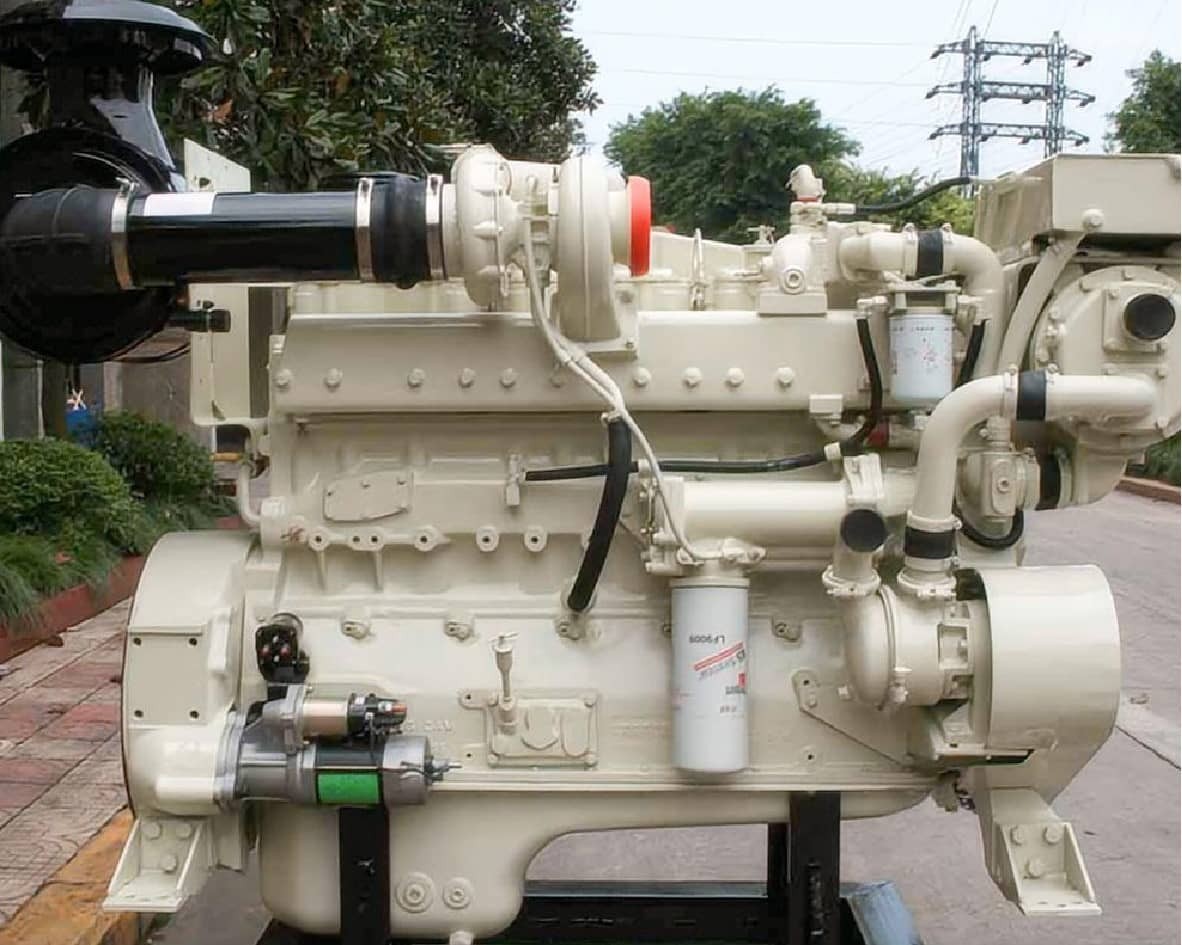
Engineering Overview of the Chongqing Cummins NTA855-M300 Marine Propulsion System
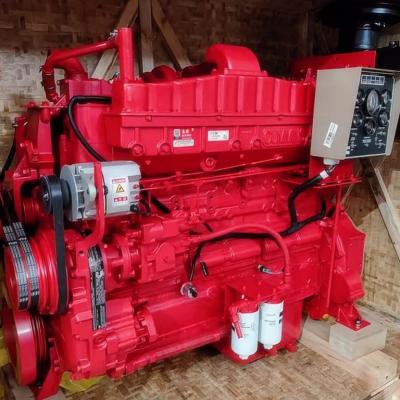
The Chongqing Cummins Engine Company (CCEC) NTA855-M300 stands as a benchmark in heavy-duty marine propulsion, bridging robust mechanical durability with refined thermal efficiency. Built upon the legendary 14-liter, six-cylinder in-line architecture, this power unit delivers a continuous rating of 224kW (300 horsepower) at an operating speed of 1800 RPM. Designed specifically for marine environments where reliability supersedes all else, the NTA855-M300 incorporates advanced turbocharging and aftercooling (NTA designation) to optimize air charge density, ensuring complete combustion and consistent power delivery across fluctuating marine loads.
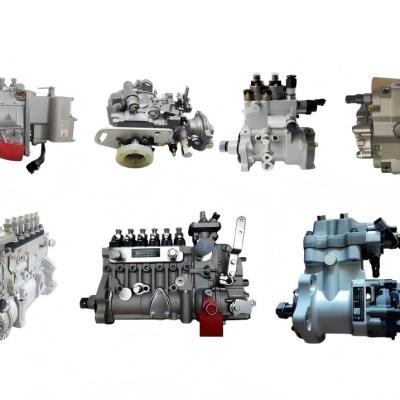
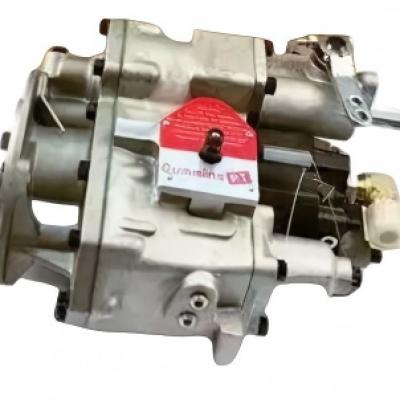
At the heart of the fuel delivery system lies the proprietary Cummins PT (Pressure-Time) fuel pump. Unlike conventional distributor or inline pumps, the PT system operates under low pressure through the fuel lines and high pressure exclusively inside the injector cup just prior to injection. This precise hydraulic metering eliminates timing lag and guarantees exceptional fuel atomization. For commercial vessel operators, this translates to predictable fuel consumption curves, reduced particulate emissions, and effortless throttle response when maneuvering in confined harbor waters or battling heavy coastal swells.
Tech Specs of Cummins NTA855-M300
General Engine Data
Engine Model: Cummins NTA855-M300
Type: 6 Cylinders in Line
Displacement: 14 L
Bore * Stroke: 140 * 152
Net Weight (with flywheel & alternator): 1385 Kg
Overall Dimension: 1453mm*947mm*1296mm
Engine Configuration No.: D092347MX02
Key Performance Data
Rated Power: 224 kW/300HP
Rated Speed: 1800 rpm
Low Idle Speed: 575-675 rpm
High Idle Speed: 1962-2106 rpm
Rating Type: Continuous Running Power
Fuel Consumption (Running Speed): 58 L/hr
Max Torque/Speed: 1306 N.m @ 1500 rpm
More Technical Data
Certification: CCS/IMO Certificates
Governor Type: Mechanical Control
Aspiration: Turbocharged/Aftercooled
Compression Radio: 14.5:1
Fuel System: Cummins Pressure Time (PT Pump)
Starting System: Electrical Start (24V/100AMP)
Lowest Starting Temp Without auxiliary system: -12℃
Cooling Method: Sea water pump, Heat exchanger, Water cooled
Real Application Scenarios in Commercial Workboats and Vessels
Selecting a propulsion plant requires exact alignment between engine duty cycles and vessel hydrodynamic profiles. The NTA855-M300 is engineered explicitly for continuous-duty applications (Duty Type 1 or Duty Type 2 depending on gear ratio), making it the preferred choice for several distinct maritime sectors.
Commercial fishing vessels operating in deep-sea trawling or long-line operations benefit immensely from the engine's flat torque curve and heavy cast-iron block rigidity. The ability to maintain sustained torque output over extended periods without thermal degradation ensures that winches and propulsion systems operate in seamless harmony. Similarly, harbor tugboats and small push boats utilize the NTA855-M300 for its immediate low-end bollard pull capability, allowing operators to maneuver heavy barges with precision.
Furthermore, coastal cargo barges, passenger ferry boats, and tour boats rely on this 14-liter platform for its dependable day-in, day-out service intervals. The integrated seawater pump and robust heat exchanger configuration ensure that even in high-salinity, sediment-heavy coastal estuaries, engine operating temperatures remain strictly regulated, safeguarding cylinder heads and turbocharger housings from premature thermal stress.
Technical Comparisons: NTA855-M300 vs. M270 and M350 Variants
Navigating the NTA855 marine lineup requires understanding how calibration shifts impact performance parameters. When evaluating the NTA855-M300 against its sibling ratings, operators must look beyond nominal horsepower figures to match their vessel's hull resistance curve.
Compared to the lower-rated Cummins NTA855-M270, the M300 configuration features modified fuel injector calibration and optimized turbocharger matching (such as specific M-107 performance curves). While both share the identical 14-liter displacement and physical installation envelope, the M300 delivers an extra 30 horsepower, pushing maximum torque delivery to approximately 1306 Nm at 1500 RPM. This higher torque reserve prevents engine lugging when a vessel encounters sudden head-currents or heavy sea states.
Conversely, when contrasted with the higher-output NTA855-M350 (typically rated at 261kW / 350HP), the M300 operates at a more conservative thermal and mechanical load factor. While the M350 is suited for lighter patrol boats or vessels requiring higher top-end speed, the M300 prioritizes extended overhaul life, lower exhaust gas temperatures (EGT), and superior fuel economy at continuous cruising speeds. Choosing the M300 over the M350 often results in a significantly extended service life before major in-frame overhauls become necessary.
Maintenance, Servicing Protocols, and Common Industry Misconceptions
Maximizing the operational lifespan of a CCEC NT855-M300 engine demands strict adherence to preventative maintenance schedules, alongside a clear understanding of common technical misconceptions prevalent in the aftermarket.
A widespread misconception among fleet operators is that marine diesel engines can safely utilize heavy industrial or automotive lubricating oils without regard for Total Base Number (TBN) ratings. Marine environments subject engines to sulfur-rich marine gas oils and high humidity, necessitating specialized marine-grade oils with proper detergency to prevent corrosive cylinder liner wear. Another frequent error involves neglecting the sacrificial zinc anodes within the heat exchanger and seawater cooling circuit. Allowing these anodes to completely degrade accelerates galvanic corrosion across the copper-nickel tube bundles, leading to premature raw water leaks into the cooling system.
Routine servicing should focus on inspecting the PT fuel pump calibration every 2,000 operating hours, cleaning the aftercooler core to prevent carbon fouling, and monitoring valve lash clearance. Maintaining proper valve and injector adjustments guarantees optimal fuel economy and prevents exhaust valve burning during high-load transits.
CCEC NTA855-M300 Series Architecture and Ecosystem
As global commercial operators seek reliable power solutions backed by authentic manufacturing standards, HekoPower maintains a comprehensive inventory of complete engine assemblies and matching components. This particular model integrates seamlessly into our broader supply catalog, ensuring that fleet managers can source both prime movers and specialized peripheral hardware from a single trusted partner.
Cummins N855-M Series (N855 Marine Engine), marine propulsion engines for commercial and recreational applications, original products from Chongqing Cummins Engine Plant(CCEC). This series mainly includes NTA855-M350, NTA855-M400, NTA855-M450, NTA855-M200, NTA855-M220, NTA855-M240, NTA855-M250, NTA855-M270, NTA855-M300. All engines complete with sea water pump, heat exchanger, CCS/IMO certificates.
Frequently Asked Questions (FAQ)
Does the NTA855-M300 require a keel cooling system or a heat exchanger?
The engine is available in flexible configurations. The standard marine propulsion setup utilizes a mounted seawater pump and a shell-and-tube heat exchanger, though customized keel-cooled configurations can be engineered upon request for shallow or sediment-heavy river operations.
What is the continuous fuel consumption rate of the Cummins NTA855-M300 at rated power?
At rated output (224kW at 1800 RPM), the NTA855-M300 consumes approximately 48 to 52 liters of diesel fuel per hour under standard operational load conditions, varying slightly depending on propeller pitch and hull resistance.
Can I use this for a yacht?
While primarily a commercial engine, it can be used for large displacement yachts requiring a 300HP Cummins marine diesel engine.