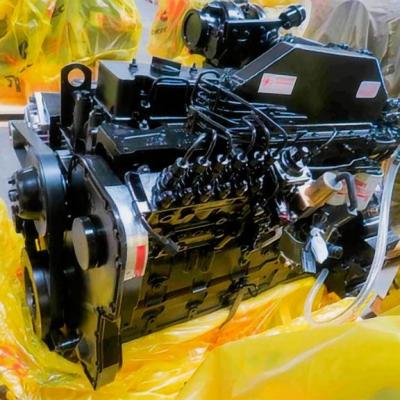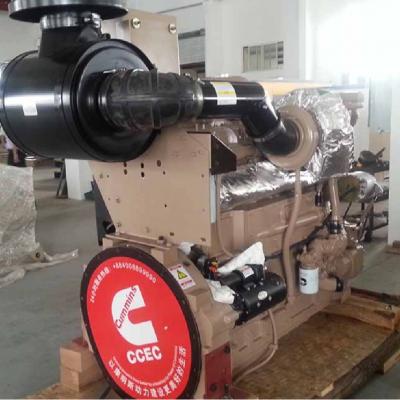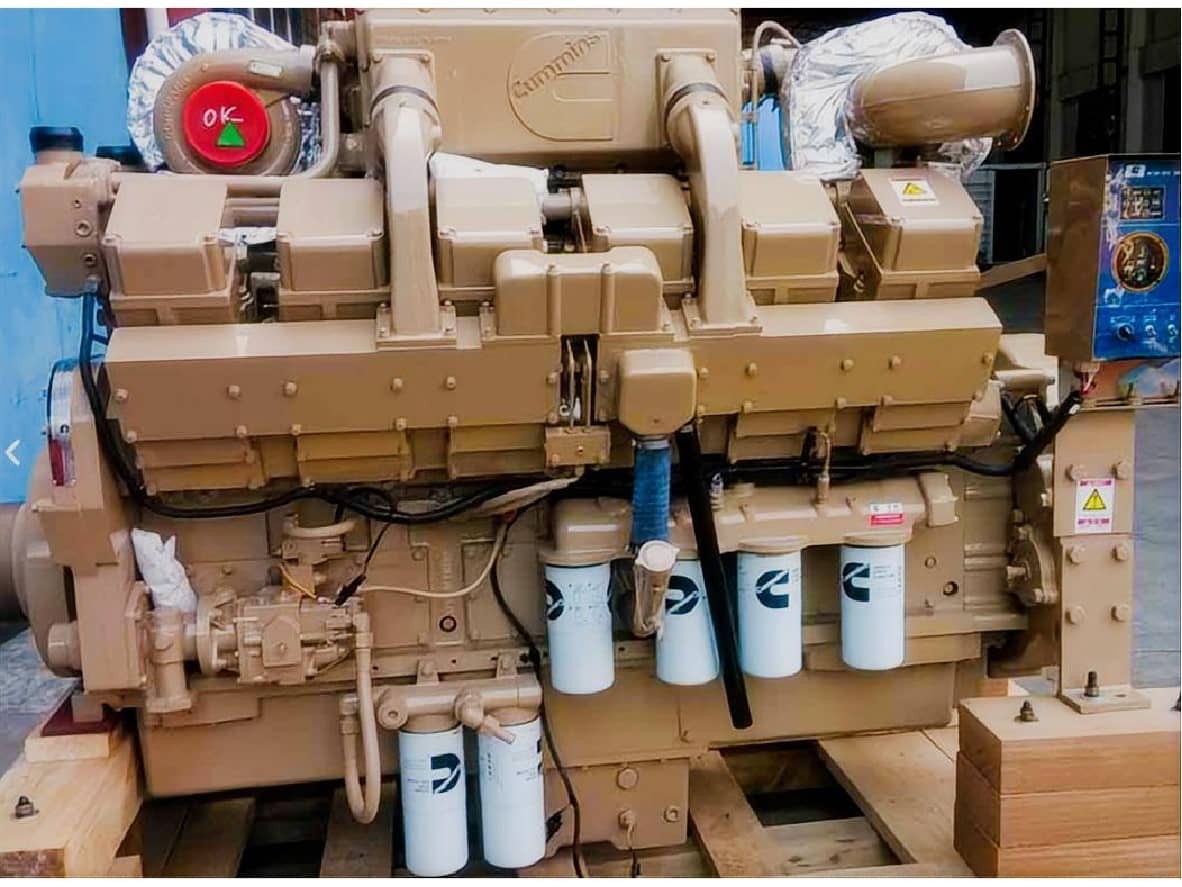
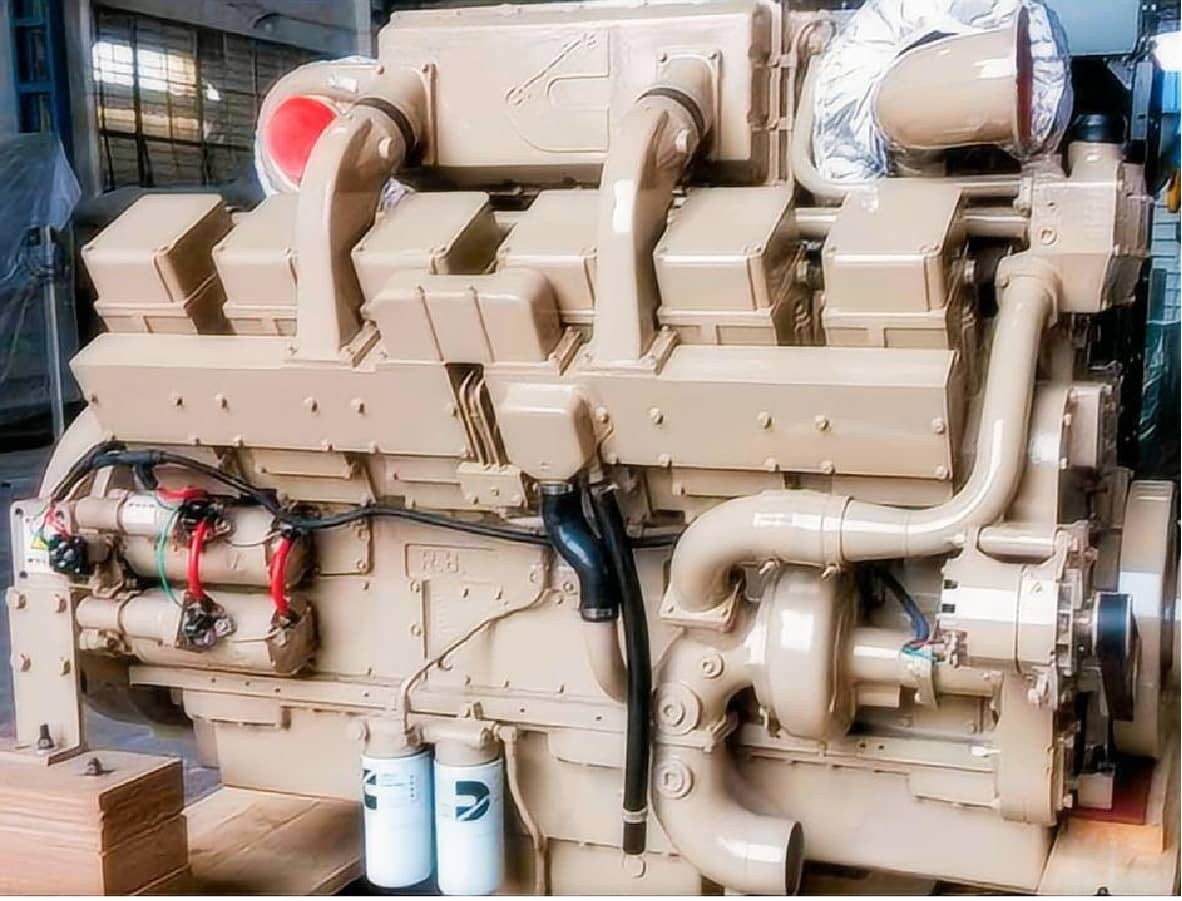
The demands placed on onboard auxiliary power systems require absolute mechanical reliability, stable frequency control, and robust thermal management. As an established global engine supplier, HekoPower provides the Cummins KTA38-DM880, an exceptional power unit engineered specifically for heavy-duty maritime environments. Operating at 1500 RPM, this Chongqing Cummins KTA38-DM880 delivers a prime rated output of 880kW (1180HP), making it a cornerstone for commercial vessels requiring continuous electrical stability. Whether integrated into a main switchboard generator set or designated as an emergency onboard power source, understanding its operational parameters ensures maximum lifecycle efficiency.
Marine auxiliary engines must perform under fluctuating load profiles, corrosive salt-air atmospheres, and cramped engine room layouts. The Cummins KTA38 marine auxiliary engine is primarily deployed in large commercial cargo ships, offshore tugboats, dredgers, and floating production storage and offloading (FPSO) vessels. In these environments, the engine drives large-capacity marine alternators to supply continuous hotel loads, winches, navigation systems, and auxiliary machinery.
Because space and weight distribution are critical on vessels, the 38L V12 Cummins marine engine offers an optimized power-to-weight ratio. Its robust block architecture absorbs torsional vibrations efficiently, while specialized marine cooling configurations utilize keel cooling or heat exchangers paired with seawater pumps to manage thermal loads in tropical or arctic waters. Fleet operators rely on this 880kW Cummins marine auxiliary generator engine because it maintains governor stability even when heavy deck machinery switches on abruptly, preventing voltage sags across the ship's grid.
Evaluating propulsion and auxiliary options requires a close look at how models scale within the same displacement family. When comparing the KTA38-DM880 vs KTA38-DM768 marine auxiliary engine, the primary divergence lies in turbocharger matching and fuel calibration. While both share the identical 38-liter V12 displacement and 159mm bore and stroke, the DM880 is tuned for higher thermal and mechanical output, yielding an additional 112kW of continuous power.
Conversely, when juxtaposed against larger variants like the KTA38-DM1007 engine specifications, the DM880 operates with slightly conservative thermal stress limits. This reduction in peak combustion pressure translates directly into extended overhaul intervals and lower thermal fatigue on cylinder heads. Understanding the distinction between prime power and overload rating is vital; the DM880 is designed to sustain 880kW continuously under variable loads without exceeding exhaust temperature thresholds, whereas attempting to push lower-tier models beyond their rated envelope risks premature turbocharger coking and thermal cracking.
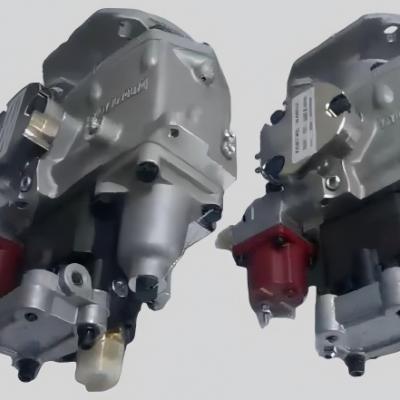
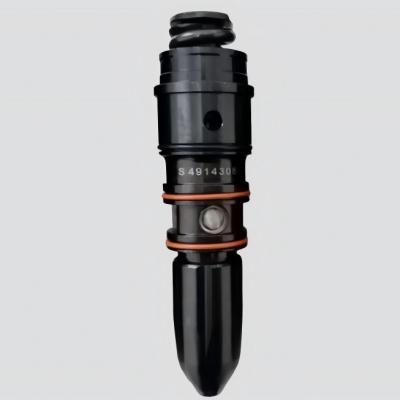
Maintaining a high-output industrial diesel engine demands strict adherence to service schedules, particularly regarding the proprietary Cummins KTA38-DM880 PT fuel system. A widespread misconception among uncertified technicians is that adjusting the pressure-time (PT) injectors without specialized flow-bench calibration can boost power output. In reality, arbitrary adjustments disrupt fuel atomization symmetry across the twelve cylinders, leading to localized thermal spikes, uneven piston ring wear, and black smoke emissions.
When executing a Cummins KTA38-DM880 replacement engine project, compatibility checks must extend beyond physical mounting footprints. Installers must verify that the existing marine exhaust piping can accommodate the mass flow rate of the DM880 to avoid dangerous backpressure buildup. Furthermore, raw water cooling circuits must be inspected for zinc anode depletion and heat exchanger fouling to prevent premature coolant boiling. Sourcing genuine CCEC KTA38-DM880 engine for sale guarantees that replacement components—from forged crankshafts to aftercooler cores—meet exact factory metallurgy standards.
To explore complementary power options across our extensive inventory, clients often review adjacent displacement tiers and related assemblies. Cummins K38-DM Series, Marine Auxilliary Diesel Engines for commercial and recreational applications, original products from Chongqing Cummins Engine Plant(CCEC). This series mainly includes KT38-DM560, KT38-DM679, KTA38-DM664, KTA38-DM768, KTA38-DM809, KTA38-DM814, KTA38-DM880, KTA38-DM1007. All engines complete with sea water pump, heat exchanger, CCS/IMO certificates.
Cummins KTA38-DM880 fuel consumption is highly optimized for constant-speed operation. At a 100% continuous load, operators can expect an efficient burn rate relative to its 880kW output. Operating at partial loads (70-80%) significantly improves fuel economy while preventing wet-stacking, making it highly efficient for standard shipboard hotel loads.
Yes. While it is built as a continuous-duty marine auxiliary engine for commercial vessels, its robust block and reliable starting motor make it an exceptional emergency power unit. It can accept heavy block loads rapidly, which is critical for restoring shipboard power during an unexpected blackout.
Yes, this engine is frequently deployed as a marine emergency generator engine or primary ship generator driver, providing rapid load acceptance and dependable startup capability under strict maritime classification society standards.
When pairing an alternator with the KTA38-DM880, engineers must account for torsional vibration compatibility, transient reactance, and the specific coupling flywheel housing dimensions (such as SAE standards) to ensure smooth power transmission during parallel grid synchronization.