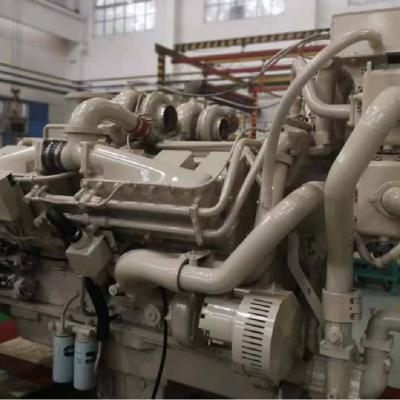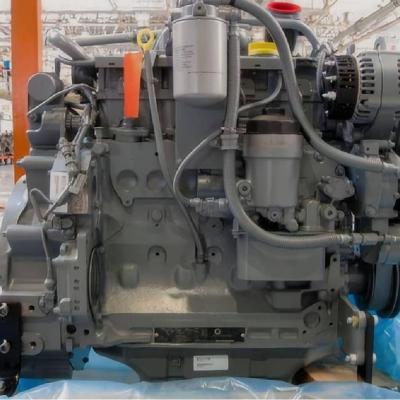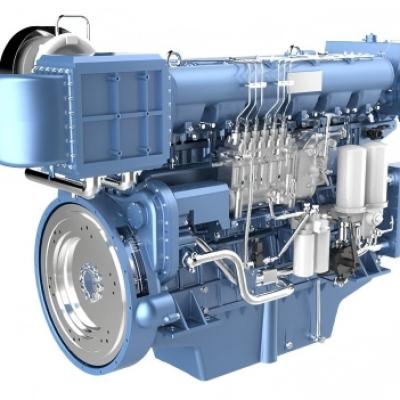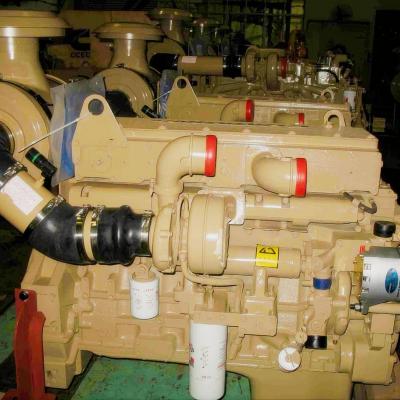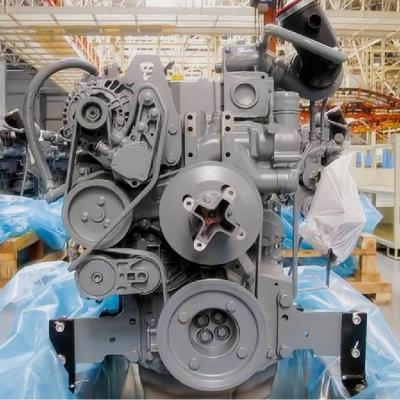
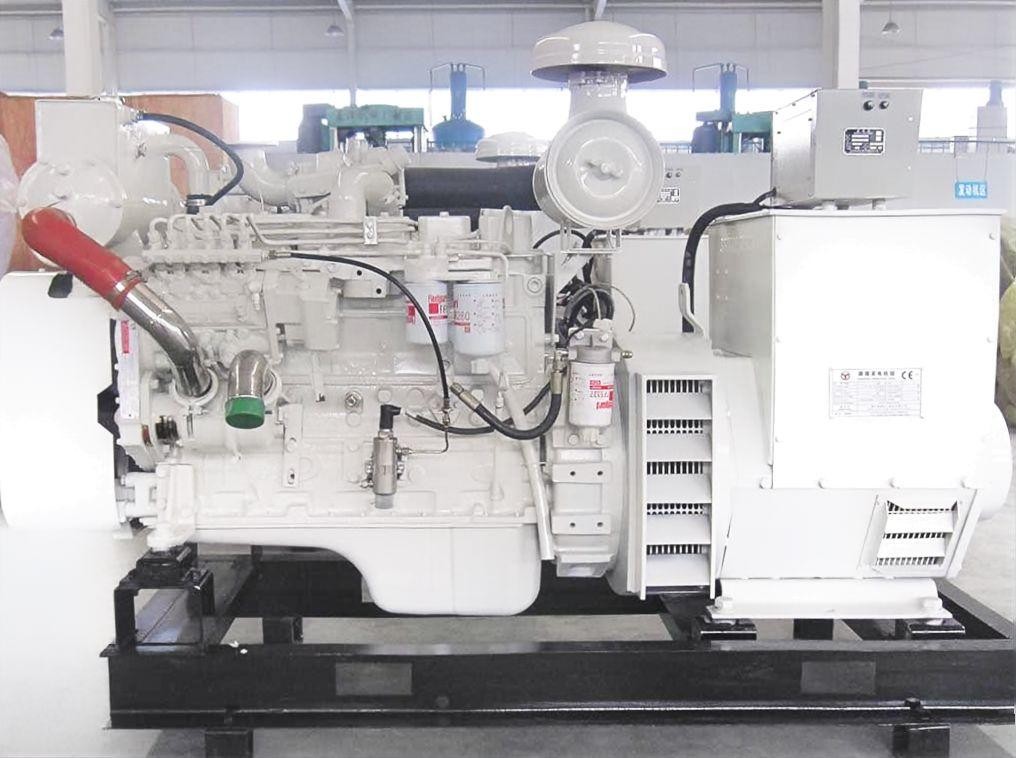
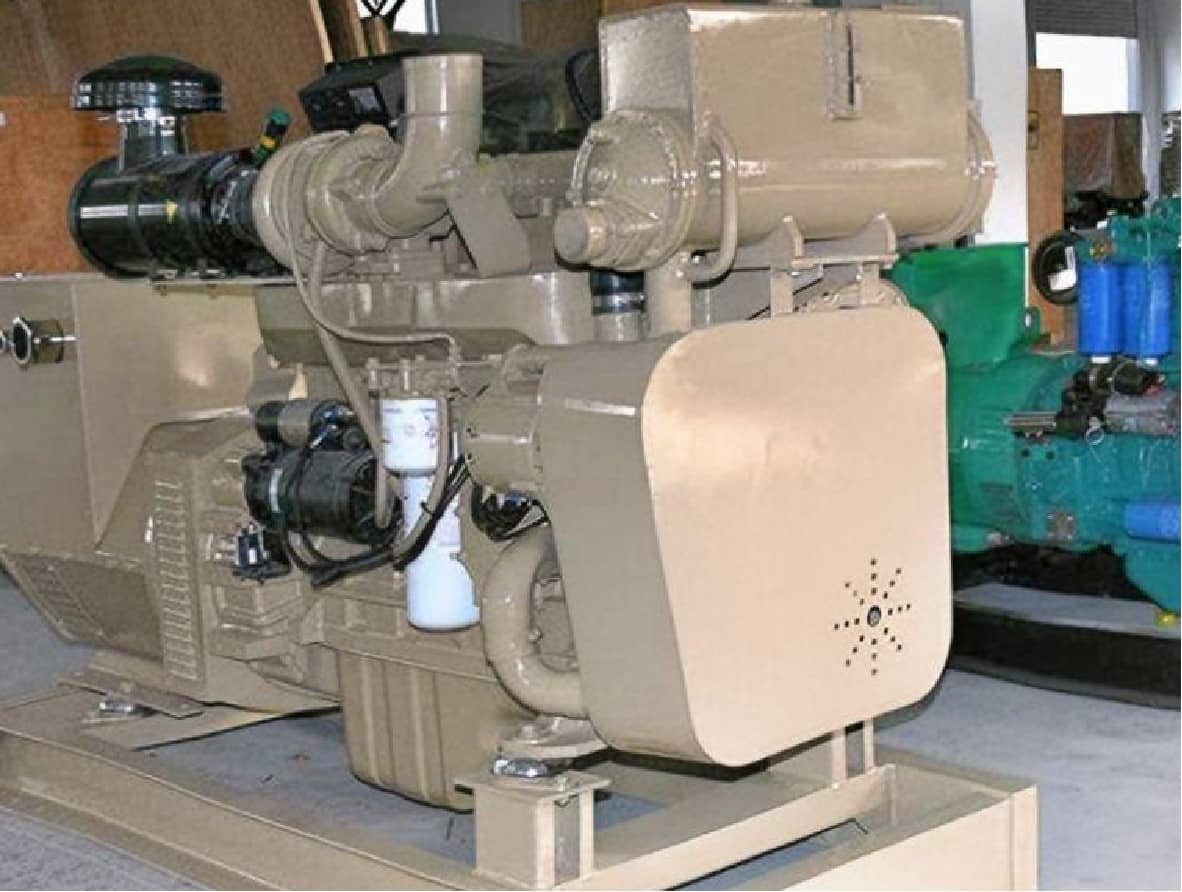
As an authorized global engine supplier, HekoPower provides the DCEC Cummins 6CT8.3-GM129 marine auxiliary engine for demanding offshore and coastal applications. This 6-cylinder Cummins marine engine is engineered specifically for continuous shipboard duty. Delivering a prime output of 129kW (173HP) at 1800 RPM, it serves as a highly reliable prime mover for 60Hz marine generator sets.
Every DCEC 8.3L marine auxiliary engine complete assembly we supply undergoes rigorous factory testing to ensure IMO Tier II compliance. Our units arrive fully configured with a marine heat exchanger, seawater cooling system, and specialized fuel delivery components. By prioritizing mechanical simplicity, this water-cooled marine diesel engine offers fleet operators maximum uptime in severe marine environments.
Marine vessel auxiliary power requires precise frequency matching. The operating speed of the engine dictates the alternating current output of the coupled alternator. Because commercial fleets operate on varying electrical standards, the Cummins C8.3 marine auxiliary engine family offers highly targeted configurations to meet exact shipyard requirements.
Cummins C8.3-GM Series, Marine Auxilliary Diesel Engines for commercial and recreational applications, original products from Dongfeng Cummins Engine Plant (DCEC), Cummins Joint Venture Plant since 1986, 50% shareholding by Cummins USA. This series mainly includes 6CT8.3-GM115, 6CT8.3-GM129, 6CTA8.3-GM155, 6CTA8.3-GM175. All engines complete with sea water pump, heat exchanger, CCS/IMO certificates.
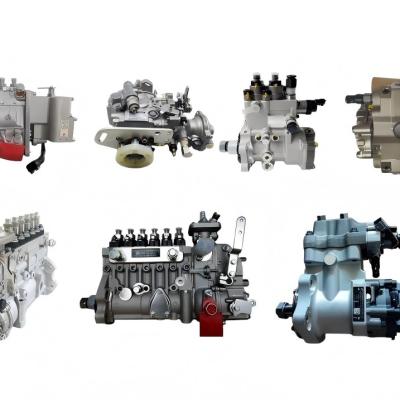
Modern offshore operating environments demand fuel systems that can handle varying fuel qualities while maintaining strict electrical frequency control. To achieve this, the DCEC 6CT8.3-GM129 engine utilizes a heavy-duty mechanical BYC PB fuel pump. This direct-injection pump resists the wear and tear often caused by low-lubricity marine diesel.
To ensure absolute frequency stability for the marine generator power unit, this engine is paired with a GAC 24V electronic governor. This mechanical-electronic hybrid design is critical. It avoids the use of delicate, fully electronic common-rail sensors that frequently corrode in humid salt air.
The GAC governor actuator adjusts the fuel rack instantly during transient load steps. When heavy inductive loads start—such as deck cranes or large ballast pumps—the 1800 RPM marine auxiliary engine maintains steady-state speed control. Operating efficiently, the Cummins 6CT8.3-GM129 fuel consumption chart shows an economical 34L/h at a 100% prime load, keeping operational costs manageable during long voyages.
Competitor spec sheets often blur the lines between different 8.3L engine models. Understanding the mechanical differences across the DCEC lineup is vital before you buy a Cummins 6CT8.3-GM129 engine for your project.
The fundamental difference between the Cummins 6CT8.3-GM115 (50Hz) and 6CT8.3-GM129 (60Hz) lies entirely in governed operating speed. Both share the identical 8.3L engine block, 114mm bore, and turbocharged aspiration. However, the 129kW vs 115kW Cummins marine auxiliary engine debate is settled by your vessel's electrical grid.
The GM115 is locked to 1500 RPM to produce 50Hz power. The GM129 spins at 1800 RPM to generate 60Hz power. This 300 RPM increase forces higher mass airflow through the turbocharger, allowing the engine to safely burn more fuel and produce an additional 14kW of prime power without increasing internal thermal stress.
Choosing between the 6CT8.3-GM129 or 6CTA8.3-GM155 requires looking at the air induction system. The GM129 is a purely turbocharged Cummins marine engine ("CT"). The intake air moves directly from the turbo compressor into the intake manifold. This keeps the engine profile compact and simplifies raw water piping.
The GM155 is an aftercooled model ("CTA"). It utilizes a seawater or jacket-water aftercooler to chill the compressed intake air, increasing oxygen density to push output up to 155kW. If your vessel's maximum auxiliary load is under 120kW, the 6CT8.3-GM129 is the superior choice. It eliminates the aftercooler maintenance entirely while still providing ample power reserves.
Because of its robust 173HP rating, this specific Cummins marine generator engine is deployed across diverse commercial sectors. Below are the most common deployment scenarios our maritime clients utilize.
Coastal tugs and pushboats frequently require a reliable Cummins 6CT8.3-GM129 repower engine for workboat generator set upgrades. These vessels rely heavily on 60Hz power for hydraulic steering pumps and electric towing winches. The GM129 provides continuous, uninterrupted power during extended towing operations.
Shipboard safety systems rely on instant power during main switchboard blackouts. The GM129 features a 142kW standby power rating specifically for marine emergency generator engine duties. Thanks to the mechanical fuel injection and 24V starting system, the engine accepts a full electrical load within seconds of a cold start.
On offshore fishing vessels, the 129kW marine diesel engine serves as the primary power source for fish hold refrigeration compressors and heavy net haulers. The resilient seawater cooling system handles silty harbor water without clogging, ensuring cooling efficiency during dockside offloading.
When you replace an old marine auxiliary engine with the Cummins 6CT8.3-GM129, strict adherence to installation tolerances will dictate the lifespan of the equipment.
Pay close attention to 6CT8.3-GM129 turbocharger backpressure and cooling system installation data. Exhaust system backpressure must never exceed 10 kPa. If the exhaust piping is too restrictive, cylinder temperatures will spike, severely degrading turbocharger bearing life and increasing fuel consumption.
For the seawater cooling system, the marine heat exchanger requires consistent raw water flow. Always install a high-capacity sea strainer upstream of the 6CT8.3-GM129 seawater pump. Inspect the flexible impeller every 500 hours, and replace the sacrificial zinc anodes inside the heat exchanger shell every 250 hours to stop galvanic corrosion.
When executing a repower, verify the 6CT8.3-GM129 flywheel specification and housing size. Providing HekoPower with your previous engine's Control Parts List (CPL) allows us to match the new engine configuration number perfectly. This ensures your existing alternator will bolt up seamlessly to the new prime mover.
While the GAC governor can be adjusted downward, doing so shifts the engine off its optimal power curve. A 6CT8.3-GM129 forced to run at 1500 RPM will suffer from incomplete combustion and "wet stacking" under light loads. If you need 50Hz output, you must purchase the factory-calibrated GM115 model instead.
No. A common error is assuming all C8.3 marine engines need complex seawater piping for an aftercooler. Because the 6CT8.3-GM129 is solely a turbocharged engine, the seawater circuit only routes through the main heat exchanger, keeping hull plumbing simple and highly reliable.
Yes. When configured for marine auxiliary use, this engine assembly can be supplied with China Classification Society (CCS) certification. It meets basic IMO Tier I or Tier II mechanical emission thresholds depending on the specific manufacturing year and fuel pump configuration chosen.
This inline 6-cylinder Cummins generator engine is engineered for both roles. For continuous power generation, it delivers a steady, unwavering power output. For backup power systems, it operates at a slightly higher standby rating, provided the engine undergoes regular maintenance and follows recommended cool-down cycles.
We recommend high-quality 15W-40 diesel engine oil. For engines operating under harsh conditions, like construction sites or mining facilities, change the oil and filters every 250 operating hours. In clean, climate-controlled standby generator rooms, this interval can extend to 400 hours.
We welcome third-party inspections before shipment. Buyers can hire independent inspection agencies like SGS or Intertek to verify the factory seals, serial numbers, and run a physical load test at our testing facility prior to final balance payments.