Details
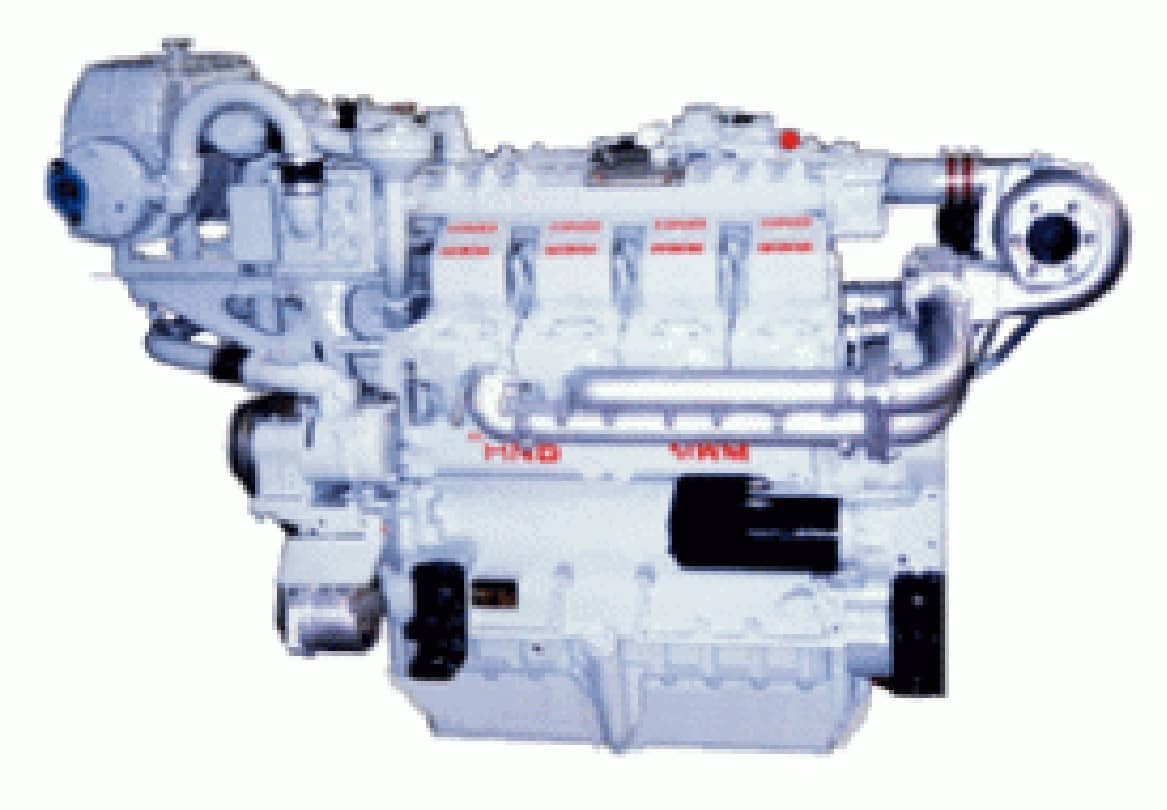
Deutz TBD234V8-400HP Marine Main Propulsion Overview
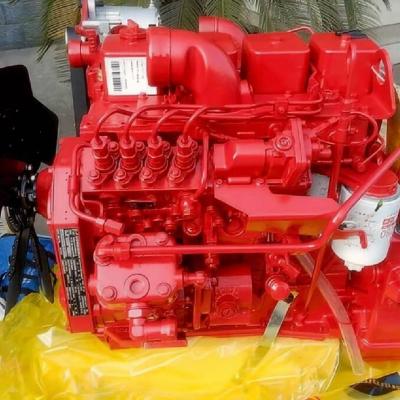
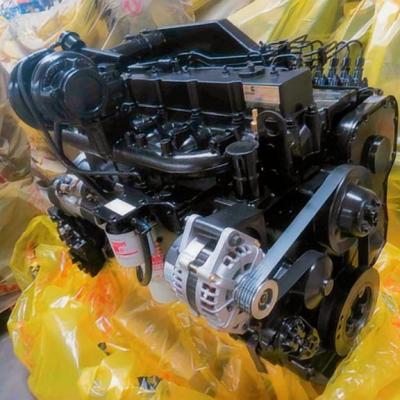
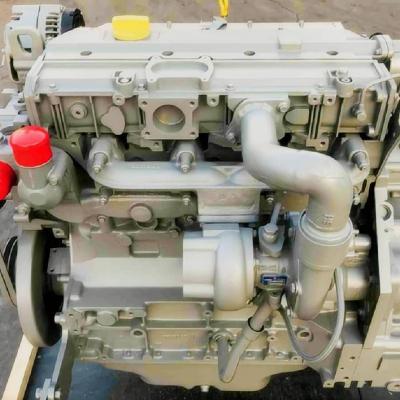
Built by Henan Diesel Engine Plant (HND) under Deutz-MWM technical license, the Deutz TBD234V8-400HP is a dedicated marine main propulsion diesel engine calibrated for unrestricted continuous navigation (ISO MCXN duty). At 296 kW (400 HP) and 1800 RPM, this 14.4-liter turbocharged and intercooled V8 generates approximately 1,570 N·m of shaft torque under tropical marine reference conditions of 45°C intake air and 32°C seawater.
Unlike wide-bank V8 blocks or elongated inline-six propulsion units, the TBD234V8 uses a compact 60-degree V-angle with individual cylinder heads, wet cylinder liners, and a mechanical high-pressure fuel injection system. HekoPower supplies complete, factory-tested TBD234V8-400HP engine assemblies configured for direct marine reduction gearbox coupling in both newbuild installations and commercial repowering projects.
Tech Specs of Deutz TBD234V8-400HP Marine Propulsion Diesel Engine
General Engine Data
- Engine Model:
- Deutz TBD234V8-400HP
- Type:
- 8 Cylinders, V Type, 4 Stroke
- Displacement:
- 14.4 L
- Bore * Stroke:
- 128 * 140
- Wet Weight (with heat exchanger):
- 1500 Kg
- Overall Dimension:
- 1810mm*988mm*1637mm
Key Performance Data
- Rated Power:
- 296 kW/400 HP
- Rated Speed:
- 1800 rpm
- Lubricant Oil Consumption:
- ≤1.4 g/kW.h
- Low Idle Speed:
- 650 rpm
- Fuel Consumption:
- 205 g/kW.hr
More Technical Data
- Certification:
- CCS/IMO Certificates
- Aspiration:
- Turbocharged and Intercooled
- Max. Combustion Pressure:
- 15 MPa
- Compression Ratio:
- 15:1
- Starting Method:
- Electrical Start (24V)
- Cooling Method:
- Water Cooled
How the TBD234V8-400HP Compares Across the TBD234 Lineup
Within HND's 14.4-liter V8 range, the TBD234V8-400HP sits directly above the 1500 RPM TBD234V8-340HP (249 kW). Both share identical 128 mm bores, 140 mm strokes, and a 1,500 kg wet weight, yet running the 400 HP calibration to 1800 RPM adds 47 kW of continuous propulsion power without enlarging the engine-room footprint. Vessels upgrading from the 340 HP rating typically pair the 400 HP unit with a slightly deeper reduction ratio to convert that extra speed band into stronger thrust.
Naval architects should also separate this propulsion unit from the similarly rated TBD234V8-296KW marine generator drive. Although both output 296 kW at 1800 RPM, the TBD234V8-400HP propulsion build packages into a shorter, narrower envelope (1810 mm × 988 mm × 1637 mm versus 2032 mm × 1130 mm × 1587 mm on the marine genset configuration) and uses variable-speed propeller-law governing rather than fixed-frequency 60 Hz alternator droop with a 326 kW standby overload step.
Compared with the six-cylinder TBD234V6-300HP (10.8 L) and twelve-cylinder TBD234V12-500HP (21.6 L), the V8-400HP hits the practical middle ground for mid-sized workboats. It delivers 33% more displacement than the V6 while trimming roughly 700 kg of wet weight and half a meter of block length relative to the V12, keeping overall width below one meter for twin-screw installations.
Marine Propulsion Applications and Load Behavior
Commercial operators specify the Deutz TBD234V8-400HP for 18-to-28-meter stern trawlers, coastal tugboats, landing craft, harbor utility launches, and inland cargo vessels running 12-to-20-hour duty cycles. Its combustion system holds a flat specific fuel consumption curve through the 60% to 85% cruise band, keeping hourly fuel burn predictable along cubic propeller load curves. Water-cooled turbocharging and dual-circuit heat exchange also restrain radiant heat inside tight, enclosed engine rooms.
One recurring mistake during vessel repowering is bolting the 400 HP engine onto a fixed-pitch propeller and gearbox originally pitched for a 1500 RPM, 340 HP motor. Over-propping prevents the TBD234V8-400HP from reaching its 1800 RPM rated speed, raising mean effective pressure and exhaust temperatures at 1550–1650 RPM while cutting usable service life. Always verify propeller pitch and gearbox reduction ratios together so full throttle lands cleanly at rated RPM under loaded hull displacement.
Maintenance Thresholds and Repower Integration
Routine servicing on the TBD234V8-400HP centers on clean fluids and raw-water circuit health. The engine carries approximately 28 liters of lubricating oil to the top dipstick mark and 24 liters of internal freshwater jacket coolant excluding external heat-exchanger lines. Replace duplex fuel filter elements every 250 operating hours and change crankcase oil (API CD/CF-4 or higher, SAE 15W-40 or 20W-40) along with full-flow lube filters at 500-hour intervals.
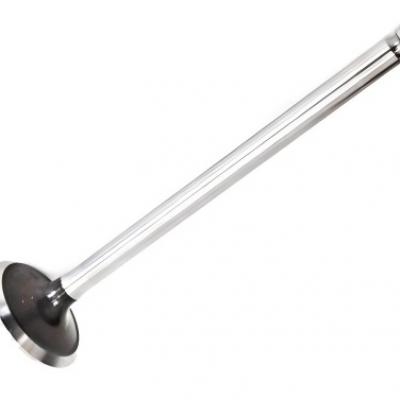
Because the indirect cooling layout separates the closed freshwater jacket loop from the raw-water intercooler and heat-exchanger circuit, inspect the self-priming raw-water centrifugal pump impeller regularly and descale tube bundles every 1,000 hours. Preserving charge-air cooling efficiency keeps combustion pressures within the 15 MPa design limit in warm coastal waters. When top-end work is eventually needed—often approaching 20,000 operating hours under clean fuel management—the individual cylinder head layout allows single-cylinder liner and valve service without uncoupling the engine from its bearers.
Crews sometimes idle a marine V8 at 650 RPM for hours alongside docks to run deck hydraulics or charge 24V banks, assuming light load reduces mechanical wear. Prolonged no-load idling actually drops combustion temperatures below clean-burn thresholds, accelerating liner glazing, wet stacking, and valve-seat carbon buildup. For repower fitment, confirm counter-clockwise crankshaft rotation (viewed from the flywheel end), match the SAE 1 flywheel housing and SAE 14 flywheel to an elastic torsional coupling, and verify angular and parallel alignment to the marine reduction gear before sea trials.
Position Within the Deutz TBD234 Marine Propulsion Series
Across the TBD234 propulsion family, six-, eight-, and twelve-cylinder models share the same 128 × 140 mm cylinder geometry, allowing fleet operators running mixed vessel sizes to standardize liners, piston rings, injectors, and individual cylinder heads across 250 HP to 600 HP propulsion packages.
Deutz TBD234-Marine Propulsion Series, Marine Propulsion Diesel Engines for commercial and recreational applications, original products from Henan Diesel Engine Plant (HND). This series mainly includes Deutz TBD234V6-250HP, Deutz TBD234V6-300HP, Deutz TBD234V8-340HP, Deutz TBD234V8-400HP, Deutz TBD234V12-500HP, Deutz TBD234V12-600HP.
Frequently Asked Questions
How does the Deutz TBD234V8-400HP differ from the TBD234V8-296KW marine generator engine?
Both models produce 296 kW at 1800 RPM from the same 14.4-liter V8 block, but the TBD234V8-400HP is tuned for variable-speed propeller-law propulsion in a more compact 1810 × 988 × 1637 mm footprint. The TBD234V8-296KW generator version is built for fixed-speed 60 Hz alternator duty with a 326 kW standby step and a longer 2032 mm assembly.
What flywheel interface, rotation direction, and firing order apply for gearbox matching?
Standard HND marine builds use an SAE 1 flywheel housing with an SAE 14 flywheel, anti-clockwise crankshaft rotation when viewed from the flywheel end, and the A1-B2-A3-B1-A4-B3-A2-B4 firing order. Confirm exact coupling bolt patterns with your reduction gear manufacturer prior to installation.
What are the engine's lube oil and freshwater coolant capacities?
The TBD234V8 sump holds approximately 28 liters of lubricating oil to the top dipstick mark, while internal engine jacket coolant capacity is roughly 24 liters excluding external heat-exchanger lines. Rated lubricating oil consumption remains at or below 1.4 g/kW·h.
Which marine classification and emissions standards apply to the TBD234V8-400HP?
Standard propulsion assemblies are supplied with CCS classification documentation and IMO Tier II compliance evaluated under tropical marine ambient conditions (45°C air, 32°C seawater). If your operating waters require IMO Tier III or specific flag-state certificates, verify emission tier eligibility before final engine build specification.