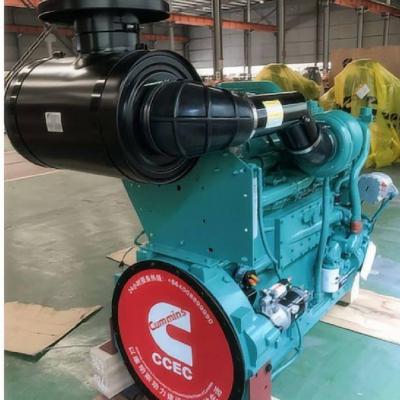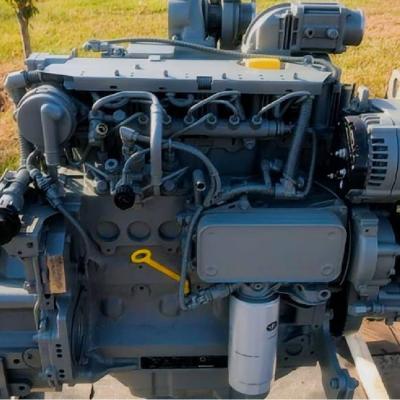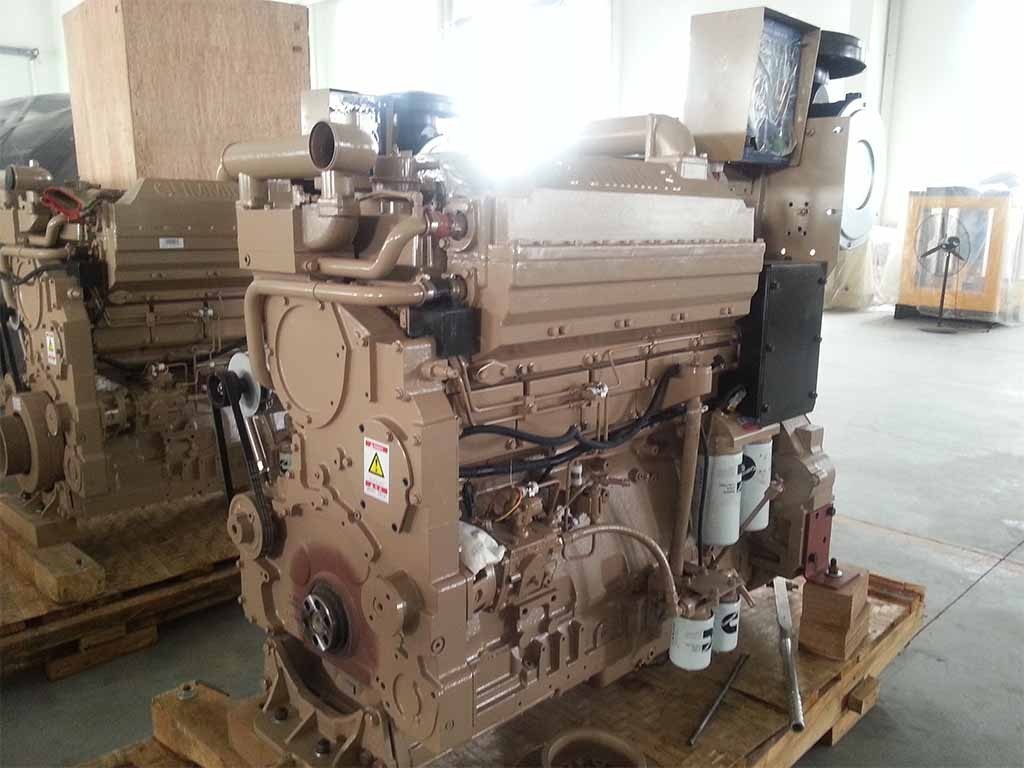
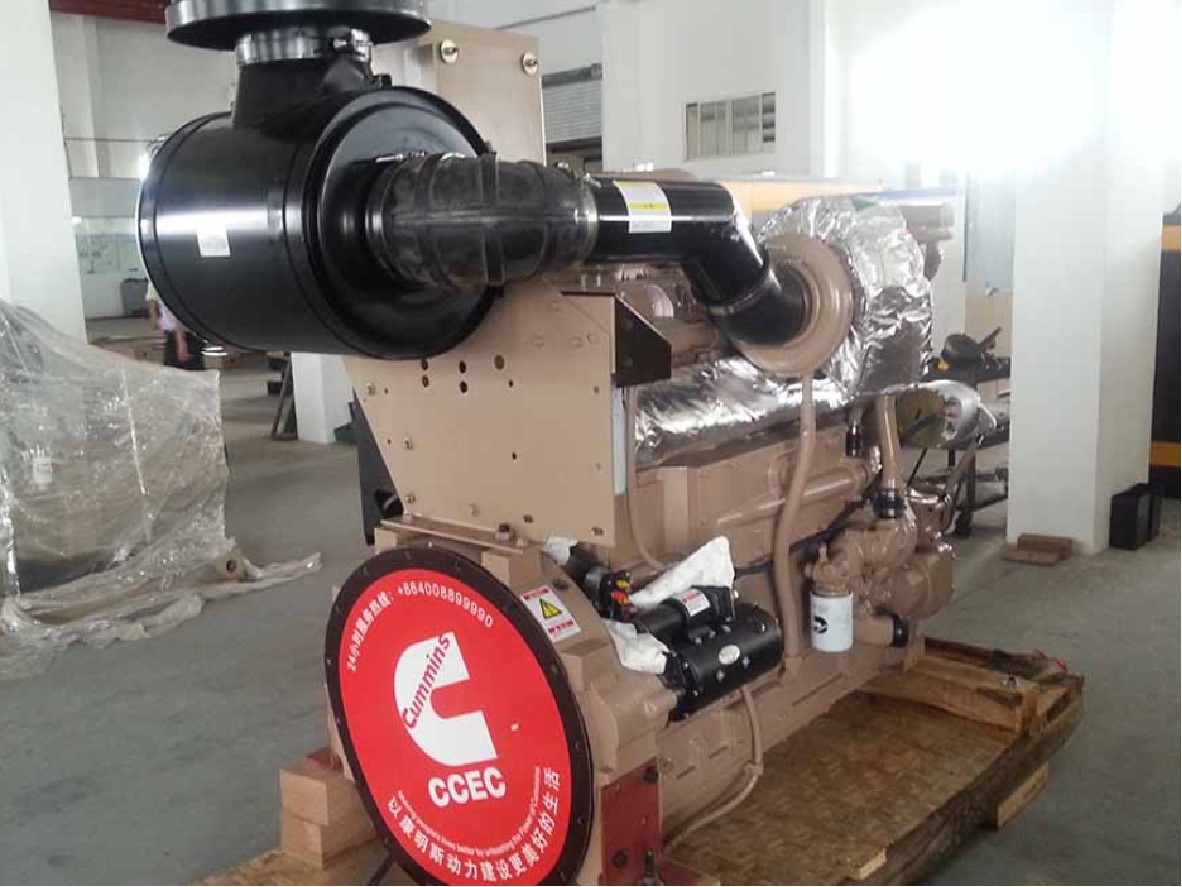
The Cummins KTA19-DM403 stands as a premier heavy-duty power solution engineered specifically for marine auxiliary and generator drive applications. Built on Chongqing Cummins Engine Company's (CCEC) robust 19-liter platform, this six-cylinder, inline, turbocharged, and aftercooled diesel engine delivers a dependable prime power output of 403kW (540HP to 550HP) at a fixed speed of 1500RPM. Designed primarily for 50Hz shipboard electrical grids, the DM403 configuration provides the steady frequency control and thermal stability required for continuous commercial marine operations.
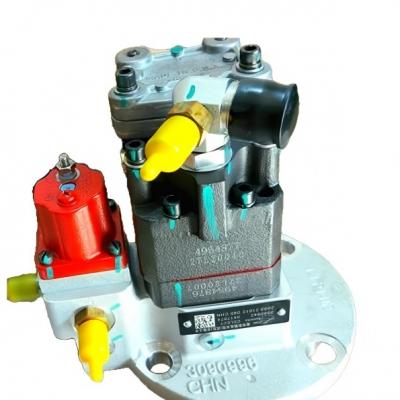
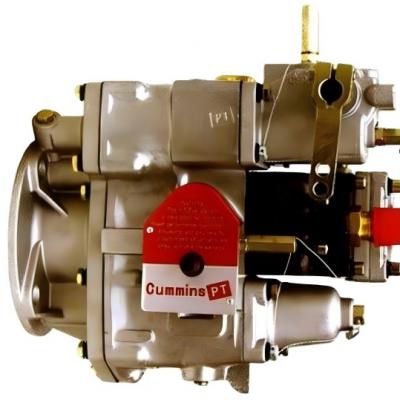
At the heart of the engine's durability is its heavy-duty cast-iron block equipped with replaceable wet cylinder liners, which significantly simplify long-term overhaul procedures. The advanced combustion chamber design, paired with Cummins' proprietary Pressure Time (PT) fuel system, ensures precise fuel metering across varying electrical loads. This precise control minimizes smoke emissions, optimizes fuel consumption during long voyages, and maintains strict compliance with marine auxiliary power demands.
Selecting the right auxiliary power unit dictates the operational safety and reliability of a commercial vessel. The Cummins KTA19-DM403 is deployed globally across a diverse range of maritime working environments where power interruption is simply not an option.
Primary deployment includes large ocean-going cargo ships and bulk carriers, where multiple DM403-driven generator sets supply heavy shipboard hotel loads, reefer container power, and auxiliary machinery electrical demands simultaneously. Similarly, harbor and coastal tugboats rely on the rapid load-acceptance and high torque reserve of the KTA19 platform to power heavy deck winches, fire-fighting pumps, and bow thrusters under heavy hydrodynamic loads.
Offshore support vessels (OSVs), anchor handling tug supply (AHTS) vessels, and large commercial fishing trawlers also utilize the CCEC KTA19-DM403 for its exceptional durability in corrosive saltwater conditions. When coupled with an oversized marine alternator and integrated into a keel-cooled or heat-exchanger-cooled skid package, the engine delivers thousands of hours of uninterrupted operation between scheduled maintenance intervals.
Navigating the various power ratings within the K19 marine lineup requires a clear understanding of mechanical and thermal loading differences. When comparing the Cummins KTA19-DM403 (403kW at 1500RPM) to its sibling models like the KTA19-DM392 and the higher-output KTA19-DM448, the distinctions lie primarily in fuel calibration, turbocharger matching, and intercooler thermal capacity.
Unlike lower-rated configurations such as the DM392, the DM403 utilizes an optimized turbocharger trim and refined PT fuel injector calibration to safely extract 403kW of continuous prime power without exceeding exhaust gas temperature (EGT) thresholds. Conversely, while models like the DM448 push higher power outputs for specific intermittent or higher-speed duty cycles, the DM403 is meticulously tuned for sustained, fixed-speed 1500RPM prime duty. This tuning strikes an ideal balance between maximum electrical output and extended component longevity, reducing thermal stress on the cylinder heads and pistons during prolonged multi-day voyages.
Misunderstandings frequently arise regarding the interchangeability of industrial and marine-spec KTA19 engines. A widespread misconception is that an industrial or construction-grade KTA19 block can be dropped directly into a marine auxiliary setup with minimal modifications.
In reality, the marine auxiliary environment demands critical marinization components that standard industrial engines lack. The DM403 features specialized marine cooling architecture, including a seawater pump, a corrosion-resistant cupronickel heat exchanger or keel-cooling connections, and water-cooled exhaust manifolds designed to isolate high engine temperatures from confined engine rooms. Attempting to convert an industrial KTA19 unit without changing these cooling loops and governing systems often leads to rapid overheating, premature turbocharger failure, and failure to meet classification society standards.
Another common myth is that higher horsepower ratings always translate to better performance in generator applications. For auxiliary gensets, engine speed governing and transient load response matter more than peak horsepower. The KTA19-DM403 is engineered specifically to maintain strict ISO 8528 G3 frequency regulation standards, ensuring that sudden switching of large electric motors on board does not cause unacceptable voltage or frequency sags.
Maximizing the operational lifespan of a CCEC KTA19-DM403 requires adherence to strict preventive maintenance protocols tailored to marine conditions. Because marine environments introduce moisture and salt-laden air, intake air filtration and aftercooler core inspections must be performed regularly to prevent fouling and reduced boost pressure.
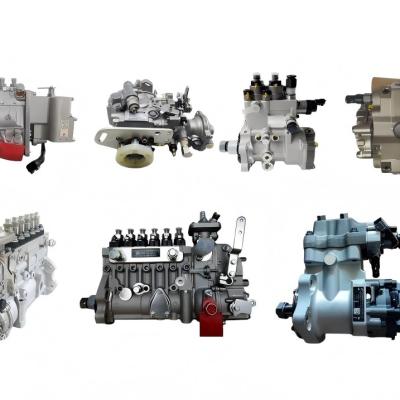
The Cummins PT fuel system, while legendary for mechanical reliability, requires clean fuel free of water and particulate contamination. Operators should routinely inspect and service the primary and secondary fuel water separators, and check PT fuel pump calibration pressures during scheduled major overhauls. Furthermore, coolant quality must be maintained with appropriate chemical inhibitors to prevent cavitation erosion on the water-side of the cylinder liners.
When sourcing replacement parts or complete engine assemblies, verifying the CPL (Critical Parts List) number and engine serial number is essential. HekoPower supplies genuine CCEC KTA19-DM403 replacement engines and overhaul kits matching exact factory specifications, complete with necessary classification documentation for seamless shipyard installation.
Cummins K19-DM Series, Marine Auxilliary Diesel Engines for commercial and recreational applications, original products from Chongqing Cummins Engine Plant(CCEC). This series mainly includes KTA19-DM336, KTA19-DM392, KTA19-DM403, KTA19-DM448, KTA19-DM463, KTA19-DM507. All engines complete with sea water pump, heat exchanger, CCS/IMO certificates.
The engine utilizes a closed-loop jacket water cooling system managed by a heat exchanger or keel cooler, paired with a raw/seawater pump circuit that circulates external water to cool the heat exchanger and water-cooled exhaust manifolds.
Yes. The KTA19-DM403 features a highly modular cooling architecture. While it ships standard with an engine-mounted heat exchanger and integrated seawater pump, it can be ordered from HekoPower in a keel-cooled configuration. This removes the seawater pump loop, routing coolant instead through internal hull channels, making it highly effective for shallow-water inland commercial barges.
CCEC explicitly mandates high-quality diesel engine lubricating oil that meets or exceeds the API CF-4 or CH-4 performance classifications. For standard commercial marine operations, a stable 15W-40 viscosity oil is required to maintain adequate oil film protection over prolonged continuous full-load duty cycles.