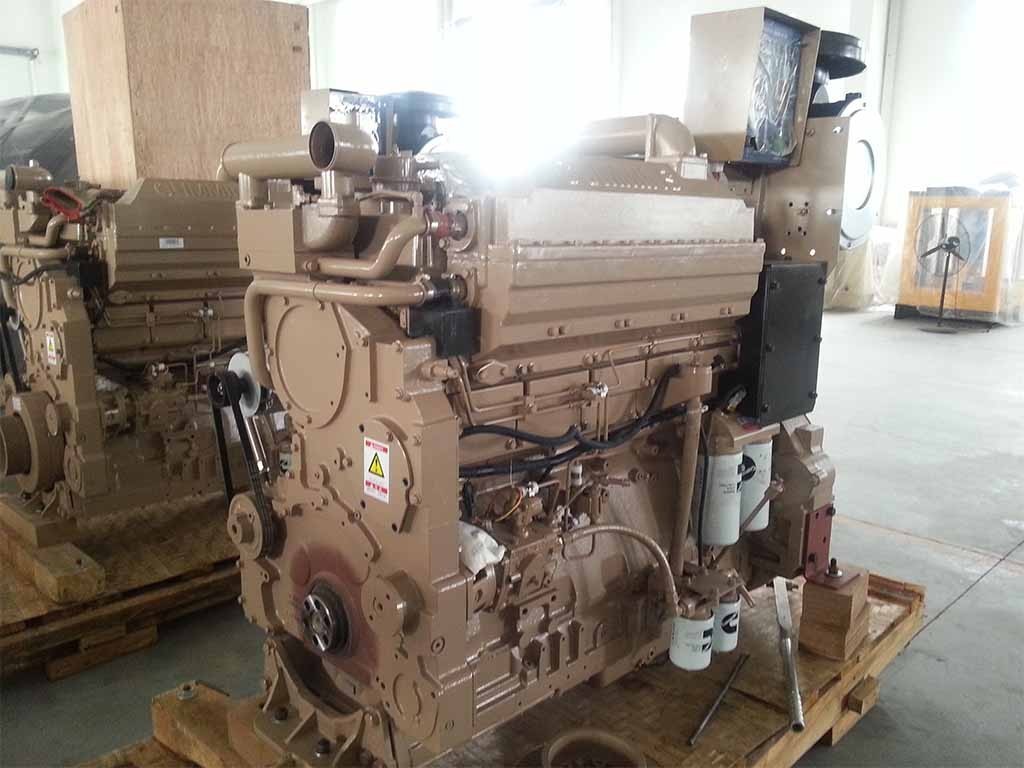
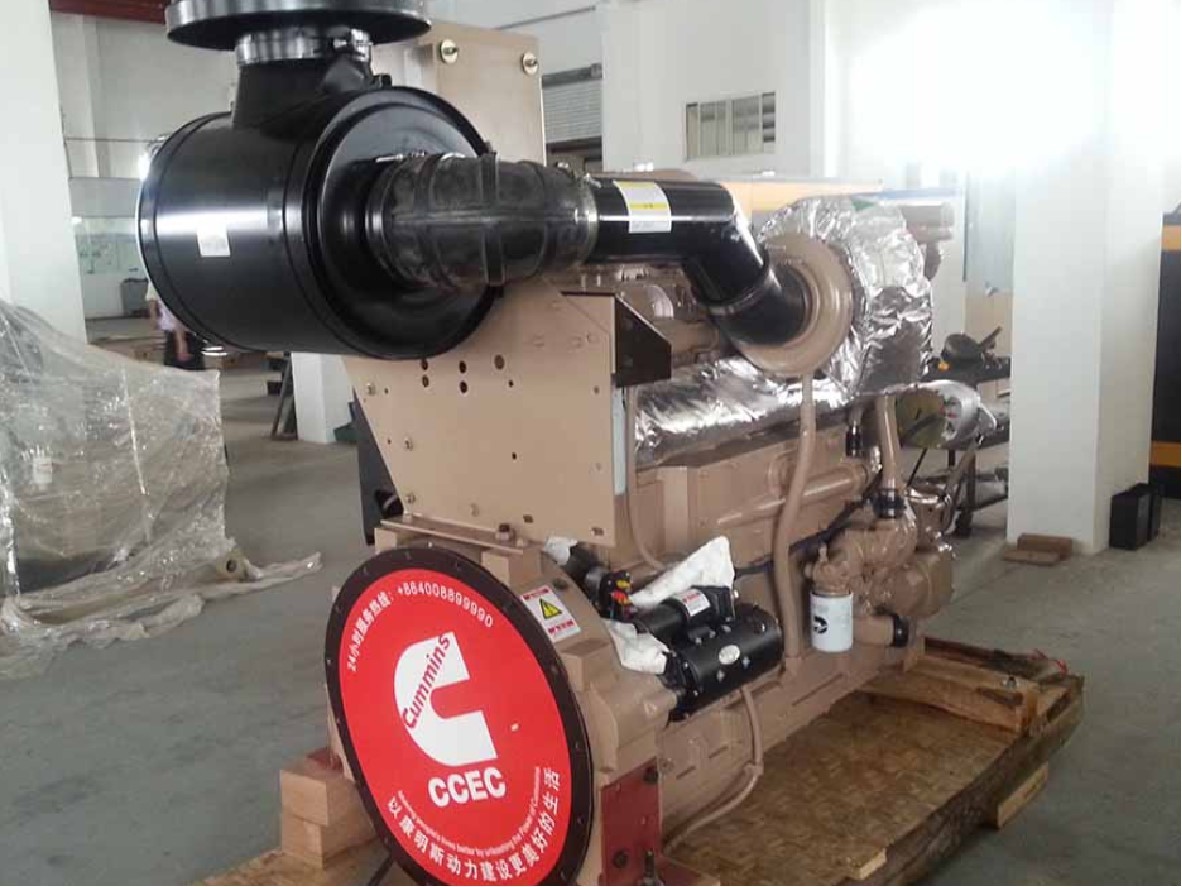
As an established marine engine supplier, HekoPower provides original Cummins marine diesel solutions built for continuous, unyielding operation. The KTA19-D(M)336 is an inline 6-cylinder, 19L displacement engine recognized globally by the marine engineering cluster for its rugged reliability. Designed strictly as a generator drive engine, this unit delivers a prime power output of 336 kW (450 HP) at a constant 1500 RPM.
This engine carries full CCS/IMO certifications. It ensures immediate compliance for commercial vessels worldwide. Procurement managers often select this model when sourcing a highly reliable Cummins KTA19-DM (336kW/450HP) replacement engine for heavy-duty shipboard electrical grids.
A common misconception regarding marine auxiliary engines is that purchasing the highest horsepower rating on a specific engine block offers the best value. This is functionally incorrect for continuous power generation. The entire KTA19 block shares a uniform 159 x 159 mm bore and stroke. However, pushing this exact same 19L block to its extreme outputs significantly increases both thermal and mechanical stress.
The KTA19-DM336 is engineered as the ultimate thermal sweet spot for 50Hz continuous power. By specifically governing the mechanical output to 336 kW, this engine operates well below its maximum structural limits. The result is drastically lower cylinder temperatures. It also means reduced wear on the main bearings and a significantly extended timeframe before a major overhaul is required. For fleet operators focused on lifetime operational costs rather than just the initial KTA19-DM336 price, this specific model offers unmatched longevity.
Buyers frequently ask us to compare the different auxiliary engines within the KTA19 family. Understanding the operational speed and thermal load is critical when evaluating a KTA19-DM336 engine for sale. The primary distinction among these models comes down to target frequency and fuel calibration.
When looking at a Cummins KTA19-DM336 vs KTA19-DM392 marine auxiliary comparison, the core difference is the operating speed. The KTA19-DM336 is calibrated for 1500 RPM to service standard 50Hz marine electrical grids. Conversely, the KTA19-DM392 produces 392 kW but operates at 1800 RPM, making it suitable only for 60Hz electrical requirements.
A similar dynamic exists when comparing the KTA19-DM336 vs KTA19-DM448 and the KTA19-DM507. Both the 448 kW and 507 kW models are high-output 1800 RPM engines built for heavy 60Hz demands. They run significantly hotter and require more intensive maintenance cycles than the conservative 336 kW model.
For 50Hz applications, buyers often weigh the KTA19-DM336 vs KTA19-DM403 or the KTA19-DM463. All three of these engines operate at 1500 RPM. The 403 kW and 463 kW models utilize aggressive turbocharger matching and higher fuel delivery rates to force more power from the same 19L displacement. If your vessel's electrical load can be comfortably managed by a 336 kW Cummins marine generator engine, up-sizing to the 463 kW version simply adds unnecessary thermal stress to your engine room.
The KTA19-DM336 marine auxiliary engine is a fixture in commercial maritime operations. On large cargo ships and bulk carriers, it serves as the primary ship service generator. The engine’s substantial 2349 Nm of mechanical torque easily handles the heavy inductive electrical loads created when deck winches, cargo cranes, and ballast pumps cycle on and off.
For heavy tugboats and inland pushboats, this 450 HP Cummins marine generator engine operates as a continuous duty auxiliary power unit. Space is often tight on these vessels, but the engine’s streamlined profile allows for accessible shipboard maintenance.
It is also widely specified as a KTA19-DM336 emergency generator engine on offshore oil and gas platforms. Because it utilizes a mechanical fuel system rather than complex electronic control modules, it guarantees reliable startup during total blackout situations. This mechanical reliability fully satisfies critical IMO safety mandates for emergency power recovery.
Maintaining a genuine CCEC KTA19-DM336 requires strict adherence to factory intervals. The heart of this reliable power unit is the KTA19-DM336 PT fuel pump. The Pressure-Time fuel system is incredibly resilient against poor-quality bunker fuel, but it remains highly sensitive to mechanical calibration.
Your KTA19-DM336 PT fuel system maintenance schedule must include a pump and injector calibration check every 1,500 hours. You should never allow unqualified technicians to adjust the PT pump settings. Improper pressure ratios will immediately spike exhaust temperatures and lead to piston damage. Fuel filters should be changed every 250 hours to protect the system.
When the engine eventually requires an in-frame rebuild, HekoPower provides the complete Cummins KTA19-DM336 major overhaul kit and spare parts list. You must always insist on using the original Cummins KTA19-DM336 wet cylinder liners and gallery-cooled pistons. Cheap aftermarket components often lack the exact metallurgical properties required to handle the internal pressures of a turbocharged aftercooled engine.
A successful KTA19-DM336 marine installation relies heavily on proper cooling and exhaust management. This engine demands highly efficient heat dissipation. The standard KTA19-DM336 cooling system configuration includes a gear-driven KTA19-DM336 seawater pump, a heavy-duty engine-mounted heat exchanger, and a water-cooled exhaust manifold.
This specific KTA19-DM336 wet exhaust design extracts intense heat from the exhaust gases before they leave the engine room. It keeps the ambient temperature compliant with marine safety regulations and drastically reduces the risk of fire in confined spaces.
Shipbuilders must carefully account for the physical footprint of the unit. The bare KTA19-DM336 engine dimensions measure approximately 1666 mm in length, 874 mm in width, and 1377 mm in height. The dry KTA19-DM336 engine weight sits near 2,005 kg. You should always design the engine room overhead clearance to allow for the safe future removal of the top-mounted turbocharger and the individual cylinder heads.
One of the most frequent operational errors marine engineers make involves wet stacking. Vessel operators sometimes run the KTA19-DM336 auxiliary generator engine at very low electrical loads for extended periods. Because the engine is not generating enough internal heat under low load, unburned fuel and carbon build up heavily inside the exhaust manifold. You should always aim to operate this engine at a minimum of 60 percent load to maintain proper cylinder temperatures and burn off carbon deposits.
Another common mistake involves generator coupling and application intent. Buyers sometimes confuse variable-speed propulsion engines with fixed-speed auxiliary models. The KTA19-DM336 marine diesel engine features a precise governor engineered exclusively to maintain exactly 1500 RPM. It cannot be modified to serve as a variable-speed main propulsion engine for a boat.
Cummins K19-DM Series, Marine Auxilliary Diesel Engines for commercial and recreational applications, original products from Chongqing Cummins Engine Plant(CCEC). This series mainly includes KTA19-DM336, KTA19-DM392, KTA19-DM403, KTA19-DM448, KTA19-DM463, KTA19-DM507. All engines complete with sea water pump, heat exchanger, CCS/IMO certificates.
At a continuous 100 percent prime load of 336 kW, the KTA19-DM336 fuel consumption sits at approximately 82 liters per hour. The specific fuel consumption rate is highly efficient, rated at 232 g/kW.hr. Running the engine at a more typical 75 percent baseline load will notably decrease this hourly burn rate, making it an incredibly economical choice for long commercial voyages.
An accurate alternator pairing guide for Cummins KTA19-DM336 336kW engines requires leaving a safe mechanical power reserve. You should match this engine with a 400 kVA (320 ekW) marine alternator. This specific KTA19-DM336 generator matching ensures the engine has sufficient mechanical torque to absorb sudden electrical spikes from heavy shipboard motors without dropping voltage or frequency.
No. The engine block utilizes a closed-loop freshwater jacket system. The KTA19-DM336 seawater cooling circuit simply pumps raw ocean water through the external heat exchanger to cool the internal freshwater. This design prevents corrosive salt water from ever entering the engine block or cylinder head passages.
As a dedicated CCEC KTA19-DM336 supplier, HekoPower provides transparent technical support and competitive wholesale pricing. You can contact our engineering team directly with your specific vessel classification requirements to receive a formal quotation, complete technical drawing files, and accurate lead times for global shipping.