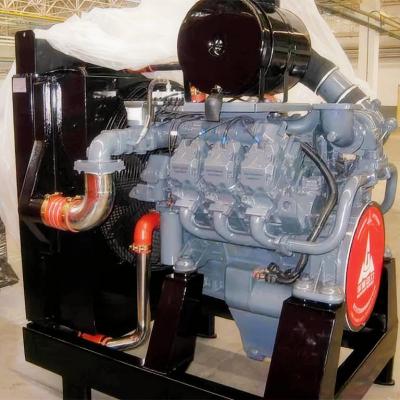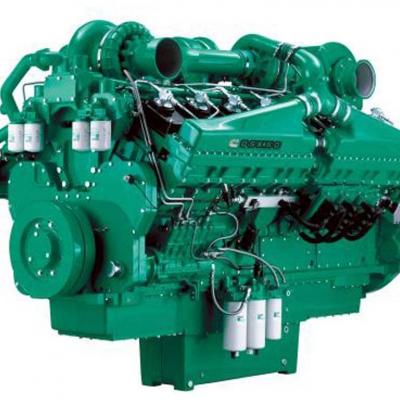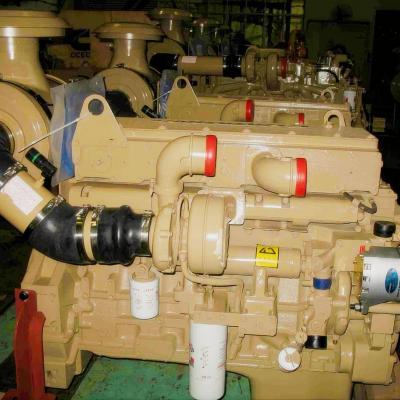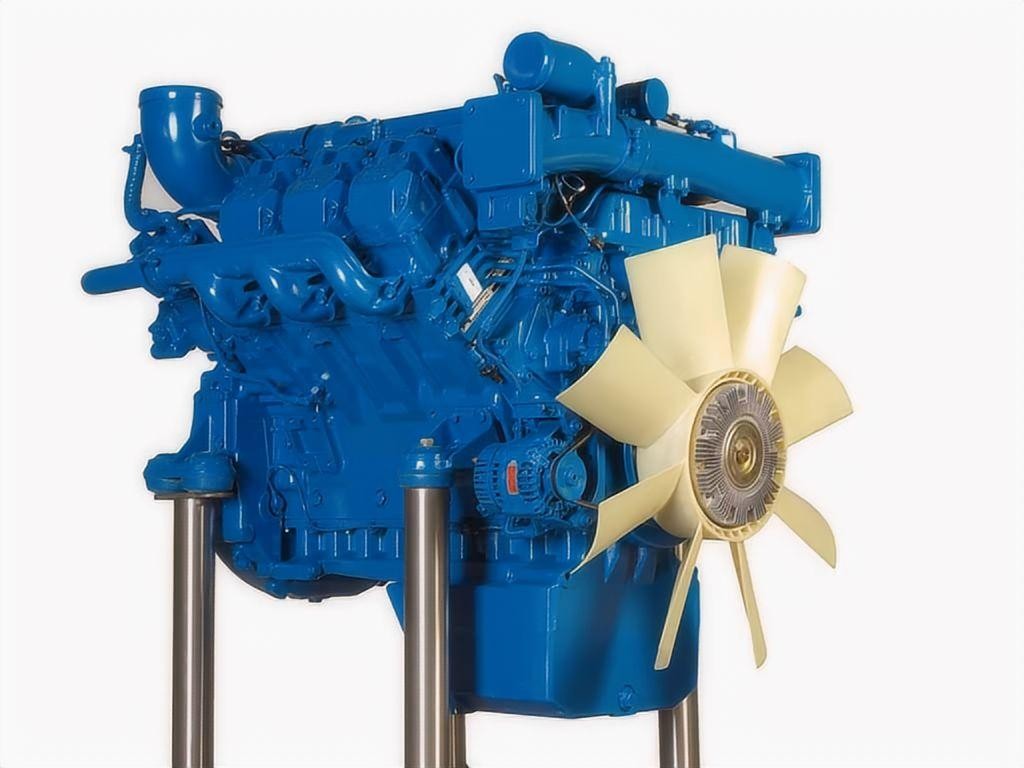
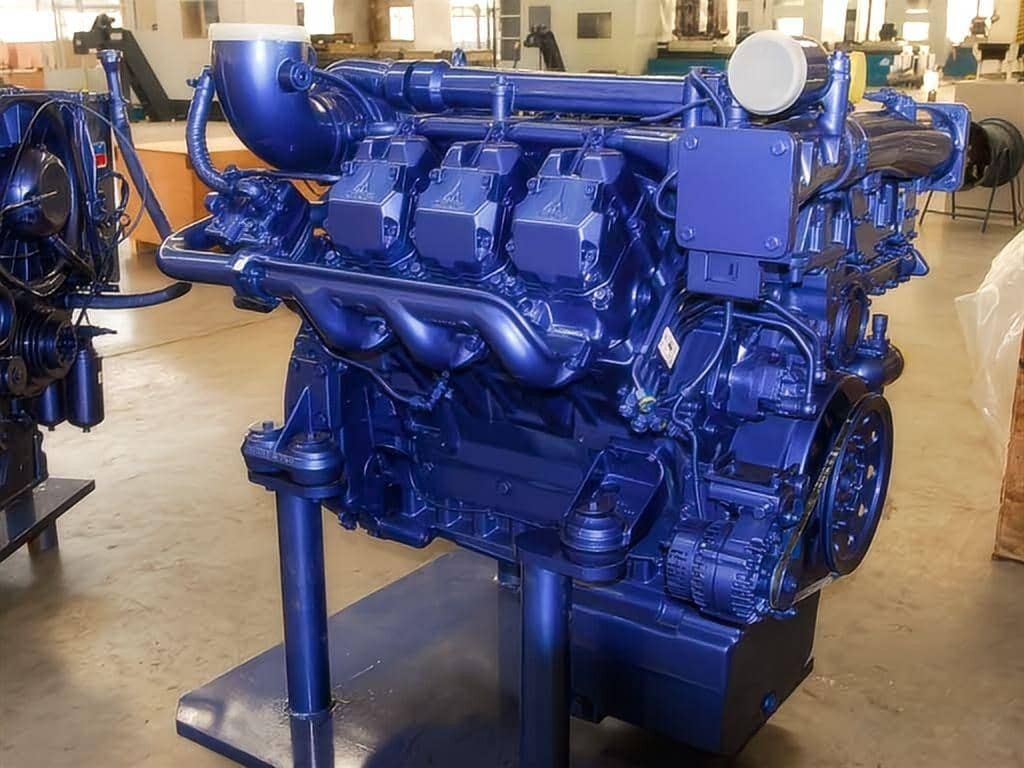
The Deutz TCD2015V06-G3 generator engine represents a pinnacle of heavy-duty industrial diesel engineering designed specifically for rigorous stationary and continuous power generation applications. As global power demands shift toward higher efficiency and smaller footprints, engineers and project managers look for prime-mover solutions that combine high power density with uncompromising reliability. HekoPower delivers this model as a fully assembled, factory-tested Deutz TCD2015 V6 diesel engine assembly, ensuring seamless integration into diverse generator enclosures and control frameworks.
Operating at a synchronous speed of 1500 RPM for 50Hz power generation, this 11.9L Deutz industrial engine for genset applications utilizes an advanced 90-degree V6 cylinder configuration. This geometric layout dramatically reduces overall engine length compared to traditional inline six-cylinder alternatives. Consequently, generator packagers can fit high-output generating sets into standard 20-foot ISO containers without sacrificing service clearance or airflow management.
When evaluating prime-mover options for 250kW class generator sets, technical buyers often weigh the merits of a V6 layout against conventional inline architectures. Understanding these structural differences prevents costly design errors during genset engineering.
Traditional inline six-cylinder engines of comparable displacement require long engine blocks. This extended length increases crankshaft torsional deflection under peak combustion pressures. The Deutz TCD2015V06-G3 227kW engine overcomes this limitation through its compact V6 crankcase design. The shorter crankshaft exhibits superior torsional rigidity, reducing harmonic vibrations and extending main bearing life under heavy load fluctuations.
Furthermore, thermal management differs significantly. Inline blocks often experience uneven cooling gradients between front and rear cylinders due to long coolant flow paths. The Deutz TCD2015V06-G3 water cooled diesel engine employs symmetrical coolant galleries within its V6 block casting. This ensures balanced heat rejection across all six cylinders, minimizing thermal distortion and maintaining tight piston ring tolerances during extended running cycles.
Unlike standard automotive-derived diesel motors, this Deutz TCD2015V06-G3 G-Drive engine is purpose-built for continuous stationary loads. It integrates heavy-duty wet cylinder liners that facilitate straightforward in-frame overhauls, eliminating the need to pull the entire engine block out of the generator skid during major maintenance intervals.
Selecting the correct prime mover depends heavily on the operational duty cycle and environmental constraints of the installation site. The Deutz TCD2015V06-LA-G3 generator engine is engineered to excel across several demanding operational environments.
In critical telecommunications and data center backup installations, the Deutz TCD2015V06-G3 250kW standby engine provides rapid block-load acceptance. When utility power fails, data centers require generators that can accept 100% step-load in accordance with ISO 8528-5 G3 compliance standards without exceeding allowable frequency and voltage recovery thresholds. The optimized turbocharger matching and electronic pump-line-nozzle (PLN) fuel injection system on this unit deliver immediate torque response, preventing dropped server loads.
For remote mining camps, infrastructure projects, and municipal utility stations across challenging climates, the Deutz TCD2015V06-G3 prime power engine configuration offers unmatched endurance. Operating at a continuous prime rating of 227kW, these engines manage continuous baseload operation in ambient temperatures exceeding 45°C when paired with appropriately sized tropical radiator cooling packages. The robust Deutz TCD2015 Euro III generator engine profile ensures compliance with international emissions standards while maintaining fuel efficiency at part-load conditions.
Achieving the projected operational lifespan of over 25,000 hours before major overhaul requires strict adherence to scheduled maintenance procedures tailored to the Deutz TCD2015 series industrial diesel engine technical data.
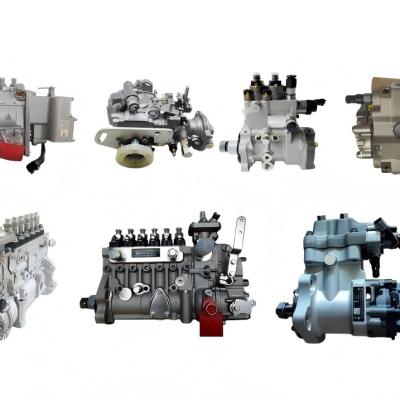
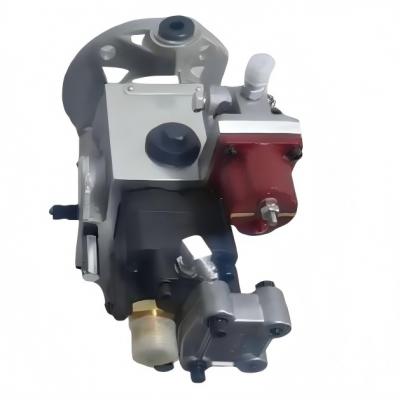
The high-pressure mechanical unit injector system operates under intense thermal and mechanical stress. Technicians must inspect fuel filtration assemblies every 250 operating hours. Using sub-micron primary water separators is mandatory to protect the injection pumps from moisture contamination inherent in remote bulk fuel storage tanks.
Cooling system maintenance dictates the longevity of the Deutz TCD2015V06-G3 turbocharged intercooled engine. Because V6 blocks manage high heat rejection rates within a compact envelope, coolant chemistry must be rigorously monitored. Using silicate-free organic acid technology (OAT) coolants prevents internal cavitation erosion in the wet sleeve cylinder liners. Furthermore, intercooler core cleanliness should be inspected semi-annually to ensure intake air temperature remains within optimal parameters, thereby preserving the low specific fuel consumption profile of 236 g/kWh.
When executing a replacement engine for Deutz TCD2015 generator application, mechanics should verify flywheel housing alignment (SAE 1 or SAE 2) and flywheel dimensional tolerances. Proper bell housing coaxiality alignment within 0.15 mm eliminates parasitic side-loads on the crankshaft rear oil seal, preventing premature rear-main leaks in field-deployed gensets.
Market acceptance of V6 industrial engines sometimes suffers from misconceptions carried over from light-duty automotive applications. Clarifying these technical realities ensures informed procurement decisions.
A frequent misconception is that V6 diesel engines inherently generate excessive vibration compared to inline six-cylinder engines due to primary imbalance. While an unmanaged 90-degree V6 has inherent primary moments, the Deutz TCD2015V06-G3 1500 RPM engine incorporates engineered internal balancing shafts and optimized counterweights forged directly into the crankshaft. This internal balancing neutralizes secondary shaking forces, allowing the engine to run smoothly on standard resilient isolators without requiring expensive external dampening masses.
Another common myth is that high-output V6 engines sacrifice fuel economy for power density. In practice, the optimized combustion chamber geometry, four-valve-per-cylinder head design, and high injection pressures of the Deutz TCD2015V06-G3 11.906l six cylinder engine achieve thermal efficiencies that rival or exceed older, heavier inline-8 or legacy inline-6 powerplants of equivalent output.
Selecting a prime mover is rarely an isolated decision; it often forms part of a broader engineering strategy encompassing multiple power tiers for varied facility loads. To support comprehensive generator manufacturing and fleet standardization, HekoPower maintains a robust inventory across the entire displacement family.
Deutz TCD2015-Generator Engine Series, original products from Huachai Deutz Engine Plant. This series mainly includes Deutz TCD2015V06-G1, Deutz TCD2015V06-G2, Deutz TCD2015V06-G3, Deutz TCD2015V06-G4, Deutz TCD2015V06-G5, Deutz TCD2015V06-G6, Deutz TCD2015V08-GA, Deutz TCD2015V08-GB.
Operating at 100% prime power (227kW), the engine consumes approximately 236 g/kWh. Under 100% standby power (250kW), fuel consumption scales proportionally with increased thermal output, though specific fuel consumption remains optimized within the peak torque curve between 1300 and 1500 RPM.
Like all turbocharged diesel engines, the TCD2015V06-G3 experiences standard atmospheric deration above 1000 meters elevation. Proper site deration calculations and electronic governing adjustments must be applied by HekoPower technical teams to maintain thermal safety margins in high-altitude installations.
The engine architecture accommodates both mechanical-hydraulic actuators and advanced electronic engine management modules communicating via SAE J1939 CAN bus protocols, facilitating seamless load sharing and synchronization in multi-genset power plants.