Details
Deutz HC6V374/18D 275 kW 60 Hz Marine Auxiliary Engine
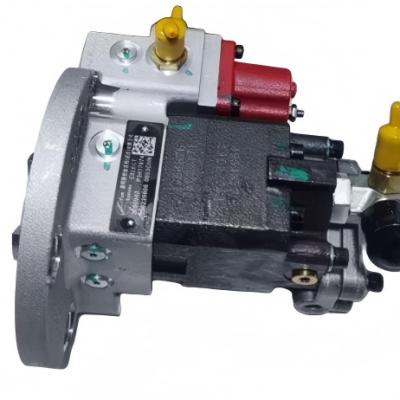
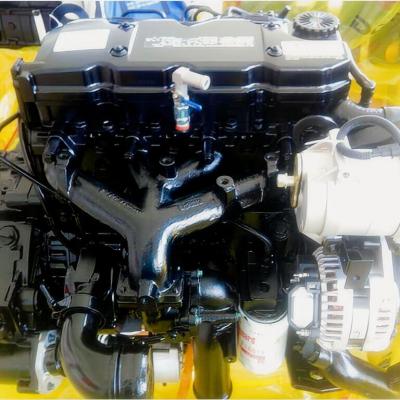
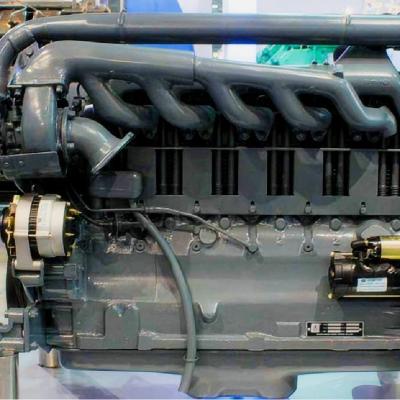
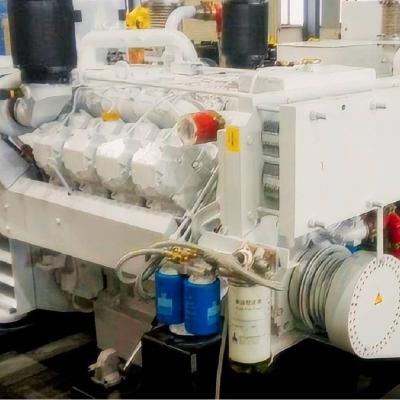
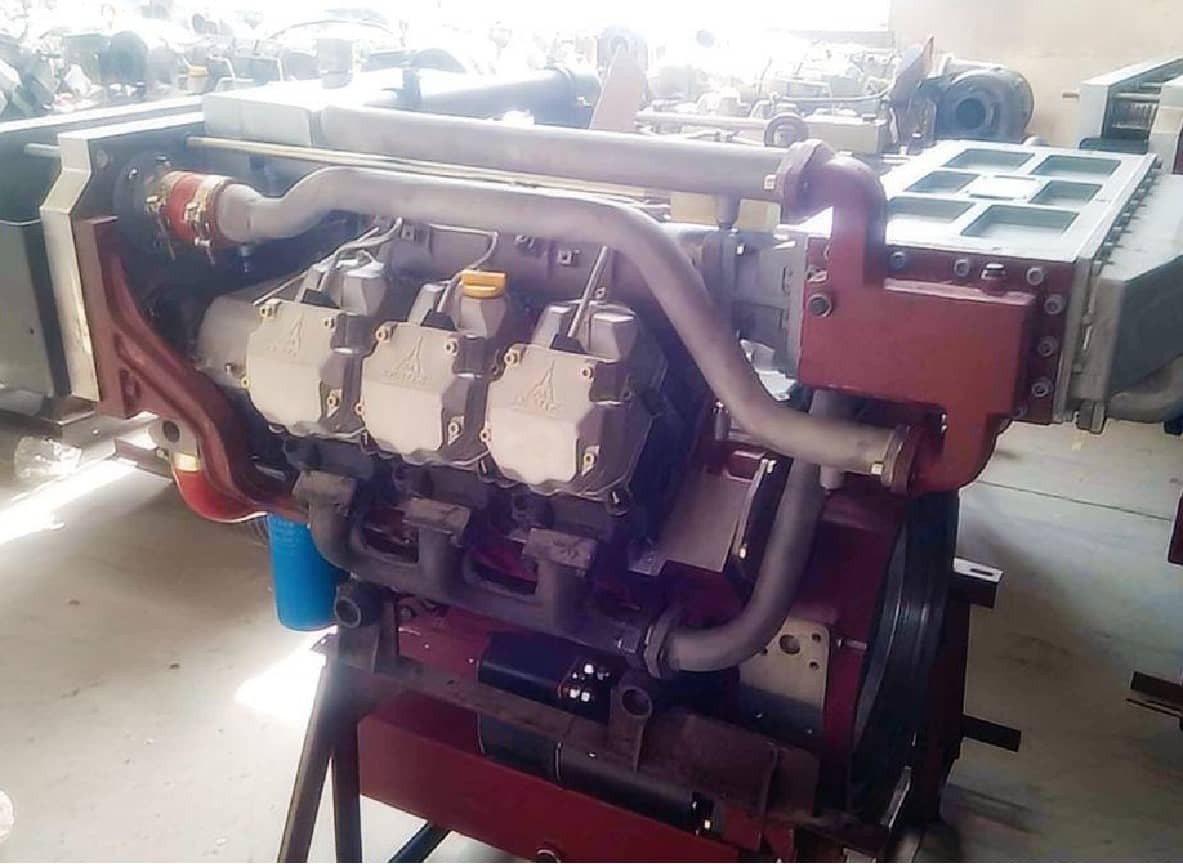
The Deutz HC6V374/18D is a 60 Hz marine auxiliary diesel engine rated at 275 kW (374 HP) continuous mechanical output at 1800 rpm. Built by Hebei Huabei Diesel Engine Company (Huachai) under German Deutz license technology derived from the proven BFM1015 11.906 L V6 platform, it uses a 90-degree V-configuration, turbocharged and water-air intercooled aspiration, and Electronic Unit Pump (EUP) fuel injection for sustained shipboard generator duty.
HekoPower supplies brand-new, factory-original Huachai Deutz HC6V374/18D complete engine assemblies for marine genset packagers, shipyards, and commercial fleet repowers. Units are configured to vessel specification with matched SAE 1 flywheel interfaces, electronic or mechanical governing, and ZY, CCS, or IMO compliance documentation.
Technical Specifications
General Engine Data
- Engine Model:
- Deutz HC6V374/18D
- Type:
- 6 Cylinders, V type, 4 stroke
- Displacement:
- 11.906 L
- Bore * Stroke:
- 132 * 145
- Net Weight (with flywheel and alternator):
- 1100 Kg
- Overall Dimension:
- 1484mm*1050mm*1468mm
Key Performance Date
- Rated Power:
- 275 kW/374 HP
- Rated Speed:
- 1800 rpm
- Low Idle Speed:
- 550 rpm
- Fuel Consumption (Running Speed):
- ≥ 195 g/kW.h
More Technical Data
- Certification:
- ZY/CCS/IMO Certificates
- Aspiration:
- Turbocharged and Intercooled
- Fuel System:
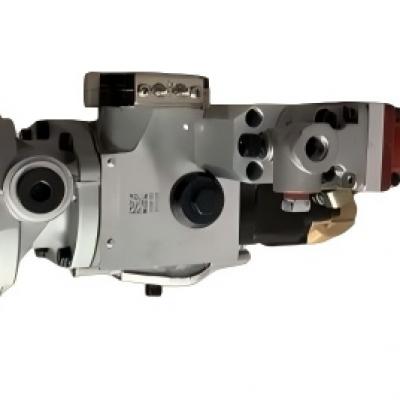
- EUP
- Compression Ratio:
- 16.5:1
- Starting Method:
- Electrical Start (28.5V/55A)
- Cooling Method:
- Heatexchanger and Water-air Intercooler
- Governor Type:
- Electronic/Mechanical
- Lubricant Capacity:
- Around 36 L
- Flywheel Size/ Housing:
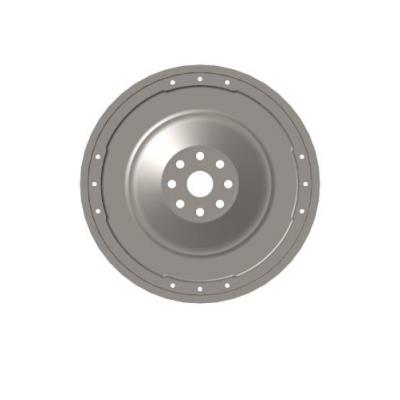
- 14", SAE1
- Running Type:
- Continuous
Comparing HC6V374/18D Against HC6V Siblings and Propulsion Engines
Within the 11.906 L HC6V/D auxiliary family, the closest counterpart to the HC6V374/18D is the 50 Hz HC6V374/15D. Both share the same 132 mm by 145 mm cylinder geometry, 1100 kg net weight, and 275 kW output, yet the HC6V374/18D reaches that rating at 1800 rpm rather than 1500 rpm. Running 20 percent faster reduces brake mean effective pressure from roughly 18.5 bar on the 15D down to about 15.4 bar on the 18D, which trims per-cycle cylinder pressure and mechanical load during round-the-clock 60 Hz shipboard operation.
Across the 60 Hz auxiliary ratings on the same block, the HC6V374/18D occupies the conservative middle tier between the 242 kW HC6V329/18D below it and the 308 kW HC6V419/18D, 330 kW HC6V449/18D, and 360 kW HC6V490/18D above it. Vessel engineers who do not need the thermal density of the 330 to 360 kW calibrations favor the HC6V374/18D for long-interval baseload service where lower exhaust temperatures extend top-end overhaul life.
Buyers should not confuse the HC6V/D auxiliary series with Huachai HC6V/C marine propulsion units such as the 287 kW HC6V390/18C or with radiator-cooled land BF6M1015 G-drive engines. Propulsion engines are fuel-mapped to a cubic propeller curve across 550 to 1800 rpm and set up for marine reduction gearboxes, whereas the HC6V374/18D is calibrated for fixed-speed 1800 rpm generator frequency stability with a 14-inch SAE 1 alternator flywheel interface, closed freshwater heat-exchanger cooling, and marine classification approval.
Shipboard Power Sizing and Operating Behavior
Paired with a 4-pole brushless marine alternator operating at typical 92 to 94 percent efficiency, the HC6V374/18D supports a 240 to 250 kWe (300 to 312.5 kVA at 0.8 power factor) continuous 60 Hz marine generator set. That output class fits hotel loads, refrigeration plants, hydraulic deck cranes, cargo winches, and ballast pumps on coastal freighters, offshore support vessels, harbor tugs, pelagic fishing vessels, and passenger ferries operating on 440 V or 480 V 60 Hz switchboards.
At 1484 mm in overall length, the 90-degree V6 layout is noticeably shorter than comparable 12-liter inline-six auxiliaries, preserving walk-around clearance in narrow machinery flats. High-pressure EUP injection responds briskly to inductive motor-starting transients, keeping voltage and frequency dips within classification limits when large pumps or compressors cycle online.
A common sizing mistake is pairing a 275 kW engine with a 275 kWe alternator by ignoring electrical conversion losses and mandatory 10 percent one-hour overload reserve. Sizing the genset to 240 to 250 kWe protects transient load acceptance and avoids governor droop under peak deck demand. During extended harbor watches, load management should also keep the engine above 30 percent rated load so the 132 mm wet liners avoid glazing and unburned fuel wet-stacking in the exhaust manifold.
Maintenance Practices and Retrofit Fitment Checks
The HC6V374/18D uses an individual one-cylinder-one-head modular architecture, allowing ship engineers to pull a single cylinder head, piston, or wet liner inside low-overhead engine rooms without disturbing adjacent cylinders. Its 36-liter sump should be serviced with API CF-4 or higher marine diesel oil, while the EUP fuel circuit depends on regular draining of the primary oil-water separator and timely fine-filter changes to protect unit-pump plungers from marine distillate moisture.
Thermal reliability hinges on the dual-circuit heat exchanger and water-air intercooler, where maximum jacket coolant temperature must stay below 103 °C. Inspect raw-water pump impellers, zinc anodes, and seawater tube bundles on a fixed schedule because biofouling or scale raises charge-air intake temperature and accelerates turbocharger wear. When replacing an aging 250 kWe-class auxiliary prime mover, verify SAE 1 housing concentricity, 14-inch flywheel coupling bolt pattern, torsional damper stiffness, and 24 V starting harness compatibility with the 28.5 V / 55 A charging alternator.
Another frequent retrofit oversight is specifying a mechanical governor on a twin-genset vessel that parallels auxiliaries on a common busbar. Mechanical governing is straightforward on standalone fishing boats or emergency sets, but automated paralleling and tight 60 Hz load sharing require the electronic governor configuration matched to the shipboard power management system.
Deutz HC6V/D-Marine Auxiliary Series
The HC6V374/18D serves as the mid-range 60 Hz continuous-duty unit in Huachai's 11-model HC6V/D marine auxiliary lineup, which spans 220 kW to 360 kW across 1500 rpm (50 Hz) and 1800 rpm (60 Hz) packages sharing common V6 wear parts and mounting geometry.
Deutz HC6V/D-Marine Auxiliary Series, Marine Auxiliary Diesel Engines for commercial and recreational applications, original products from Huachai Deutz Engine Plant. This series mainly includes HC6V299/15D, HC6V329/15D, HC6V374/15D, HC6V419/15D, HC6V449/15D, HC6V299/18D, HC6V329/18D, HC6V374/18D, HC6V419/18D, HC6V449/18D, HC6V490/18D.
Frequently Asked Questions
What continuous marine generator output can the Deutz HC6V374/18D drive?
At 275 kW mechanical output at 1800 rpm, the HC6V374/18D matches a 240 to 250 kWe (300 to 312.5 kVA at 0.8 power factor) continuous 60 Hz marine alternator while retaining headroom for alternator losses and standard 10 percent one-hour overload testing.
Can an HC6V374/18D be derated to 1500 rpm for 50 Hz shipboard operation?
Simply dialing speed down to 1500 rpm does not preserve the 275 kW rating or optimal turbocharger matching. For 50 Hz 275 kW continuous duty, specify the factory-calibrated HC6V374/15D, which uses fuel and boost settings tailored for higher torque at 1500 rpm.
When should I choose the electronic governor over the mechanical governor?
Specify the electronic governor whenever two or more shipboard auxiliaries run in parallel, or when sensitive navigation and variable-frequency drive loads demand tight steady-state 60 Hz stability. The mechanical option is best reserved for standalone, non-paralleling auxiliary sets.
What alternator coupling interface and cooling setup are standard on the HC6V374/18D?
The engine is built with an SAE 1 flywheel housing and a 14-inch flywheel for direct coupling to standard single-bearing or two-bearing marine alternators. Cooling is handled by a closed freshwater heat exchanger paired with a water-to-air intercooler, eliminating the need for an engine-room radiator.