Details
Deutz HC6V329/15D Marine Auxiliary Diesel Engine Overview
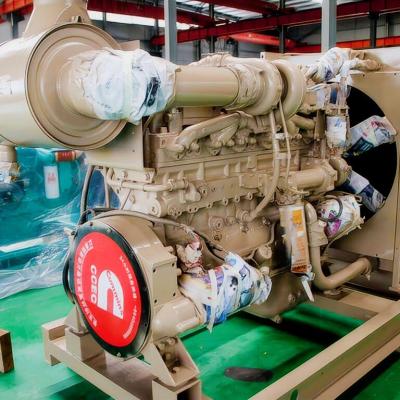
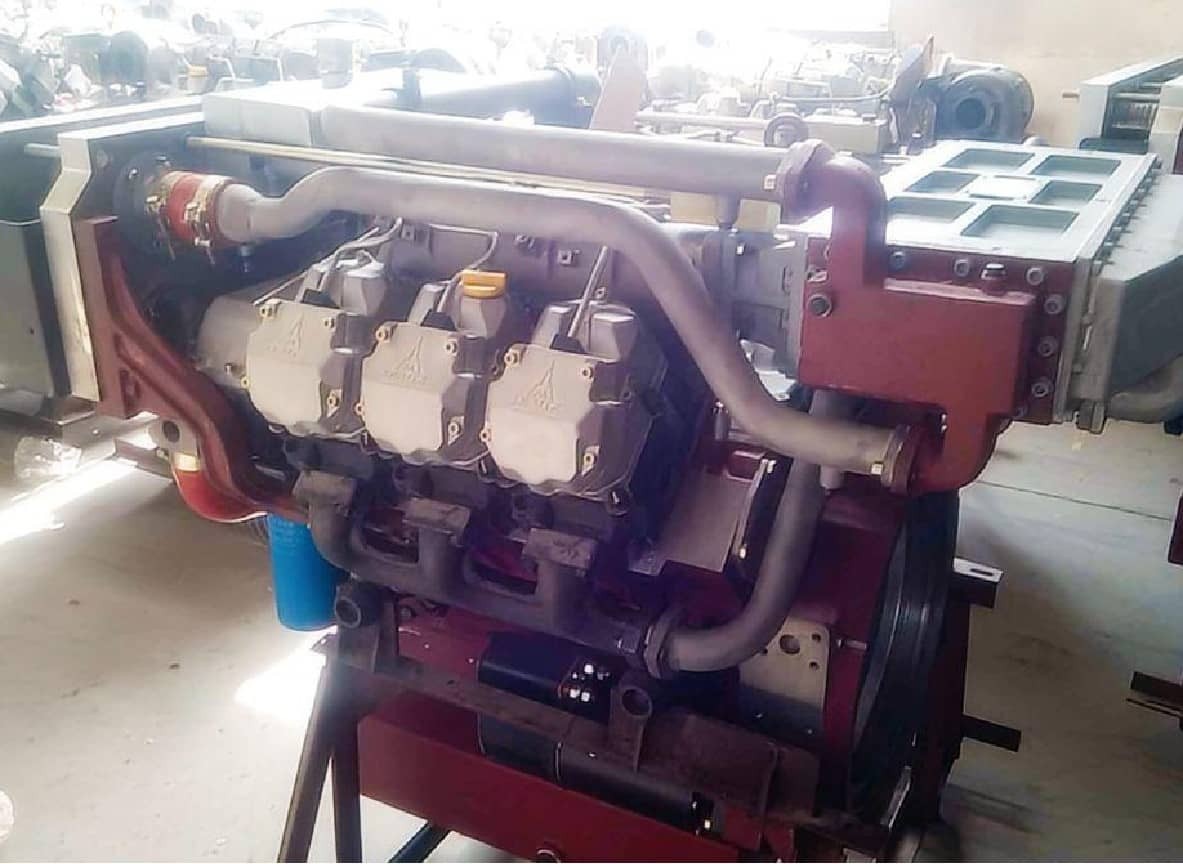
The Deutz HC6V329/15D is a constant-speed 1500 rpm marine auxiliary diesel engine rated at 242 kW (329 HP) for continuous 50 Hz shipboard power generation. Manufactured by Hebei Huabei Diesel Engine Company (Huachai) under Deutz AG license on the 11.906-liter 90-degree V6 BFM1015 platform, it pairs a compact wet-liner block and individual cylinder heads with an electronic unit pump (EUP) injection system, closed-loop heat exchanger, and water-air intercooler.
HekoPower supplies the HC6V329/15D as a complete, factory-new marine auxiliary engine assembly fitted with a 14-inch flywheel, SAE 1 bellhousing, and ZY, CCS, and IMO certification for direct genset OEM packaging or shipboard repowering.
Technical Specifications
General Engine Data
- Engine Model:
- Deutz HC6V329/15D
- Type:
- 6 Cylinders, V type, 4 stroke
- Displacement:
- 11.906 L
- Bore * Stroke:
- 132 * 145
- Net Weight (with flywheel and alternator):
- 1100 Kg
- Overall Dimension:
- 1484mm*1050mm*1468mm
Key Performance Data
- Rated Power:
- 242 kW/329 HP
- Rated Speed:
- 1500 rpm
- Low Idle Speed:
- 550 rpm
- Fuel Consumption (Running Speed):
- ≥ 195 g/kW.h
More Technical Data
- Certification:
- ZY/CCS/IMO Certificates
- Aspiration:
- Turbocharged and Intercooled
- Fuel System:
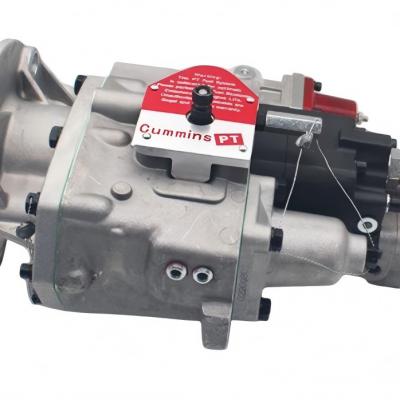
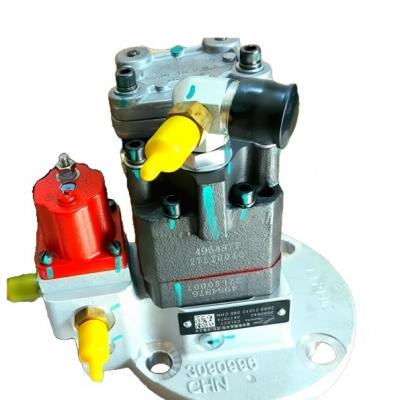
- EUP
- Compression Ratio:
- 16.5:1
- Starting Method:
- Electrical Start (28.5V/55A)
- Cooling Method:
- Heatexchanger and Water-air Intercooler
- Governor Type:
- Electronic/Mechanical
- Lubricant Capacity:
- Around 36 L
- Flywheel Size/ Housing:
- 14", SAE1
- Running Type:
- Continuous
How the HC6V329/15D Compares Across the HC6V Lineup
Within the 50 Hz Huachai Deutz HC6V/D auxiliary family, the HC6V329/15D sits one step above the 220 kW HC6V299/15D and directly below the 275 kW HC6V374/15D. All five 1500 rpm ratings—stretching up to the 330 kW HC6V449/15D—share the exact same 11.906 L displacement, 1100 kg net weight, and 1484 mm × 1050 mm × 1468 mm installation envelope. Running at 242 kW keeps brake mean effective pressure at a conservative 16.3 bar rather than the higher cylinder pressures required on 308–330 kW calibrations, which lowers exhaust thermal loading during round-the-clock harbor and sea watches.
Compared to its 60 Hz counterpart, the HC6V329/18D, both models deliver 242 kW continuous shaft power, but the HC6V329/15D produces roughly 20 percent higher output torque (approximately 1541 N·m vs. 1284 N·m) at a lower mean piston speed of 7.25 m/s. Buyers should also distinguish the HC6V329/15D from the similarly rated 243 kW HC6V330/15C marine propulsion engine. Although both share the same V6 core, the /15C is calibrated for variable-speed propeller-law loads through a reduction gearbox, whereas the /15D is governed strictly for constant-speed auxiliary generator and steady-RPM marine machinery duty.
Shipboard Applications, Genset Sizing, and Load Behavior
Engine builders typically couple the HC6V329/15D to a 4-pole marine synchronous alternator to produce a 200 kWe (250 kVA at 0.8 power factor) continuous 50 Hz shipboard generator set. That output class fits coastal cargo ships, inland river barges, commercial fishing trawlers, passenger ferries, dredgers, and offshore utility vessels running hotel loads, refrigeration plants, ballast pumps, and electric deck cranes.
A common sizing error is pairing this 242 kW prime mover with a 240 kWe alternator. Once alternator conversion losses (typically 6 to 8 percent), auxiliary fan or pump parasitics, and the mandatory 10 percent marine classification overload reserve are deducted, 200 kWe is the realistic continuous electrical rating that preserves transient step-load stability. With the electronic governor option selected, the EUP injection system responds quickly to sudden inductive motor starts—such as hydraulic winch packs or cargo hold blowers—keeping shipboard frequency and voltage within classification society tolerances.
Maintenance Priorities and Retrofit Guidance
The 36-liter lubrication system calls for API CF-4 or higher heavy-duty diesel oil (commonly SAE 15W-40), with oil and filter changes typically spaced every 250 to 500 operating hours depending on distillate sulfur levels and average load factor. Because each cylinder uses its own cam-driven electronic unit pump, clean fuel filtration through a primary oil-water separator and secondary fine filter is critical; the upside during service is that an individual cylinder head or unit pump can be serviced without pulling an entire inline injection assembly.
On the cooling side, keep the closed fresh-water circuit dosed with corrosion inhibitor and schedule routine inspection of the raw-water heat exchanger tube bundle, water-air intercooler, and sacrificial zinc anodes to prevent scale buildup from raising intake air temperatures. One frequent operational misconception is that the 550 rpm low idle capability allows indefinite light-load running during port stays. Sustained operation below 25 to 30 percent of rated output still promotes wet stacking, liner glazing, and turbocharger soot fouling, so crews should balance bus loads across parallel sets or periodically exercise the unit above 60 percent load. When retrofitting into an existing skid, confirm SAE 1 bellhousing and 14-inch flywheel coupling tolerances, counter-clockwise rotation facing the flywheel, and a 24V battery bank matched to the 28.5V/55A charging alternator.
Deutz HC6V/D-Marine Auxiliary Series
The HC6V329/15D forms the 200 kWe 50 Hz tier within Huachai Deutz's 11-model V6 marine auxiliary lineup, spanning 220 kW to 330 kW at 1500 rpm and 220 kW to 360 kW at 1800 rpm so shipyards can standardize spare parts and skid footprints across multiple vessel classes.
Deutz HC6V/D-Marine Auxiliary Series, Marine Auxiliary Diesel Engines for commercial and recreational applications, original products from Huachai Deutz Engine Plant. This series mainly includes HC6V299/15D, HC6V329/15D, HC6V374/15D, HC6V419/15D, HC6V449/15D, HC6V299/18D, HC6V329/18D, HC6V374/18D, HC6V419/18D, HC6V449/18D, HC6V490/18D.
Frequently Asked Questions
What marine generator output matches the Deutz HC6V329/15D at 50 Hz?
With 242 kW continuous mechanical output at 1500 rpm, the HC6V329/15D is ideally matched to a 200 kWe (250 kVA) 50 Hz marine auxiliary generator set. This sizing accounts for alternator efficiency and preserves the 10 percent temporary overload margin required by marine classification rules.
Can the HC6V329/15D run on a 60 Hz vessel or replace an HC6V330/15C propulsion engine?
No. Vessels with 60 Hz electrical systems require the 1800 rpm HC6V329/18D calibration rather than overspeeding a 1500 rpm unit. Likewise, main propulsion duties require the HC6V330/15C propulsion variant, which is calibrated for variable-speed propeller-law torque curves instead of constant-speed auxiliary governing.
Should I specify the electronic or mechanical governor on the HC6V329/15D?
Choose the electronic governor whenever the genset will run in parallel with other shipboard generators, share bus loads automatically, or handle heavy crane and winch step loads. The mechanical governor option suits standalone auxiliary sets or emergency generators where simplicity and minimal control wiring are preferred.
What mechanical and electrical interfaces are needed for a drop-in retrofit?
The engine uses a standard SAE 1 flywheel housing and 14-inch flywheel rotating counter-clockwise when facing the output end. Your installation skid needs raw-water connections for the heat exchanger and water-air intercooler, adequate exhaust and combustion-air ducting, and a 24V DC starting battery bank compatible with the 28.5V/55A alternator.