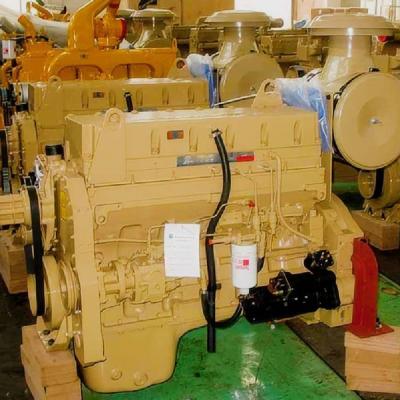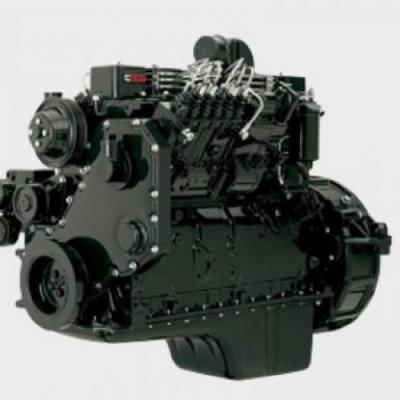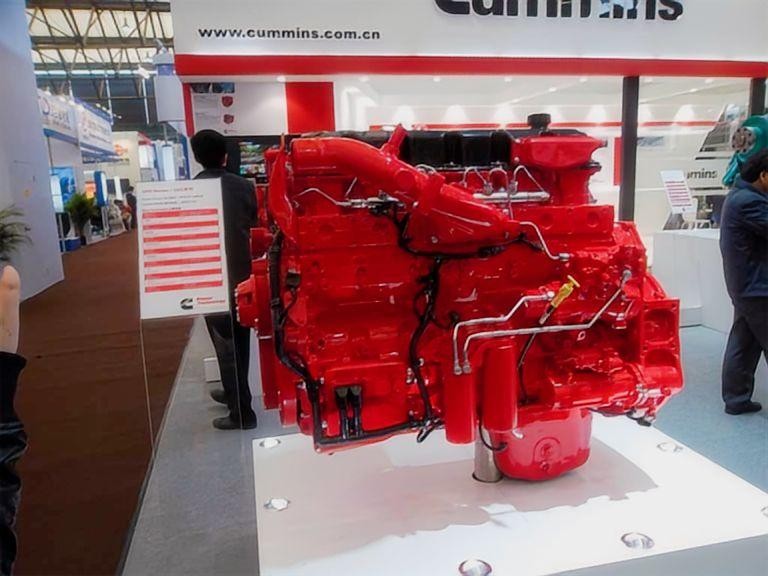
The Cummins QSZ13-G2 is a heavy-duty, inline six-cylinder industrial diesel engine engineered specifically to drive 400kW prime and standby power generation systems. Registered under CPL 3718, this 13.0-liter power plant combines robust structural integrity with precise electronic management.
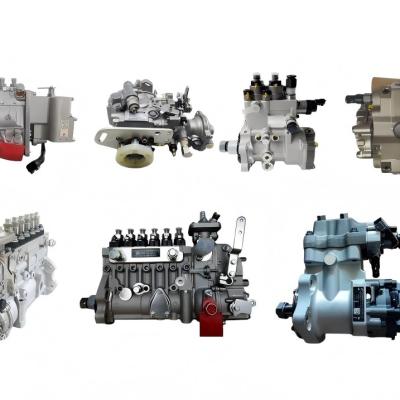
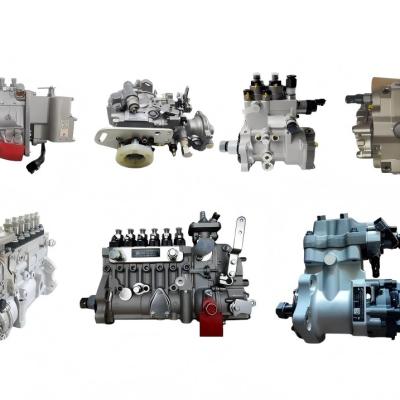
At the core of its high-pressure combustion efficiency is an advanced High Pressure Common Rail (HPCR) fuel injection system. This system operates at ultra-high injection pressures to atomize diesel fuel thoroughly, resulting in cleaner emissions, reduced combustion noise, and exceptional fuel economy across varying load profiles.
The engine block features a robust design with a 130 mm cylinder bore and a 163 mm piston stroke, yielding a displacement of 13 liters and a resilient 17:1 compression ratio. Supported by a turbocharged and air-to-air aftercooled induction configuration, the QSZ13-G2 sustains maximum torque and thermal stability even in demanding ambient operating conditions. With a dry weight of approximately 1,195 kg and a 24V electric starting system, it delivers the high power density required by modern generator original equipment manufacturers (OEMs).
When designing or specifying industrial generator sets, engineers frequently evaluate the QSZ13-G2 against alternative ratings like the QSZ13-G3 or older mechanical platforms such as the 6ZTAA13-G4.
Unlike higher-output variants optimized for rapid emergency standby bursts, the QSZ13-G2 is precisely calibrated for stable, continuous prime power delivery at 1500 RPM (50Hz) or 1800 RPM (60Hz). Its governor response is tuned to handle abrupt block load acceptance without severe frequency droop, making it vastly superior to older mechanical fuel pump engines that struggle with stringent ISO 8528 G3 transient performance standards.
Furthermore, when compared to smaller 9L or 11L displacement engines pushed to reach 400kW, the 13-liter displacement of the QSZ13-G2 operates with lower thermal and mechanical stress on internal components, translating directly into extended overhaul intervals and lower lifecycle operating costs.
HekoPower supplies the Cummins QSZ13-G2 engine to a diverse global network of generator packagers and industrial end-users operating in critical sectors.
In remote mining power stations, where grid connectivity is absent or unreliable, this engine forms the prime mover for continuous-duty generator houses operating 24 hours a day. Its ability to maintain precise frequency and voltage regulation under heavy inductive loads makes it ideal for running mine dewatering pumps, crushing machinery, and camp micro-grids.
Similarly, in commercial and municipal infrastructure—such as municipal water treatment facilities, telecommunication hubs, and regional hospitals—the QSZ13-G2 serves as a reliable emergency backup engine inside containerized or acoustically enclosed generator sets. Its rapid cold-start capability ensures seamless synchronization and power transfer within seconds of a primary grid failure.
Navigating heavy-duty diesel specifications often involves dispelling widespread technical myths. One common misconception is that the QSZ13-G2 can utilize lower-grade, high-sulfur diesel fuel without consequence. In reality, the sophisticated micro-tolerances within the HPCR fuel injectors demand strict adherence to ultra-low sulfur diesel (ULSD) standards and rigorous primary fuel-water separation filtration to prevent premature plunger wear.
Another frequent misunderstanding involves confusing automotive or off-highway heavy equipment QSZ13 variants with the G-Drive generator engine specification. G-Drive engines like the QSZ13-G2 feature dedicated electronic control module (ECM) software calibrations mapped specifically for constant-speed governed operation rather than variable-speed vehicular torque curves. Attempting to interchange automotive engine assemblies without remapping the ECM and verifying governor droop characteristics will result in unstable frequency regulation during generator synchronization.
Maximizing the operational lifespan of your Cummins QSZ13-G2 requires a disciplined preventive maintenance schedule. The HPCR fuel system demands meticulous cleanliness during service intervals. Technicians must never loosen high-pressure fuel lines while the engine is running or immediately after shutdown, as residual high pressure can cause severe fluid injection injuries.
Routine maintenance should focus on regular replacement of genuine fuel filters, lube oil filters, and air intake elements to protect the turbocharger compressor wheel and aftercooler core from particulate abrasion. Cooling system integrity is equally vital; ensure that coolant additive concentrations (SCA/EG mixes) are tested semi-annually to prevent cavitation pitting on cylinder liners. When performing overhauls or replacing wear parts, always verify component part numbers against the specific CPL 3718 parts manual to guarantee metallurgical and dimensional compatibility.
As you evaluate complete generator configurations or auxiliary systems within our catalog, it is helpful to look at the broader equipment ecosystem. Cummins QSZ13-G Series, original products from Dongfeng Cummins Engine Plant (DCEC), Cummins Joint Venture Plant since 1986, 50% shareholding by Cummins USA. This series mainly includes QSZ13-G2-400KW, QSZ13-G3-450KW. In accordance with the criteria of Machinery Safety Directive 2006/42, movable elements such as distribution belts, fans, and parts that acquire high temperatures during operation, such as exhaust manifolds, have their respective safeguards. Before being delivered, the generator is thoroughly checked at the factory. Voltage, frequency, and load are all tested, as well as the appropriate operation of warnings and the influence of engine oil temperature on stop.
The unit comes tailored to specific target markets as a Cummins QSZ13-G2 Tier 2 / Tier 3 emission engine. This flexibility makes it highly compatible with regions requiring robust performance without complex aftermarket exhaust treatments.
It utilizes an advanced High Pressure Common Rail (HPCR) fuel injection system paired with XPI technology, which optimizes fuel atomization, reduces noise emissions, and enhances overall thermal efficiency.
The QSZ13-G2 1500 rpm engine is configured for 50Hz power grids, outputting exactly 400kW. The QSZ13-G2 1800 rpm engine operates at a higher rotational speed to generate 60Hz power, resulting in a slightly higher mechanical output of 408kW to meet the demands of 60Hz alternators.
The engine requires a robust 24-volt battery bank capable of delivering sufficient cold-cranking amps (CCA). The exact battery sizing depends on the ambient temperature of your installation site to ensure the QSZ13-G2 turbocharged engine turns over efficiently in adverse conditions.