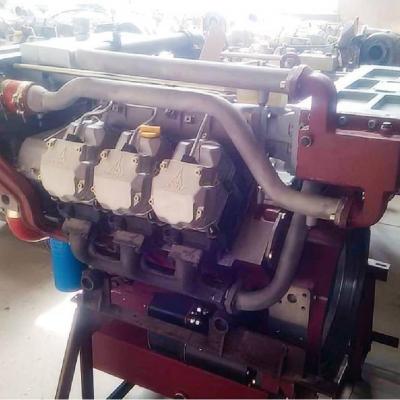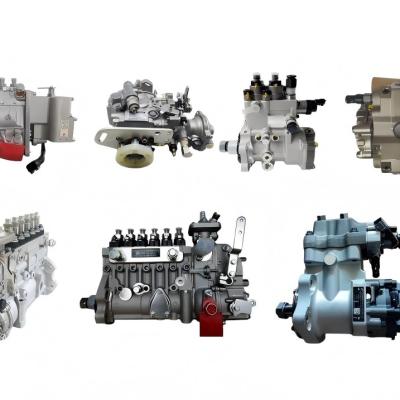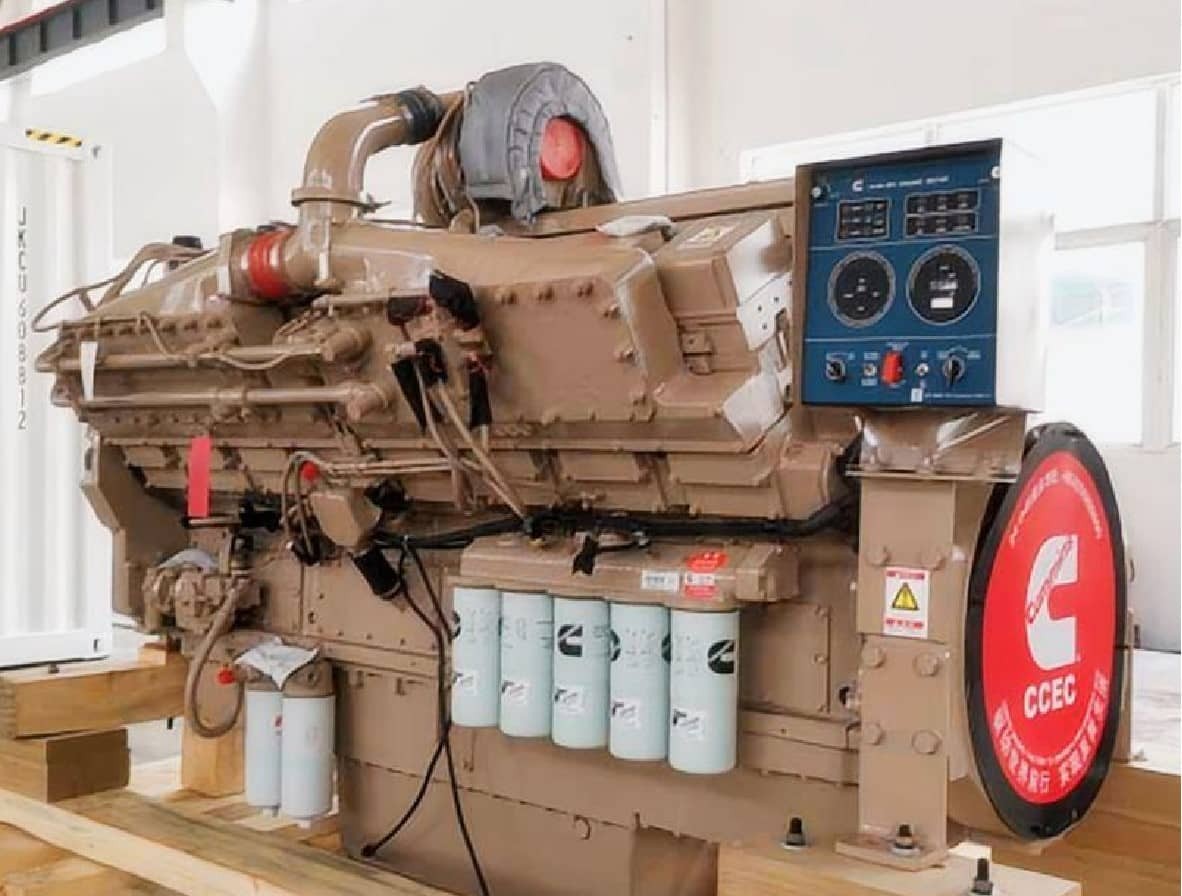
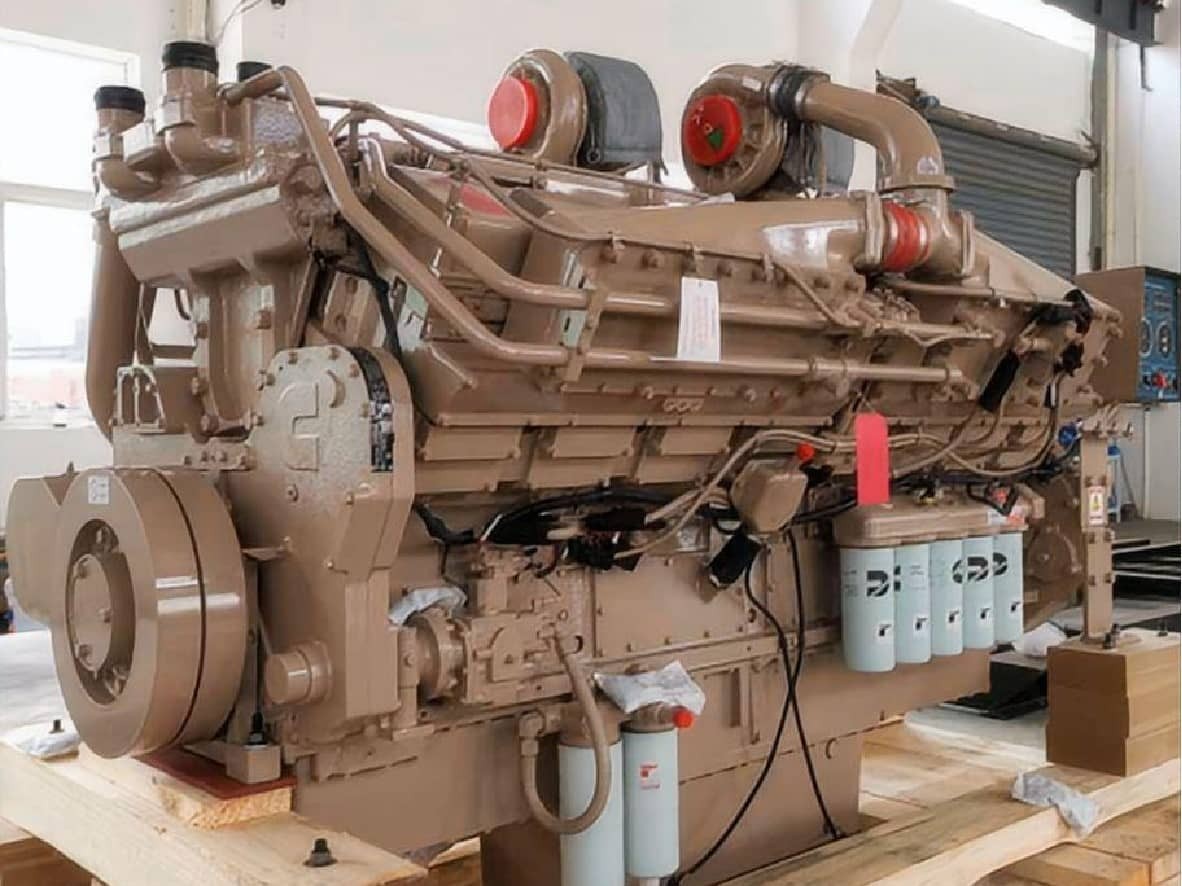
HekoPower stands as a trusted, specialized global engine supplier, delivering heavy-duty propulsion and auxiliary power solutions built for demanding marine environments. When commercial shipbuilders, fleet operators, and marine contractors require uncompromising reliability for shipboard electrical generation, the Cummins KTA50-DM1097 emerges as a premier industry standard. Engineered by Chongqing Cummins Engine Co., Ltd. (CCEC), this V16 powerhouse is specifically designed to satisfy the rigorous continuous demands of modern commercial shipping, offshore support vessels, and large-scale marine generator sets.
Navigating the K50 engine family requires a sharp understanding of how the KTA50-DM1097 compares to alternative ratings and sibling configurations within the CCEC portfolio.
When comparing the KTA50-DM1097 (1097 kW at 1500 RPM) to the higher-rated KTA50-DM1291, operators often weigh raw electrical output against thermal and mechanical load limits. While the DM1291 pushes higher horsepower for larger auxiliary demands, the DM1097 offers a more conservative thermal operating margin, which often translates into extended time between overhauls in continuous-duty auxiliary roles.
A common point of confusion arises when buyers mistake marine auxiliary engines like the KTA50-DM1097 for land-based generator drive models such as the KTA50-G3. Although both share the same robust 50L V16 block architecture, their governing systems, cooling architectures, and marine classification certifications differ substantially. Land-based generator engines are rarely engineered to withstand the rigorous corrosive environments, variable hull pitch angles, and structural torsional vibration limits required for shipboard integration. Furthermore, selecting between a 1500 RPM engine for 50 Hz grids and an 1800 RPM variant for 60 Hz grids dictates not only the alternator selection but also the overall vessel power distribution topology. Verifying exact engine configuration numbers, such as configuration D283036MX02, ensures that replacement parts and auxiliary accessories match factory specifications precisely.
The practical utility of the CCEC Cummins KTA50-DM1097 shines brightest in heavy-duty commercial maritime environments where power failure is simply not an option.
Ocean-going cargo ships utilize this engine to power massive shipboard electrical grids, running banks of refrigerated containers, heavy deck cranes, and essential shipboard hotel loads simultaneously. In the demanding operational theater of harbor and ocean-going tugboats, the KTA50-DM1097 drives auxiliary fire-fighting pumps and heavy winch generators that require instant torque response and stable governing under sudden load spikes.
Offshore drilling platforms and floating production storage and offloading (FPSO) vessels rely on complete engine assemblies of this caliber to maintain auxiliary hotel and safety power systems in remote, corrosive marine atmospheres. Seamless power system integration involves pairing the engine with a high-efficiency marine alternator, advanced digital paralleling switchgear, and robust keel-cooling or heat-exchanger circuits tailored to the vessel's specific operating waters.
Maximizing the operational lifespan of a KTA50-DM1097 requires disciplined adherence to scheduled maintenance intervals and a clear understanding of common technical misconceptions.
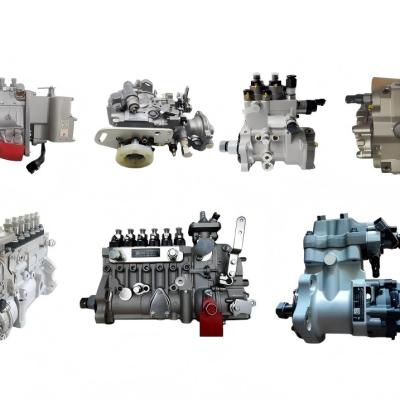
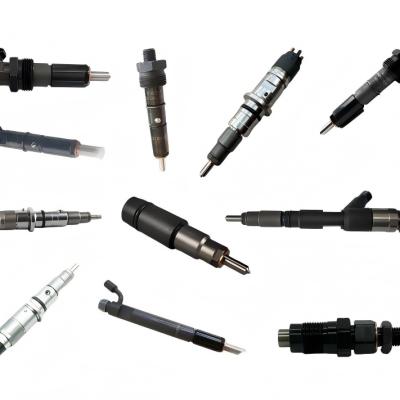
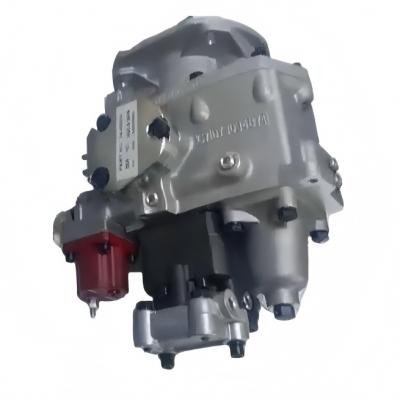
A prevalent myth in marine engineering is that heavy-duty diesel engines require no special care during extended idle periods in port. In reality, low-temperature idling can lead to fuel injector coking and unburned fuel accumulation in the exhaust manifold. Operators should maintain proper coolant temperatures using block heaters and follow rigorous PT fuel system maintenance guidelines to preserve injector spray patterns.
When planning an engine replacement or overhaul, verifying mounting footprints, flywheel housing sizes, and vibration damper conditions is paramount. Replacing worn components with genuine overhaul kits prevents premature bearing wear and catastrophic turbocharger failure. Furthermore, procuring complete engine assemblies through an experienced supplier ensures that all marine-specific accessories—such as seawater pumps, heat exchangers, and CCS documentation packages—are verified and tested prior to export dispatch.
As global maritime regulations and power requirements evolve, exploring the broader ecosystem of propulsion and auxiliary power is essential for fleet standardization. Cummins K50-DM Series, Marine Auxilliary Diesel Engines for commercial and recreational applications, original products from Chongqing Cummins Engine Plant(CCEC). This series mainly includes KTA50-DM1097, KTA50-DM1291. All engines complete with sea water pump, heat exchanger, CCS/IMO certificates.
Actual fuel consumption depends largely on engine rating setups and configuration options. A standard CCEC KTA50-DM1097 consumes roughly 235 liters per hour at 100% prime load. If your configuration features a different internal timing setup or an alternative aftercooler loop, fuel consumption can shift up to 247 liters per hour based on ISO 8178 D2 test standard conditions.
No, this specific model is optimized for 1500 RPM to run synchronized 50 Hz marine generator installations. For 60 Hz onboard grids that run at 1800 RPM, you will need to source a different configuration, such as the KTA50-DM1291, which is engineered to provide proper generator drive performance at higher operational speeds.
HekoPower can deliver complete engine builds carrying China Classification Society (CCS) approval books. We can also coordinate with regional surveyors to arrange witness testing and obtain build certificates for other major maritime registries, including Lloyd's Register (LR), Bureau Veritas (BV), or the American Bureau of Shipping (ABS), depending on what your vessel's flag state requires.
Our standard auxiliary engine assembly ships completely dressed. This package includes the core block assembly, PT mechanical fuel injection system, twin turbochargers, marine-grade water-cooled exhaust manifolds, engine-mounted oil-and-fuel filters, a 24V electrical starter motor, and the main raw-water cooling heat exchanger assembly.