Details
Cummins 4BTA3.9-GM65 Marine Auxiliary Engine: Engineering and Operational Overview
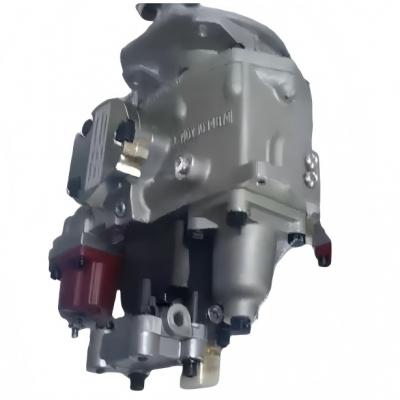
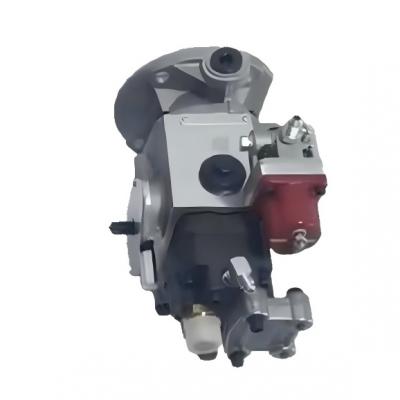
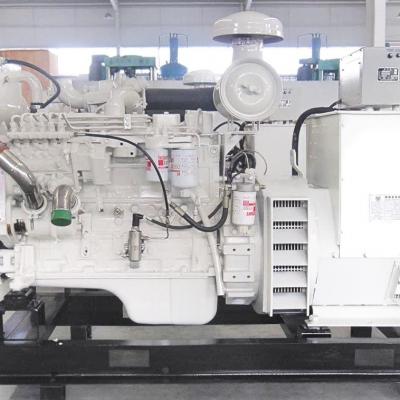
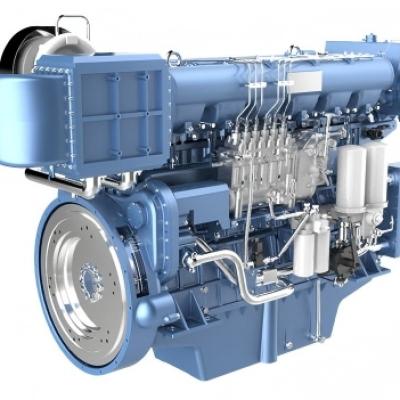
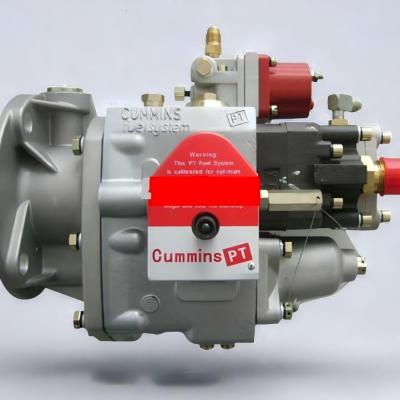
The Dongfeng Cummins (DCEC) 4BTA3.9-GM65 is a specialized 3.9-liter, four-cylinder, turbocharged and water-air intercooled marine auxiliary diesel engine engineered explicitly for auxiliary shipboard power and marine generator sets. Operating continuously at a rated speed of 1800 RPM, this unit delivers a reliable prime power output of 65kW (87HP) alongside a standby capability of 72kW. Registered under CPL 2720, the engine integrates a mechanical BYC A-type fuel injection pump coupled with a precision GAC electronic governor, ensuring frequency stability essential for marine electrical grids.
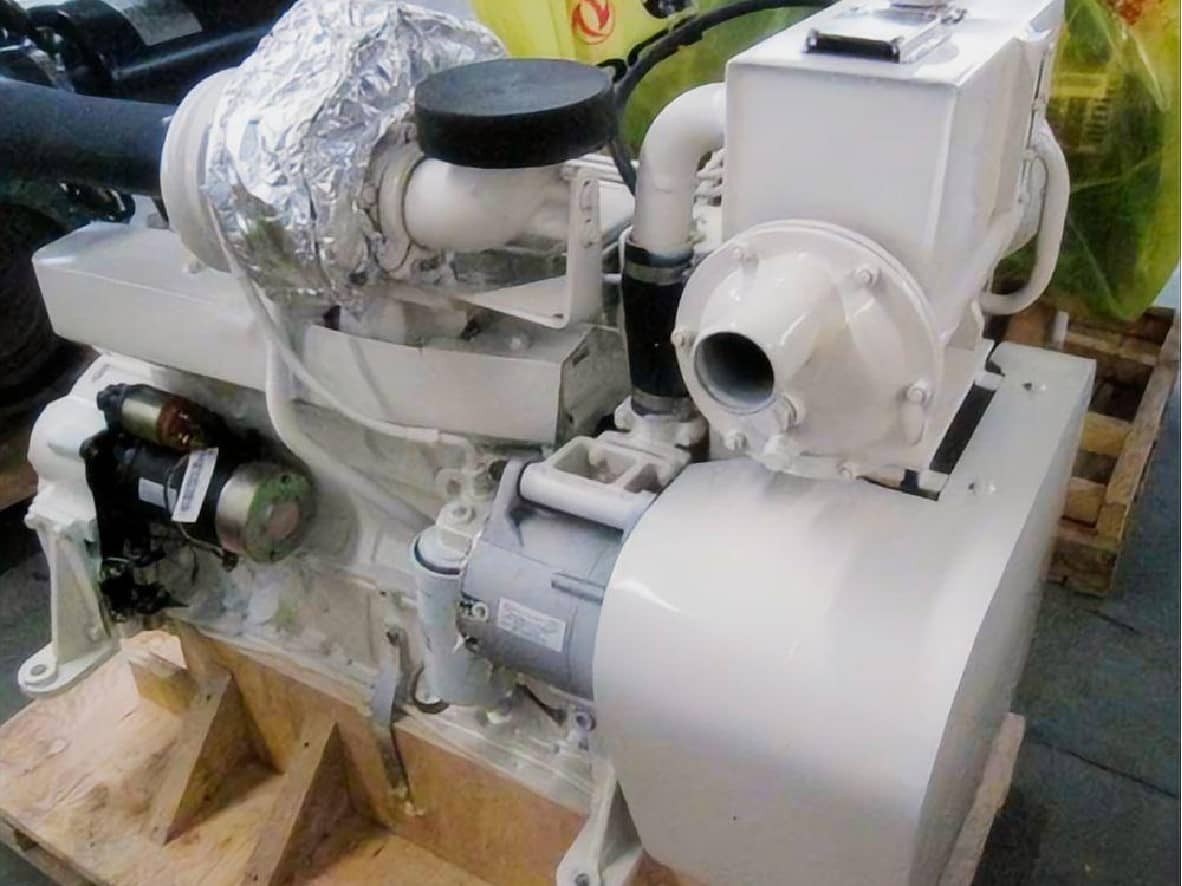
As a premier engine supplier, HekoPower provides fully configured Cummins 4BTA3.9-GM65 engine assemblies complete with heavy-duty heat exchangers, integrated sea water pumps, and resilient marine mounting footprints. This documentation outlines the technical distinctions, operational deployment environments, maintenance frameworks, and model-specific clarifications for maritime engineers and procurement specialists.
Tech Specs of Cummins 4BTA3.9-GM65
General Engine Data
Engine Model: Cummins 4BTA3.9-GM65
Type: 4 Cylinders in Line
Displacement: 3.9 L
Bore * Stroke: 102 * 120
Net Weight (with flywheel & alternator): 350 Kg
Overall Dimension: 867mm*544mm*988mm
Engine Configuration No.: D383060MX02
Key Performance Data
Rated Power/Standby Power: 65 kW/87HP, 72 kW/96HP
Rated Speed: 1800 rpm
Low Idle Speed: 950-1050 rpm
Fuel Consumption (Running Speed): ≤ 240 g/kW.hr
More Technical Data
Certification: CCS Certificates
Aspiration: Turbocharged/Water-air Intercooled
Fuel System: BYC A Pump/GAC Governor
Compression Ratio: 17.3:1
Electrical System (Starter Motor/Alternator): 12V/24V
Lowest Starting Temp Without auxiliary system: -12℃
Cooling Method: Water cooled
Engine Cooling Fluid Volume: 7.9 L
Technical Comparisons: 4BTA3.9-GM65 vs. 4BTA3.9-GM47
A frequent point of evaluation among marine operators involves distinguishing between the Cummins 4BTA3.9-GM65 and its sibling variant, the 4BTA3.9-GM47. While both share the foundational 3.9-liter four-cylinder block configuration with a bore and stroke of 102mm by 120mm, their calibration profiles differ significantly to serve distinct auxiliary duties.
The GM47 variant is generally tuned for lower continuous power output tiers, whereas the GM65 is calibrated to push a stable 65kW of prime power at 1800 RPM. This higher output threshold on the GM65 is achieved through optimized turbocharger matching, a refined fuel delivery rate via the BYC A pump, and enhanced thermal rejection management through the water-air intercooler circuit. Operators transitioning from a GM47 to a GM65 must verify that their alternator head capacity and shipboard circuit protection are rated for the increased amperage output. Another common misconception involves confusing industrial G-drive versions of the 3.9L engine with marine auxiliary variants. Industrial units rely on radiator cooling and variable-speed mechanical governors, whereas the GM65 marine specification utilizes keel cooling or raw water heat exchangers paired with precision governing to maintain strict 60Hz or 50Hz frequency tolerances under fluctuating vessel electrical loads.
Real Application Scenarios and Marine Deployment
The DCEC 4BTA3.9-GM65 finds its optimal deployment across various commercial marine sectors where continuous, unyielding auxiliary power is mandatory.
In commercial fishing vessels and coastal trawlers, the engine is frequently integrated into auxiliary generator power packs driving refrigeration compressors, onboard winches, and navigation electronics. Because fishing vessels operate in humid, salt-laden environments, the engine's marine-grade heat exchanger and corrosion-resistant auxiliary components prevent premature thermal fatigue.
Another primary application is aboard harbor tugs, workboats, and small inland ferries. In these settings, the 4BTA3.9-GM65 functions as a dependable ship service diesel generator (SSDG) driving hotel loads and vital steering auxiliary hydraulic pumps. Its compact four-cylinder inline architecture allows naval architects to fit the power pack into cramped auxiliary machinery spaces without compromising service access points for filters and fluid checks.
Maintenance, Servicing, and Component-Specific Tips
Maximizing the operational lifespan of a DCEC 4BTA3.9-GM65 requires strict adherence to marine-specific maintenance intervals. Unlike land-based generator engines, marine auxiliary units contend with raw water cooling loops that demand proactive raw water pump impeller inspections every 250 operating hours. Zinc anodes within the heat exchanger must be monitored and replaced biannually to prevent galvanic corrosion of the core bundle.
Fuel system integrity remains paramount for the BYC A fuel pump and multi-hole fuel injectors. Marine diesel contamination often stems from condensation in storage tanks. Installing a primary water-separating fuel filter upstream of the engine fuel lift pump protects the precision plungers of the BYC A pump from scoring. Furthermore, when calibrating the GAC electronic governor, technicians must ensure that the actuator linkage is free of binding and that gain settings are properly adjusted to eliminate hunting or surging when large electrical loads engage abruptly on the vessel.
Series Ecosystem and Auxiliary Solutions
When designing or upgrading a vessel power system, evaluating single units within a broader engine family ensures proper scalability and spare parts interchangeability.
Cummins B3.9-GM Series, Marine Auxilliary Diesel Engines for commercial and recreational applications, original products from Dongfeng Cummins Engine Plant (DCEC), Cummins Joint Venture Plant since 1986, 50% shareholding by Cummins USA. This series mainly includes 4BTA3.9-GM47, 4BTA3.9-GM65. All engines complete with sea water pump, heat exchanger, CCS/IMO certificates.
Frequently Asked Questions
Is the 4BTA3.9-GM65 compatible with CCS (China Classification Society) marine certification?
Yes, genuine DCEC marine auxiliary engines supplied for commercial vessel registration are available with CCS, ZC, or major maritime classification documentation upon request to satisfy flag state inspection requirements.
Can the 4BTA3.9-GM65 be retrofitted to replace older 4BT marine engines?
Yes, the dimensional footprint closely matches legacy 4BT models, but installers must verify exhaust elbow alignment, raw water plumbing routing, and electrical harness compatibility with the GAC electronic governor system.