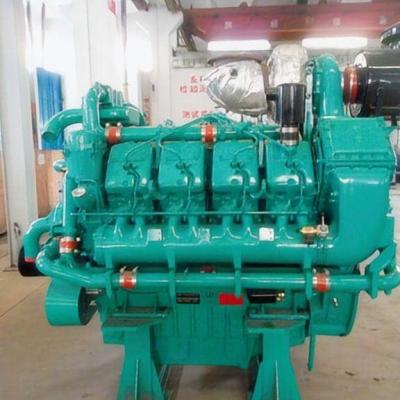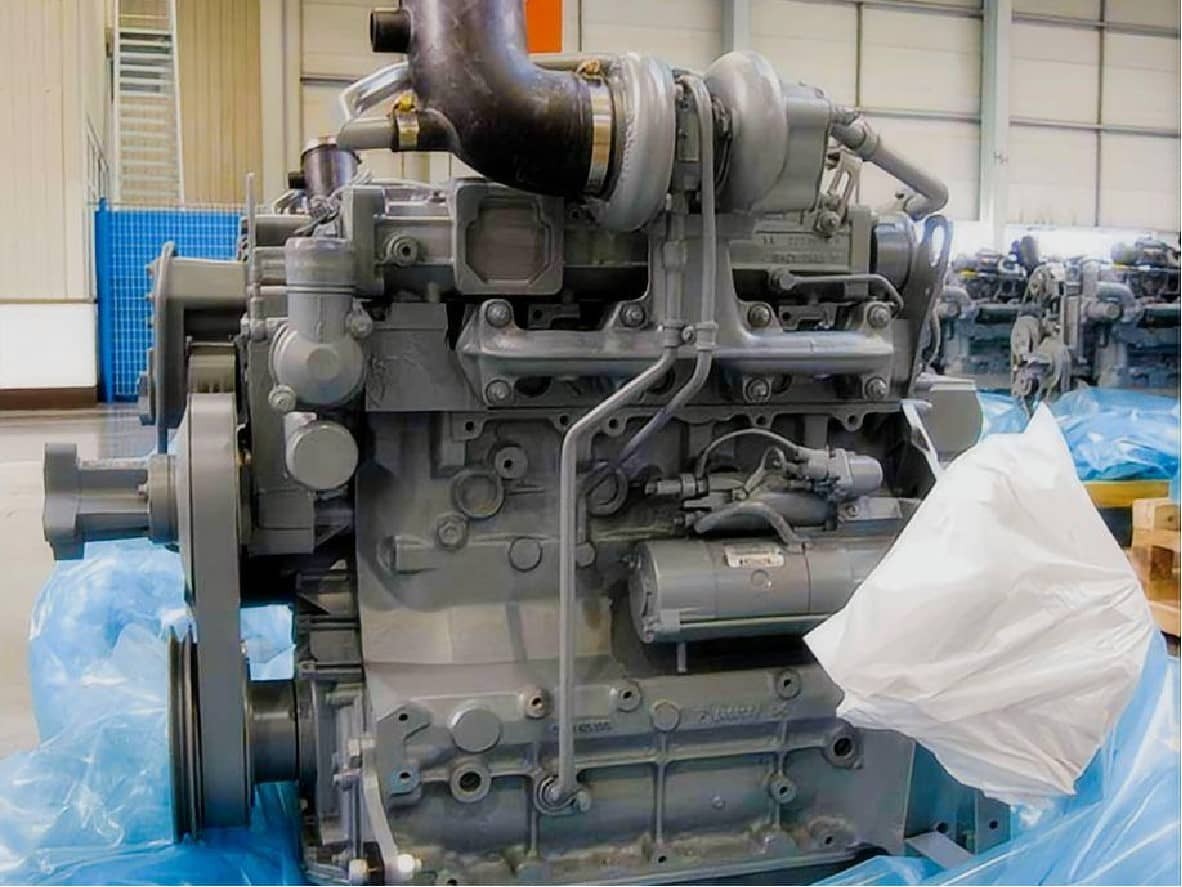
Details
Distinct Design Advantages of the BF4M2012 over Legacy Series
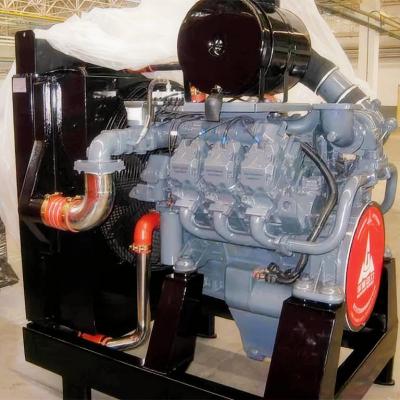
The Deutz BF4M2012 represents a significant step forward in compact, heavy-duty industrial diesel engineering compared to older air-cooled or legacy water-cooled predecessors. When deployed in modern generator sets, this engine delivers high power density through an optimized combustion chamber geometry and integrated oil cooling management. Unlike older 4-cylinder models that suffer from thermal throttling under sustained prime loads, the BF4M2012 utilizes an advanced liquid-cooling jacket designed to maintain stable cylinder wall temperatures even in high-ambient-temperature environments.
HekoPower sources and supplies complete engine assemblies built to withstand the rigorous duty cycles demanded by commercial and industrial backup power systems. The structural rigidity of the crankcase and the precision balancing of the forged steel crankshaft minimize harmonic vibrations, extending the operational lifespan of both the engine and the coupled alternator.
Tech Specs of Dalian Deutz BF4M2012
General Engine Data
Engine Model: Deutz BF4M2012
Type: 4 Cylinders, in Line
Displacement: 4.04 L
Bore * Stroke: 101 * 126
Overall Dimension: 1393mm*733mm*971mm
Net Weight: 530 Kg
Key Performance Data
Rated Power: 60 kW
Max. Torque/Speed: 390 N.m @ 1500 rpm
Rated Speed: 1500 rpm
Specific Fuel Consumption: 227 g/kW.h
Net Frequency: 50Hz
Noise db(A): ≤ 113
More Technical Data
Certification: Tier II
Aspiration: Turbocharged & Intercooling
Fuel System: Mechanical Unit Pump in Line
Cooling Method: Water Cooled
Electrical System (Starter Motor/Alternator): Electronic Starting (24V)
Compression Ratio: 19:1
Governor Type: Mechanical Governor
Technical Comparisons: BF4M2012 vs. Standard 4-Cylinder Alternatives
When evaluating 60kW-class generator engines, engineers often compare the BF4M2012 against standard naturally aspirated or lower-tier turbocharged units. Mechanically, standard 4-cylinder engines often struggle to maintain steady-state frequency regulation when sudden block loads are applied. The BF4M2012 overcomes this limitation through a high-efficiency exhaust gas turbocharger matched precisely with a mechanical single-injection pump system.
Unlike electronically governed engines that require complex diagnostic software and clean, sensitive electrical grids for ECU operation, the mechanical fuel injection system on the BF4M2012 offers rugged reliability in remote or harsh operational sites. It delivers rapid torque response and maintains strict frequency stability under transient loading conditions, making it superior for critical backup applications where electronic control failure represents an unacceptable risk. Furthermore, its compact envelope dimensions allow it to fit into standard sound-attenuated canopy enclosures without requiring custom chassis redesigns.
Real Application Scenarios and 50Hz Genset Integration
The primary engineering intent behind the Deutz BF4M2012 generator engine is seamless integration into 50Hz generator sets operating at a synchronous speed of 1500 RPM. This configuration matches the optimal torque curve and fuel combustion efficiency of the 4.04L displacement architecture. In real-world deployment, this engine serves as the prime mover for telecommunication base stations, agricultural irrigation pumps, municipal emergency backup systems, and remote construction site power stations.
Because generator sets must often run continuously for days during grid outages, the thermal management and fuel atomization precision of the BF4M2012 ensure predictable fuel consumption profiles. When paired with a compatible brushless synchronous alternator, the unit provides clean, stable voltage output with minimal harmonic distortion. HekoPower ensures that every supplied engine assembly is pre-calibrated for optimal governor response, reducing on-site synchronization and tuning time for genset manufacturers.
Maintenance Protocols and Common Misconceptions
Routine Maintenance Best Practices
Maximizing the operational lifespan of the Deutz BF4M2012 requires adherence to structured maintenance intervals. Oil and filter changes should be performed strictly using high-grade heavy-duty diesel engine oil that meets Deutz quality specifications to prevent varnish buildup on the turbocharger shaft. Particular attention must be paid to the cooling system; flushing the water jacket and inspecting the coolant pump integrity prevents localized hot spots in the 4-cylinder block. Air filtration maintenance is equally vital, especially in dusty industrial or agricultural environments, as particulate ingestion directly accelerates cylinder liner and piston ring wear.
Dispelling Common Misconceptions Regarding Fuel Injection and Cooling
A frequent misconception among operators is that mechanical injection systems require less filtration rigor than common-rail systems. In reality, the precision tolerances within the single-injection pumps of the BF4M2012 demand ultra-clean diesel fuel. Installing primary water-separating fuel filters is mandatory to prevent premature plunger wear.
Another common error is operating the engine below its optimal thermal window during prolonged light-load conditions. Running a diesel engine under continuous low loads leads to cylinder glazing, unburnt fuel accumulation, and excessive carbon deposition in the exhaust manifold. Operators should ensure the engine is periodically subjected to load bank testing if continuous low-load operation cannot be avoided.
Replacement and Sourcing Strategies for Industrial Gensets
Sourcing a replacement engine for an existing industrial generator requires exact matching of flywheel housings, flywheel dimensions, and accessory mounting points. The Deutz BF4M2012 provides standardized SAE interface dimensions, allowing it to serve as a direct drop-in replacement for aging or damaged power units in existing genset chassis.
As part of the broader Deutz BFM2012 family, this engine complements sibling configurations across various power outputs. This series mainly includes variants designed to cover diverse mechanical and electrical load requirements, ensuring that technicians can scale maintenance inventories and spare parts across multiple generator fleets without managing disparate component lines.
When procuring replacement units, verifying the authenticity of core components—such as the cylinder head, oil cooler assembly, and turbocharger—is critical to maintaining emission compliance and operational reliability. HekoPower provides fully verified engine assemblies complete with historical factory testing documentation, ensuring immediate drop-in compatibility and dependable performance from the initial startup.
Series Integration
Deutz BFM2012-Generator Engine Series, original products from Dalian Deutz Engine Plant. This series mainly includes Deutz BF4M2012, Deutz BF4M2012C, Deutz BF6M2012C. In accordance with the criteria of Machinery Safety Directive 2006/42, movable elements such as distribution belts, fans, and parts that acquire high temperatures during operation, such as exhaust manifolds, have their respective safeguards. Before being delivered, the generator is thoroughly checked at the factory. Voltage, frequency, and load are all tested, as well as the appropriate operation of warnings and the influence of engine oil temperature on stop.
Frequently Asked Questions
Is the BF4M2012 engine suitable for 60Hz operation at 1800 RPM?
While the base mechanical platform is robust, the BF4M2012 variant specified for generator drives is primarily optimized for 50Hz operation at 1500 RPM to meet standard generator synchronization requirements.
Can this engine run on biodiesel?
It can run on low-percentage biodiesel blends (up to B20) if you monitor the fuel filters closely. Biodiesel tends to loosen deposits inside the fuel system, which requires more frequent filter changes early on.
Can the BF4M2012 serve as a direct replacement for older Deutz engines in existing genset canopies?
Yes, due to its standardized industrial footprint and SAE flywheel housing dimensions, it acts as an effective replacement unit, provided that cooling radiator and exhaust routing alignments are verified during installation.